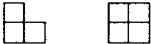
Several coins are divided once into 200 groups, and then once again into 300 groups. Call a coin *special* if it is in a group of smaller size in the second division than in the first division. Find the minimum number of special coins.
Given a positive integer $N$, we subtract from it its greatest proper divisor (different from $N$), then do the same with the new number and repeat the operation until $1$ is obtained. Find how many subtractions are there if the process starts with $N = 19^{19}$.
The set $G$ is defined by the points $(x, y)$ with integer coordinates, $1 \leq x \leq 5$ and $1 \leq y \leq 5$. Determine the number of five-point sequences $\left(P_{1}, P_{2}, P_{3}, P_{4}, P_{5}\right)$ such that for $1 \leq i \leq 5, P_{i}=\left(x_{i}, i\right)$ is in $G$ and $\left|x_{1}-x_{2}\right|= \left|x_{2}-x_{3}\right|=\left|x_{3}-x_{4}\right|=\left|x_{4}-x_{5}\right|=1$.
Let $f: \mathbb{Z}_{\geq 0} \rightarrow \mathbb{Z}_{\geq 0}$ be a function which satisfies for all integer $n \geq 0$ :
(a) $f(2n+1)^2 - f(2n)^2 = 6f(n) + 1$,
(b) $f(2n) \geq f(n)$;
where $\mathbb{Z}_{\geq 0}$ is the set of nonnegative integers. Solve the equation $f(n) = 1000$.
Find all positive integers $n$ such that there exist non-constant polynomials with integer coefficients $f_1(x), \dots, f_n(x)$ (not necessarily distinct) and $g(x)$ such that
$$
1 + \prod_{k=1}^{n} (f_k^2(x) - 1) = (x^2 + 2013)^2 g^2(x).
$$
Let $ABCDEF$ be a regular octahedron with lower vertex $E$, upper vertex $F$, middle slice plane $ABCD$, center $M$ and circumsphere $k$. Furthermore let $X$ be an arbitrary point within side $ABF$. The line $EX$ intersects $k$ in $E$ and $Z$ and the plane $ABCD$ in $Y$.
$$
\text{Show that } \langle EMZ \rangle = \langle EYF \rangle.
$$
Let $S$ be the set of rational numbers of the form
$$
\frac{(a_1^2 + a_1 - 1)(a_2^2 + a_2 - 1) \cdots (a_n^2 + a_n - 1)}{(b_1^2 + b_1 - 1)(b_2^2 + b_2 - 1) \cdots (b_n^2 + b_n - 1)},
$$
where $n, a_1, a_2, \dots, a_n, b_1, b_2, \dots, b_n$ run through the positive integers. Show that $S$ contains infinitely many primes.
Let triangle $A B C$ have a right angle at $C$, and let $M$ be the midpoint of the hypotenuse $A B$. Choose a point $D$ on line $B C$ so that angle $C D M$ measures $30$ degrees. Prove that the segments $A C$ and $M D$ have equal lengths.
Triangle $A B C$ is inscribed in a circle centered at $O$, and $M$ is the midpoint of $B C$. Suppose that $A, M$, and $O$ are collinear. Prove that $\triangle A B C$ is either right or isosceles (or both).
Let $a_1, a_2, \dots, a_n$ be non-negative integers such that for all real numbers $x_1 \gt x_2 \gt x_3 \gt \dots \gt x_n \gt 0$ with $x_1 + x_2 + \dots + x_n \lt 1$ it holds that $\sum_{k=1}^n a_k x_k^3 \lt 1$.
Show that
$$
na_1 + (n-1)a_2 + \dots + (n-j+1)a_j + \dots + a_n \le \frac{n^2(n+1)^2}{4}.
$$
G. Baron, Vienna
$$
\left(\begin{array}{lllll}
1 & 1 & 1 & \cdots & 1
\end{array}\right)
$$
is written on a board, with 2013 ones in between the outer parentheses. Between each pair of consecutive ones you may write either "+" or ")(" (you cannot leave the space blank). What is the maximum possible value of the resulting expression?
Determine all injective functions $f$ of the set of positive integers into itself satisfying the following condition: If $S$ is a finite set of positive integers such that $\sum_{s \in S} 1/s$ is an integer, then $\sum_{s \in S} 1/f(s)$ is also an integer.
Find all composite positive integers $n$ such that all the divisors of $n$ can be written in the form $a^{r}+1$, where $a$ and $r$ are integers with $a \geq 0$ and $r \geq 2$.
Determine all positive integers $n$ such that $f_n(x, y, z) = x^{2n} + y^{2n} + z^{2n} - xy - yz - zx$ divides $g_n(x, y, z) = (x-y)^{5n} + (y-z)^{5n} + (z-x)^{5n}$, as polynomials in $x, y, z$ with integer coefficients.
Let $a_{1}, a_{2}, \ldots, a_{2013}$ be real numbers satisfying the following conditions:
- $a_{1}=a_{2013}=0$
- $|a_{i}-a_{i+1}|\lt 1$, for $1 \leq i \leq 2012$.
- $\sum_{i=1}^{2013} a_{i}=0$.
Find the greatest possible value of the sum $\sum_{i=1}^{m} a_{i}$, where $m$ ($1 \leq m \leq 2013$) is allowed to vary, in addition to the sequence $\{a_{i}\}$.
a. A number is written at each edge of a cube. The cube is called magic if:
(i) For every face, the four edges around it have the same sum.
(ii) For every vertex, the three edges meeting at it have the same sum. (The face and vertex sums may be different.)
Determine if there exists a magic cube using
(a) the numbers 1 through 12, each only once;
(b) the numbers from 1 through 13, each no more than once.