Let $ABC$ be a triangle with orthocenter $H$. The external bisector of $\angle BHC$ meets sides $AB$ and $AC$ at $D$ and $E$, respectively. The internal bisector of $\angle BAC$ meets the circumcircle of triangle $ADE$ at $K$. Prove that line $HK$ passes through the midpoint of $BC$.
Find all pairs of natural numbers $(n;k)$, where $n$ is a nonnegative integer and $k$ is an integer greater than $1$, such that
$$A=17^{2006n}+4\cdot17^{2n}+7\cdot19^{5n}$$
can be expressed as a product of $k$ consecutive positive integers.
There are $2006$ points in space, no four of which are coplanar. Join every pair of points by a segment. A natural number $m$ is called good if each segment can be assigned a natural number not exceeding $m$ so that every triangle formed by any three of the points has two sides assigned equal numbers and its remaining side assigned a number greater than those two numbers. Find the smallest good number.
Prove that, for all real numbers $x,y,z\in[1,2]$,
$$(x+y+z)\left(\frac1x+\frac1y+\frac1z\right)\ge6\left(\frac{x}{y+z}+\frac{y}{z+x}+\frac{z}{x+y}\right).$$
Determine exactly when equality holds.
Let $ABC$ be an acute, non-isosceles triangle inscribed in a circle with center $O$ and radius $R$. A variable line $d$ is always perpendicular to $OA$ and meets rays $AB$ and $AC$ at $M$ and $N$, respectively. Suppose that lines $BN$ and $CN$ intersect at $K$, and that line $AK$ meets line $BC$.
1. Let $P=AK\cap BC$. Prove that the circumcircle of triangle $MNP$ always passes through a fixed point as $d$ varies.
2. Let $H$ be the orthocenter of triangle $AMN$. Write $BC=a$, and let $l$ be the distance from $A$ to line $HK$. Prove that $HK$ always passes through the orthocenter of triangle $ABC$. Deduce that $l\le\sqrt{4R^2-a^2}$, and determine exactly when equality holds.
A real sequence $(a_n)$ is defined by
$$a_0=1,\qquad a_{n+1}=\frac12\left(a_n+\frac1{3a_n}\right)\quad\text{for every }n=1,2,3,\ldots.$$
Prove that, for every integer $n$, the number
$$A_n=\frac3{3a_n^2-1}$$
is a perfect square and has at least $n$ distinct prime divisors.
Let $ABCD$ be a convex quadrilateral. A point $M$ moves on line $AB$, with $M\ne A,B$. Let $N$ be the second intersection, distinct from $M$, of the circles $(MAC)$ and $(MBD)$. Prove that:
(1) $N$ lies on a fixed circle;
(2) line $MN$ always passes through a fixed point.
Here $(XYZ)$ denotes the circle through $X,Y,Z$.
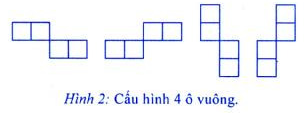
Let $m,n$ be integers greater than $3$, and consider an $m\times n$ board of unit cells ($m$ rows and $n$ columns). A move places four marbles, one in each of four cells forming one of the configurations shown below. Can these moves make the number of marbles in every cell equal, in each case:
(1) $m=2004,n=2006$;
(2) $m=2005,n=2006$?
Let $f(x)=-x+\sqrt{(a+x)(b+x)}$, where $a,b$ are given distinct positive real numbers. Prove that for each $s\in(0,1)$ there exists a unique positive real number $\alpha$ such that
$$f(\alpha)=\left(\frac{a^s+b^s}{2}\right)^{1/s}.$$
Let $S$ be a set with $2006$ elements. A subset $T$ of $S$ is called “stubborn” if for any $u,v\in T$, allowing $u=v$, one has $u+v\notin T$. Prove that:
(1) If $S=\{1,2,\ldots,2006\}$, every stubborn subset has at most $1003$ elements.
(2) If $S$ consists of any $2006$ positive integers, it has a stubborn subset with $669$ elements.
Let $ABCD$ be an isosceles trapezoid with $CD$ its larger base. A point $M$ moves on the line $CD$, distinct from $C,D$. Let $N$ be the second intersection, other than $M$, of circles $(BCM)$ and $(DAM)$. Prove that:
1. $N$ moves on a fixed circle.
2. The line $MN$ always passes through a fixed point.
Here $(XYZ)$ denotes the circle through $X,Y,Z$.
A forest ranger unit wants to prepare a patrol schedule for the whole year 2006 satisfying:
(i) The number of patrol days exceeds half the number of days in the year.
(ii) No two patrol days are exactly one week apart.
1. Prove that such a schedule exists, knowing that 2006 has $365$ days.
2. How many such patrol schedules are there?
Let an acute triangle $ABC$ be inscribed in a circle with center $O$, with $BC\gt AB\gt AC$. Line $OA$ meets line $BC$ at $A_1$, and line $OB$ meets line $CA$ at $B_2$. Let $B_1,C_1,C_2,A_2$ be the centers of circles $(AA_1B),(AA_1C),(BB_2C),(BB_2A)$, respectively. Prove that:
1. Triangles $A_1B_1C_1$ and $A_2B_2C_2$ are similar.
2. These triangles are congruent if and only if angle $C$ of triangle $ABC$ equals $60^\circ$.
Here $(XYZ)$ denotes the circle through $X,Y,Z$.
Find the largest real number $k$ such that for all positive real numbers $a,b,c$ with $abc=1$, the inequality
$$\frac1{a^2}+\frac1{b^2}+\frac1{c^2}+3k\ge(k+1)(a+b+c)$$
always holds.