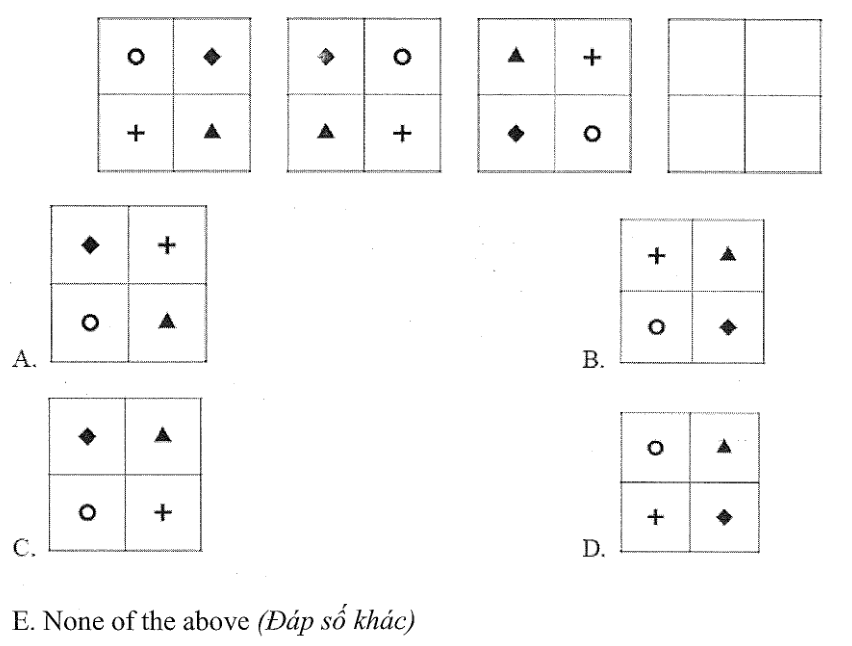
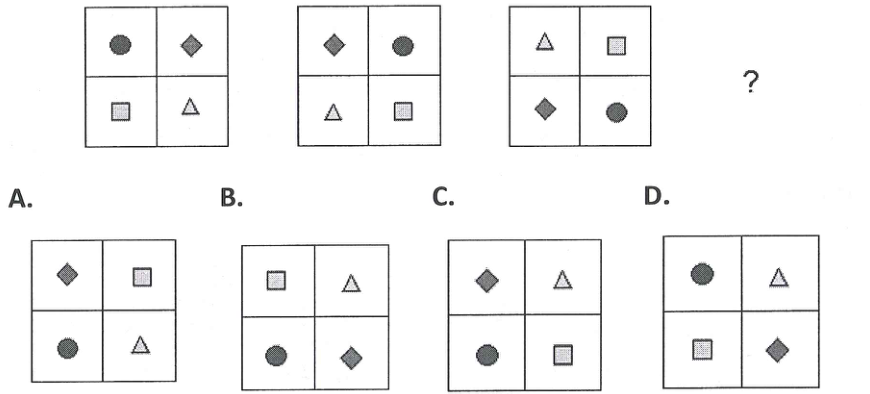
Skip to content / Đến nội dung
ThichHocToan.com

Question bank SASMO 2027

Exam papers

825 questions

Question 1

Editorial self-study SET for 2027; not an official SASMO 2027 examination. Known source years remain in individual attributions. Time: 90 minutes. Platform scoring starts at 0: Q1–15 are worth 2 points each; Q16–25 are worth 4 points each; wrong and blank answers score 0; maximum 70. Official SASMO scoring instead starts at 15, deducts 1 for an incorrect Section A answer and has a maximum of 85. Verified means editorially checked; assumptions, source errors and mathematical uncertainty are disclosed where relevant.

Fill every blank in the number triangle. Enter the missing numbers from left to right in the next-to-last row, then the last row, separated by commas.
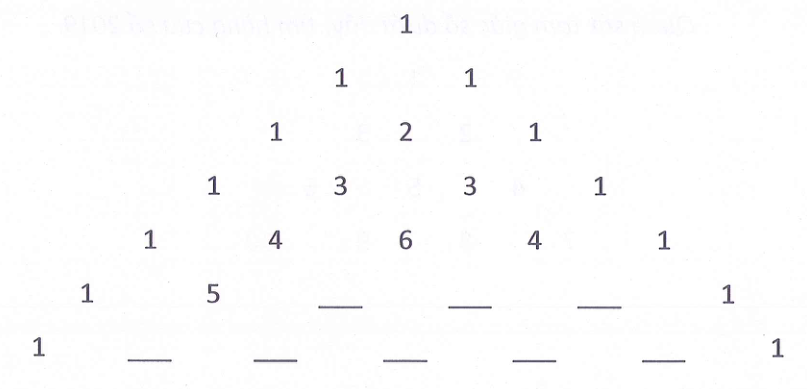
Question illustration

Question 2

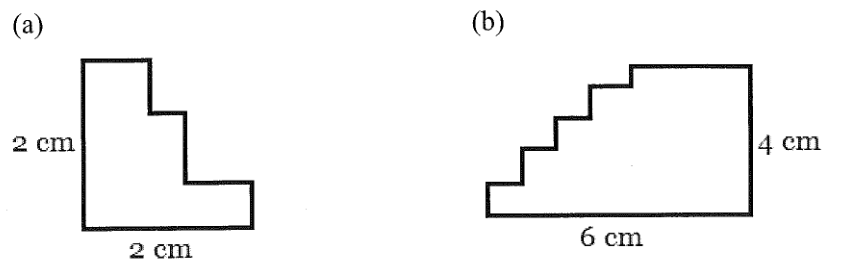
Find the perimeter of each figure (a) and (b). All corners are right angles. Enter the two perimeters in cm, in order (a),(b), separated by a comma.

Question illustration

Question 3

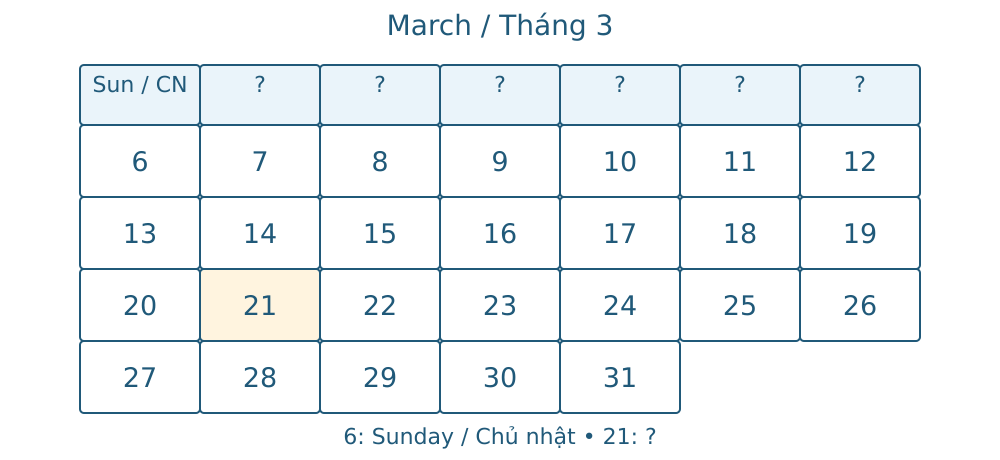
Many years ago, 6 March was a Sunday. What day of the week was 21 March that year? Enter the weekday in English or Vietnamese.

Question illustration

Question 4

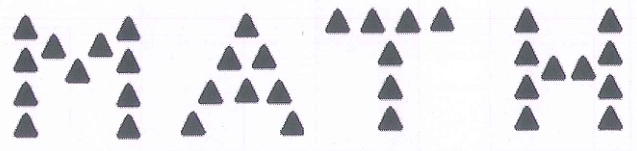
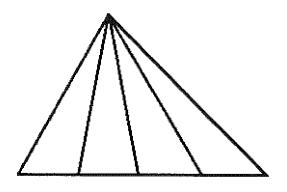
How many triangles are there in the figure?

Question illustration
  1. 34
  2. 35
  3. 36
  4. 37
  5. None of the above

Question 5

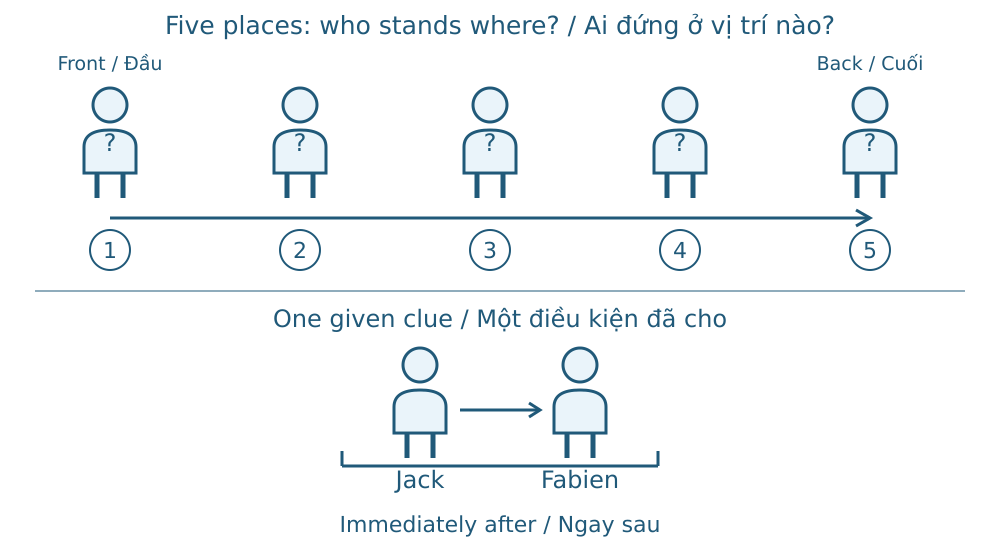
Rose, Fabien, Lisa, Jack and Adel stand in a single row. Rose is after Lisa. Fabien is before Rose and just after Jack. Jack is before Lisa but is not first. Where is Adel?

Question illustration
  1. 1st
  2. 2nd
  3. 3rd
  4. 4th
  5. None of the above

Question 6

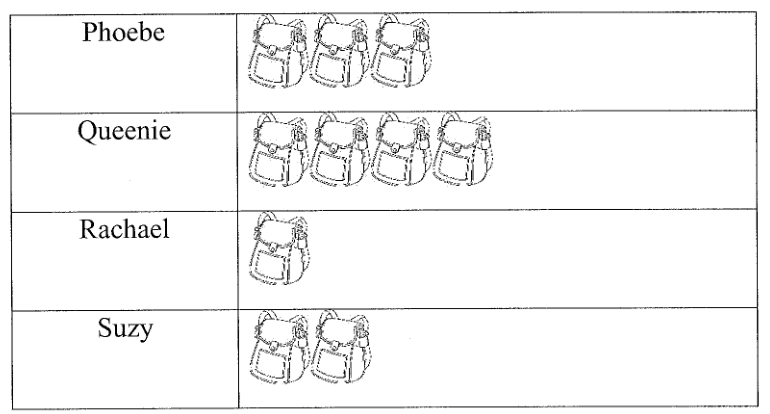
The pictogram shows the comic books that Phoebe, Queenie, Rachael and Suzy have. Each bag represents the same number of books. Altogether they have 40 books. If Queenie wants twice as many books as Phoebe, how many more books must Queenie buy? Enter a number.

Question illustration

Question 7

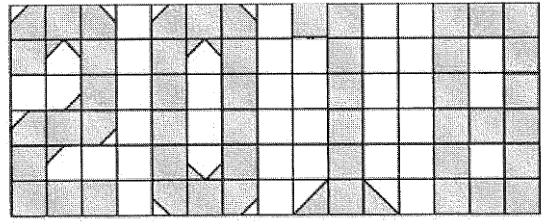
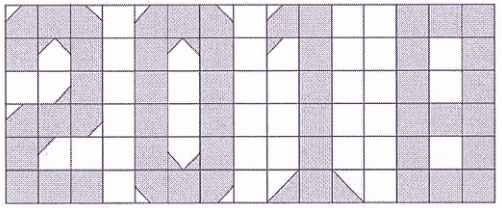
Each diagram is a 15 by 6 board with 2018 shaded. Every square is 1 cm by 1 cm. A long diagonal joins opposite square vertices; a short diagonal joins midpoints of adjacent sides. Find the total shaded area, in square centimetres. The sources print two slightly different versions of digit 1. Both are retained as A and B; give the shaded area for each version, in that order. Enter A,B separated by a comma.

Version A

Question illustration

Version B

Question illustration

Question 8

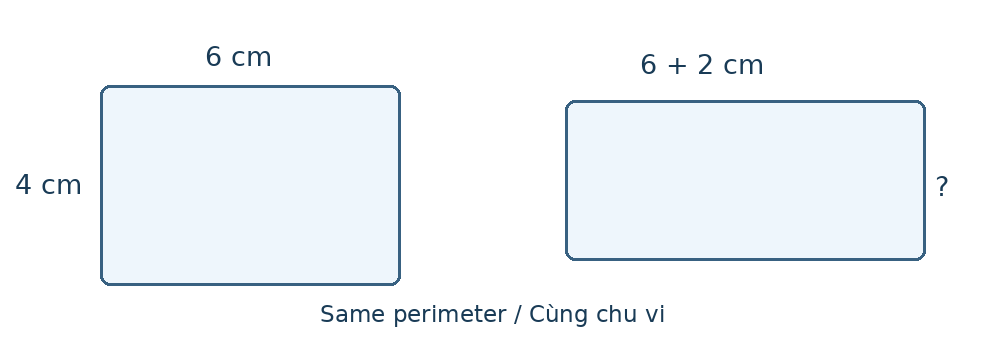
A rectangle has length 6 cm and breadth 4 cm. Its length increases by 2 cm. What should its new breadth be for the perimeter to stay unchanged? Enter the breadth in cm.

Question illustration

Question 9

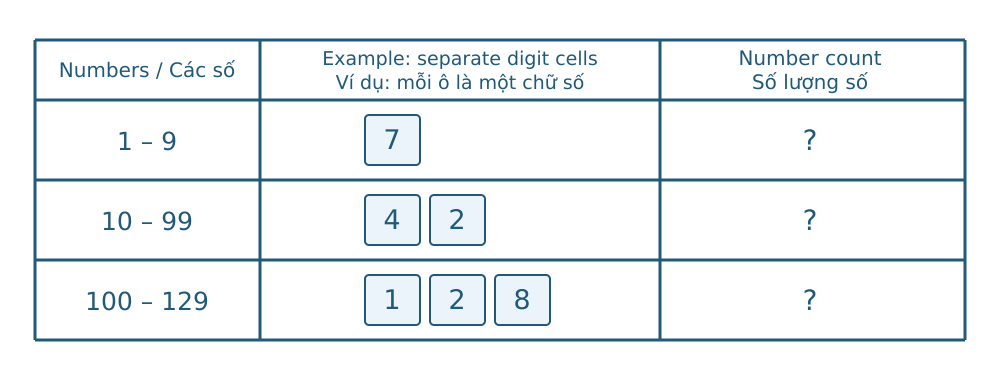
Tom wrote every whole number from 1 to 129 on a whiteboard. How many digits did he write altogether? Enter a number.

Question illustration

Question 10

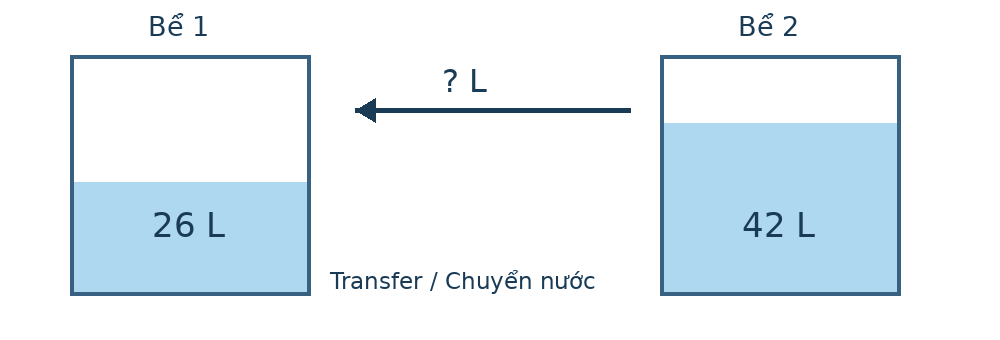
Simon has two aquaria containing 26 litres and 42 litres of water. How many litres should be poured from the second into the first to make their amounts equal? Assume the first aquarium has enough capacity to receive the water, and no water is lost during transfer. Enter a number.

Question illustration

Question 11

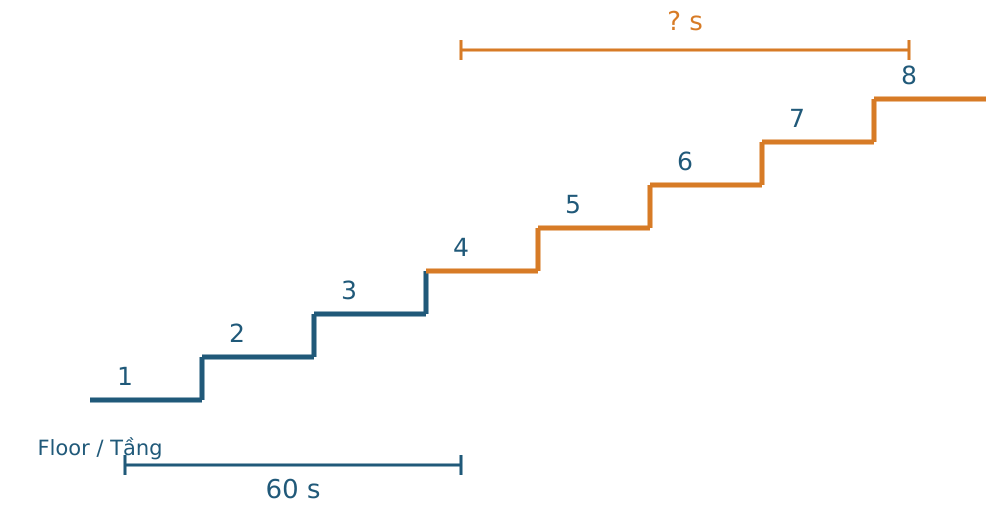
A boy takes 60 seconds to climb from the first floor to the fourth floor. How many more seconds will he need to reach the eighth floor? Assume equal time for each interval between neighbouring floors and no stops. Enter a number.

Question illustration

Question 12

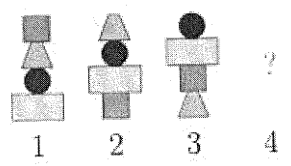
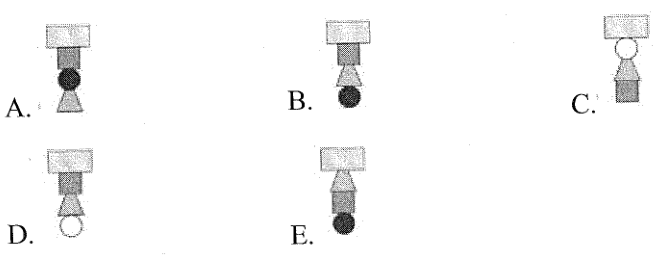
Emily builds towers in the pattern shown. Which tower will be fourth? Choose A–E in the options image.

Question illustration

Question illustration
  1. Tower A
  2. Tower B
  3. Tower C
  4. Tower D
  5. Tower E

Question 13

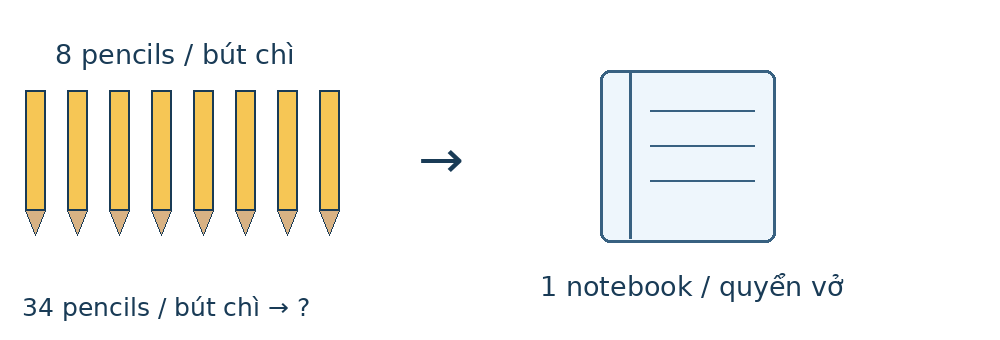
Eight pencils can be exchanged for one notebook. What is the maximum number of notebooks obtainable from 34 pencils? Enter a whole number.

Question illustration

Question 14

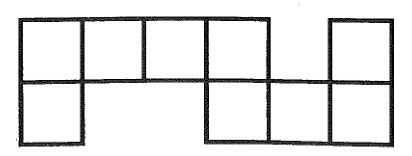
The figure is made of identical squares of side 4 cm. What is its perimeter? Enter the answer in cm.

Question illustration

Question 15

In the figure, find (a) the number of points (vertices and junctions), (b) the number of line segments, and (c) the number of triangles. Count all distinct line segments whose endpoints are among the drawn vertices or junctions, including longer segments made of several adjacent parts. Enter the three counts in order, separated by commas.
Question illustration

Question 16

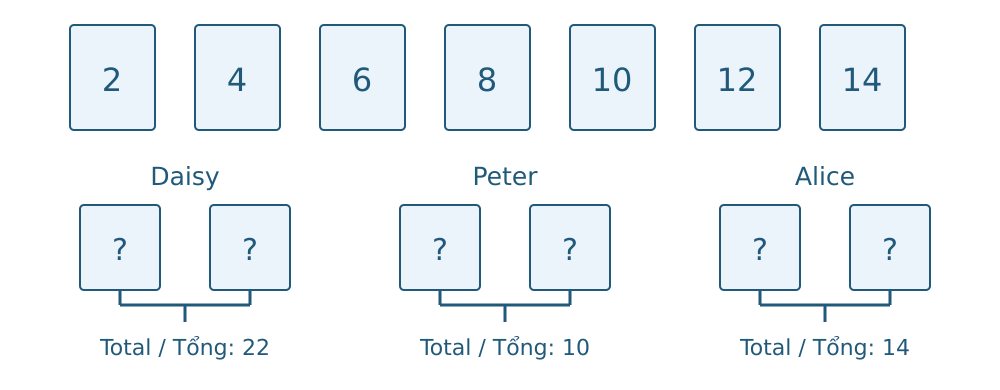
Daisy, Peter and Alice each draw two cards, without replacement, from seven cards numbered 2,4,6,8,10,12,14. Daisy’s pair totals 22, Peter’s totals 10, and Alice’s totals 14. Which card is left?

Question illustration
  1. 6
  2. 8
  3. 10
  4. 14
  5. None of the above

Question 17

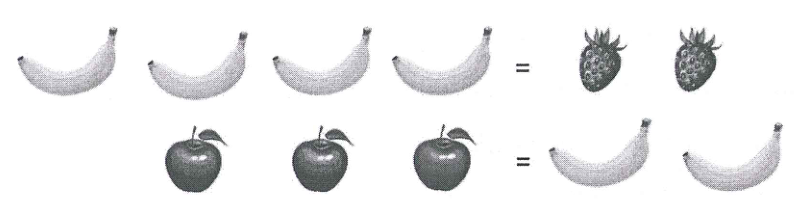
Emma can exchange fruits at the rates shown. How many strawberries does she need to obtain 12 apples? Enter a number.

Question illustration

Original SASMO 2017 Primary 2 paper choices (preserved for reference): A. 4; B. 5; C. 6; D. 7; E. None of the above. For this self-study question, enter the number of strawberries, not an option letter.

Question 18

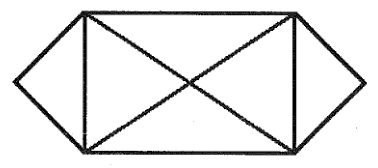
In the figure, count (a) triangles, (b) quadrilaterals, and (c) all distinct line segments whose endpoints are vertices or the diagonal intersection. Include larger figures formed from smaller parts. Enter the three counts in order, separated by commas.
Question illustration

Question 19

What comes next in the pattern? Both source versions are shown: version A uses a plus sign; version B replaces it with a square. Choose the letter of the next diagram, which is the same in both versions. Option E means none of A–D.

Version A

Question illustration

Version B

Question illustration
  1. Diagram A
  2. Diagram B
  3. Diagram C
  4. Diagram D
  5. None of A–D

Question 20

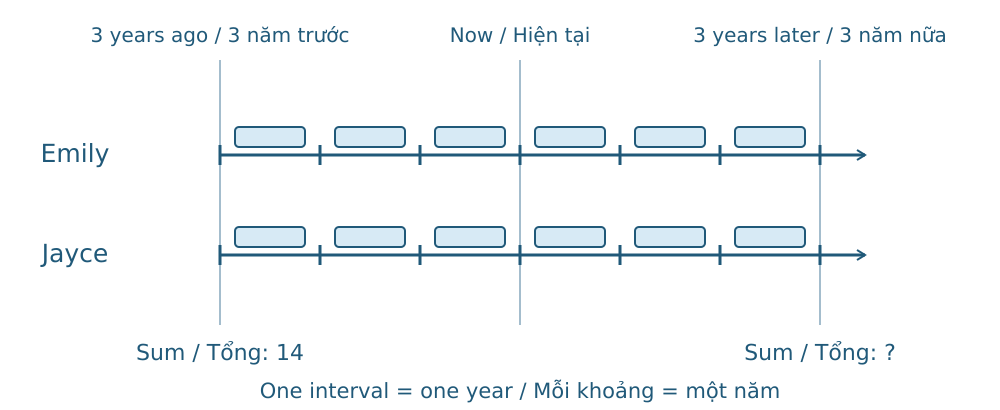
Three years ago, the sum of Emily’s and Jayce’s ages was 14. What will the sum of their ages be three years from now?

Question illustration
  1. 20
  2. 24
  3. 26
  4. 28
  5. None of the above