A right triangle has an angle of $30^\circ$. The supplied Vietnamese text asks to prove that one angle bisector is shorter than half another angle bisector. The official original asks for one bisector to be exactly half as long as another. Preserve this distinction when interpreting the question.
One bacterium is in a cell of a $10\times10$ board. In each move, one existing bacterium moves to a cell sharing a side with its current cell and splits into two, both remaining in that new cell. Can all cells ever contain equal numbers of bacteria after some moves?
Call a positive integer good if its decimal digits are only 0 and 1. Suppose two good integers have a product which is also good. Must the digit sum of the product equal the product of the digit sums of the two factors?
Hexagon $AB^{\prime} CA^{\prime} BC^{\prime}$ has $ABC$ equilateral, its angles $A^{\prime} BC^{\prime},C^{\prime} AB^{\prime},B^{\prime} CA^{\prime}$ greater than $120^\circ$, and $AB^{\prime}=AC^{\prime}$, $BA^{\prime}=BC^{\prime}$, $CA^{\prime}=CB^{\prime}$. Prove that $AB^{\prime},BC^{\prime},CA^{\prime}$ are the side lengths of a triangle.
The integers 1 through 100 are colored: 50 red, 25 yellow, 25 green. The red and yellow numbers can be partitioned into 25 triples, each containing two red numbers and a yellow number strictly between them. The same is possible for the red and green numbers. Must all 100 numbers be partitionable into 25 quadruples, each with two red numbers, one yellow and one green, both nonred numbers strictly between the red numbers?
Let $X$ be a set of integers which can be partitioned into $N$ disjoint increasing arithmetic progressions, infinite in both directions, but not into fewer such progressions. Is a partition into $N$ progressions necessarily unique for every such $X$ when (a) $N=2$; (b) $N=3$? Original weights: 4 points each.
There are $N$ untidy employees in an office, each with a pile of rubbish on their desk. They leave for lunch one at a time, each only after the preceding employee returns. Whenever an employee leaves, every other employee puts half of the rubbish on their own desk onto the absent employee’s desk. Is it possible that, after everyone has had lunch, every desk has exactly its initial amount of rubbish, if (a) $N=2$; (b) $N=10$? Original weights: (a) 1 point, (b) 3 points.
There are 2023 dice on a table. For one dollar, one die may be turned so that any of its four side faces becomes the top face. What is the smallest number of dollars sufficient to guarantee making the top numbers on all dice equal? The faces are numbered 1 through 6 and opposite faces always sum to 7.
For any real $x$, define $Q(x)=\lfloor x\rfloor+\lfloor x/2\rfloor+\lfloor x/3\rfloor+\cdots+\lfloor x/10000\rfloor$. Find $Q(2023)-Q(2022)$. Here $\lfloor x\rfloor$ is the greatest integer not exceeding $x$.
A $5\times5$ square board has one identical-looking coin on each cell. Exactly two coins are counterfeit, of equal weight; all genuine coins have the same weight and are heavier than the counterfeit coins. The counterfeit coins occupy two cells sharing exactly one vertex. Can one guarantee identifying (a) 13 genuine coins; (b) 15 genuine coins; (c) 17 genuine coins, using only one weighing on a balance without weights? Original weights: (a) 2 points, (b) 3 points, (c) 2 points.
Two strings each consist of 100 letters, all $A$ or $B$. In one step one may insert any number of identical letters at a chosen position, or delete any number of consecutive identical letters. Prove that either string can be transformed into the other in at most100 steps.
Triangle $ABC$ has perimeter1. Its $A$-excircle touches $BC$ and the extensions of $AB,AC$ along rays $AB,AC$ at $P,Q$, respectively. The line through the midpoints of $AB,AC$ meets the circumcircle of $APQ$ at $X,Y$. Find $XY$.
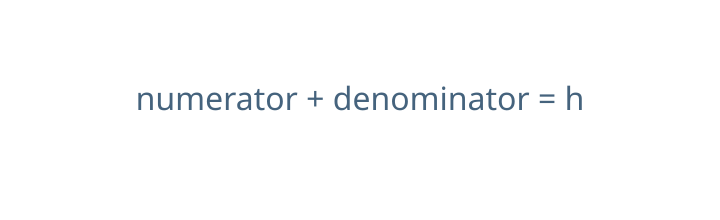
Let $h>1$ be an integer. A positive fraction, not necessarily reduced, is good if its positive numerator and denominator sum to $h$. Call $h$ remarkable if every positive fraction whose denominator is less than $h$ can be expressed using good fractions, not necessarily distinct, and only addition and subtraction. Prove that $h$ is remarkable if and only if it is prime.
Chameleons on an island have five possible colors. When one bites another, only the bitten chameleon changes color, according to a fixed rule depending solely on their two current colors. Suppose2023 initially red chameleons can, by a sequence of bites among themselves, all become blue. Find the smallest$k$ for which one can always guarantee that$k$ initially red chameleons can all become blue under the same rule.
For example, a rule might say that a red chameleon biting a green one turns the victim blue; a green one biting a red one leaves the victim red; a red one biting a red one turns the victim yellow. Other rules are possible.
There are 2023 dice on a table. For one dollar, choose one die and turn any one of its four side faces to the top. What is the least sum that always suffices to make all 2023 top numbers equal? Faces are numbered 1 through 6, with opposite numbers summing to 7.