Suppose that a fair four-sided die (with faces labelled $1,2,3,4$) is rolled twice, producing outcomes $b$ and $c$ in that order. Let $p$ be the probability that the quadratic equation $x^2+bx+c=0$ has two real and distinct roots. Find the value of $\left\lceil\frac1p\right\rceil$.
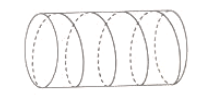
A string of length $L$ is wound uniformly around a cylinder of circumference $5cm$ exactly four times, starting at the base and ending at the top of the cylinder. The height of the cylinder is $48cm$. Find the value of $\lfloor L\rfloor$.
32
52
60
61
Insufficient information to determine the value of $L$
Given that the minimum value of $(\tan^{-1}x)^{2048}+\left(\tan^{-1}\frac1x\right)^{2048}$ is $\frac{\pi^a}{b}$, where $a$ and $b$ are rational numbers, and $x>0$, find the value of $\log_2\left(\frac ba\right)$.
Let $\{a_n\}_{n=1}^{m}$ be a finite sequence of real numbers. Find the largest value of $m$ such that $\sum_{k=0}^{4}a_{i+k}\lt 0$ and $\sum_{k=0}^{7}a_{j+k}>0$ for any positive integers $i,j$.
Find the sum of all the digits from $1$ to $10^7$ inclusive. For example, the sum of all the digits from $23$ to $27$ inclusive are $2+3+2+4+2+5+2+6+2+7$.
Let $\{a_n\}_{n=0}^{\infty}$ be a sequence of real numbers satisfying $a_{n-2}+a_n=1+2a_{n-1}$ for $n\ge2$, and $a_0=a_1=1$. Find the value of $a_{26}$.
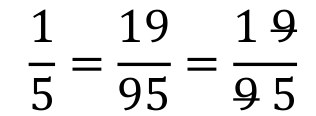
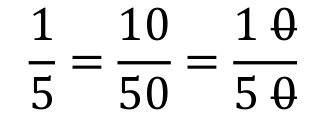
We say a rational number is funny if removing the same nonzero digit from both its numerator and denominator yields the same rational number as when it is properly simplified (not necessarily to lowest terms). For example,
is a funny rational number but
is not. Find the total number of funny rational numbers $\frac ab$ such that $10\le a\lt b\le99$.
Let $x_1,x_2,\ldots,x_{100}$ be positive real numbers. Let
$$P_i=x_i^{(\ln x_1)(\ln x_2)\cdots(\ln x_{i-1})(\ln x_{i+1})\cdots(\ln x_{100})}$$
for $i=1,2,\ldots,100$. Suppose that $\sum_{k=1}^{100}P_k=10000$. Find the value of $\left\lfloor\prod_{k=1}^{100}\ln x_k\right\rfloor$.
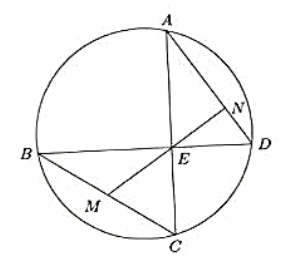
In the diagram below, the points $A,B,C$ and $D$ lie on a circle. The lines $AC$ and $BD$ intersect at the point $E$ and $AB$ is the diameter of a circle that passes through the points $A,B$ and $E$. Let $M$ be the midpoint of $BC$ and $N$ be the point of intersection between the line passing through the points $M$ and $E$ and the line passing through the points $A$ and $D$. Given that $BC=28$, $AN=27$, $DN=3$, $MN=x$, find the value of $x$.
Let $x_1,x_2,x_3,x_4,x_5,x_6$ be real numbers such that
$$(\tan x_1)(\tan x_2)(\tan x_3)(\tan x_4)(\tan x_5)(\tan x_6)=1.$$
Let $A$ be the maximum value of
$$(\sin x_1)(\sin x_2)(\sin x_3)(\sin x_4)(\sin x_5)(\sin x_6).$$
Determine the value of $\lfloor A^{-1}\rfloor$.
The polynomial $P(x)=\sum_{k=0}^{64}a_kx^k$, where $a_j$ are real numbers for $j=0,\ldots,64$ and $a_{64}=1$ is such that $P(j)=10j$ for $j=1,2,\ldots,63$. Find the remainder when $P(66)+P(-2)$ is divided by $67$.
A circle $\mathcal C$ has equation $(x-10)^2+(y-10\sqrt3)^2=39$. Let $a$ be largest real number such that the line $\mathcal L$ tangent to $\mathcal C$ at the point $(a,b)$ passes through the origin. Given that
$$\frac ba=\alpha\sqrt3+\beta\sqrt{39}$$
find the value of $\left\lceil\left|\frac\alpha\beta\right|\right\rceil$, where $\alpha,\beta$ are rational numbers in their simplest form.
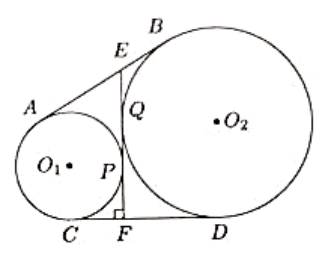
In the diagram below, the circles $\Gamma_1$ and $\Gamma_2$ have centres $O_1$ and $O_2$ respectively. The lines $AB,CD$ and $EF$ are tangent to both circles, where the points of tangency are $A,B,C,D,P,Q$ as shown in the diagram below, and $CD$ perpendicular to $EF$. The circle $\Gamma_1$ is tangent to the line $EF$ at the point $P$ and $\Gamma_2$ is tangent to the line $EF$ at the point $Q$. Given that $PQ=11$, $O_1O_2=61$ and $EF=x$, find the value of $x$.
Let $a_1,a_2,\ldots,a_{2026}$ be real numbers. Let $k$ be the largest real number such that
$$a_1^2+a_2^2+\cdots+a_{2026}^2\ge k\sum_{1\le i\lt j\le2026}a_i a_j.$$
Find the value of $\left\lfloor\left|\frac1k\right|\right\rfloor$.