Let $ABCD$ be a convex quadrilateral. A point $M$ moves on line $AB$, with $M\ne A,B$. Let $N$ be the second intersection, distinct from $M$, of the circles $(MAC)$ and $(MBD)$. Prove that:
(1) $N$ lies on a fixed circle;
(2) line $MN$ always passes through a fixed point.
Here $(XYZ)$ denotes the circle through $X,Y,Z$.
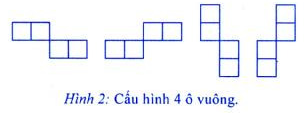
Let $m,n$ be integers greater than $3$, and consider an $m\times n$ board of unit cells ($m$ rows and $n$ columns). A move places four marbles, one in each of four cells forming one of the configurations shown below. Can these moves make the number of marbles in every cell equal, in each case:
(1) $m=2004,n=2006$;
(2) $m=2005,n=2006$?
Let $f(x)=-x+\sqrt{(a+x)(b+x)}$, where $a,b$ are given distinct positive real numbers. Prove that for each $s\in(0,1)$ there exists a unique positive real number $\alpha$ such that
$$f(\alpha)=\left(\frac{a^s+b^s}{2}\right)^{1/s}.$$
Let $S$ be a set with $2006$ elements. A subset $T$ of $S$ is called “stubborn” if for any $u,v\in T$, allowing $u=v$, one has $u+v\notin T$. Prove that:
(1) If $S=\{1,2,\ldots,2006\}$, every stubborn subset has at most $1003$ elements.
(2) If $S$ consists of any $2006$ positive integers, it has a stubborn subset with $669$ elements.