Let $a$ be real and define
$$u_1=a,\qquad u_{n+1}=\frac12+\sqrt{\frac{2n+3}{n+1}u_n+\frac14}\quad(n\ge1).$$
a) For $a=5$, prove that the sequence has a finite limit and find it.
b) Find all $a$ for which the sequence is defined over the reals and has a finite limit.
Let $ABC$ be an acute scalene triangle inscribed in $(O)$, with orthocenter $H$. Let $E,F$ be the feet of the altitudes from $B,C$, respectively, and let $AH$ meet $(O)$ again at $D\ne A$.
a) Let $I$ be the midpoint of $AH$, and set $M=EI\cap BD$, $N=FI\cap CD$. Prove $MN\perp OH$.
b) Lines $DE,DF$ meet $(O)$ again at $P,Q\ne D$, respectively. The circumcircle of $AEF$ meets $(O)$ and $AO$ again at $R,S\ne A$, respectively. Prove that $BP,CQ,RS$ are concurrent.
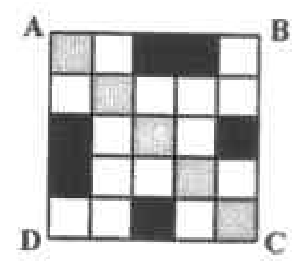
Let $n\gt 1$ be an integer. An $n\times n$ board $ABCD$ consists of unit squares colored black, white or gray. A coloring is symmetric if the squares whose centers lie on diagonal $AC$ are gray, and each pair reflected across $AC$ is either both black or both white. Put 0 in each gray square, a positive integer in each white square and a negative integer in each black square. For a positive integer $k$, a filling is called k-balanced if:
i) Each reflected pair has the same integer, belonging to $[-k,k]$.
ii) If a row and column intersect in a black square, their sets of positive entries are disjoint; if they intersect in a white square, their sets of negative entries are disjoint.
a) For $n=5$, find the least $k$ permitting a k-balanced filling of the pictured coloring.
b) For $n=2017$, find the least $k$ that works for every symmetric coloring.
Prove that
a) $\displaystyle\sum_{k=1}^{1008}k\binom{2017}{k}\equiv0\pmod{2017^2}$;
b) $\displaystyle\sum_{k=1}^{504}(-1)^k\binom{2017}{k}\equiv3(2^{2016}-1)\pmod{2017^2}$.
Let an acute triangle $ABC$ be inscribed in $(O)$. Let $G$ lie on the arc $BC$ not containing $O$ of the circumcircle $(I)$ of triangle $OBC$. The circumcircle of $ABG$ meets $AC$ again at $E\ne A$; the circumcircle of $ACG$ meets $AB$ again at $F\ne A$.
a) Put $K=BE\cap CF$. Prove that $AK,BC,OG$ are concurrent.
b) Fix a point $D$ on the arc $BOC$ containing $O$ of $(I)$. Put $M=GB\cap CD$ and $N=GC\cap BD$. Suppose $MN$ meets $(O)$ at two points $P,Q$. Prove that, as $G$ varies on the arc $BC$ not containing $O$, the circumcircle of $GPQ$ always passes through two fixed points.