Question 1
EXPERIMENTAL TEST I: Electrical Circuit
Objectives
- To determine electrical circuit inside a blackbox
- To observe the differences between series and parallel circuits
Theory
In electrical engineering, a switch is an electrical component that can break an electrical circuit, interrupting the current or diverting it from one conductor to another. The mechanism of a switch can be operated manually to control the circuits (for example, a light switch or a keyboard button), by a moving object (such as a door-operated switch), and can be operated by some sensing elements such as pressure or temperature.
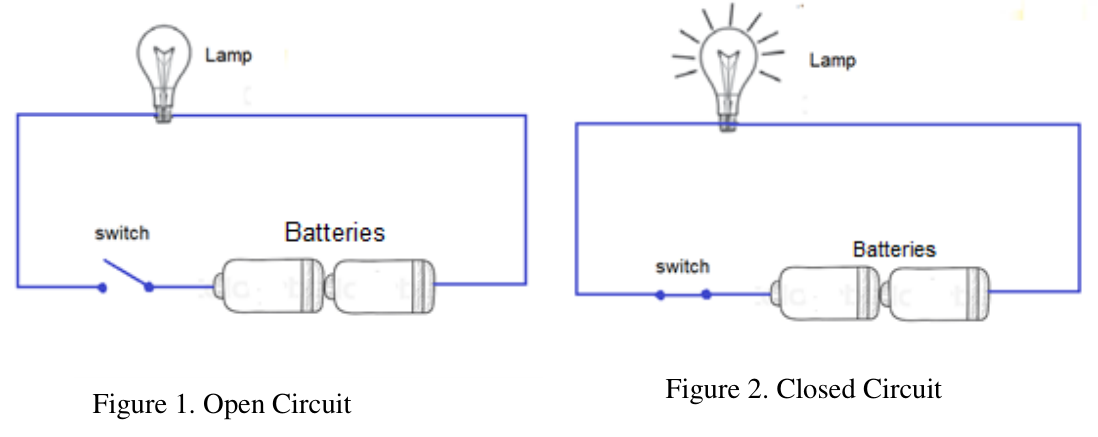
There are two types of electrical circuits: open circuit and closed circuit. An open circuit is a discontinuous circuit through which no current can flow. Meanwhile, a closed circuit is a circuit without interruption, providing a continuous path through which current can flow.
You will Need
- A Lamp
- 4 toggle switches
- Batteries
- Wires
What to do
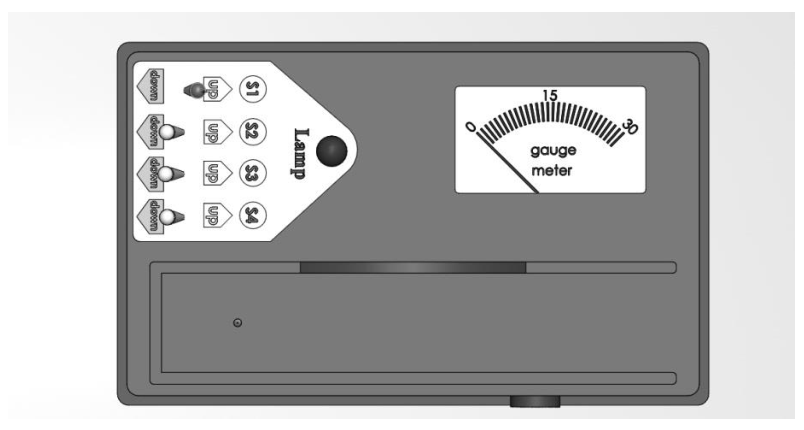
1\. Make sure that the blackbox consists of four switches and a lamp.
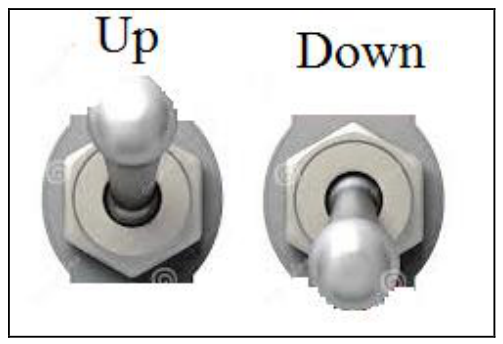
2\. Move Switch 1 (S1) to an up position.
3\. Observe the lamp condition.
4\. Move Switch 1 (S1) to a down position.
5\. Write down the data in Table 1.
| Switch | Switch Position | Lamp Condition | Switch Position | Lamp Condition |
| --- | --- | --- | --- | --- |
| S1 | Up | \_\_\_\_\_ | Down | \_\_\_\_\_ |
| S2 | Up | \_\_\_\_\_ | Down | \_\_\_\_\_ |
| S3 | Up | \_\_\_\_\_ | Down | \_\_\_\_\_ |
| S4 | Up | \_\_\_\_\_ | Down | \_\_\_\_\_ |
6\. Repeat steps 1-5 by using S2, S3, and S4.
7\. Move Switch 1 (S1) and Switch 2 (S2) to an up position.
8\. Observe the lamp condition.
9\. Move Switch 1 (S1) and Switch 2 (S2) to a down position.
10\. Write down the data in Table 2.
| Switch | Switch Position | Lamp Condition |
| --- | --- | --- |
| S1 and S2 | Up | \_\_\_\_\_ |
| S1 and S3 | Up | \_\_\_\_\_ |
| S2 and S3 | Up | \_\_\_\_\_ |
11\. Repeat steps 7-10 by using (S1 and S2), (S1 and S3), (S2 and S3).
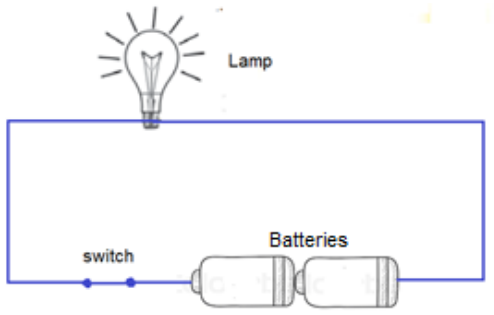
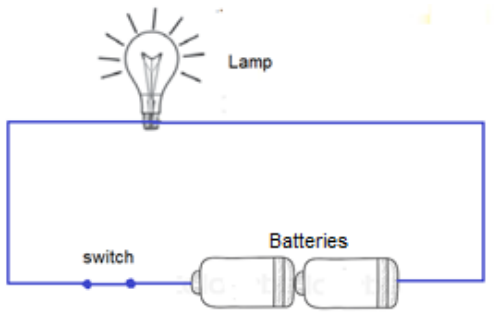
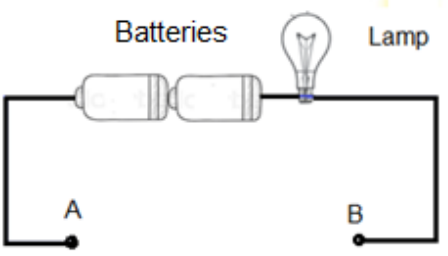
12\. According to the data in Table 1, draw an electrical circuit diagram when one switch is closed and the lamp is lit up by inserting switch, lamp, battery, and wire. Circuit 1:
13\. According to the data in Table 2, draw an electrical circuit diagram when the two switches are closed and the lamp is lit up by inserting switch, lamp, battery, and wire. Circuit 2; Circuit 3; Circuit 4:
14\. Draw an electrical circuit by combining three electrical circuit diagram from step 13. Circuit 5:
15\. Draw an electrical circuit by combining circuit diagrams from step 12 and step 14. Circuit 6:
Editorial clarification: keep untested switches in the down position when testing a selected switch or pair. Record actual observations in the blank tables; reference answers appear only in the solution. Practical-work marks (22) are printed in the supplied key rather than in the question paper.
Safety: use only the supplied low-voltage battery apparatus under adult/teacher supervision. Never connect this experiment to mains electricity. Disconnect power before changing wires or cleaning probes; avoid short circuits, hot batteries and sharp electrodes. Keep hands dry, keep liquids away from electrical connections, and do not eat the tested vegetables.
Objectives
- To determine electrical circuit inside a blackbox
- To observe the differences between series and parallel circuits
Theory
In electrical engineering, a switch is an electrical component that can break an electrical circuit, interrupting the current or diverting it from one conductor to another. The mechanism of a switch can be operated manually to control the circuits (for example, a light switch or a keyboard button), by a moving object (such as a door-operated switch), and can be operated by some sensing elements such as pressure or temperature.
There are two types of electrical circuits: open circuit and closed circuit. An open circuit is a discontinuous circuit through which no current can flow. Meanwhile, a closed circuit is a circuit without interruption, providing a continuous path through which current can flow.
You will Need
- A Lamp
- 4 toggle switches
- Batteries
- Wires
What to do
1\. Make sure that the blackbox consists of four switches and a lamp.
2\. Move Switch 1 (S1) to an up position.
3\. Observe the lamp condition.
4\. Move Switch 1 (S1) to a down position.
5\. Write down the data in Table 1.
| Switch | Switch Position | Lamp Condition | Switch Position | Lamp Condition |
| --- | --- | --- | --- | --- |
| S1 | Up | \_\_\_\_\_ | Down | \_\_\_\_\_ |
| S2 | Up | \_\_\_\_\_ | Down | \_\_\_\_\_ |
| S3 | Up | \_\_\_\_\_ | Down | \_\_\_\_\_ |
| S4 | Up | \_\_\_\_\_ | Down | \_\_\_\_\_ |
6\. Repeat steps 1-5 by using S2, S3, and S4.
7\. Move Switch 1 (S1) and Switch 2 (S2) to an up position.
8\. Observe the lamp condition.
9\. Move Switch 1 (S1) and Switch 2 (S2) to a down position.
10\. Write down the data in Table 2.
| Switch | Switch Position | Lamp Condition |
| --- | --- | --- |
| S1 and S2 | Up | \_\_\_\_\_ |
| S1 and S3 | Up | \_\_\_\_\_ |
| S2 and S3 | Up | \_\_\_\_\_ |
11\. Repeat steps 7-10 by using (S1 and S2), (S1 and S3), (S2 and S3).
12\. According to the data in Table 1, draw an electrical circuit diagram when one switch is closed and the lamp is lit up by inserting switch, lamp, battery, and wire. Circuit 1:
13\. According to the data in Table 2, draw an electrical circuit diagram when the two switches are closed and the lamp is lit up by inserting switch, lamp, battery, and wire. Circuit 2; Circuit 3; Circuit 4:
14\. Draw an electrical circuit by combining three electrical circuit diagram from step 13. Circuit 5:
15\. Draw an electrical circuit by combining circuit diagrams from step 12 and step 14. Circuit 6:
Editorial clarification: keep untested switches in the down position when testing a selected switch or pair. Record actual observations in the blank tables; reference answers appear only in the solution. Practical-work marks (22) are printed in the supplied key rather than in the question paper.
Safety: use only the supplied low-voltage battery apparatus under adult/teacher supervision. Never connect this experiment to mains electricity. Disconnect power before changing wires or cleaning probes; avoid short circuits, hot batteries and sharp electrodes. Keep hands dry, keep liquids away from electrical connections, and do not eat the tested vegetables.