Skip to content / Đến nội dung
ThichHocToan.com

SEAMO 2027 - Paper E - SET 01 - Self-study

Question 1

SEAMO self-study edition 2027; not an official 2027 paper. Original source years are retained. 25 questions, 90 minutes; Q1–10: 3 points, Q11–20: 4 points, Q21–25: 6 points, total 100. Original response types and all subparts are preserved. Verified is an editorial convention; source defects, necessary assumptions and unresolved mathematical uncertainty are disclosed.

Find the largest five-digit positive integer whose digits have product $7!$.

Question 2

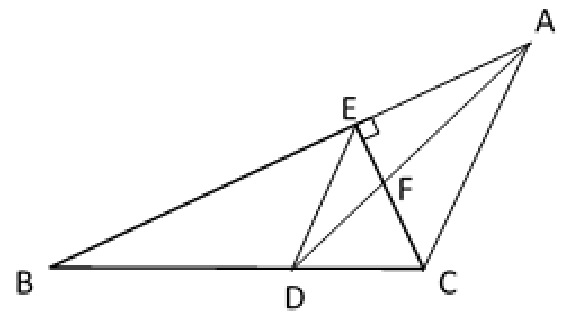
In the figure, $AD$ bisects $\angle BAC$ and $\angle CDA=45^\circ$. Find $\angle BED$. The right-angle mark means $CE\perp AB$; $B,D,C$ are collinear and $B,E,A$ are collinear. $F$ is the intersection of $AD$ and $CE$.

Question illustration
  1. $32^\circ$
  2. $36^\circ$
  3. $38^\circ$
  4. $45^\circ$
  5. $48^\circ$

Question 3

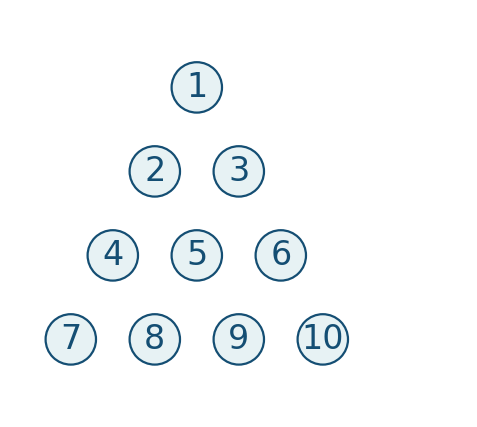
The positive integers are grouped as $(1),(2,3),(4,5,6),(7,8,9,10),\ldots$. Find the sum of the numbers in the $n$th group.

Question illustration
  1. $n(n^2+1)$
  2. $\frac n2(n+1)$
  3. $\frac n2(n^2+3)$
  4. $\frac n2(n^2+1)$
  5. None of the above

Question 4

The sequence $(a_n)$ satisfies $a_{n+1}=\frac1{1-a_n}$ for every positive integer $n$. Given $a_1=\frac13$, find $a_{2024}$.
  1. $\frac12$
  2. $0$
  3. $-2$
  4. $-1$
  5. $\frac32$

Question 5

Find $x$ given that $2^{x+1}+2^x+2^{x-1}=56\sqrt2$.
  1. $\frac72$
  2. $4$
  3. $\frac92$
  4. $5$
  5. None of the above

Question 6

For $i=1,2,\ldots,100$, each $x_i$ can be either $\sqrt3-\sqrt2$ or $\sqrt3+\sqrt2$. Let $S=x_1x_2+x_3x_4+\cdots+x_{99}x_{100}$. How many different positive integer values can $S$ have?
  1. $25$
  2. $50$
  3. $75$
  4. $100$
  5. None of the above

Question 7

Evaluate $\sqrt{1+2019^2-\frac{2019^2}{2020^2}}-\frac1{2020}$.

The printed radical ends before the final subtraction. Use exactly the expression shown; the source answer key conflicts with it.
  1. $2021$
  2. $2020$
  3. $2019$
  4. $2018$
  5. None of the above

Question 8

Evaluate $\frac{\sqrt{40}+6}{\sqrt{40}-6}+\frac{\sqrt{40}-6}{\sqrt{40}+6}$.
  1. $36$
  2. $38$
  3. $40$
  4. $42$
  5. $44$

Question 9

Let $u_1,u_2,\ldots,u_{49}$ be an increasing arithmetic progression with first term $25$ and common difference $3$. Find $\frac3{\sqrt{u_1}+\sqrt{u_2}}+\frac3{\sqrt{u_2}+\sqrt{u_3}}+\cdots+\frac3{\sqrt{u_{48}}+\sqrt{u_{49}}}$.

Question 10

Find the integer closest to $\frac{(1+\sqrt3)^2}{4}$.

Use the expression exactly as printed, with exponent 2 and denominator 4; its source answer key is inconsistent.

Question 11

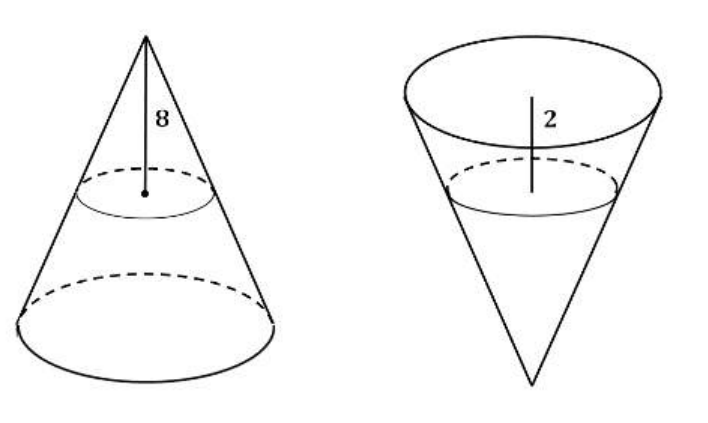
When a conical bottle rests on its flat base, the water surface is $8\text{ cm}$ from the vertex. When Leonard turns the bottle upside down, the water surface is $2\text{ cm}$ from the base. The bottle height is $(a+b\sqrt c)\text{ cm}$, where $a,b,c$ are integers and $c$ is not divisible by any perfect square greater than $1$. Find $a+b+c$.

Question illustration

Question 12

Positive integers $n,k$ satisfy $\frac7{13}<\frac n{n+k}<\frac6{11}$. Find the smallest possible $n$.
  1. $9$
  2. $10$
  3. $11$
  4. $12$
  5. $13$

Question 13

Find the four-digit perfect square $\overline{aabb}$, where the digits $a$ and $b$ are different.
  1. $1188$
  2. $2299$
  3. $5566$
  4. $6655$
  5. $7744$

Question 14

Let $S=[\sqrt1]+[\sqrt2]+\cdots+[\sqrt{1998}]$. Find $[\sqrt S]$. Here $[t]$ denotes the greatest integer less than or equal to $t$, as defined in the source lesson.

Use the stated floor function and include every term through 1998. The source answer key is inconsistent.
  1. $44$
  2. $45$
  3. $240$
  4. $241$
  5. None of the above

Question 15

Triangle $ABC$ is equilateral. $D$ is a point outside triangle $ABC$ such that $AC=AD$. Given $\angle CDB=x$, find $x$.

The source lists these choices: (A) $30^\circ$, (B) $34^\circ$, (C) $36^\circ$, (D) $40^\circ$, (E) $45^\circ$.

The source does not specify which arc contains D, so its conditions do not determine a unique angle. This item is assessed manually: explain the possible cases rather than assuming a missing position condition.

Question 16

Find the number of real solutions $(x,y,z)$ to $x^4+y^4+z^4-4xyz=-1$.
  1. $1$
  2. $2$
  3. $3$
  4. $4$
  5. None of the above

Question 17

Let $f(x)=\frac{1+10x}{10-100x}$ and let $f^n=\underbrace{f\circ f\circ\cdots\circ f}_{n\text{ compositions}}$. Find $f(\frac12)+f^2(\frac12)+f^3(\frac12)+\cdots+f^{6000}(\frac12)$.
Question 18

Find the least positive integer $k$ such that $2^{2021}+k$ is divisible by $33$.

Question 19

Find the number of pairs of positive integers $(a,b)$ such that $a^2-b^2=361$.
  1. $0$
  2. $1$
  3. $2$
  4. $3$
  5. None of the above

Question 20

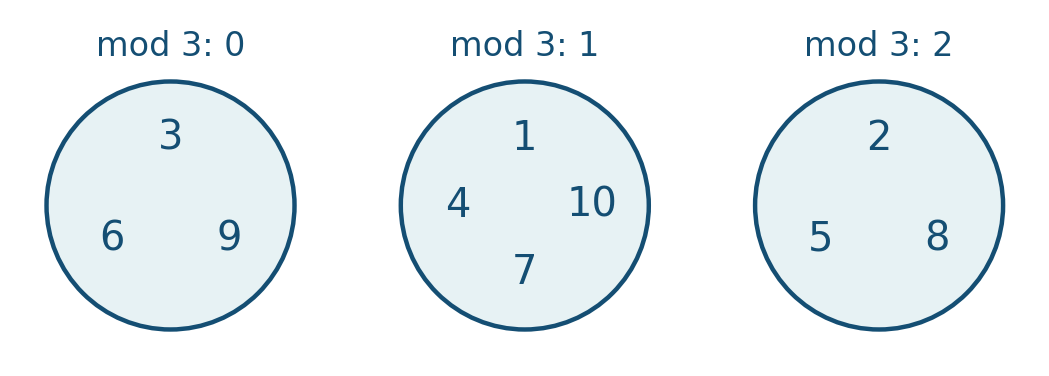
Three distinct integers are chosen randomly from $\{1,2,3,\ldots,10\}$. Compute the probability that their sum is a multiple of $3$.

Question illustration