Question 74
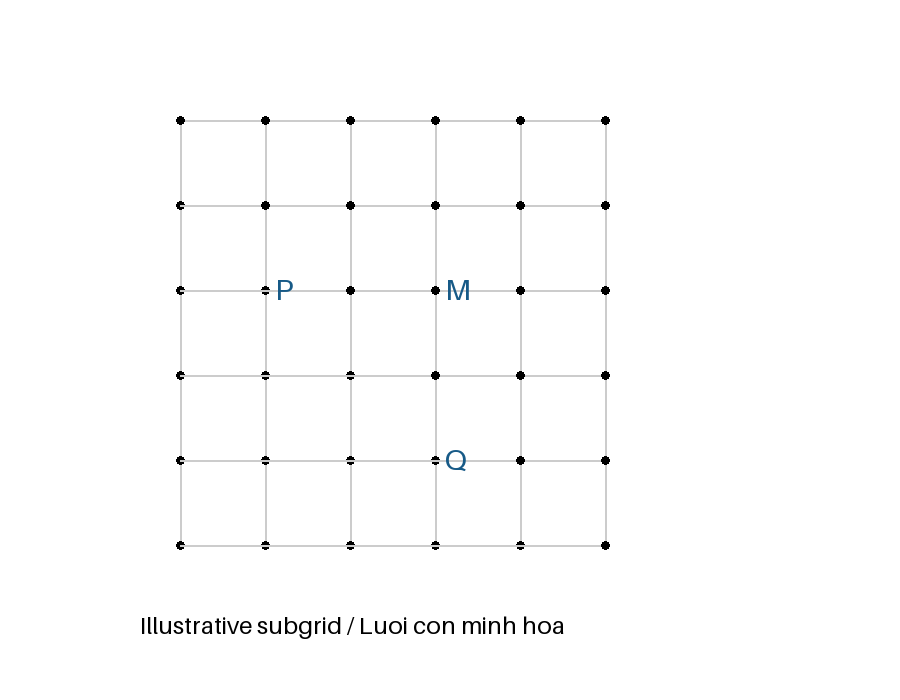
A fly and $k$ spiders occupy some vertices of a square $2012\times2012$ grid. One turn consists of the fly moving to an adjacent vertex or staying still, followed by each of the $k$ spiders moving to an adjacent vertex or staying still (several spiders may occupy one vertex). At every moment each spider and the fly knows all the other positions.
(a) Find the least $k$ for which the spiders can catch the fly in finitely many turns, regardless of the initial positions of the fly and spiders.
(b) Answer the same question for a cubic $2012\times2012\times2012$ grid.
(Vertices are adjacent if they differ in exactly one coordinate, by $1$. A spider catches the fly when they occupy the same vertex.)
(Nikola Milosavljević)
(a) Find the least $k$ for which the spiders can catch the fly in finitely many turns, regardless of the initial positions of the fly and spiders.
(b) Answer the same question for a cubic $2012\times2012\times2012$ grid.
(Vertices are adjacent if they differ in exactly one coordinate, by $1$. A spider catches the fly when they occupy the same vertex.)
(Nikola Milosavljević)