Question 10
Each square of an infinite grid has been filled with exactly one digit. Elsa places an O-tetromino on this grid covering four squares along the grid lines:
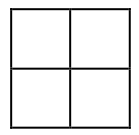
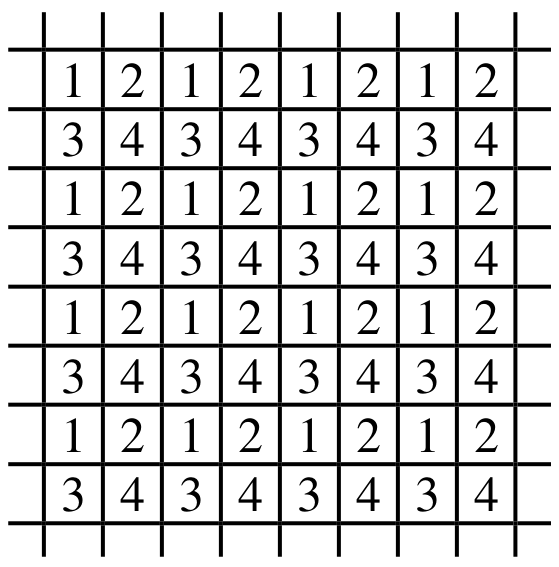
The minimum number of different digits used to fill the infinite grid so that the four squares will have different digits, regardless the position of the O-tetromino, is 4. The grid on the right is an example of such filling.
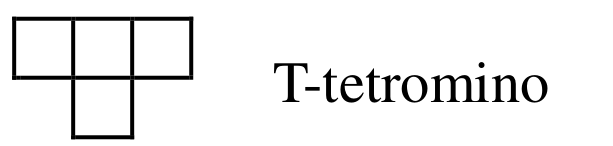
When Elsa places a T-tetromino on this grid covering four squares along the grid lines, what is the minimum number $n$ of different digits that must be used for the infinite grid so that the four squares covered by the tetromino will always have different digits?
The T-tetromino can be flipped or rotated.
(Note: You must explain why using $n-1$ different digits is insufficient and give a filling example to show that using $n$ digits is sufficient.)
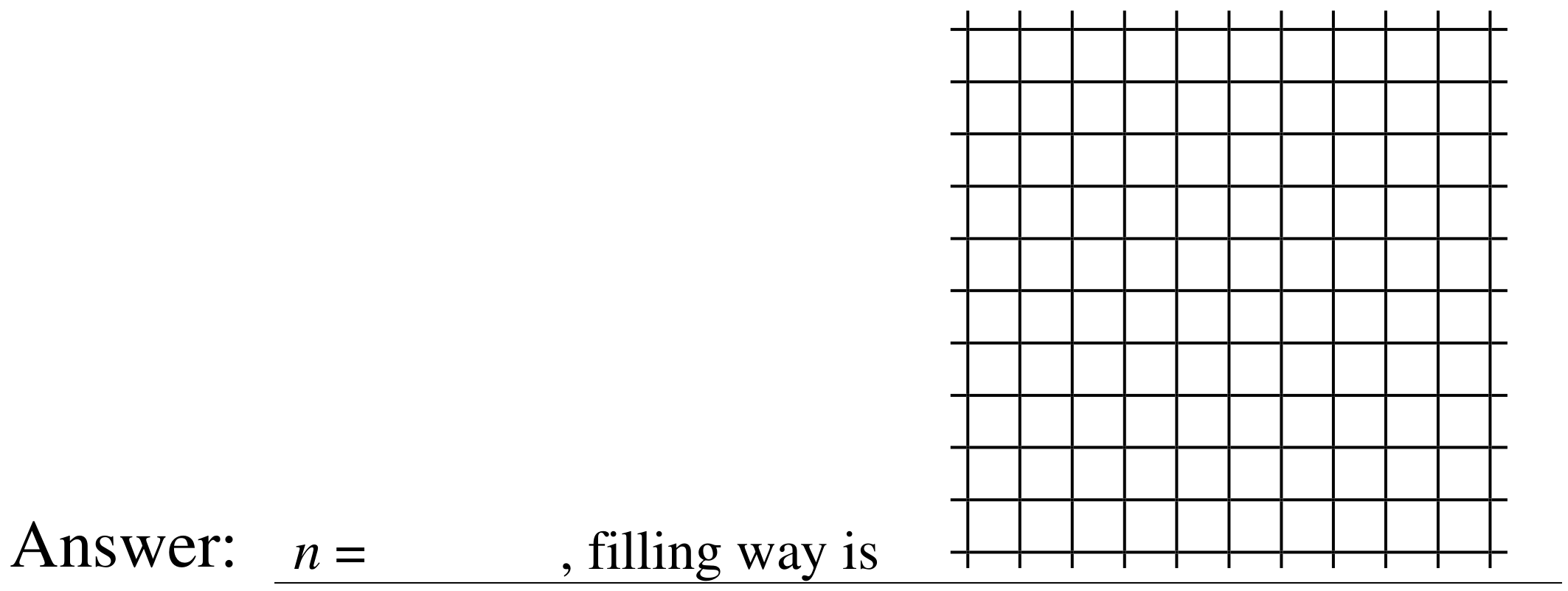
Paper instruction: Give a full solution.
The minimum number of different digits used to fill the infinite grid so that the four squares will have different digits, regardless the position of the O-tetromino, is 4. The grid on the right is an example of such filling.
When Elsa places a T-tetromino on this grid covering four squares along the grid lines, what is the minimum number $n$ of different digits that must be used for the infinite grid so that the four squares covered by the tetromino will always have different digits?
The T-tetromino can be flipped or rotated.
(Note: You must explain why using $n-1$ different digits is insufficient and give a filling example to show that using $n$ digits is sufficient.)
Paper instruction: Give a full solution.