Skip to content / Đến nội dung
ThichHocToan.com

VTMO 2026 - Grade 9 - Semifinal - SET 1 - Self-study

Question 1

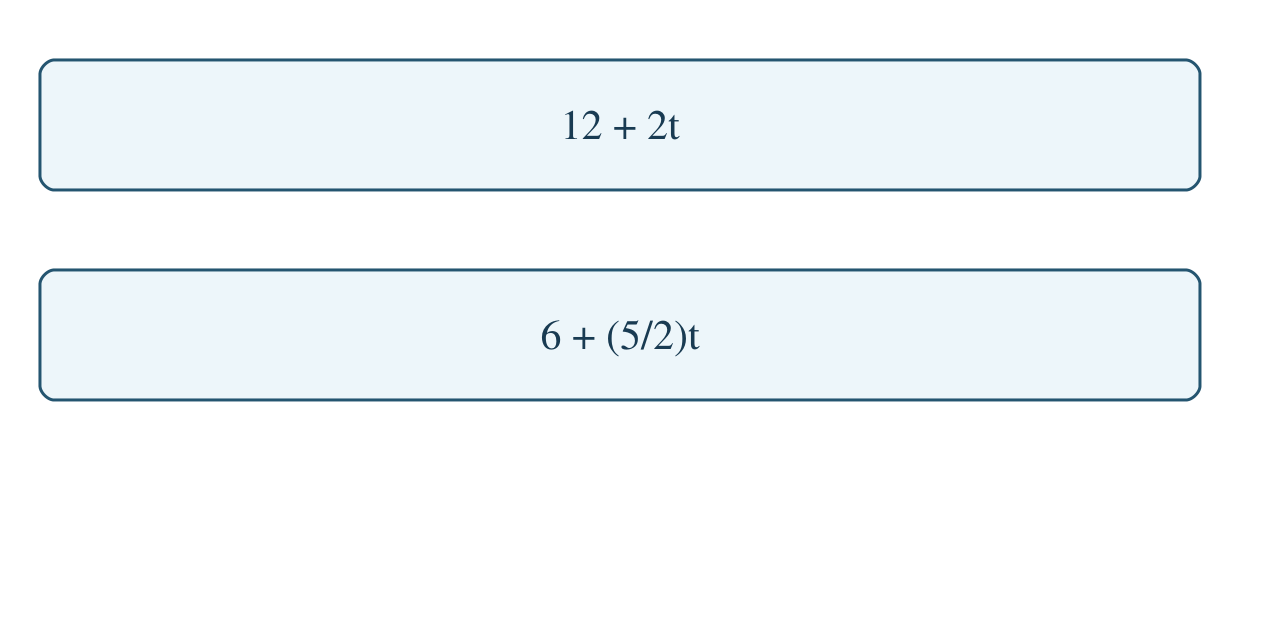
Two workers produce items at different constant rates. The first has already made 12 items and makes 2 more per hour. The second has already made 6 items and makes 5 more every 2 hours. When their totals become equal, how many items has each made?
Question illustration
  1. 24
  2. 28
  3. 32
  4. 36
  5. 42

Question 2

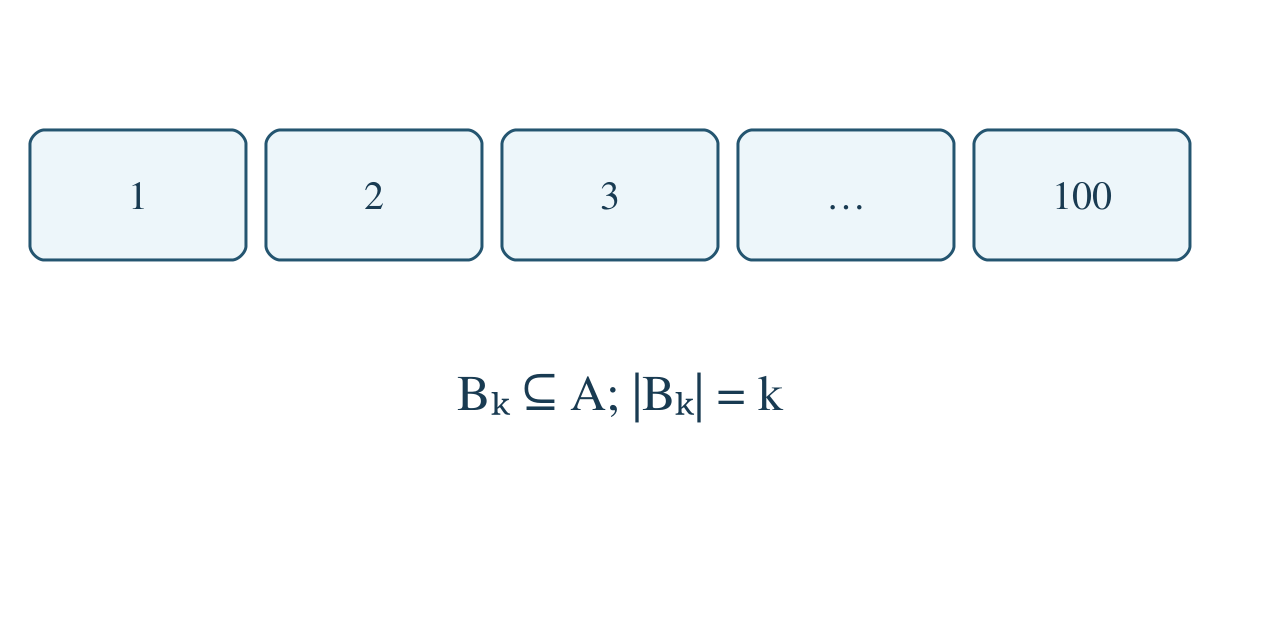
Let $A=\{1,2,\ldots,100\}$. A subset $B_k$ of $A$ has $k$ elements such that the sum of any two elements is not divisible by their difference. Find the largest possible value of $k$ and justify your answer.

Question illustration

Question 3

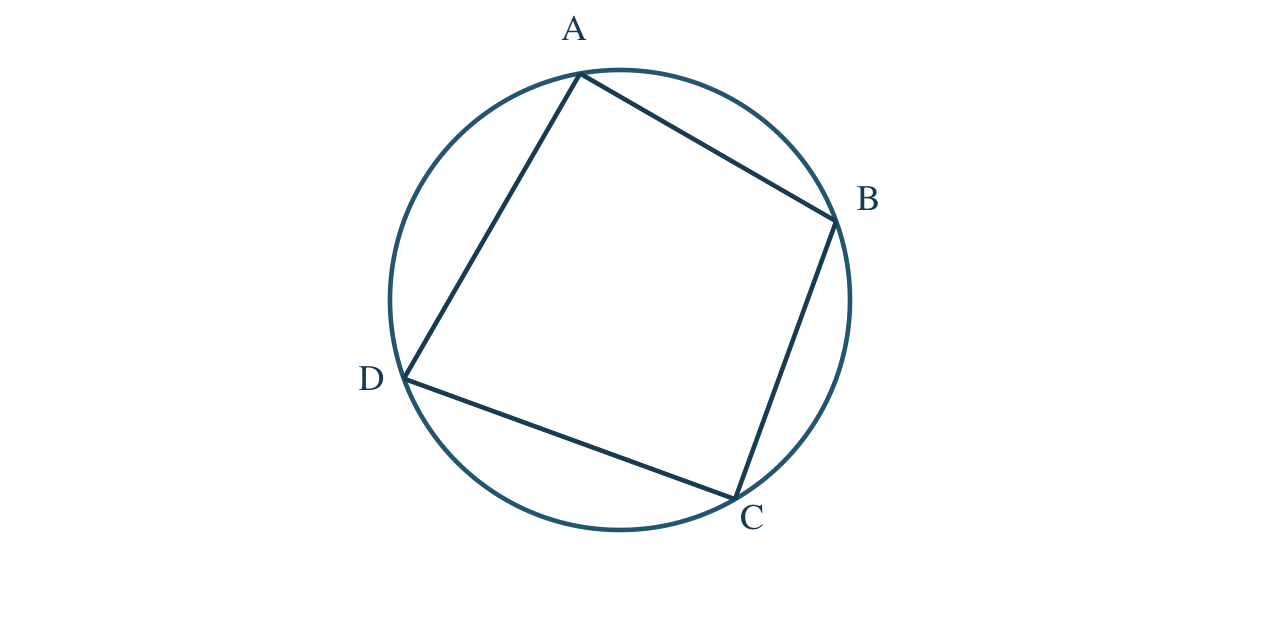
Which ratio can be the ratio of the four consecutive angles of a cyclic quadrilateral?

Question illustration
  1. 1 : 2 : 3 : 4
  2. 1 : 2 : 4 : 3
  3. 1 : 3 : 2 : 4
  4. 1 : 4 : 3 : 2
  5. 1 : 4 : 2 : 3

Question 4

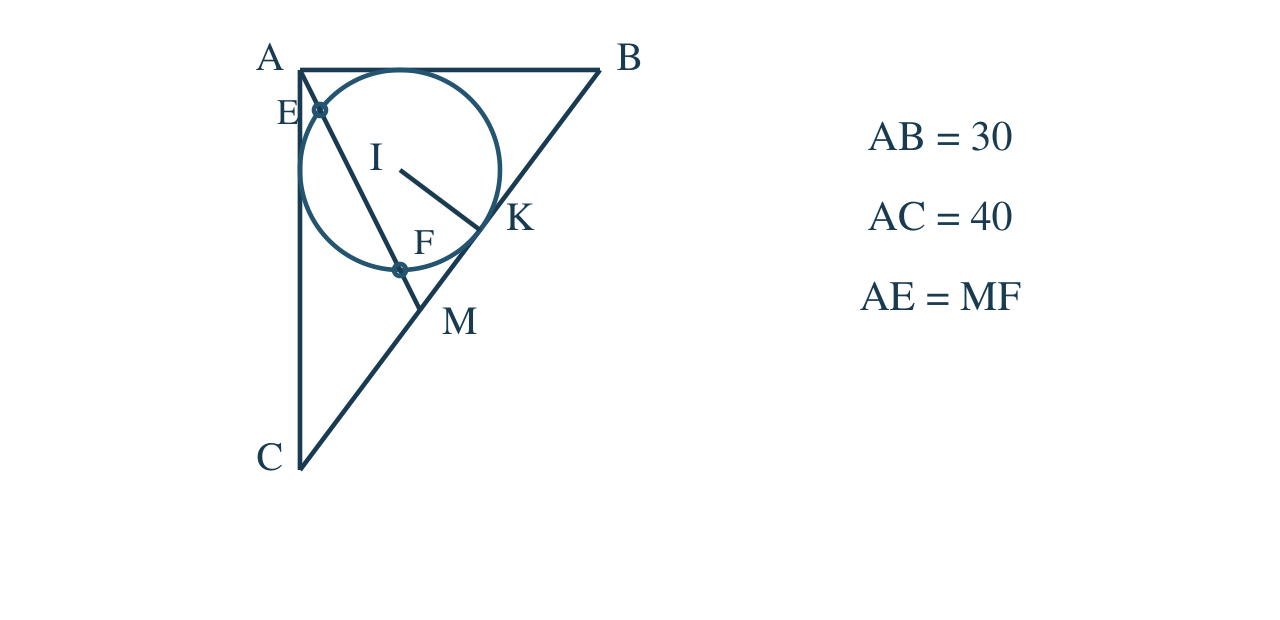
Right triangle $ABC$ has $\angle A=90^\circ$, $AB=30$ and $AC=40$. Its incircle, with centre $I$, touches $BC$ at $K$. A point $M$ on segment $KC$ is chosen so that line $AM$ meets the incircle at $E$ and $F$, in that order, and $AE=MF$. Find $EF$.

Question illustration
  1. $4\sqrt5$
  2. $4\sqrt{15}$
  3. 16
  4. $8\sqrt{15}$
  5. $8\sqrt5$

Question 5

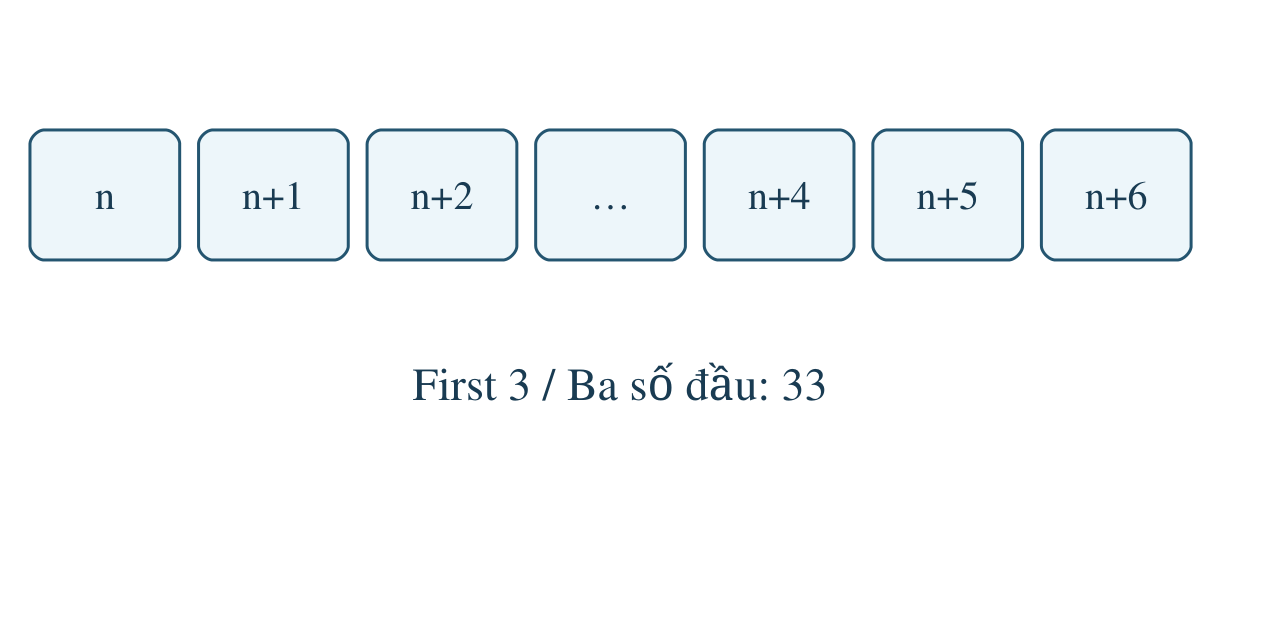
Seven consecutive integers have the sum of their three smallest members equal to 33. What is the sum of their three largest members?

Question illustration
  1. 37
  2. 39
  3. 42
  4. 45
  5. 48

Question 6

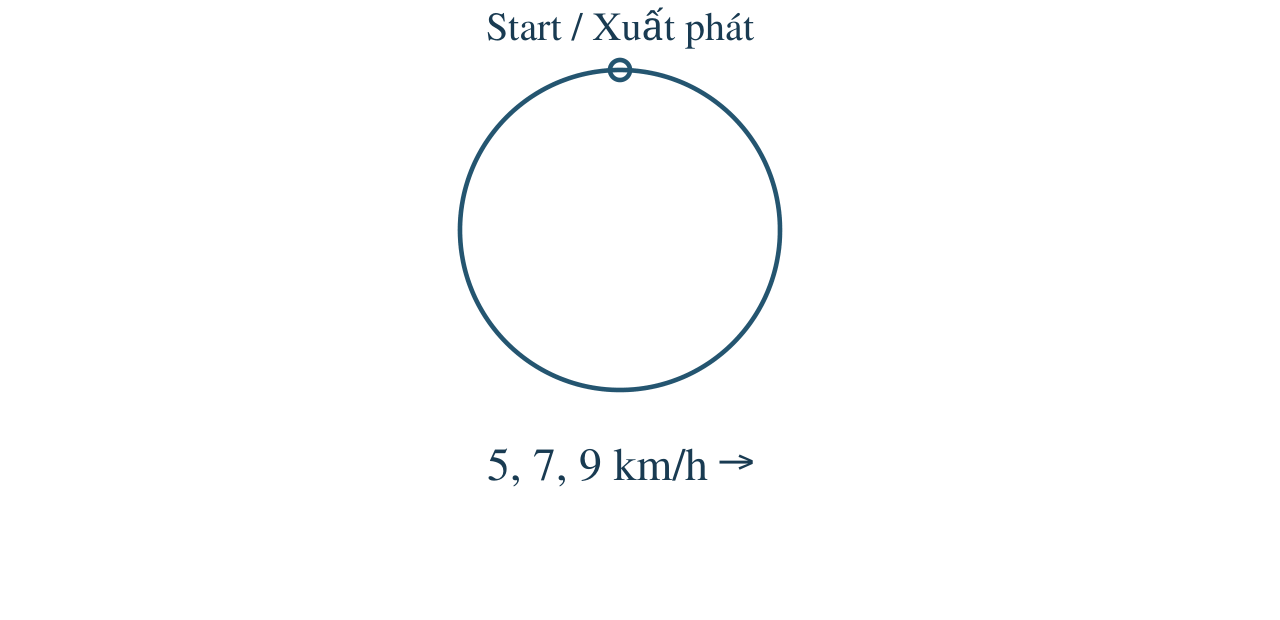
An, Nam and Minh run around the shore of a lake at constant speeds of 5, 7 and 9 km/h respectively. They start together at the same point and run in the same direction. Each time all three meet, a point is marked. How many distinct points on the shore are marked?

Question illustration
  1. 1
  2. 2
  3. 3
  4. 4
  5. 5

Question 7

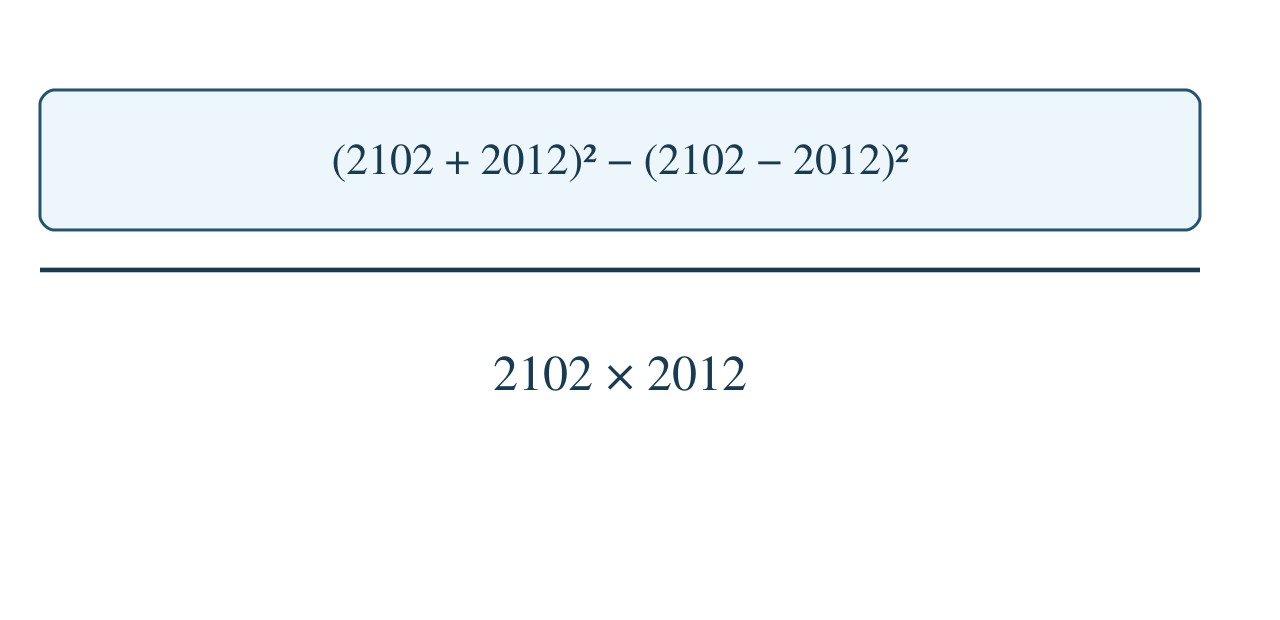
Evaluate $\dfrac{(2102+2012)^2-(2102-2012)^2}{2102\cdot2012}$.

Question illustration
  1. 2
  2. 4
  3. 2012
  4. 2102
  5. Another answer

Question 8

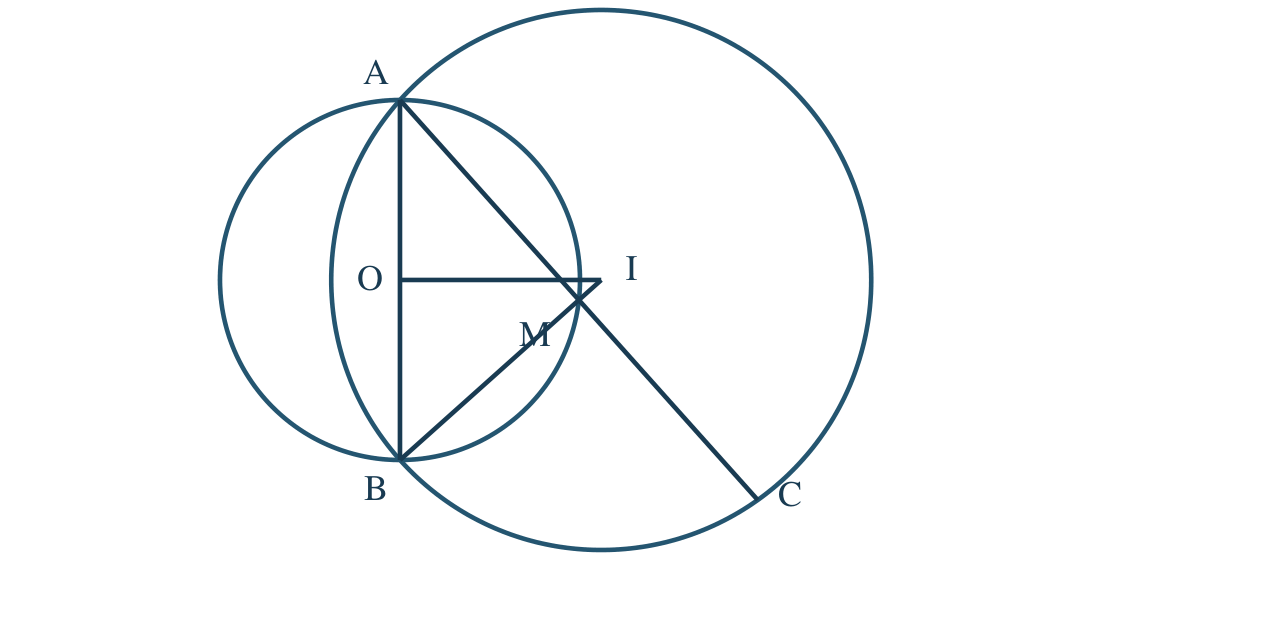
Circles with centres $O,I$ and radii 2,3 respectively intersect at $A,B$, with $\angle AOI=90^\circ$. A secant through $A$ meets the circles again at $M,C$ respectively, with $M,C\ne A$. If $MA=MC$, find $AC$.

Question illustration
  1. $3\sqrt5$
  2. $\frac{8\sqrt5}{3}$
  3. $2\sqrt5$
  4. $\frac{4\sqrt5}{3}$
  5. $\sqrt5$

Question 9

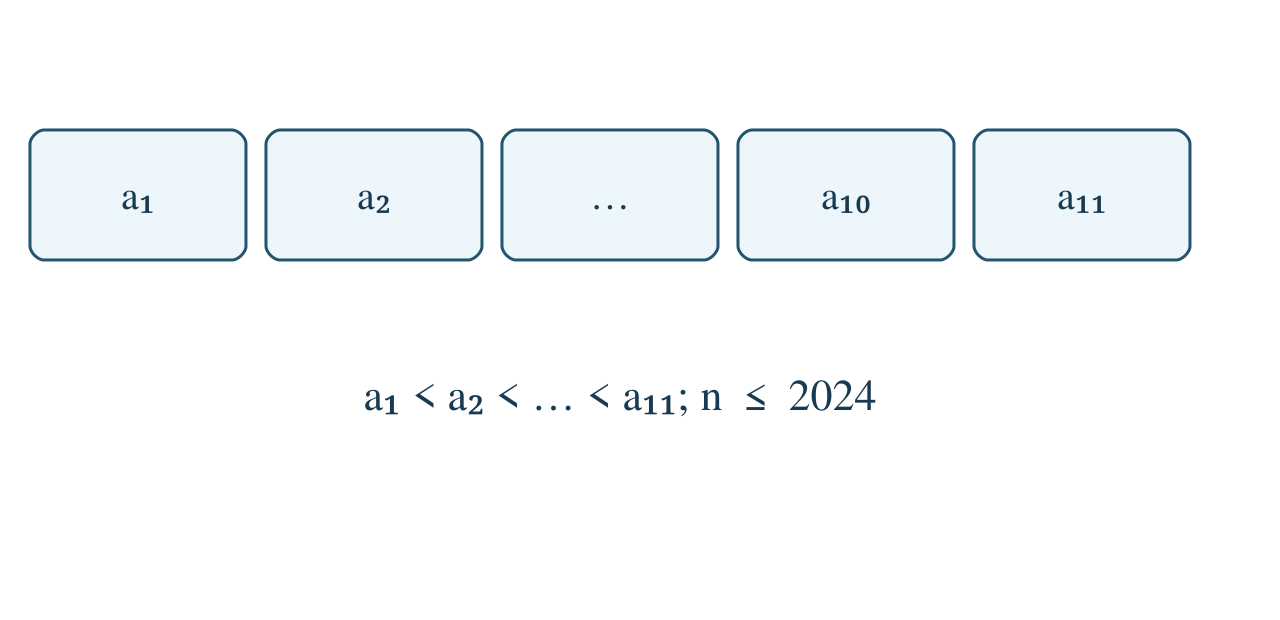
Let $A=\{a_1,a_2,\ldots,a_{11}\}$ consist of positive integers with $a_i<a_j$ whenever $i<j$. For every positive integer $n\le2024$ not in A, some distinct elements of A have sum n. Find the smallest possible value of $a_{10}$.

Question illustration

Question 10

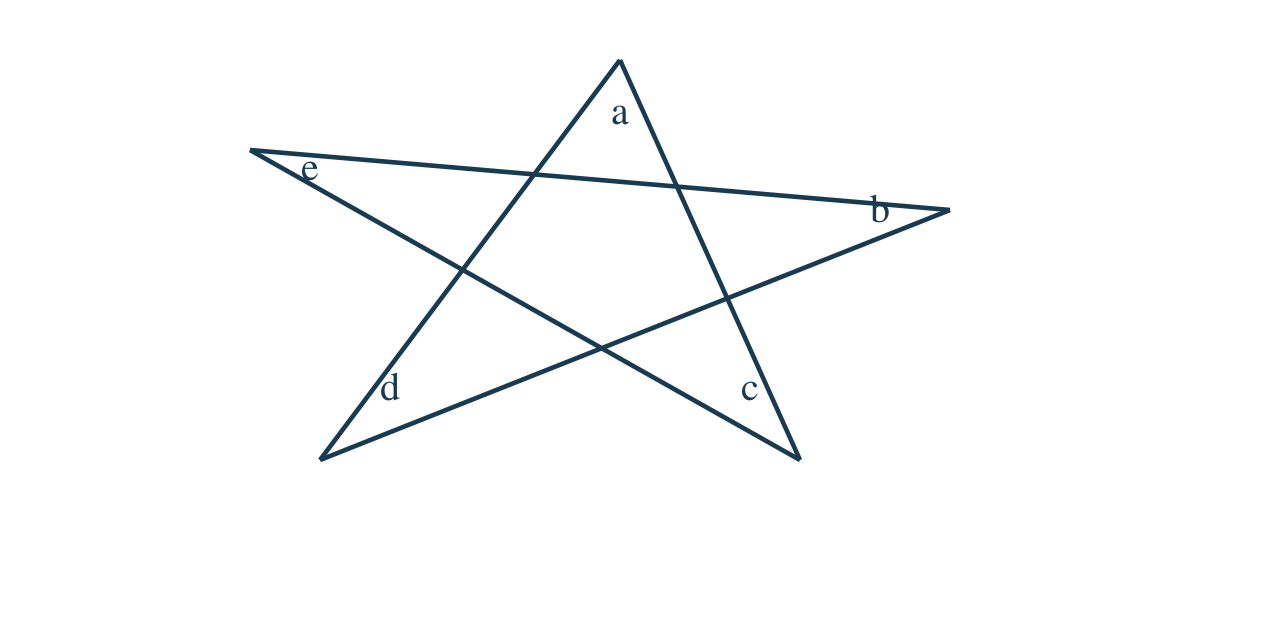
Find the sum of the five marked tip angles $a,b,c,d,e$ in the star shown.

Question illustration
  1. $150^\circ$
  2. $180^\circ$
  3. $300^\circ$
  4. $360^\circ$
  5. Another answer

Question 11

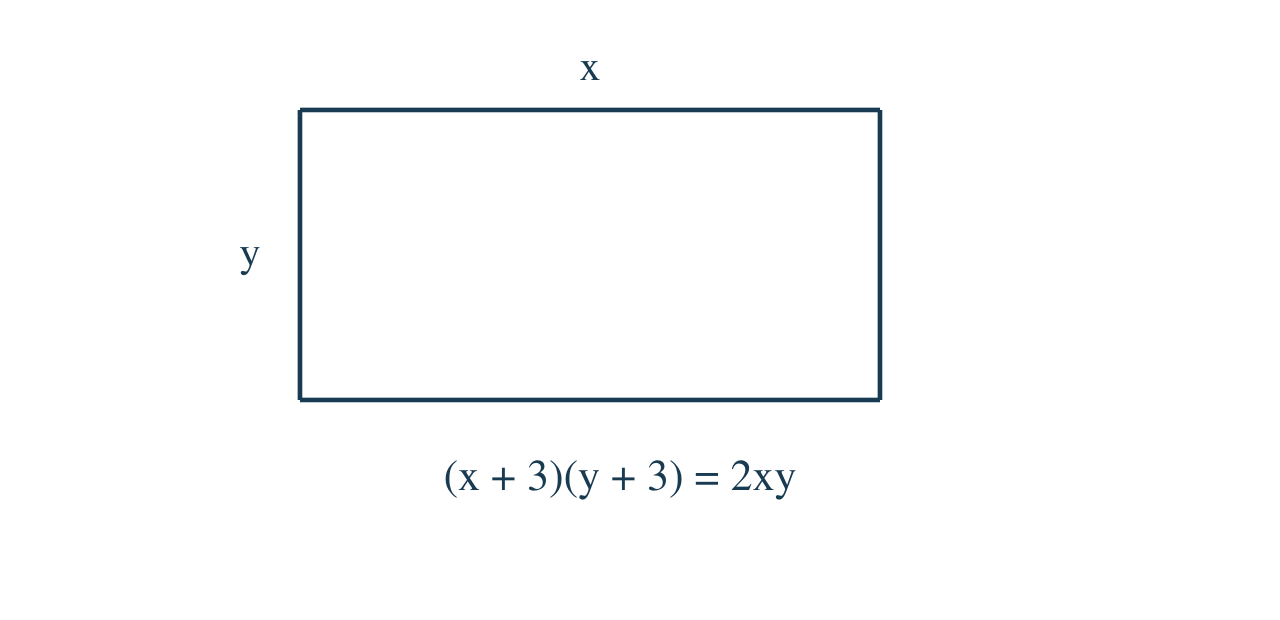
Increasing both the length and width of a rectangle by 3 length units doubles its area. If both original dimensions are instead decreased by 3 units, what is the new area?

Question illustration
  1. 18
  2. 27
  3. 15
  4. 24
  5. 20

Question 12

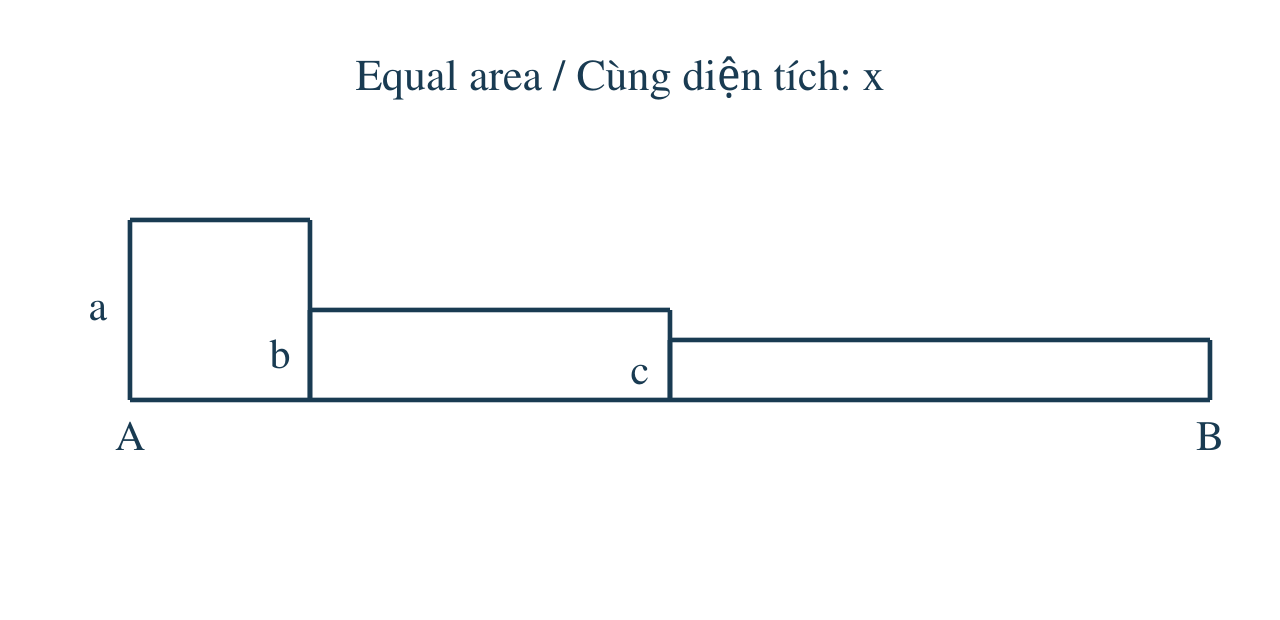
Three rectangles of different dimensions, each of area $x\text{ cm}^2$, are placed side by side as shown. All side lengths in centimetres are positive integers, the leftmost rectangle is a square, and $AB=x\text{ cm}$. Find x.

Question illustration

Question 13

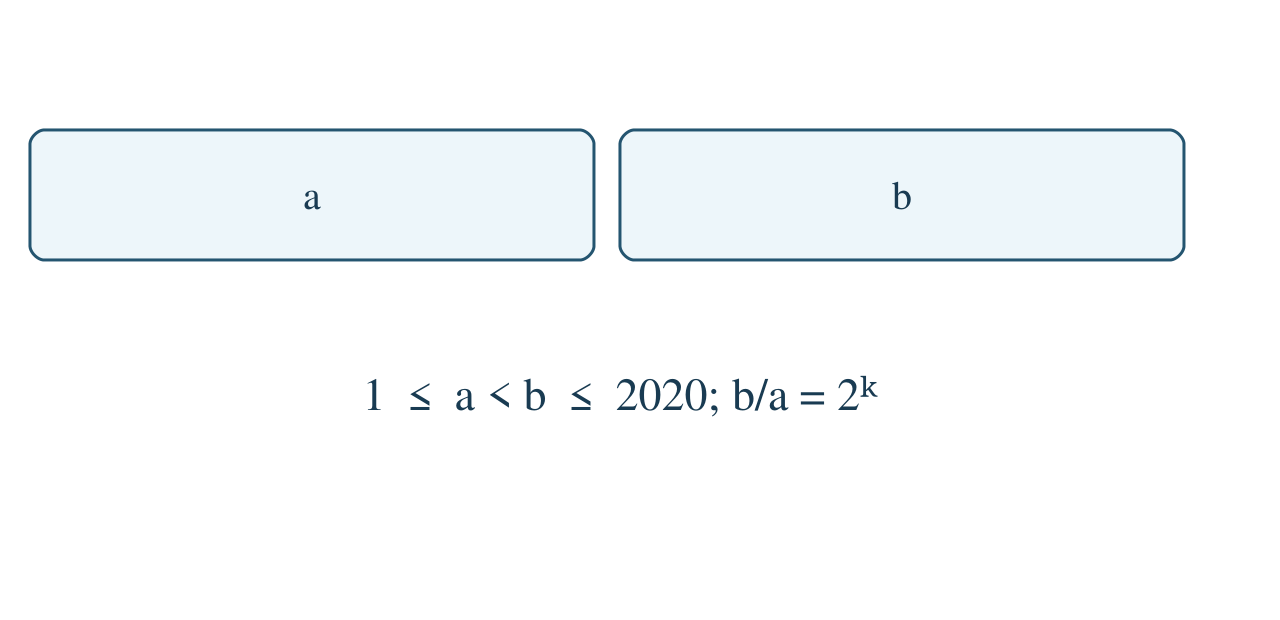
Let $A=\{1,2,3,\ldots,2020\}$. How many ways are there to choose integers $a,b\in A$, with $a<b$, such that $b/a$ is a power of 2?

Question illustration

Question 14

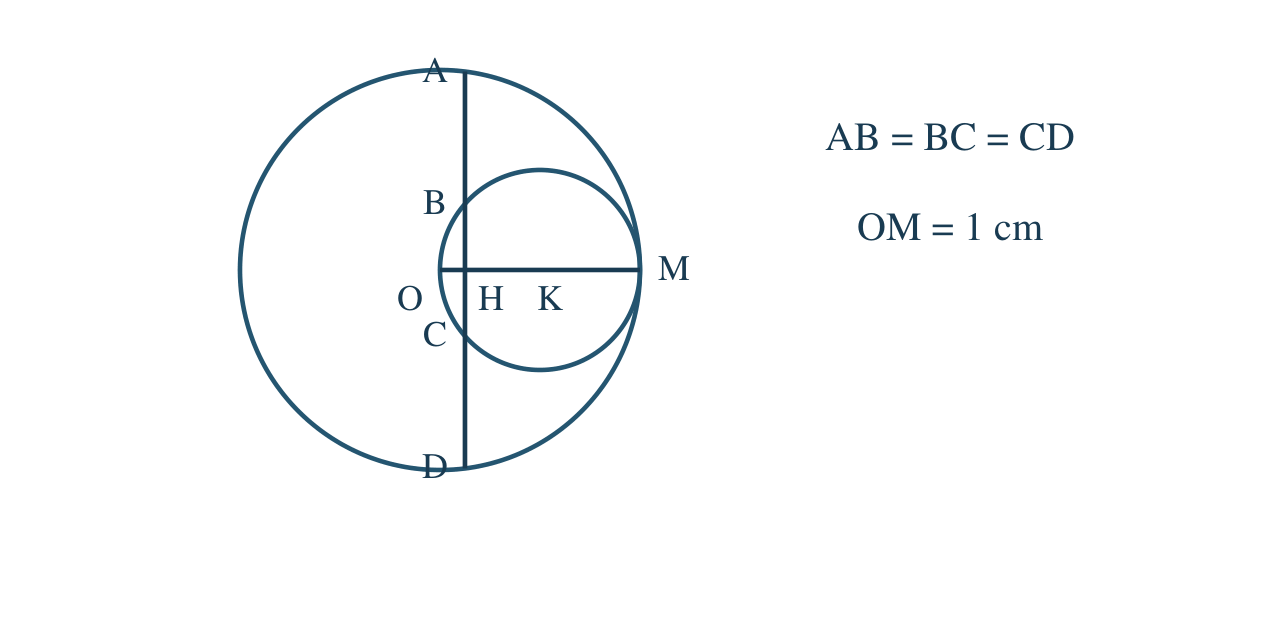
A circle with centre O has radius 1 cm, and M is a point on it. Draw the circle with centre K and diameter MO. A line d meets the two circles at four distinct points A,B,C,D, where A,D lie on the circle centred at O and $AB=BC=CD$. Find the distance from O to d.

Question illustration
  1. $\frac14$ cm
  2. $\frac13$ cm
  3. $\frac18$ cm
  4. $\frac16$ cm
  5. $\frac23$ cm

Question 15

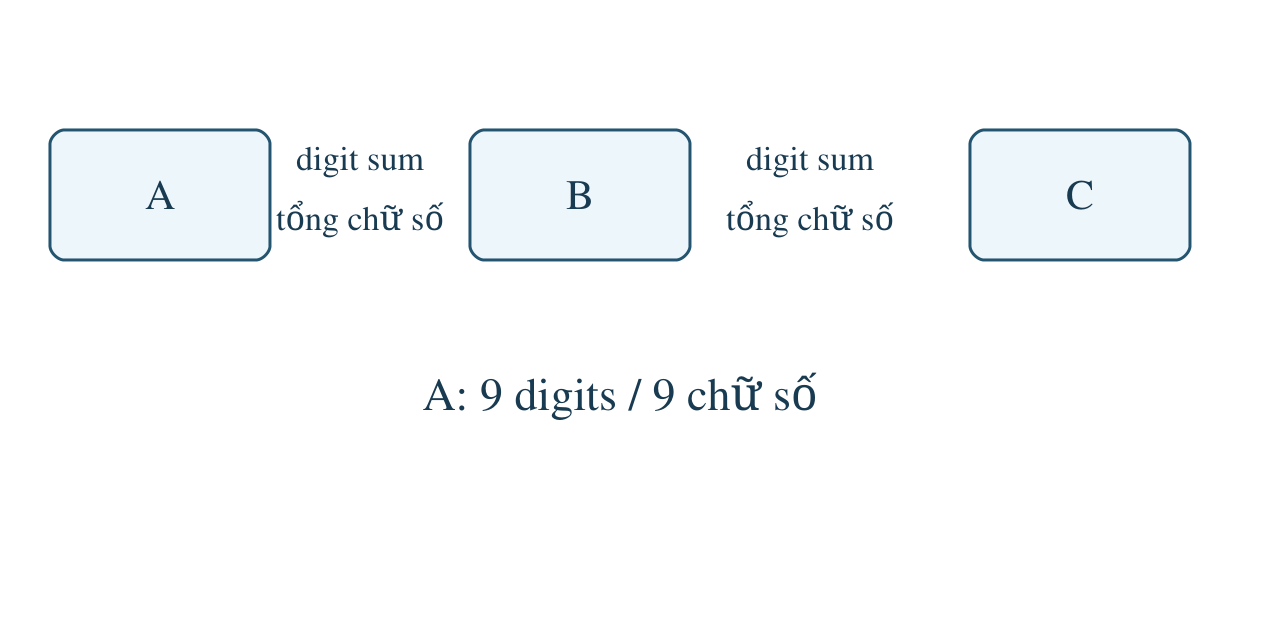
A is a nine-digit integer whose remainder upon division by 9 is 2. B is the sum of the digits of A, and C is the sum of the digits of B. Which of the following can be C?

Question illustration
  1. 1
  2. 3
  3. 11
  4. 9
  5. 5

Question 16

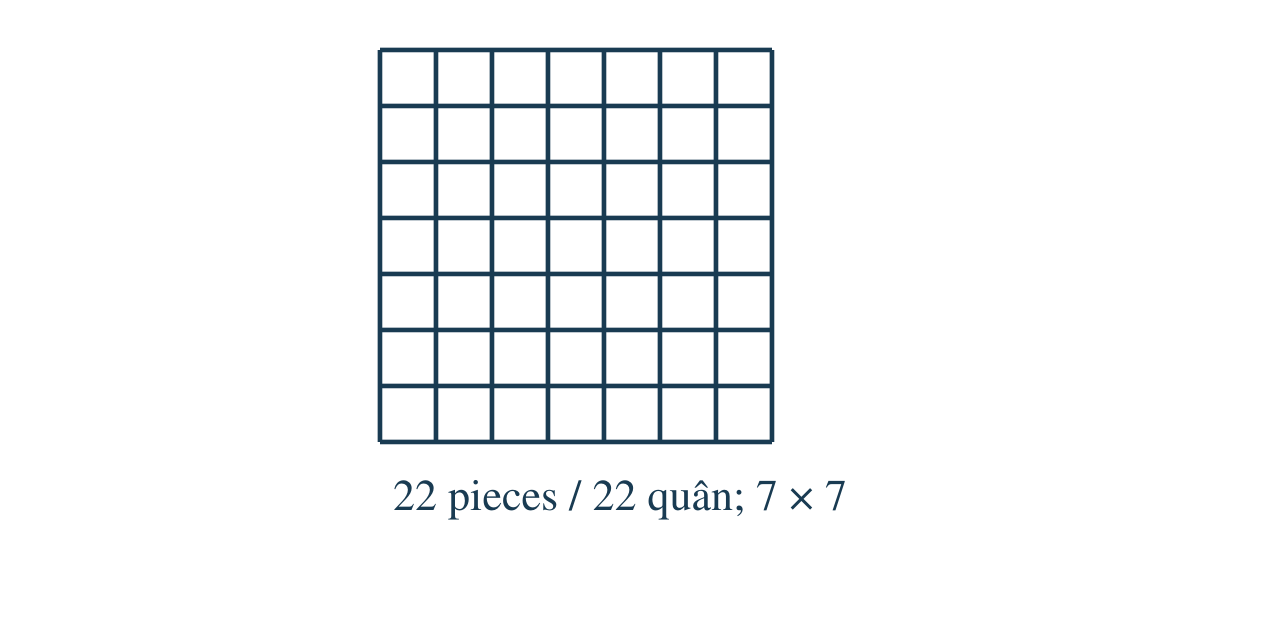
A $7\times7$ grid contains 22 chess pieces, at most one in each cell. Two pieces attack each other if they lie in the same row or the same column. Prove that at least four of the pieces can be chosen so that no two attack each other.

Question illustration

Question 17

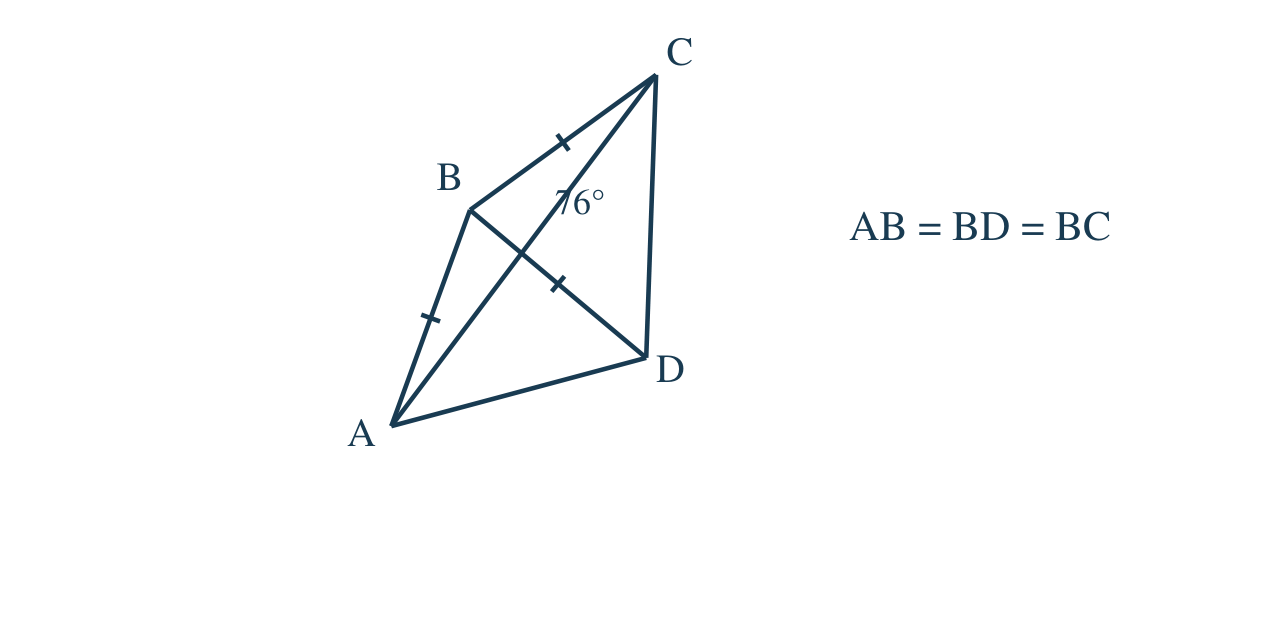
In the quadrilateral ABCD shown, $AB=BD=BC$ and $\angle DBC=76^\circ$. Find $\angle DAC$.

Question illustration
  1. $36^\circ$
  2. $38^\circ$
  3. $40^\circ$
  4. $52^\circ$
  5. $32^\circ$

Question 18

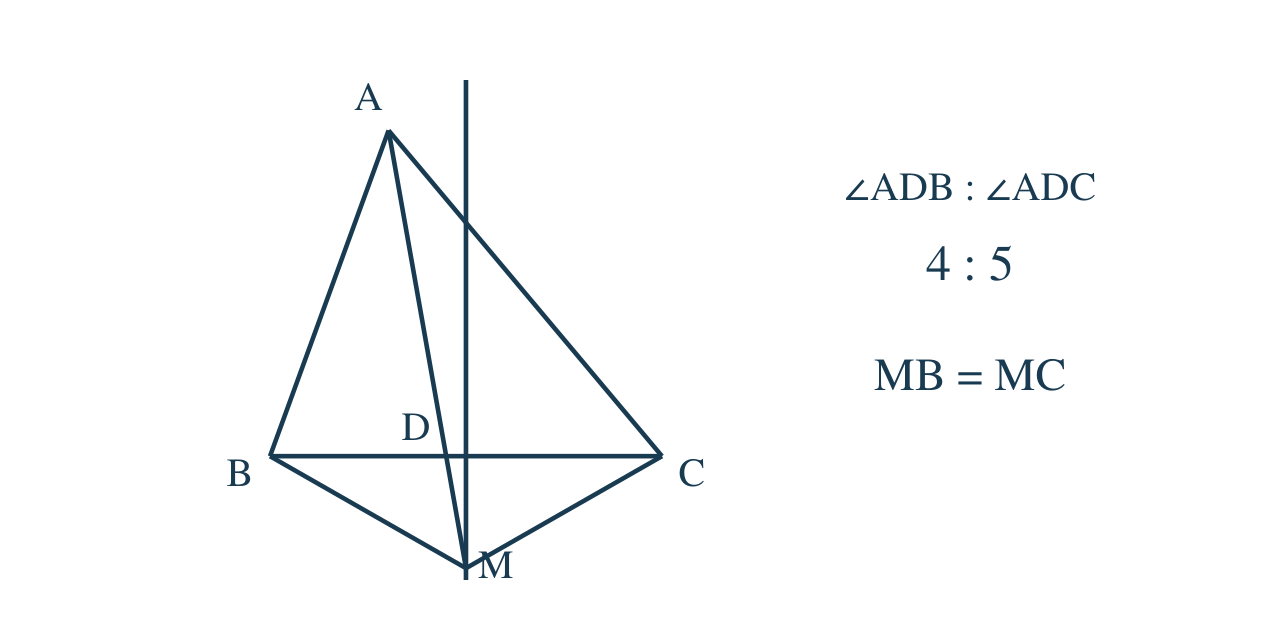
In triangle ABC, AD bisects $\angle A$, with $D\in BC$, and $\angle ADB:\angle ADC=4:5$. The perpendicular bisector of BC meets the line AD at M. Find $\angle ABM$.

Question illustration
  1. $80^\circ$
  2. $100^\circ$
  3. $120^\circ$
  4. $90^\circ$
  5. $60^\circ$

Question 19

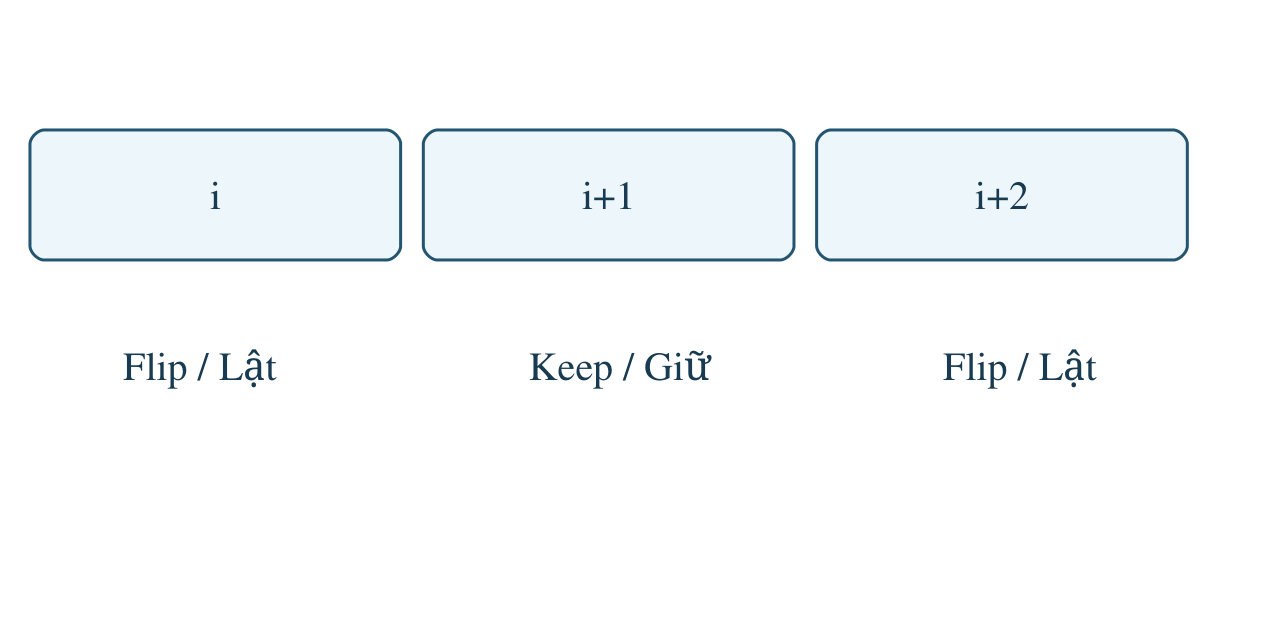
A magician places n coins in a row, initially all heads up. In each move, the magician chooses three consecutive coins, leaves the middle coin unchanged, and flips the two outside coins. Find all positive integers n for which all n coins can be turned tails up, and prove your answer.

Question illustration

Question 20

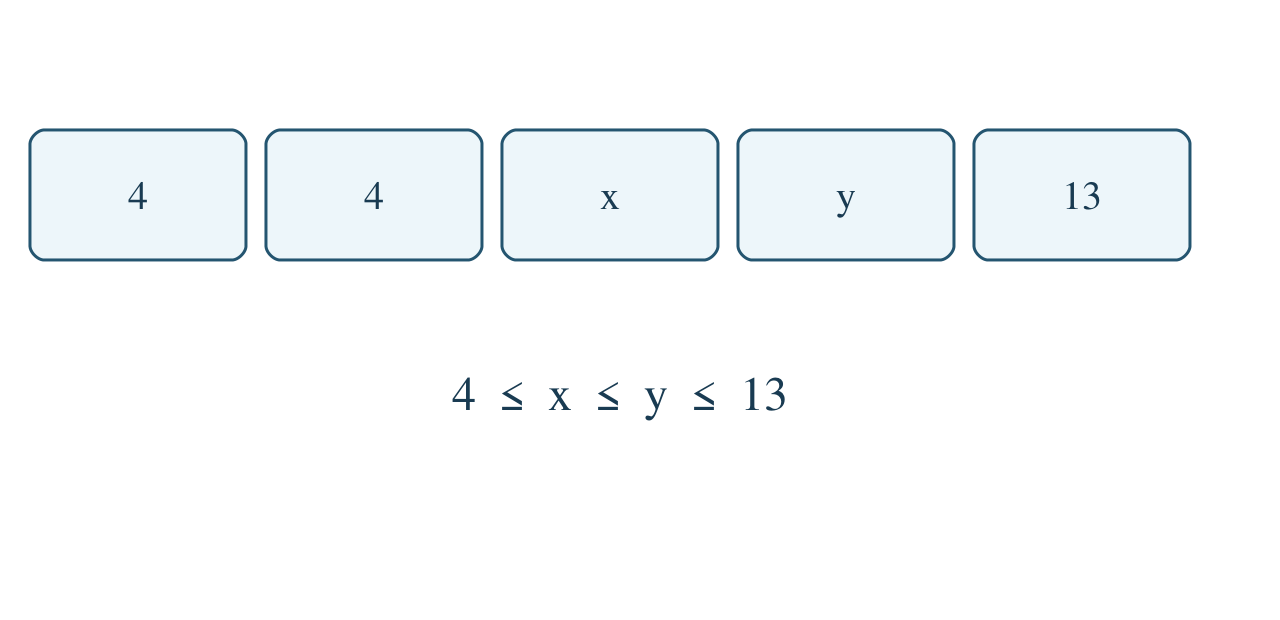
Integers $4,4,x,y,13$ are ordered with $4\le4\le x\le y\le13$. How many distinct pairs $(x,y)$ make the arithmetic mean of these five numbers an integer?

Question illustration
  1. 7
  2. 8
  3. 9
  4. 10
  5. 11