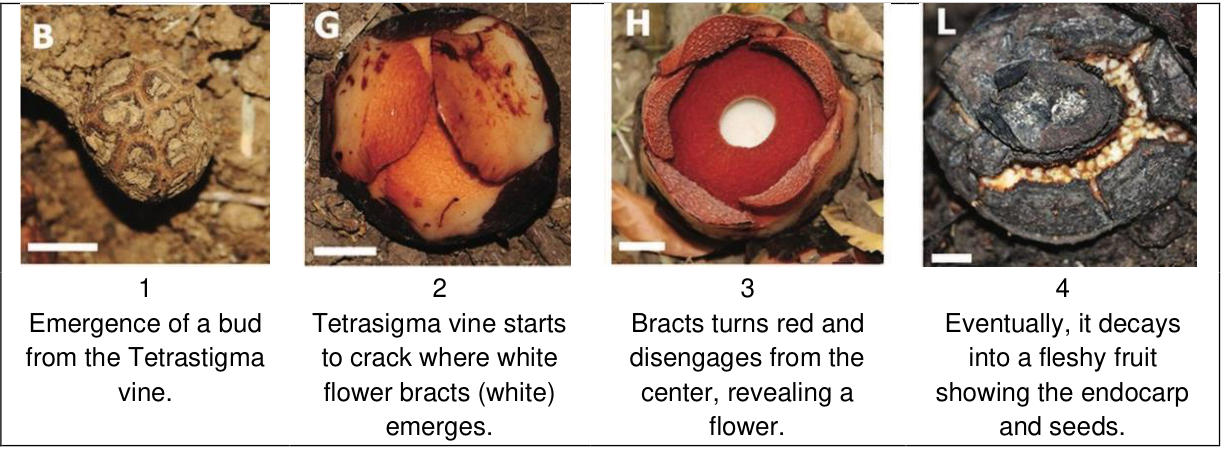
Often called corpse plant, the Rafflesia blooms into the single largest individual flower in the world. When it blooms, it shows patches of red and white dots or stripes and an aroma similar to a rotten meat. Despite its bright appearance, Rafflesia is not capable producing its own food from the Sun, instead it attaches itself to a specific genus of vines called Tetrastigma via germination in response to stimulants coming from the host plant. The figure below shows a selected life history of a rafflesia plant.
Source: Tolod, J.R., Galindon, J.M.M, Atienza, R.R., Duya, M.V., Fernando, E.S., and Ong, P.S. (2020). Flower and fruit development and life history of Rafflesia consueloae (Rafflesiaceae). Philippine Journal of Science 150(1), p. 321–332. DOI: 10.56899/150.S1.23
a. List down two (2) adaptations of rafflesia plant that allows it to survive in nature. [2 points]
b. At the end of its life cycle, the rafflesia rots into a fleshy fruit which contains seeds. State the method at which the fruit is dispersed and explain how this structure help in its dispersal. [1.5 points]
c. Rafflesia and Nepenthes both attract insects. Do they both have the same goal of attracting insects? Explain their similarity or difference. [1.5 points]
On the evening of Saturday 29 October, as many as 100,000 people – mostly in their teens and 20s – poured into Itaewon’s narrow, sloping streets for one of the first major celebrations since Covid restrictions were lifted. Just after 10 pm, chaos erupted on a narrow, steep side street near Itaewon station that connects to a slew of bars and clubs from the main road. Witnesses reported seeing crowds surging in different directions and people losing their footing on the slope, causing a domino effect. People fell and knocked others down, piling one person onto another and trapping them. Others tried to scale the sides of the buildings to escape.
An excerpt from Crowd crushes: how disasters like Itaewon happen, how can they be prevented, and the ‘stampede’ myth. Source: https://www.theguardian.com/world/2022/nov/01/how-do-crowd-crushes-happen-stampede-myth-what-happened-in-the-seoul-itaewon-halloween-crush
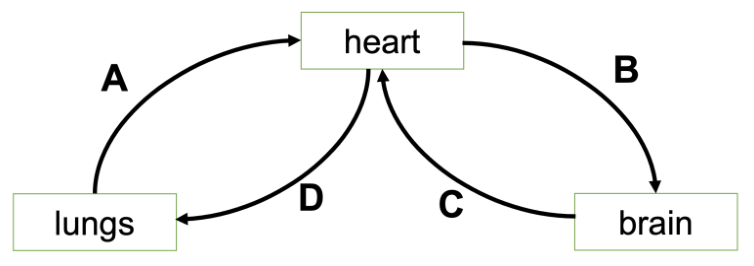
a. The diagram below shows the directions of blood flow in some parts of the body. Encircle the part(s) immediately affected by the crowd crush. [2 points]
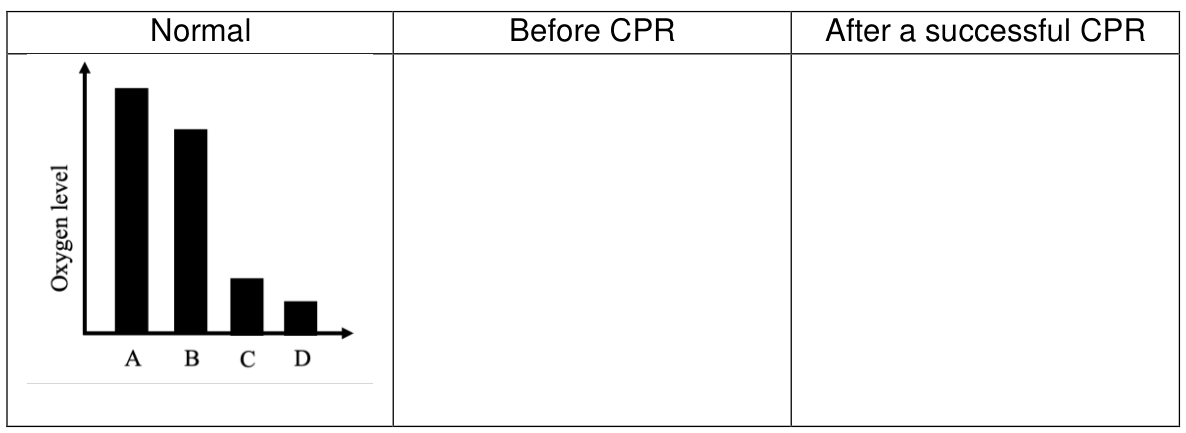
b. It is believed that there were people who experienced cardiac arrest during the crowd crush. Thus, a cardiopulmonary resuscitation was conducted by first responders and by-standers. Assuming that a same amount of blood was continuously drawn from A, B, C, and D during the entire CPR process, draw a graph showing the comparison of blood oxygen level drawn from each level on a normal condition, before and after a successful CPR. [3 points]
c. When oxygen is depleted, the brain instructs some organs to stop working. This illustrates our body’s inability to maintain _________________. [1 point]
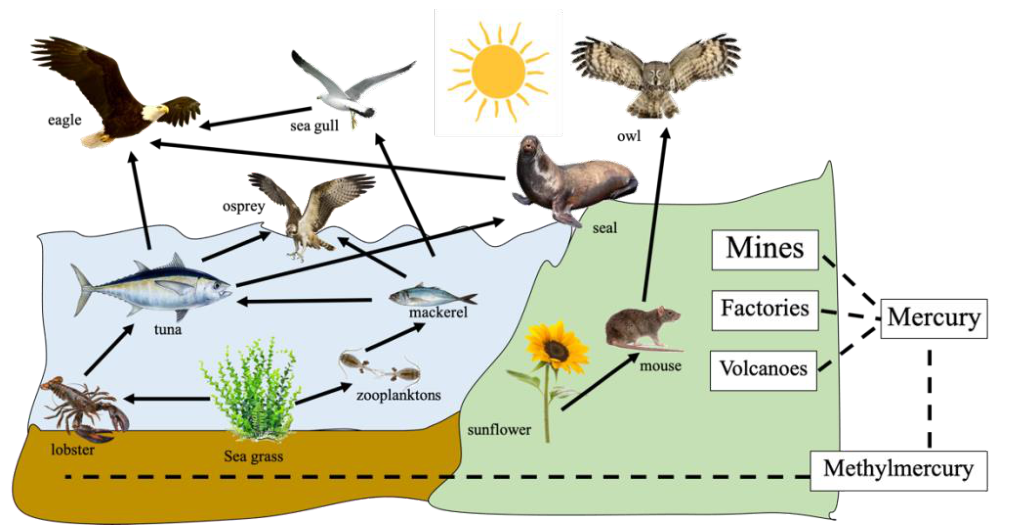
Mercury in fish and other marine organisms is a source of great health concern for people who eat them, particularly expecting mothers and young children who are at risk of having damages in the central nervous system. Figure 4 shows that once in a lake or river, mercury from mines, volcanoes, and factories is converted to a highly toxic substance called methylmercury by bacteria and other chemical reactions. Fish absorb methylmercury from their food and from water as it passes over their gills. Mercury is tightly bound to proteins in all fish tissue, including muscle.
When an animal consumes food having methylmercury residue, the methylmercury accumulates in the tissue of the animal by a process called bioaccumulation. The higher an animal is on the food chain, the greater the concentration of methylmercury in their body as a result of a process called biomagnification. Unfortunately, there is no method of cooking or cleaning fish that will reduce the amount of mercury in a meal.
Figure 4
a. Plants/animals from which of the trophic groups are most susceptible to problems from methylmercury. Describe and explain by citing examples from the figure above. [1.5 points]
b. What are some differences between the food chain of ospreys and the food chain of owls? How might these differences in the diet of osprey and owls result in exposure to different amounts of methylmercury? [2 points]
c. Taking all factors into account, rank the following for likelihood of bioaccumulation: eagle, osprey, seals, and owls. [1.5 points]
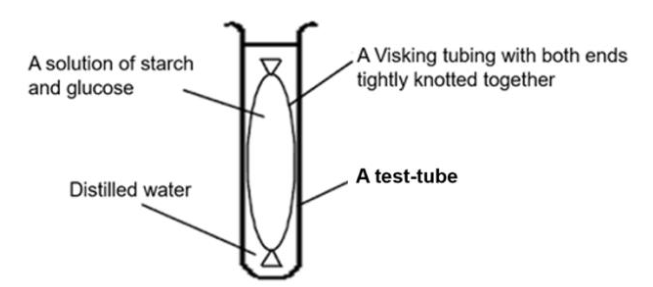
An experiment was conducted using a Visking tubing shown in Figure 3.1. The Visking tubing is a selectively permeable membrane which only allows small molecules to pass through.
A starch molecule is made up of many, small glucose molecules chemically bonded together.
Figure 3.1
After 3 hours, 1mL of the liquid in the test-tube was pipetted up using a dropper. This liquid was used in Iodine test. The iodine test is to test for the presence or absence of starch. Another 1ml of the liquid in the test tube was then pipetted up using a dropper. This liquid was used in Benedict’s test. Benedict’s test is to test for the presence or absence of glucose.
a. Explain the results of the two tests that were conducted for the liquid in the test-tube. [3 points]
b. Suggest one method to shorten the time taken to obtain the results shown in Figure 3.1 [1 point]
Object A is 11.11 grams and object B is 133.11 grams. The two objects were then put in separate cups fully filled with water. The water from the cups overflowed with the amounts of 11.123 cm³ and 130.09 cm³ respectively. If we put objects A and B into the water.
a. Which one will sink? [1.5 point]
b. Give your reason for your answer in question (a). [2 points]
c. If object A is compressed such that its volume is reduced by one half, how will this affect your answer in question (a)? [1.5 point]
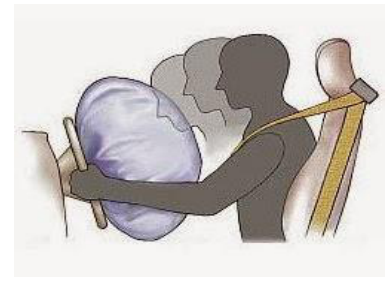
The seat belt should be allowed to stretch to reduce the force needed to stop the driver to minimize injury. Some cars are fitted with airbags that inflate quickly upon collision and then quickly deflate as shown in the figure below.
a. Explain how these two features help reduce the force exerted on the driver to stop him. [2 points]
b. The total mass of the car and the driver is 750 kg. They are brought to rest at a speed of 10.0 m/s. Calculate the total energy dissipated by the car and the driver upon impact when they come to rest. [2 points]
c. If the car is moving at a lower speed, how will this affect the energy dissipated by the car and the driver upon impact? [1 point]
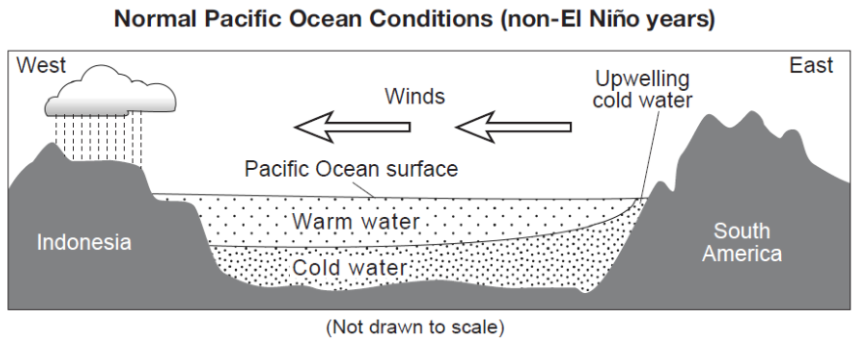
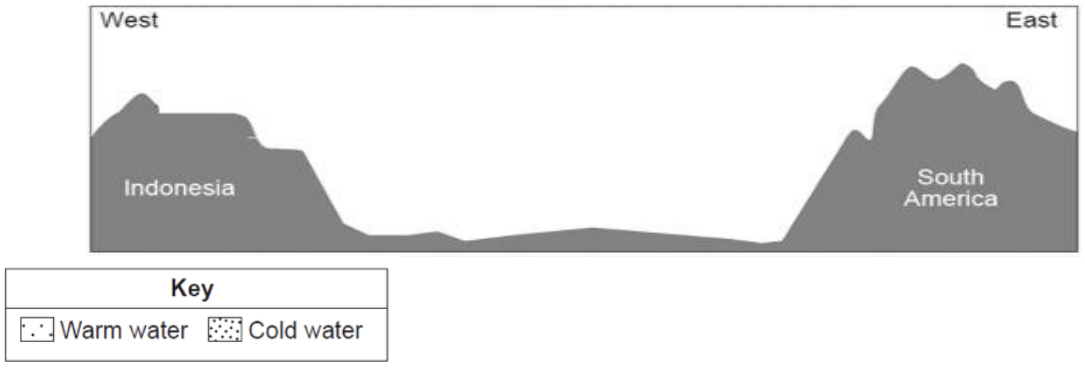
Under normal Pacific Ocean conditions, strong winds blow from east to west along the equator. Surface ocean water piles up on the western part of the Pacific due to these winds. This allows deeper, colder ocean water on the eastern rim of the Pacific to be pulled up (upwelling) to replace the warmer surface water that was pushed westward.
During an El Niño event, these westward-blowing winds get weaker. As a result, warmer water does not get pushed westward as much, and colder water in the east is not pulled toward the surface. This creates warmer surface ocean water temperatures in the east, allowing the thunderstorms that normally occur at the equator in the western Pacific to move eastward.
a. Draw the cross section that best represents the changed wind conditions and Pacific Ocean temperatures during an El Niño event. [1 point]
b. Compared to non-El Niño years, which climatic conditions exists near the equator on the western and eastern sides of the Pacific Ocean during an El Niño event? [3 points]
| | Colder or Warmer | Drier or Wetter |
| --- | --- | --- |
| Australia | | |
| Bolivian | | |
c. According to recent estimates, 8 out of 10 farmers have 40% reduced profits during El Niño years. What can farmers and government agencies do to minimize the effects of El Niño? [1 point]
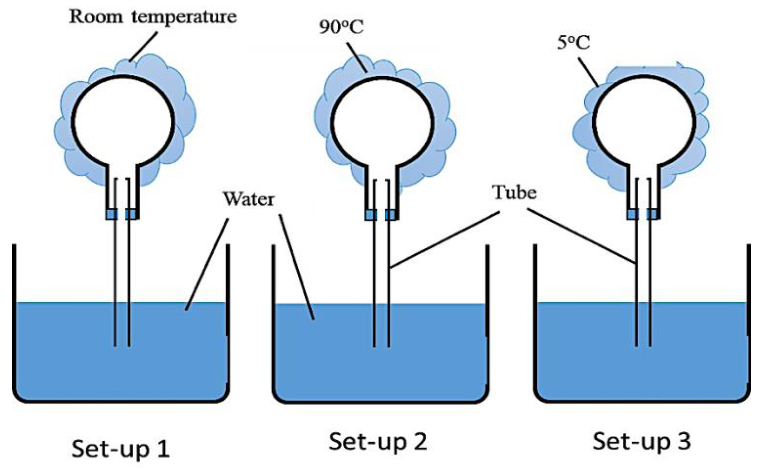
An experiment was conducted to observe the relationship between temperature and air pressure.
The figure below shows the set-up where the flasks were covered by the cloths at different temperatures.
The following observation of the set-ups was made two minutes after the cloth was placed on the flask.
- Set-up 1: No changes were observed
- Set-up 2: Bubbles observed around the tube
- Set-up 3: Water rose in the tube
a. Explain the observations made in each set-up. [3 points]
b. Based from the experiment, what is the relationship between temperature and air pressure? Explain. [2 points]