Skip to content / Đến nội dung
ThichHocToan.com

IMSO 2008 Science Taiwan Second Round Experiment

Question 1

Section C: science experiment. The supplied key prints 40 marks and a 50-minute limit. Ten points per parent task and its subpart rubric are editorial allocations; no per-task scores are printed.

## I. Height of Taipei 101 tower

The historical source calls Taipei 101 Taiwan's new landmark and the tallest building on Earth. Design **at least three experiments using different methods** to measure its height. Write the procedures, explain them, and list the materials needed for each experiment. The description of “tallest” belongs to the historical paper; it is not a current ranking.
Question 2

Section C: science experiment. The supplied key prints 40 marks and a 50-minute limit. Ten points per parent task and its subpart rubric are editorial allocations; no per-task scores are printed.

## II. “Abbreviations” of shape-memory plastics

The source describes a plastic sheet that remembers an earlier form: draw a picture, heat with a hot-air machine or oven, and the sheet shrinks into a small ornament. Design experiments to measure the size reduction. Write the procedures and explain them.

Provided materials:
- ruler;
- hot-air machine;
- A4 shape-memory plastic sheets;
- drawing pens;
- ordinary A4 paper;
- knife;
- clipper.

“Abbreviations” is the source's term for shrinkage, not shortening written words.

Question 3

Section C: science experiment. The supplied key prints 40 marks and a 50-minute limit. Ten points per parent task and its subpart rubric are editorial allocations; no per-task scores are printed.

## III. Four kingdoms of living organisms

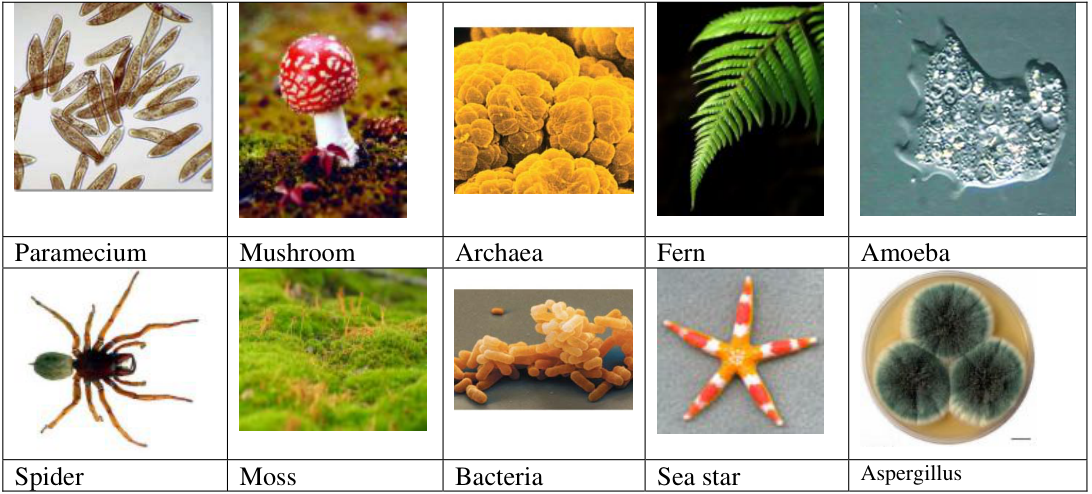
The original pictures name ten organisms. Write each pictured organism's name under the correct heading in the blank table.

Question illustration

| Animalia | Plantae | Fungi | Protista | None of the four kingdoms |
|---|---|---|---|---|
| ____ | ____ | ____ | ____ | ____ |
| ____ | ____ | ____ | ____ | ____ |

Question 4

Section C: science experiment. The supplied key prints 40 marks and a 50-minute limit. Ten points per parent task and its subpart rubric are editorial allocations; no per-task scores are printed.

## IV. A taxonomic key for mammals

**Objective:** discover how familiar mammals are classified. **Problem:** how does a taxonomic key help classify living things? **Skills:** observing, inferring, classifying. **Materials:** pencil and paper.

**Procedure**
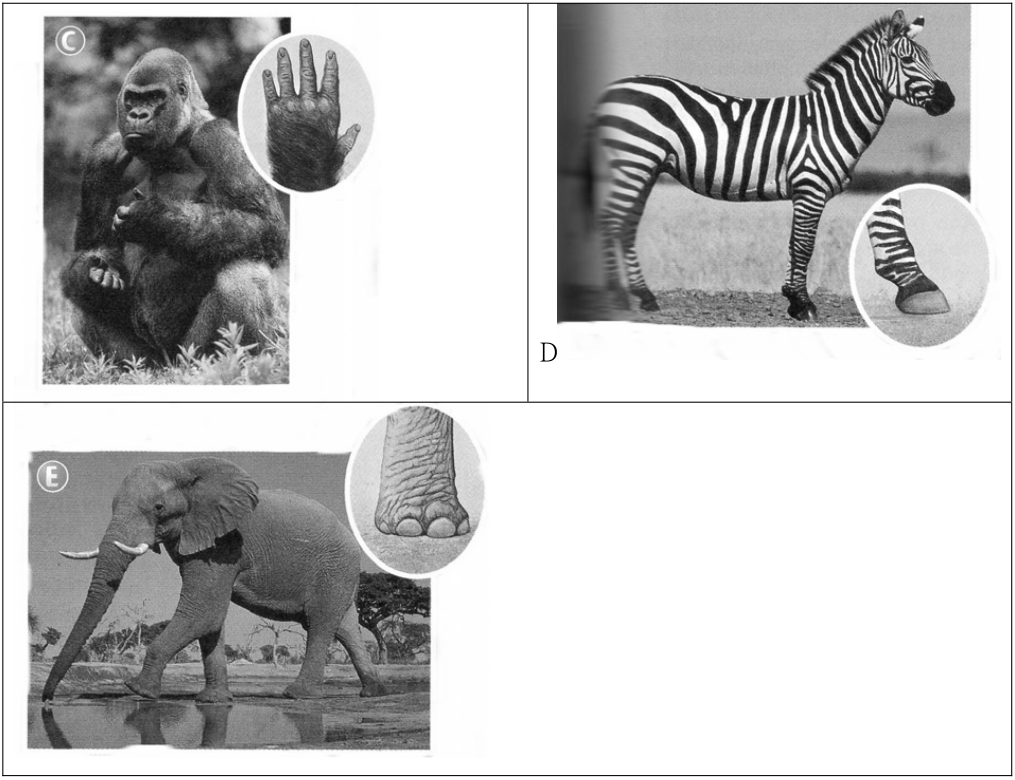
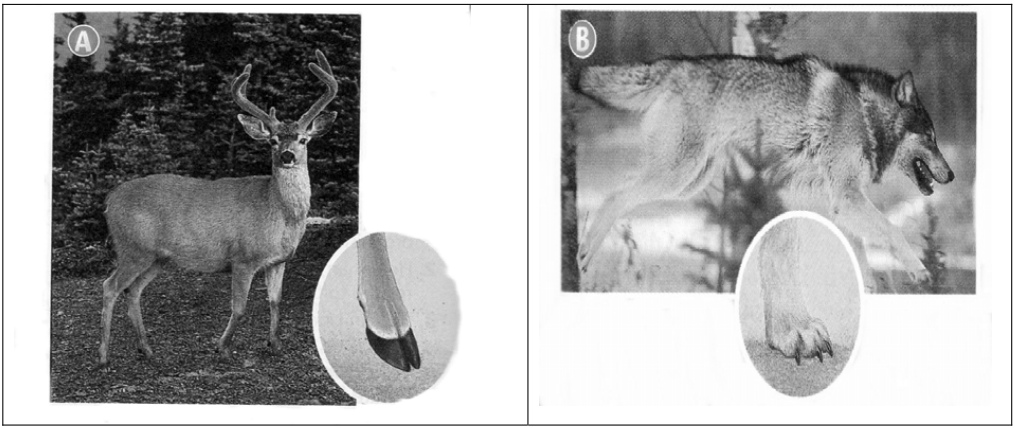
1. Observe organisms A–E. All are mammals; each belongs to a different mammalian order.
2. Use the paired statements in Table 1, beginning at Step 1 for photograph A. The source directs A to Step 2 because it lacks the specified five-digit/flexible-thumb combination. Continue until an order is identified.
3. Repeat for B–E.

Question illustration

Question illustration

| Step | Statement | Result |
|---|---|---|
| 1a | Five digits on all limbs, and hands with flexible thumbs | Primates |
| 1b | Do not have five digits on all limbs, and hands with flexible thumbs [source wording] | Go to Step 2 |
| 2a | Limbs with claws or nails, not hooves | Go to Step 3 |
| 2b | Limbs with hooves, not claws or nails | Go to Step 4 |
| 3a | Long muscular trunks | Proboscidea |
| 3b | Sharp teeth for biting and tearing flesh | Carnivora |
| 4a | Even number of hoofed toes | Artiodactyla |
| 4b | Odd number of hoofed toes | Perissodactyla |

**Questions**
1. Name the mammalian order of each photographed organism.
2. Why must the paired statements at Step 1 be opposites?
3. Could this key classify non-mammals? Explain.
4. Could it classify different carnivores, such as foxes, skunks and walruses? Explain.