Skip to content / Đến nội dung
ThichHocToan.com

Bebras 2021 - Level 4

Question 1

The beavers have found an interesting way to encode letters. First they draw three grids of 9 cells (see below). They then draw one round dot in each cell of the second grid and two round dots in each cell of the third. Finally they fill in the letters from left to right, top to bottom.
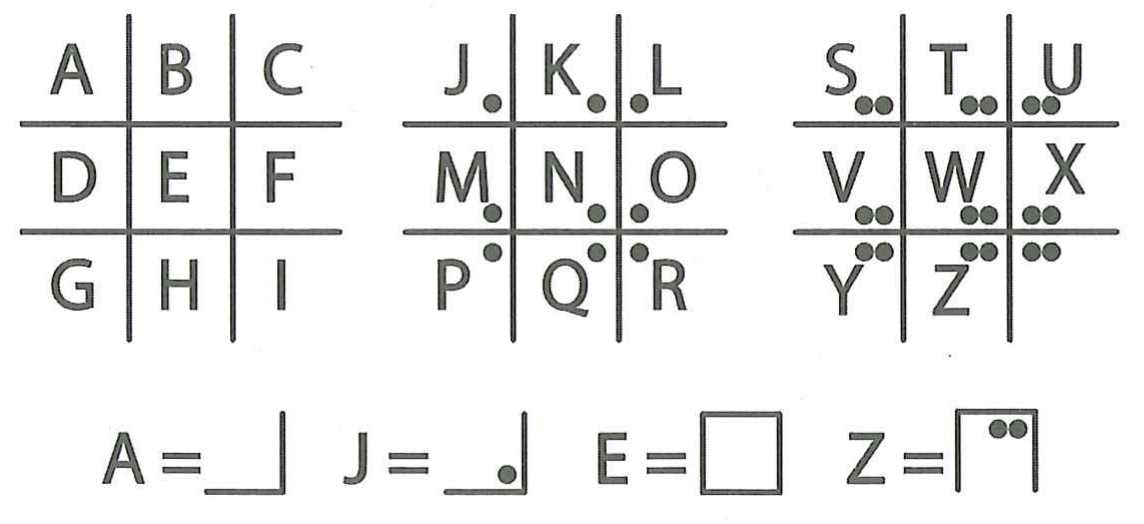
Question illustration

Editable letter grids (rows within each cell, top to bottom):

| Dot count | Top row | Middle row | Bottom row |
|---|---|---|---|
| 0 | A B C | D E F | G H I |
| 1 | J K L | M N O | P Q R |
| 2 | S T U | V W X | Y Z — |

Each letter is encoded by the picture of the line segments and dots (if any) in its cell. For example, A is encoded by a shape with 2 line segments; Z by a shape with 3 line segments and 2 dots; …

Decode the following picture and determine the sequence of letters it encodes.

Question illustration
  1. ONVERMEV
  2. INTERNET
  3. INTERMET
  4. INTERGER

Question 2

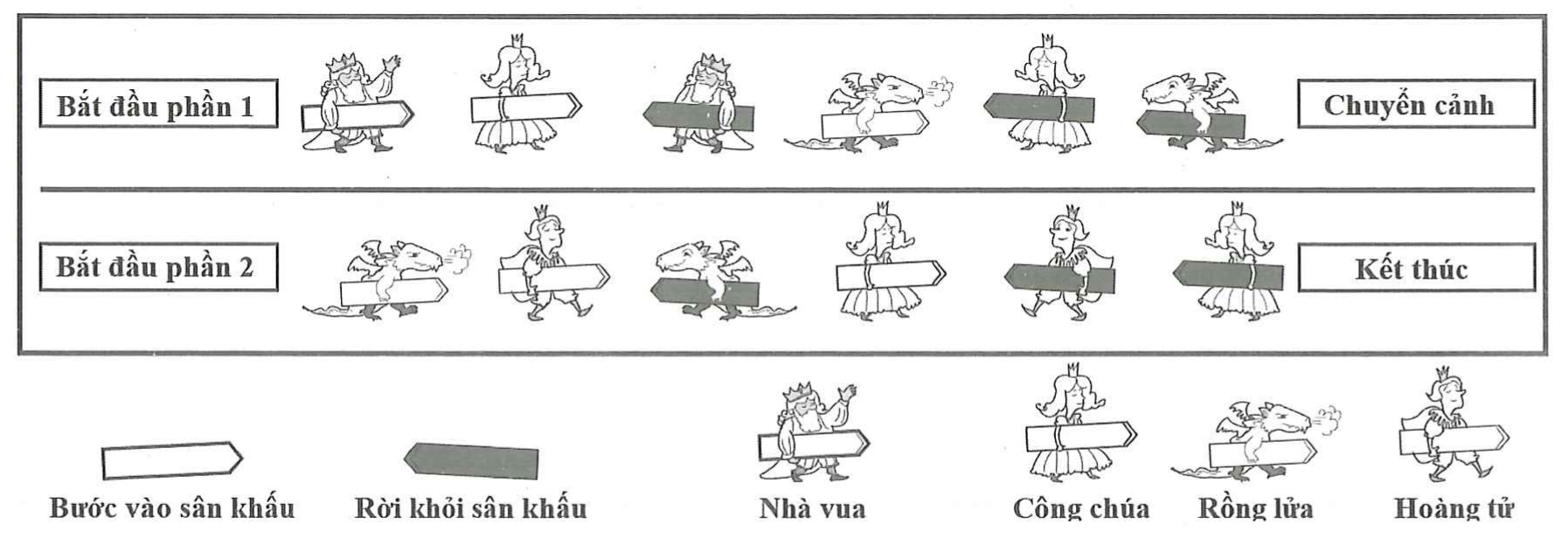
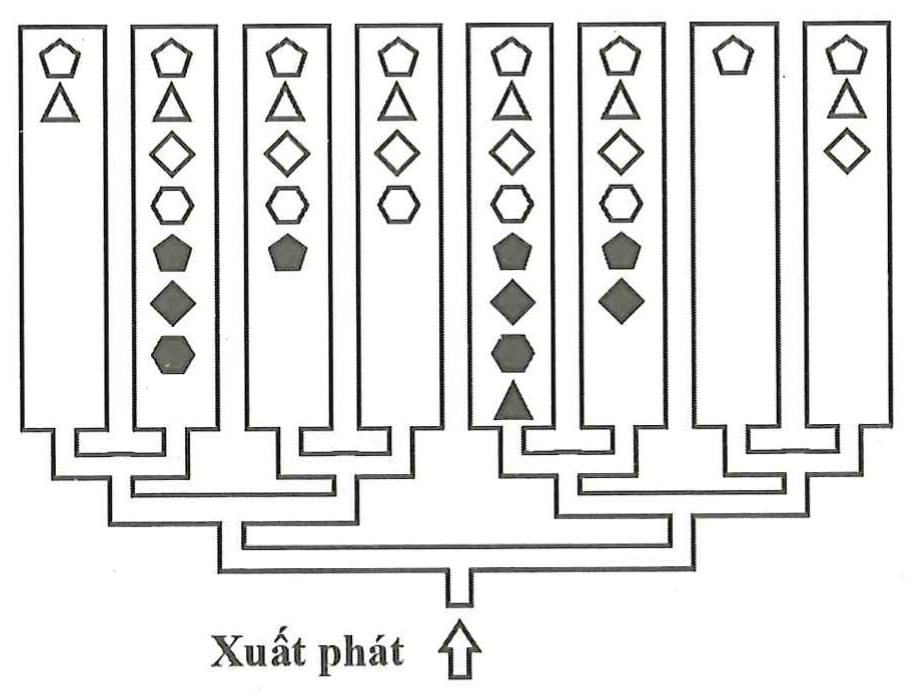
A fairy-tale play has two parts with an interval for a scene change. The picture shows the order in which the actors enter and leave the stage.

Question illustration

Legend: hollow arrow=enter stage; filled arrow=leave stage; Nhà vua=King, Công chúa=Princess, Rồng lửa=Dragon, Hoàng tử=Prince. “Bắt đầu phần 1/2” means start of part 1/2; “Chuyển cảnh” means scene change; “Kết thúc” means end.

Which of the following statements about events in the play is certainly false?
  1. At some times, the Prince and Princess appear on stage together.
  2. At some time, the King and Dragon appear on stage together.
  3. The Prince first appears on stage after the scene change.
  4. At some time, the Prince and Dragon appear on stage together.

Question 3

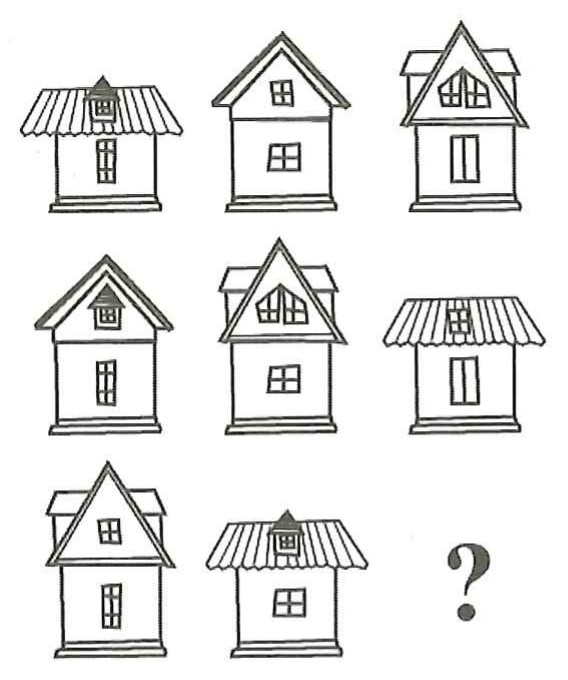
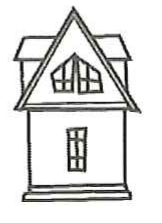
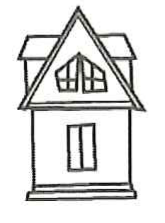
Sue the beaver draws a neighbourhood whose houses follow a rule, as illustrated below.

Question illustration

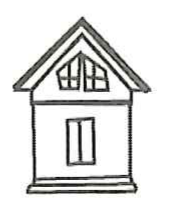
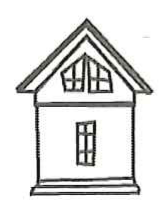
What does the missing house look like?
  1. Question illustration
  2. Question illustration
  3. Question illustration
  4. Question illustration

Question 4

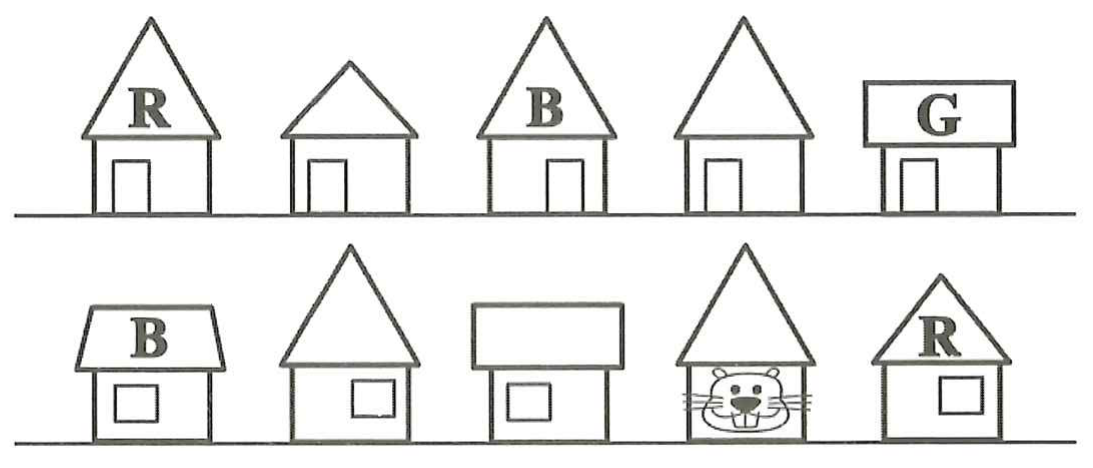
The colour festival is approaching. Residents of the colourful city decide to repaint their homes in one of three colours: blue (B), red (R) and green (G). They agree that a house must not have the same colour as a neighbouring house or the house directly opposite across the street. The picture shows some houses already painted.

Question illustration

Which colours can the beaver’s house be painted to satisfy these conditions?
  1. Blue or green
  2. Only red
  3. Only blue
  4. Only green

Question 5

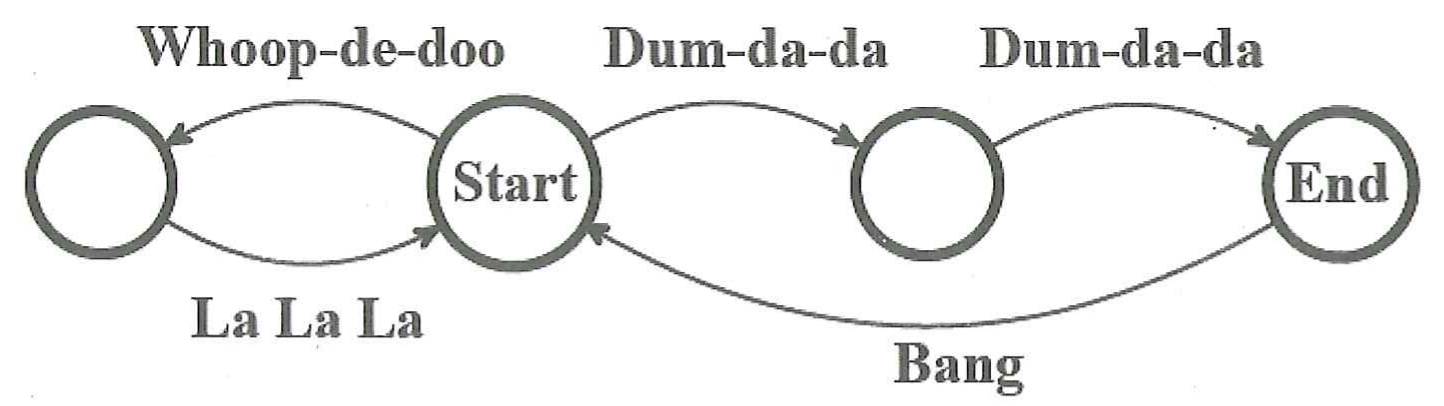
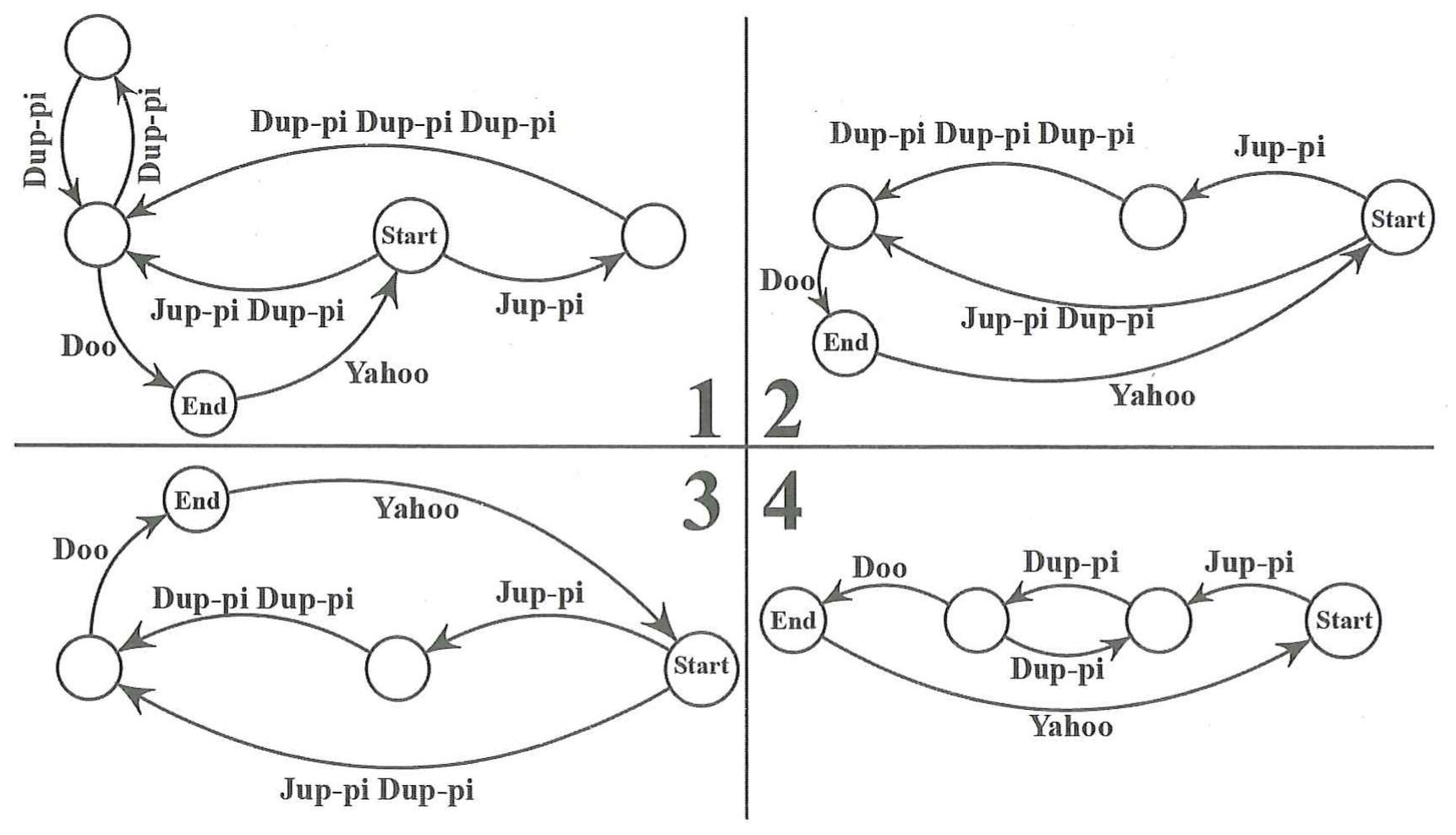
A beaver musician always writes lyrics using a diagram. He always begins at “Start”, then follows the arrows to choose the lyrics. The song always finishes at “End”, although reaching “End” need not mean the song finishes immediately.

Question illustration

For example, the diagram above can produce the song “Whoop-de-doo La La La Whoop-de-doo La La La Dum-da-da Dum-da-da Bang Dum-da-da Dum-da-da”.

Consider the following four diagrams.

Question illustration

How many of diagrams 2, 3 and 4 can produce the same lyrics as diagram 1?
  1. 0
  2. 1
  3. 2
  4. 3

Question 6

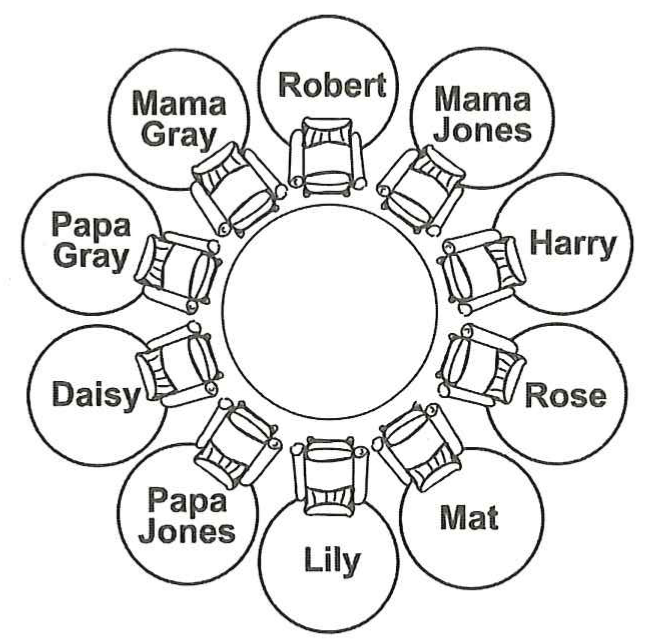
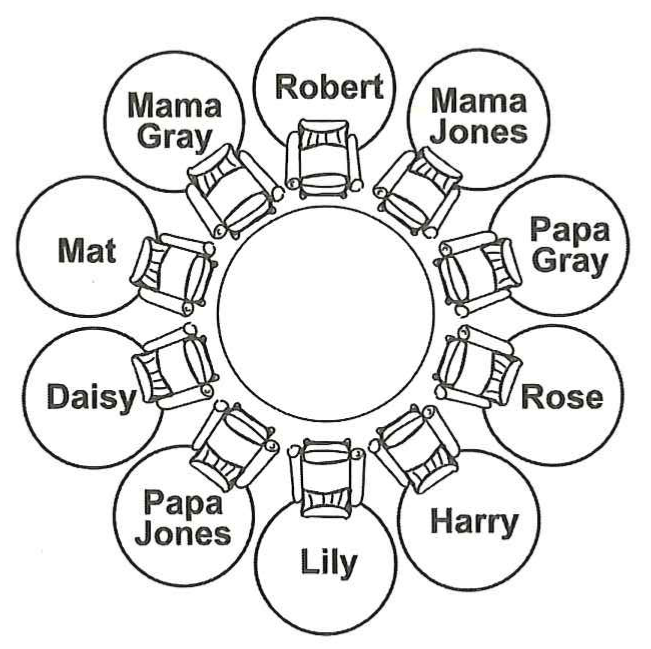
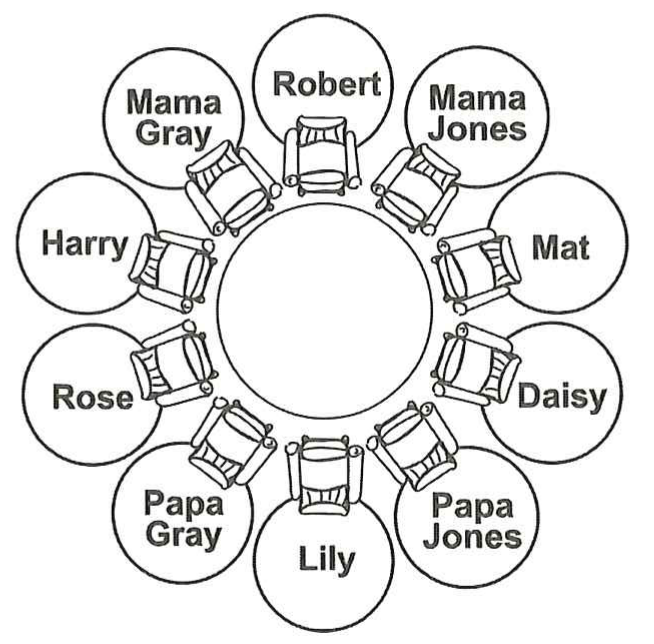
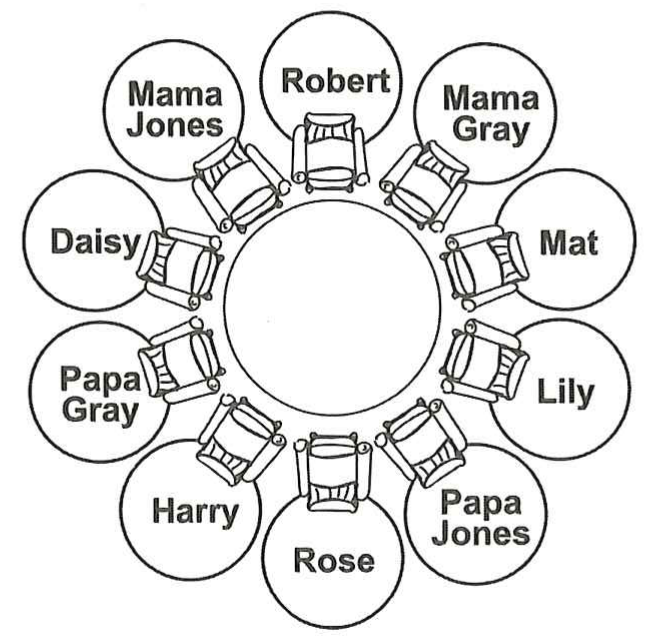
Mat the beaver is organizing a party. He invites his friend Robert and two other beaver families. The first family consists of Papa Jones (husband), Mama Jones (wife), and Harry and Rose, their son and daughter respectively. The second consists of Papa Gray (husband), Mama Gray (wife), and their two daughters Lily and Daisy.

Mat will arrange the seating so no two female beavers sit next to each other; no married couple sit together; and no child sits next to either parent. Which arrangement below is suitable?
  1. Question illustration

    Clockwise from Robert: Robert, Mama Jones, Harry, Rose, Mat, Lily, Papa Jones, Daisy, Papa Gray, Mama Gray.
  2. Question illustration

    Clockwise from Robert: Robert, Mama Jones, Papa Gray, Rose, Harry, Lily, Papa Jones, Daisy, Mat, Mama Gray.
  3. Question illustration

    Clockwise from Robert: Robert, Mama Jones, Mat, Daisy, Papa Jones, Lily, Papa Gray, Rose, Harry, Mama Gray.
  4. Question illustration

    Clockwise from Robert: Robert, Mama Gray, Mat, Lily, Papa Jones, Rose, Harry, Papa Gray, Daisy, Mama Jones.

Question 7

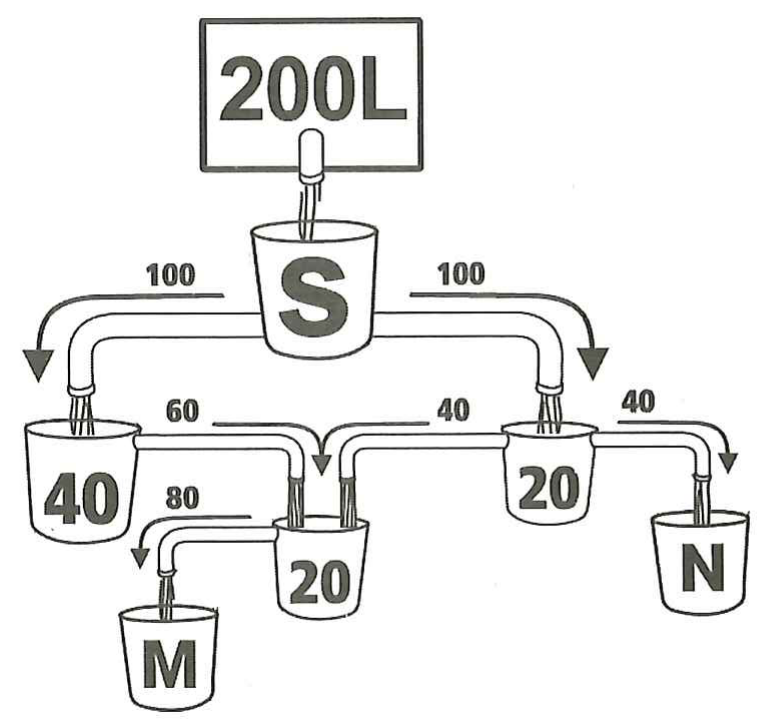
The beavers have the water system illustrated below. Each bucket can hold at most the amount written on it, except M and N. All remaining water reaching a bucket is split equally between its outgoing branches and continues downward. At the end, the top bucket S holds no water; M and N hold 80 and 40 litres respectively; the other buckets are full at their capacities, respectively 40,20 and 20 litres.

Question illustration

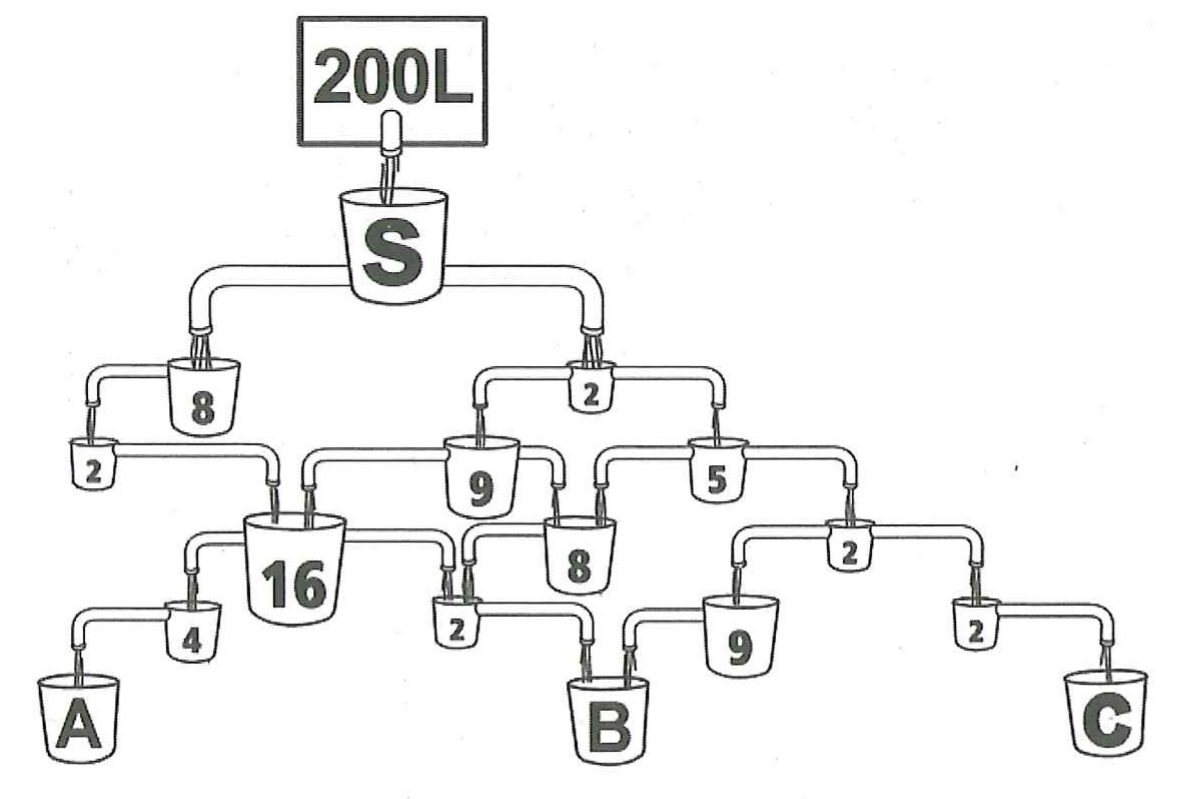
The beavers build another system as below and pour 200 litres through S.

Question illustration

Initially all buckets are empty and no water spills outside the system while flowing. When the water stops flowing, how many litres are in A?
  1. 65 litres
  2. 43 litres
  3. 100 litres
  4. 86 litres

Question 8

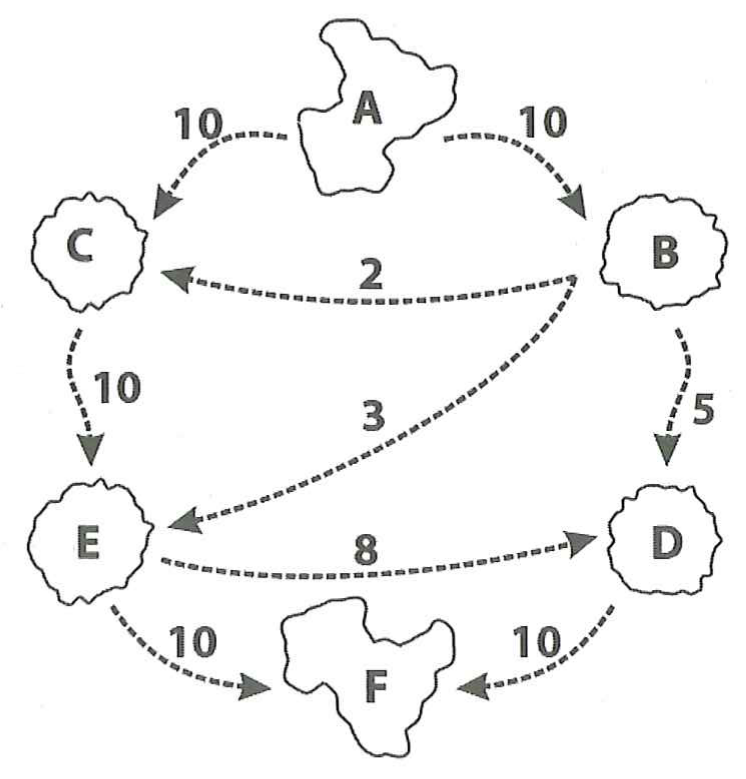
The beaver kingdom consists of six islands A, B, C, D, E and F. A strange disease has appeared on F, and the King needs to send experts from A to help F. To prevent the disease from spreading, the King also restricts travel between islands as shown below.

Question illustration

Travel must follow the arrows. The number of people on each route is limited; each number in the diagram is the maximum permitted to use that route in one day.

| Route | Daily limit |
|---|---|
| A→B | 10 |
| A→C | 10 |
| B→C | 2 |
| B→D | 5 |
| B→E | 3 |
| C→E | 10 |
| E→D | 8 |
| E→F | 10 |
| D→F | 10 |

What is the maximum number of experts who can reach F on the first day?
  1. 20
  2. 18
  3. 15
  4. 13

Question 9

The beavers devise an interesting way to encode I, T, O, C and L using 3×3 number grids. First they draw these letters on 3×3 grids as follows.

Question illustration

Editable pixel data: 1=shaded, 0=white; rows are listed top to bottom.

| Letter | Row 1 | Row 2 | Row 3 |
|---|---|---|---|
| I | 010 | 010 | 010 |
| T | 111 | 010 | 010 |
| O | 111 | 101 | 111 |
| C | 111 | 100 | 111 |
| L | 100 | 100 | 111 |

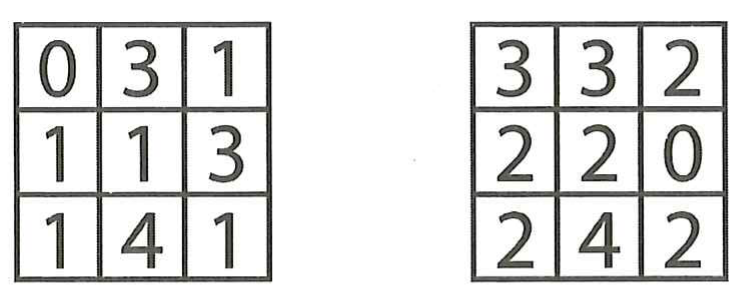
To encode each letter, they examine each unit cell of its picture and record the number of cells at the same position and with the same colour in the pictures of the other four letters. For example, I is encoded by the number grid on the left below.

Question illustration

Editable example (I):

| 0 | 3 | 1 |
|---|---|---|
| 1 | 1 | 3 |
| 1 | 4 | 1 |

Editable target:

| 3 | 3 | 2 |
|---|---|---|
| 2 | 2 | 0 |
| 2 | 4 | 2 |

Which letter produces the grid on the right?
  1. T
  2. O
  3. C
  4. L

Question 10

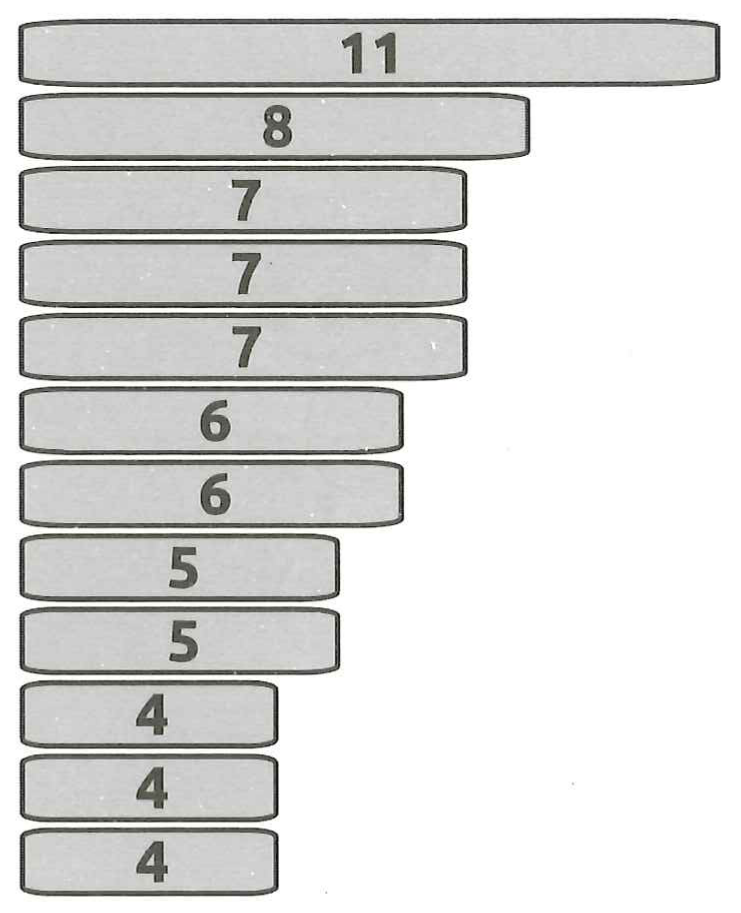
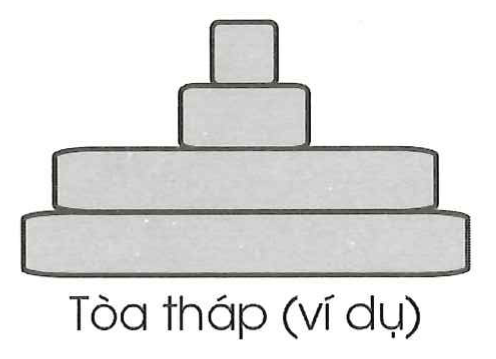
Alex the beaver has wooden bars of equal height and the lengths illustrated below. He wants to use the bars to form three towers of equal height. In each tower, every bar is shorter than any bar below it, if there is one.

Question illustration

Lengths in the source, top to bottom: 11,8,7,7,7,6,6,5,5,4,4,4.

Question illustration

After making the towers, Alex calculates their deviation: the greatest difference between any two of the three sums of bar lengths within a tower. What is the smallest deviation he can obtain?

Approved editorial clarification: use all twelve bars, so each tower contains four bars. The source does not expressly say “all”; this intended interpretation is required for its grading key. The result if unused bars are allowed is discussed separately in the solution.
  1. 1
  2. 2
  3. 5
  4. 8

Question 11

Betty the beaver plays with cards bearing the strings ABBA, GAGA, GIBB and IGGY. She places cards consecutively or overlaps them to obtain other special strings.

For example, Betty can form GIABIGGYGA as follows:
- Put the GIBB card on the table.
- Partly overlap the first card with ABBA: GIABBA.
- Place GAGA to obtain GIABBAGAGA.
- Place IGGY on this sequence to obtain GIABIGGYGA.

Betty has very many such cards. Which of the following strings can she certainly not form?
  1. AGGIBBAGGAGABABGA
  2. AGGIBBAGAGGABABGA
  3. AGIBBGAGAGGYBAYBB
  4. AGGIBBAGAGGYBAGGY

Question 12

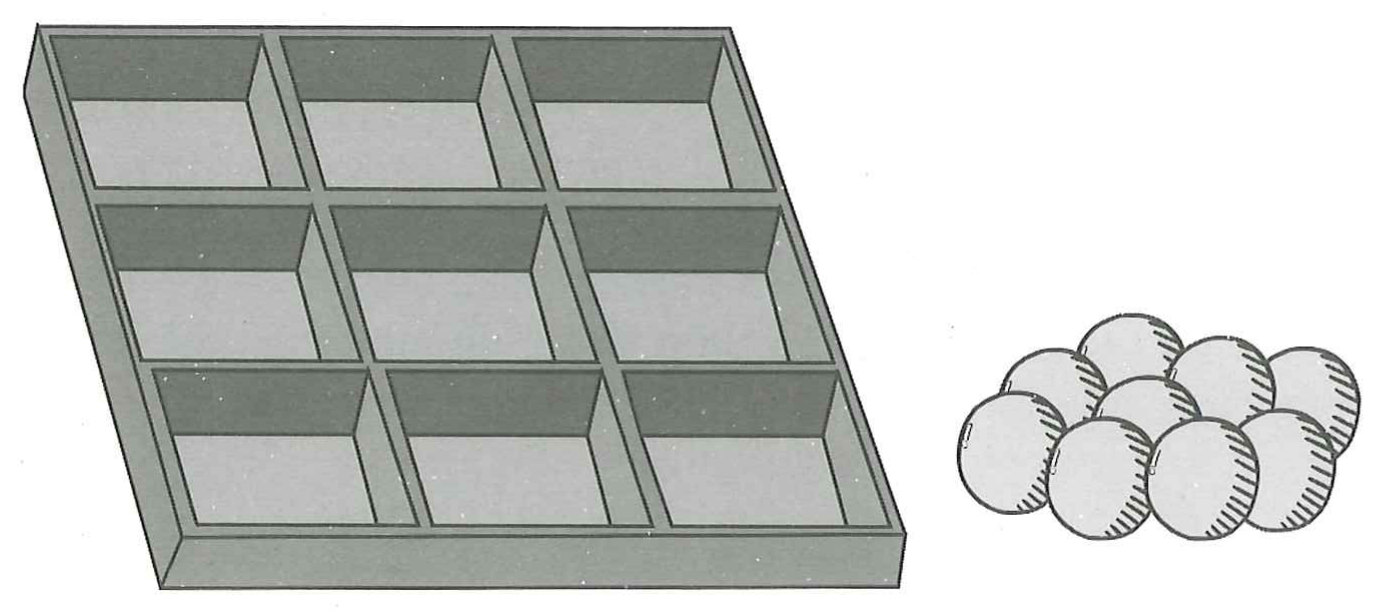
Alex the beaver is assigned to put balls into a wooden box with nine compartments as illustrated below.

Question illustration

There are nine balls, but Alex may choose how many to put in the box. The placement must satisfy all the following conditions:
- Each ball is placed neatly into one of the nine compartments; all nine are wide enough to hold a ball.
- Each compartment contains at most one ball.
- The total number of balls in every row and every column is odd.

How many different placements satisfy the conditions?
  1. 12
  2. 16
  3. 64
  4. 120

Question 13

A gem-collecting game consists of a robot and a map showing paths as below.

Question illustration

The robot starts at the starting position and keeps moving. At every three-way junction it stops to ask the controller which direction to turn. At a dead end it collects all the gems there.

Alex and Bob play together, taking turns to decide the robot’s turns. Alex wants to bring the robot to as many gems as possible; Bob wants the opposite. Both know each other’s goals and both reason very well. Alex makes the first decision. How many gems will the robot collect when it stops?
  1. 2
  2. 4
  3. 5
  4. 8

Question 14

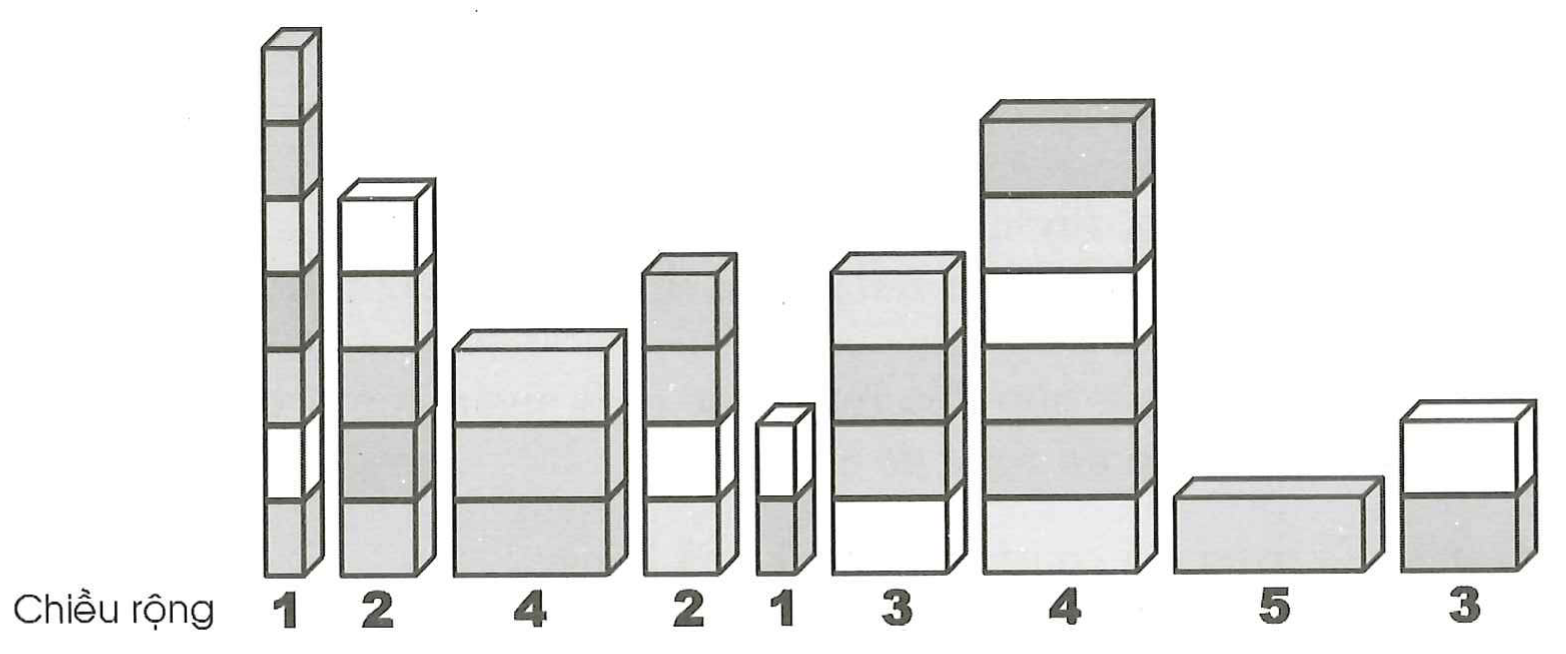
Sam the beaver has blocks of equal height. He uses them to make towers as illustrated below; blocks in any one tower all have equal width.

Question illustration

| Tower, left to right | 1 | 2 | 3 | 4 | 5 | 6 | 7 | 8 | 9 |
|---|---|---|---|---|---|---|---|---|---|
| Initial height | 7 | 5 | 3 | 4 | 2 | 4 | 6 | 1 | 2 |
| Width | 1 | 2 | 4 | 2 | 1 | 3 | 4 | 5 | 3 |

To make the towers equally high, Sam can add or remove blocks. He calculates the change of the towers for each way of doing this. Every time a block is added or removed, the change increases by its width. For example, removing 2 blocks from a tower of width 1 increases the change by 2×1=2 units; adding 4 blocks to a tower of width 3 increases it by 4×3=12 units.

What is the smallest total change needed to make these towers equally high?
  1. 27
  2. 35
  3. 39
  4. 42

Question 15

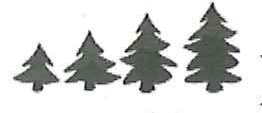
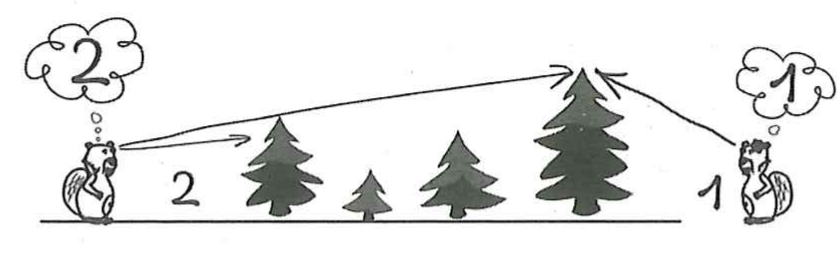
A beaver has 16 fir trees of four types, four of each type. Trees of the same type have the same height, and different types have different heights.

Question illustration

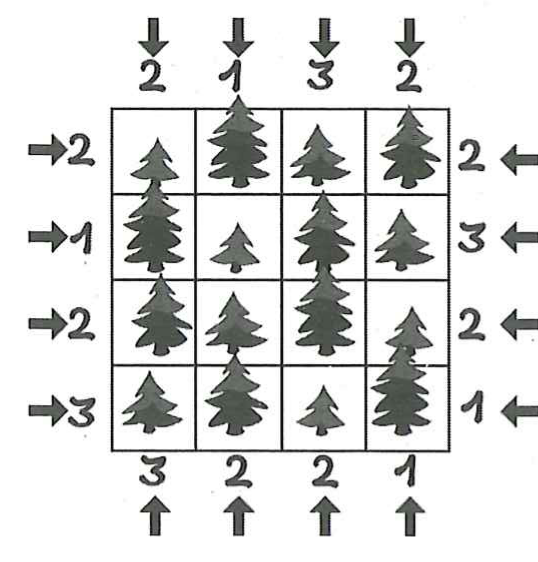
He plants the 16 trees in a 4×4 garden so that every type appears exactly once in each row and column. Around the garden he places signs giving the number of trees visible along the row or column from each position. Shorter trees behind taller ones are hidden. The pictures below give an example of sign values for a planting.

Question illustration

Editable example, with I shortest and IV tallest:

| I | IV | II | III |
|---|---|---|---|
| IV | I | III | II |
| III | II | IV | I |
| II | III | I | IV |

Example clues: top 2,1,3,2; bottom 3,2,2,1; left 2,1,2,3; right 2,3,2,1. The separate side-view example has heights III,I,II,IV, so two are visible from the left and one from the right.

Question illustration

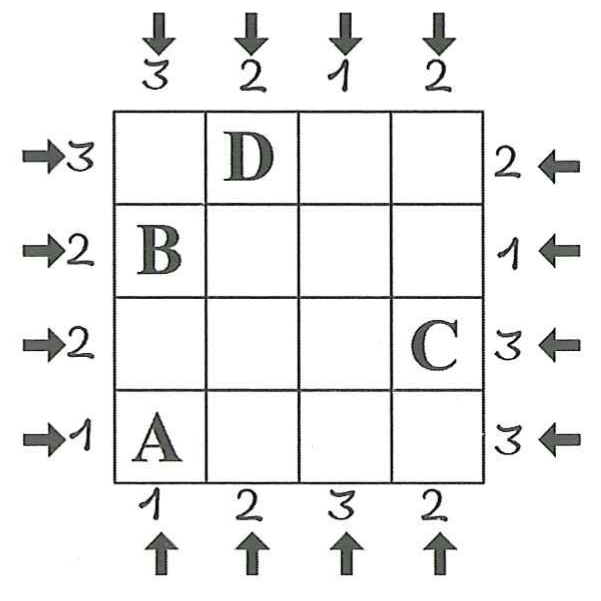
The following picture gives some signs around the garden.

Question illustration

| Side | Counts in order |
|---|---|
| Top, left to right | 3,2,1,2 |
| Bottom, left to right | 1,2,3,2 |
| Left, top to bottom | 3,2,2,1 |
| Right, top to bottom | 2,1,3,3 |

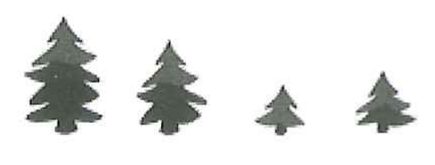
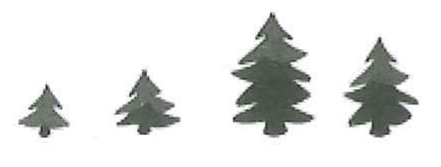
A=(row 4,column 1), B=(2,1), C=(3,4), D=(1,2). Which four trees below could respectively occupy A,B,C,D?
  1. Question illustration

    Heights in increasing-rank notation: IV,III,I,II.
  2. Question illustration

    Heights in increasing-rank notation: I,II,IV,III.
  3. Question illustration

    Heights in increasing-rank notation: IV,II,I,III.
  4. Question illustration

    Heights in increasing-rank notation: IV,I,II,III.