Question 11
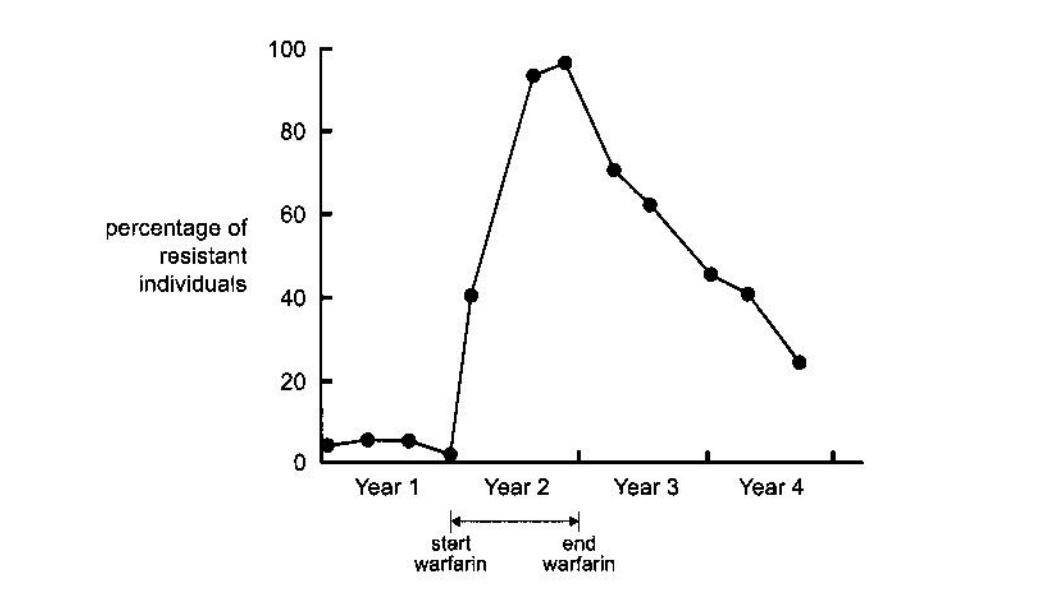
Warfarin is a poison used to control rat populations. It is an anticoagulant that prevents blood clotting. However, some rats are resistant to warfarin and are not affected by the poison. The figure below shows changes in the percentage of rats resistant to warfarin in a particular rat population over a period of about four years. High levels of warfarin were used on this population during Year 2. Which of the following can be inferred from the graph?
A. The use of warfarin results in healthier rats in year 3 and 4.
B. Rats developed resistance to warfarin at the beginning of Year 2.
C. As with rats, the use of warfarin will result in high levels in human beings.
D. If even higher levels of warfarin were used at the beginning of Year 2, 100% of the rat population could become resistant to it at the beginning of Year 3.
A. The use of warfarin results in healthier rats in year 3 and 4.
B. Rats developed resistance to warfarin at the beginning of Year 2.
C. As with rats, the use of warfarin will result in high levels in human beings.
D. If even higher levels of warfarin were used at the beginning of Year 2, 100% of the rat population could become resistant to it at the beginning of Year 3.