Question 11
ANGKLUNG: A MUSICAL INSTRUMENT MADE OF BAMBOO
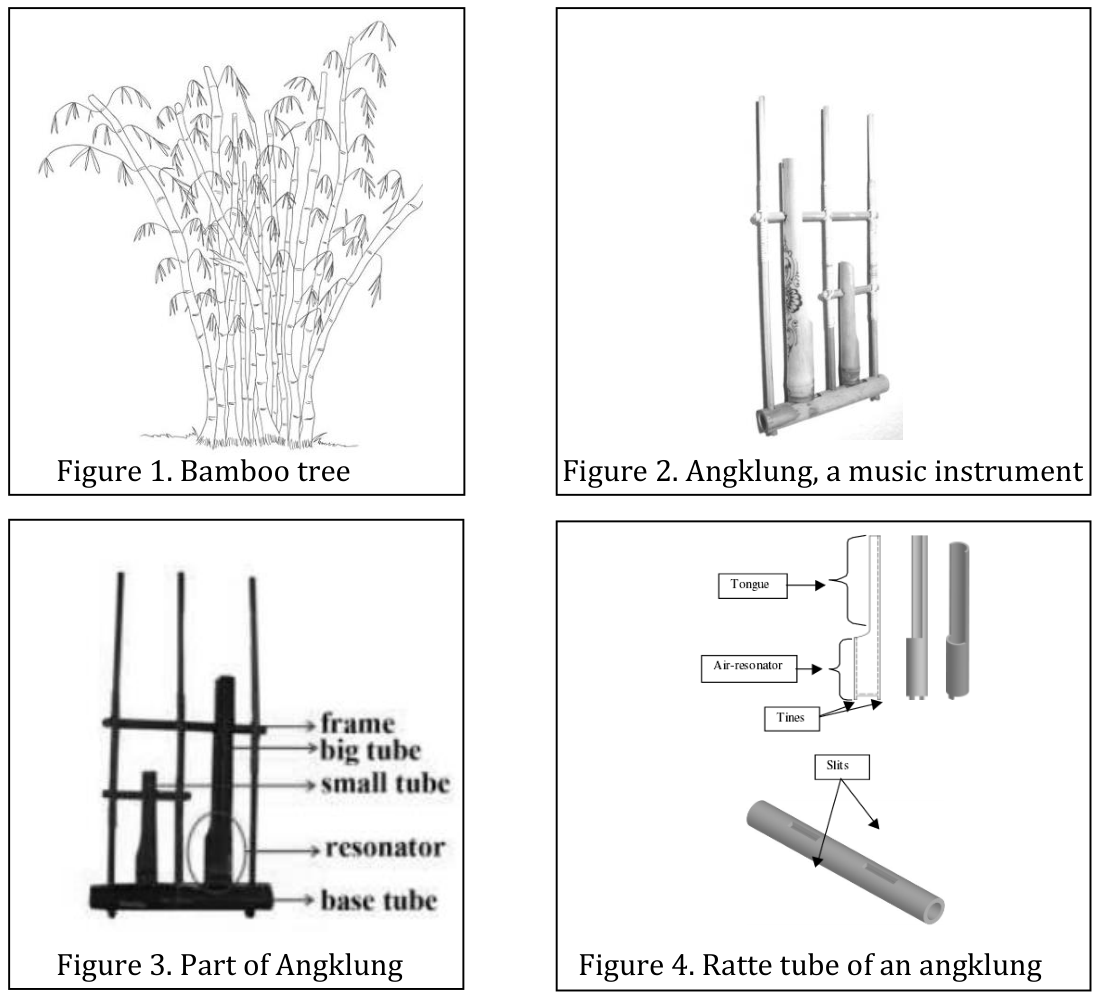
Bamboo is a monocot plants in the grass family Poaceae (Figure 1). Bamboo species are found in diverse climates, from cold mountains to hot tropical regions. They distribute across Asia, Africa, Australia and America.
Bamboos are of notable economic and cultural significance in South Asia, Southeast Asia and East Asia, being used for building materials, as a food source, as a versatile raw product and also music instrument. Angklung is a musical instrument from the West Java, Indonesia made of two to four bamboo tubes attached to a bamboo frame (Figure 2, 3 and 4). The tubes are carved to have a resonant pitch when struck and are tuned to octaves. The sound of angklung is produced from collision of the base tubes. The sound is amplified by resonantor on each tube.
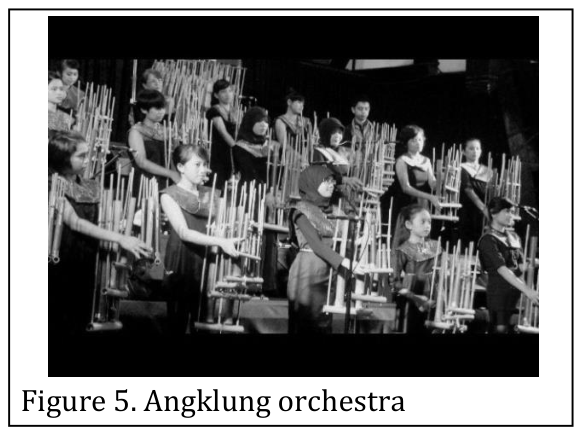
Playing angklung as an orchestra requires cooperation and coordination, and is believed promotes the values of teamwork, mutual respect and social harmony (Figure 5).
On November 18, 2010, UNESCO officially recognized Indonesian "angklung" as a Masterpiece of Oral and Intangible Heritage of Humanity. (Source: www.wikipedia.org)
QUESTIONS:
a. (2.5 points) State whether the statements below is TRUE or FALSE.
- Bamboo can reproduce through vegetative
- Bamboo is classified as non-flowering plant
- Bamboo has no branches
- Figure 1 shows the population of bamboo trees
- Bamboo can be cultivated from seed
b. (1 point) What is resonance?
c. (1 point) What is the type of wave produced by angklung sound?
d. (1 point) A kind of angklung can produce 660 Hz sound. What is the wavelength if it travels 330 m/s?
e. (1 point) Three angklungs produce different sound waves as shown below. Rank the angklung produced from the lowest frequency to the highest?
f. (2 points) Explain the relation between wavelength and frequency?

Bamboo is a monocot plants in the grass family Poaceae (Figure 1). Bamboo species are found in diverse climates, from cold mountains to hot tropical regions. They distribute across Asia, Africa, Australia and America.
Bamboos are of notable economic and cultural significance in South Asia, Southeast Asia and East Asia, being used for building materials, as a food source, as a versatile raw product and also music instrument. Angklung is a musical instrument from the West Java, Indonesia made of two to four bamboo tubes attached to a bamboo frame (Figure 2, 3 and 4). The tubes are carved to have a resonant pitch when struck and are tuned to octaves. The sound of angklung is produced from collision of the base tubes. The sound is amplified by resonantor on each tube.
Playing angklung as an orchestra requires cooperation and coordination, and is believed promotes the values of teamwork, mutual respect and social harmony (Figure 5).
On November 18, 2010, UNESCO officially recognized Indonesian "angklung" as a Masterpiece of Oral and Intangible Heritage of Humanity. (Source: www.wikipedia.org)
QUESTIONS:
a. (2.5 points) State whether the statements below is TRUE or FALSE.
- Bamboo can reproduce through vegetative
- Bamboo is classified as non-flowering plant
- Bamboo has no branches
- Figure 1 shows the population of bamboo trees
- Bamboo can be cultivated from seed
b. (1 point) What is resonance?
c. (1 point) What is the type of wave produced by angklung sound?
d. (1 point) A kind of angklung can produce 660 Hz sound. What is the wavelength if it travels 330 m/s?
e. (1 point) Three angklungs produce different sound waves as shown below. Rank the angklung produced from the lowest frequency to the highest?
f. (2 points) Explain the relation between wavelength and frequency?