Question 4
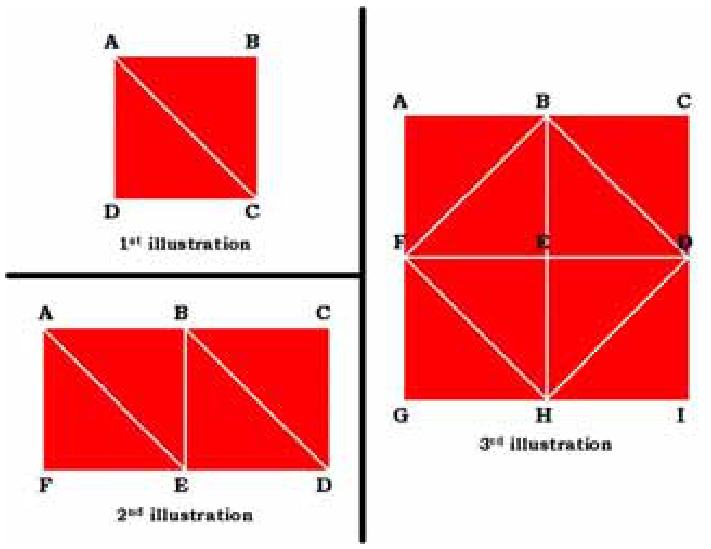
Right-isosceles triangles are used to make various arrangements, so that the arrangements contain squares, as in the following illustrations:
1st illustration: Using two triangles, we can make an arrangement, which contains one square: ABCD.
2nd illustration: Using four triangles, we can make an arrangement, which contains two squares: ABEF and BCDE.
3rd illustration: Using eight triangles, we have six squares: ABEF, BCDE, EDIH, FEHG, BDHF and ACIG.
(a) Using 10 of such triangles, how many squares at most can we find?
(b) How about using 12 triangles?
(c) How about using 18 triangles?
(d) How about using 24 triangles?
1st illustration: Using two triangles, we can make an arrangement, which contains one square: ABCD.
2nd illustration: Using four triangles, we can make an arrangement, which contains two squares: ABEF and BCDE.
3rd illustration: Using eight triangles, we have six squares: ABEF, BCDE, EDIH, FEHG, BDHF and ACIG.
(a) Using 10 of such triangles, how many squares at most can we find?
(b) How about using 12 triangles?
(c) How about using 18 triangles?
(d) How about using 24 triangles?