Question 11
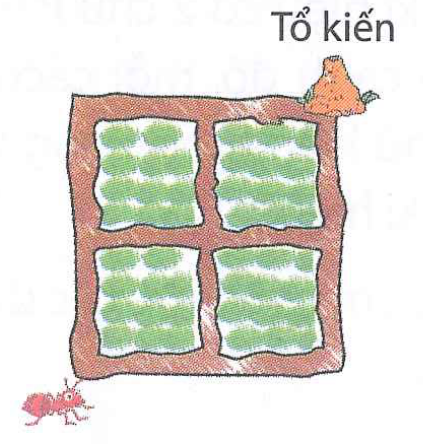
After each search for food, a fire ant follows the field boundaries back to its nest, as shown. To take a shortest route it can move only upwards or to the right. Find the number of routes through the following questions.
1. How many field edges must the ant traverse? How many upwards and how many to the right? Each side of one field cell counts as one edge.
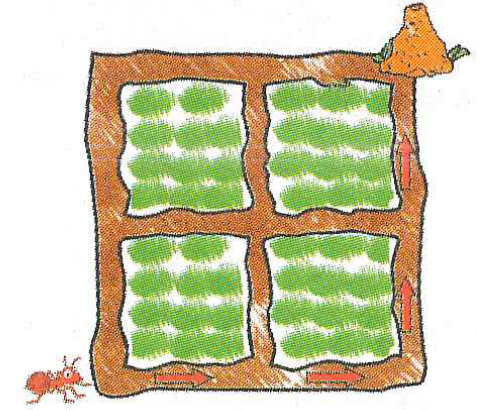
2. List the ant’s routes home. Let P denote right and L denote up. The illustrated example is PPLL.
– List all four-letter strings containing two P letters and two L letters.
– Count and compare the ant’s routes and these strings.
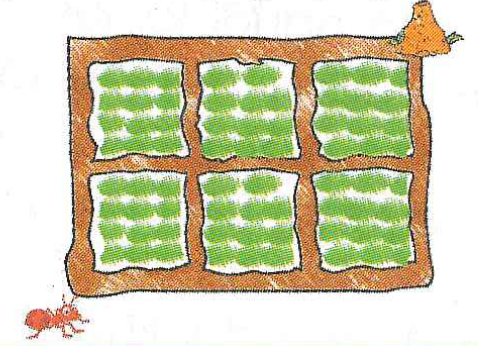
3. A larger field has six cells as shown. Using the preceding questions, determine the number of routes home.
Figures in order: original 2 × 2 field; the PPLL example; the larger 3 × 2 field.
1. How many field edges must the ant traverse? How many upwards and how many to the right? Each side of one field cell counts as one edge.
2. List the ant’s routes home. Let P denote right and L denote up. The illustrated example is PPLL.
– List all four-letter strings containing two P letters and two L letters.
– Count and compare the ant’s routes and these strings.
3. A larger field has six cells as shown. Using the preceding questions, determine the number of routes home.
Figures in order: original 2 × 2 field; the PPLL example; the larger 3 × 2 field.