Question 1
A $2\times3$ (or $3\times2$) rectangle with one unit square removed from a corner is called a singly deficient rectangle (Figure 1). Removing two unit squares at opposite corners gives a doubly deficient rectangle (Figure 2). Tile a $1993\times2000$ rectangle, without overlaps, using $2\times2$ squares and these two kinds of deficient rectangles. Let $s$ be the total number of $2\times2$ squares and doubly deficient rectangles in a tiling. Find the largest possible $s$.
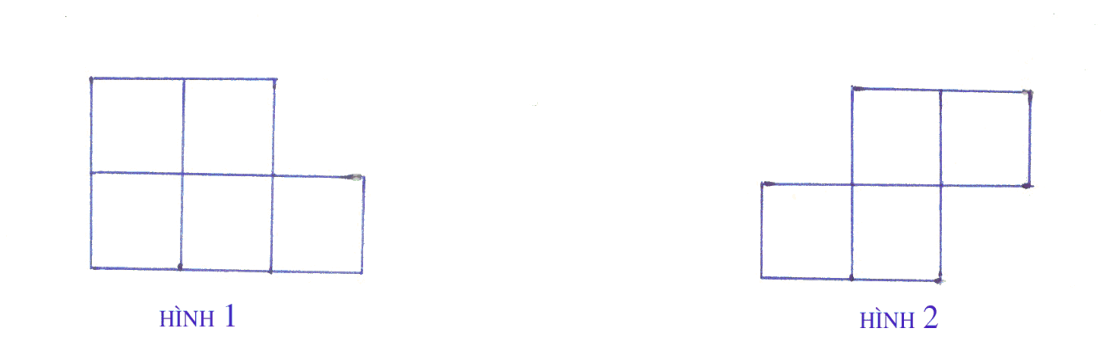
The shapes are understood as unit-grid pieces, as in the source drawing.
The supplied PDF does not state a time limit. This edition uses the user-approved 240 minutes per session, 480 minutes total for both sessions; this is an editorial convention. The supplied source has no question point values. Each problem uses 1 editorial point for import compatibility; this is not an official scoring scale. Essay grading is manual; the rubric is editorial. Importer multipliers: correct 1, incorrect 0, blank 0.