Question 26
The star shown is made up of two different-sized equilateral triangles which overlap symmetrically.
If the lighter-shaded smaller triangles each have an area of 1 square unit and the darker, larger triangles each have an area of 16 square units, what is the total area, in square units, of the whole star?
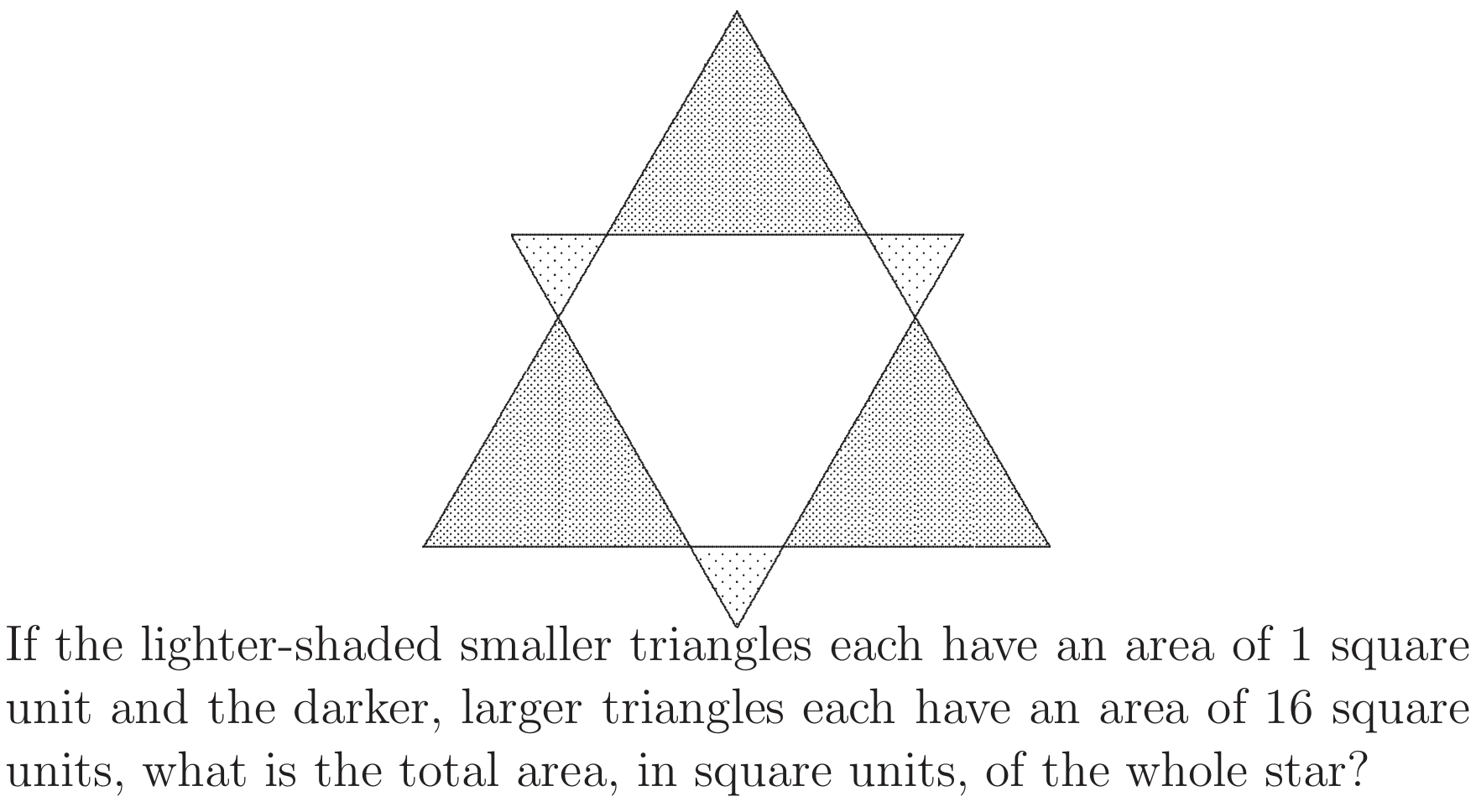
If the lighter-shaded smaller triangles each have an area of 1 square unit and the darker, larger triangles each have an area of 16 square units, what is the total area, in square units, of the whole star?