Question 14
Sam the beaver has blocks of equal height. He uses them to make towers as illustrated below; blocks in any one tower all have equal width.
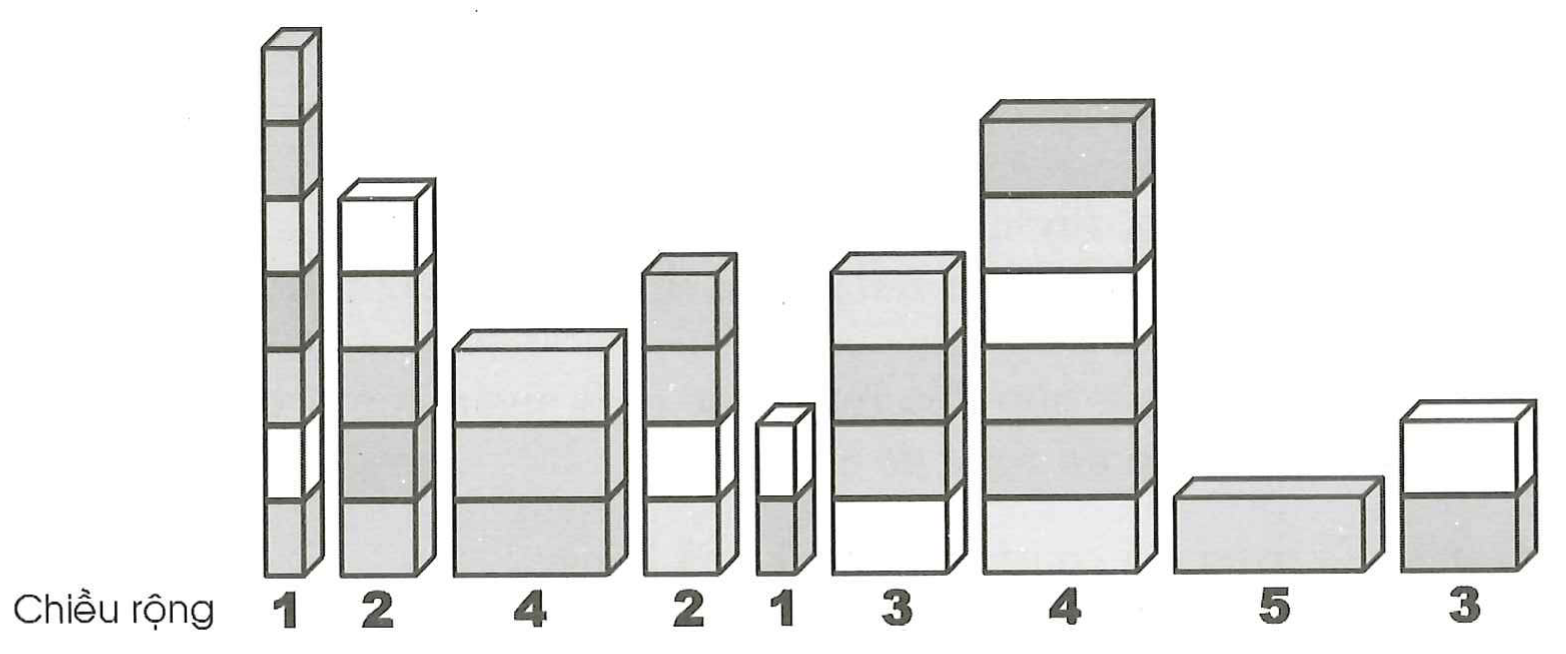
| Tower, left to right | 1 | 2 | 3 | 4 | 5 | 6 | 7 | 8 | 9 |
|---|---|---|---|---|---|---|---|---|---|
| Initial height | 7 | 5 | 3 | 4 | 2 | 4 | 6 | 1 | 2 |
| Width | 1 | 2 | 4 | 2 | 1 | 3 | 4 | 5 | 3 |
To make the towers equally high, Sam can add or remove blocks. He calculates the change of the towers for each way of doing this. Every time a block is added or removed, the change increases by its width. For example, removing 2 blocks from a tower of width 1 increases the change by 2×1=2 units; adding 4 blocks to a tower of width 3 increases it by 4×3=12 units.
What is the smallest total change needed to make these towers equally high?