Question 6
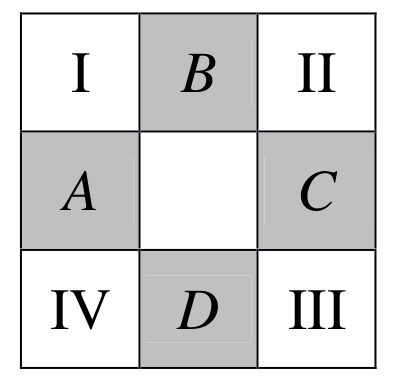
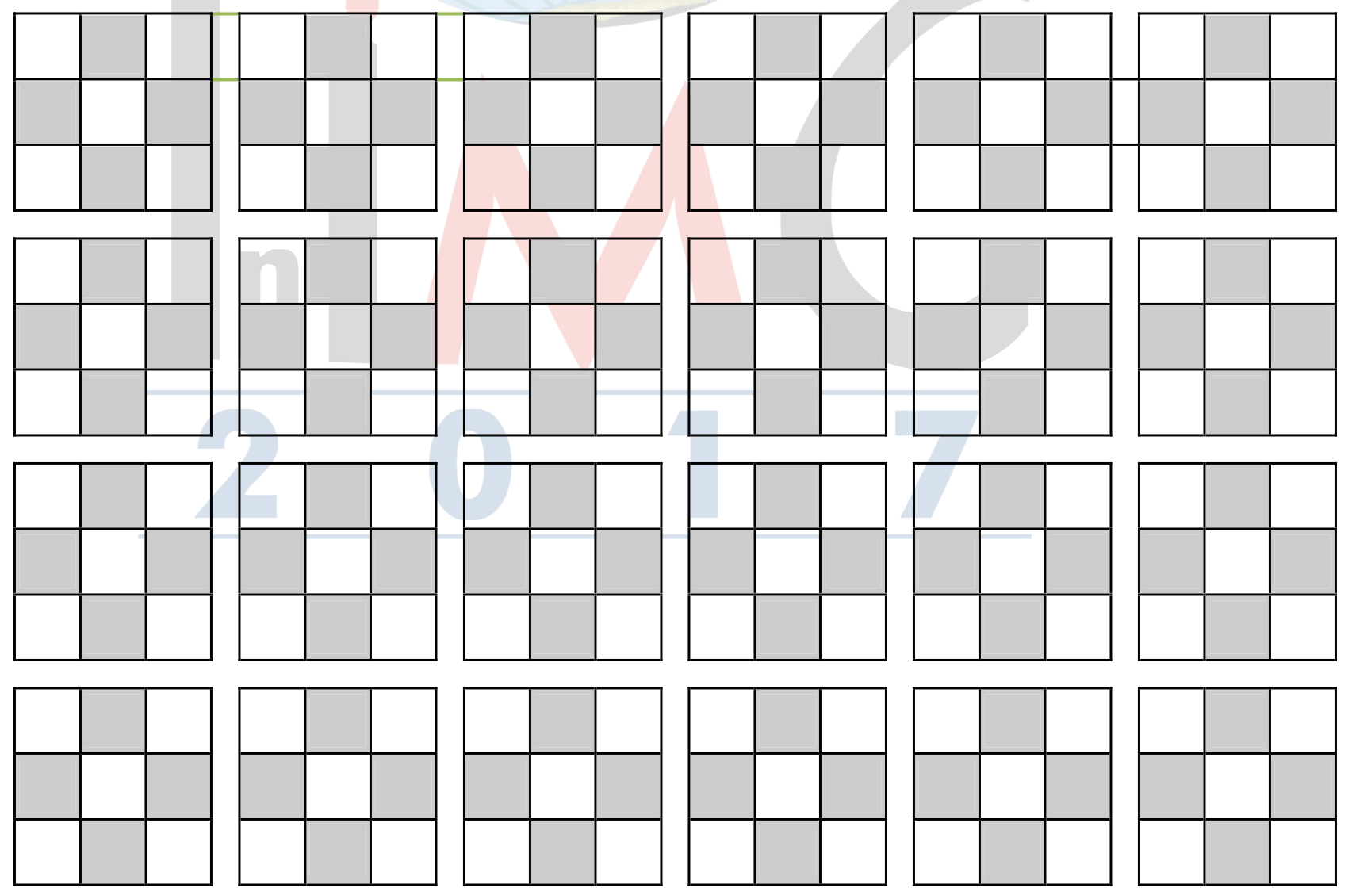
In the diagram, eight of the numbers from 1 to 10 are used to fill the squares $A,B,C,D,\mathrm{I},\mathrm{II},\mathrm{III},\mathrm{IV}$. The numbers in $\mathrm{I},\mathrm{II},\mathrm{III},\mathrm{IV}$ are the sums of their two neighbors. List down all the possible solutions. (Rotations and reflections are allowed).