Question 7
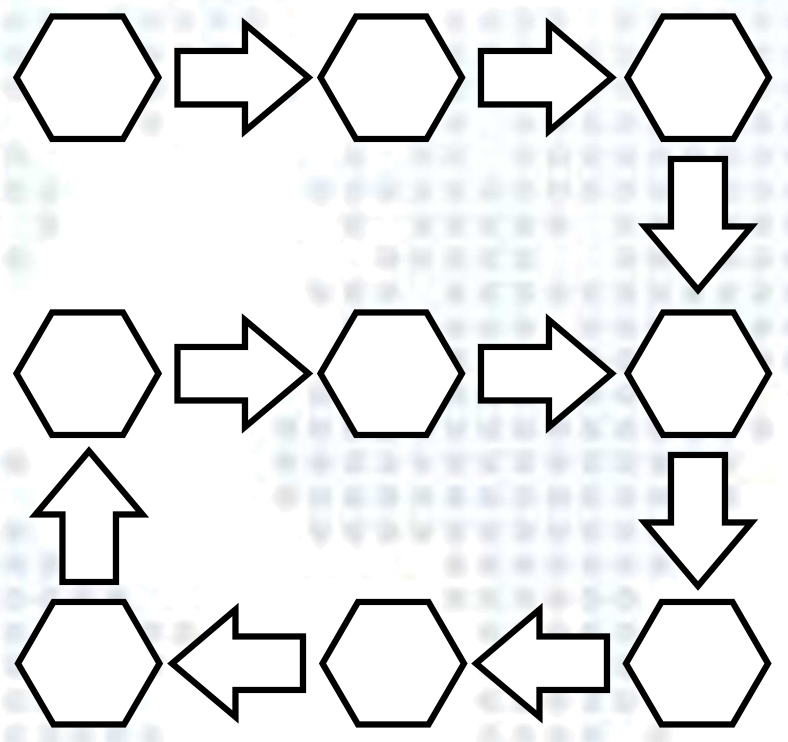
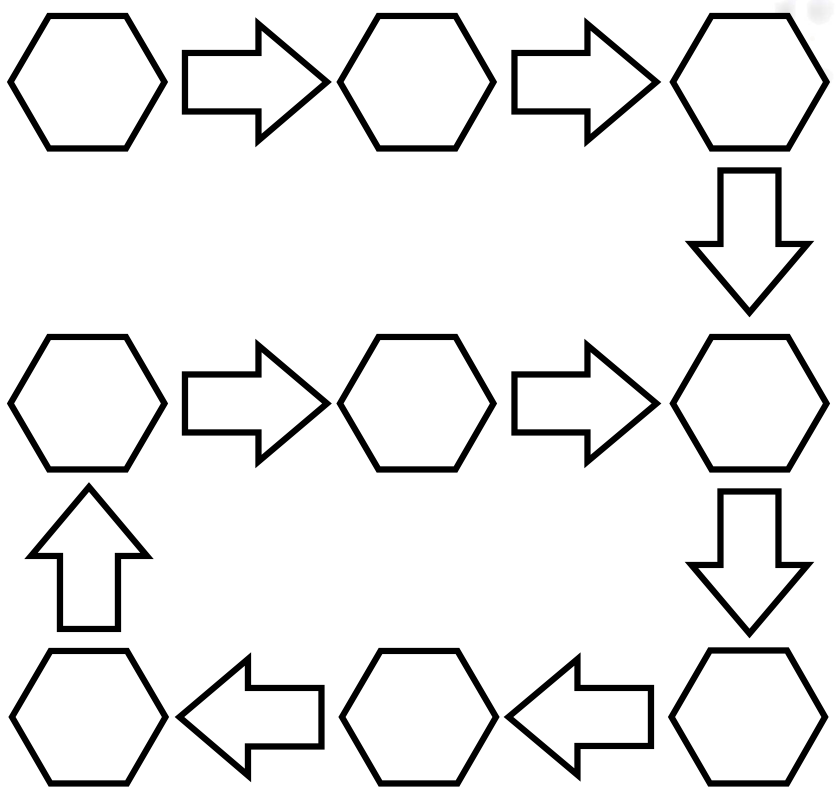
In the diagram below, each hexagon contains one of the numbers $2,4,5,6,7,18,20$ and $36$. Each number appears once except that $6$ appears twice. Each arrow contains one of the operations $-1$, $\div2$, $+3$, $\times3$, $+4$, $\times4$, $\div9$ and $+16$. Each operation appears once except that $-1$ appears twice. Complete the diagram so that each operation applied to the number in the preceding hexagon yields the number in the succeeding hexagon. Note that one of the hexagon succeeds no arrows while another one succeeds two arrows.