Skip to content / Đến nội dung
ThichHocToan.com

SEAMO 2027 - Paper D - SET 03 - Self-study

Question 1

SEAMO self-study edition 2027; not an official 2027 paper. Original source years are retained. 25 questions, 90 minutes; Q1–10: 3 points, Q11–20: 4 points, Q21–25: 6 points, total 100. Original response types and all subparts are preserved. Verified is an editorial convention; source defects, necessary assumptions and unresolved mathematical uncertainty are disclosed.

The sum of $n$ real numbers is zero and the sum of their pairwise products is also zero. Prove that the sum of the cubes of the numbers is zero.

Question 2

If $a-b=3$ and $a^2+b^2=5$, find $\dfrac1a-\dfrac1b$.
  1. $\frac12$
  2. 1
  3. $\frac32$
  4. 2
  5. None of the above

Question 3

Which of the following numbers is the largest?
  1. 1
  2. $\sqrt2$
  3. $\sqrt[3]3$
  4. $\sqrt[4]4$
  5. $\sqrt[6]6$

Question 4

Compute $\dfrac1{2021}+\dfrac{2020\times2022}{2021}-2022$.
  1. $-2$
  2. $-1$
  3. 1
  4. $\frac1{2021}$
  5. None of the above

Question 5

Compute the sum of the three smallest positive integers which have an odd number of divisors.
  1. 11
  2. 12
  3. 13
  4. 14
  5. None of the above

Question 6

Each time the hands of a standard 12-hour clock form a 180° angle, a bell chimes once. From midnight today until midnight tomorrow, how many chimes will be heard?
  1. 20
  2. 21
  3. 22
  4. 23
  5. 24

Question 7

Let $a_n$ be the number of ways to climb a flight of $n$ steps by taking either 1 or 2 steps at a time. Find the remainder when $a_{2019}$ is divided by 7.

Question 8

Find the smallest whole number whose first digit is 4 and for which moving this digit to the last place produces a number equal to $\frac14$ of the original.

Question 9

Given $x>0$, find the minimum value of $x+\dfrac4x$.
  1. 0
  2. 1
  3. 2
  4. 3
  5. 4

Question 10

Evaluate $\dfrac1{1\times2}+\dfrac5{2\times3}+\dfrac{11}{3\times4}+\cdots+\dfrac{71}{8\times9}+\dfrac{89}{9\times10}$.
  1. $\frac{81}{10}$
  2. $\frac{89}{10}$
  3. 9
  4. $\frac{91}{9}$
  5. None of the above

Question 11

Find the remainder when $3^{2000}$ is divided by 13.

Question 12

For an equilateral triangle, the ratio of the area of its circumscribed circle to the area of its inscribed circle is $m:n$, where $m,n$ are positive integers with no common factor. Find $m+n$.
  1. 4
  2. 5
  3. 6
  4. 7
  5. 8

Question 13

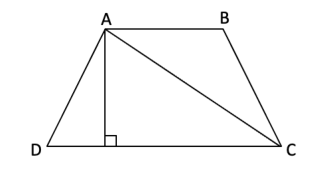
$ABCD$ is an isosceles trapezium with $AB\parallel DC$, $AC=DC$ and $AD=BC$, as shown. Its height equals $AB$. Find $AB:DC$.

Question illustration
  1. $2:3$
  2. $3:5$
  3. $4:5$
  4. $5:7$
  5. $5:9$

Question 14

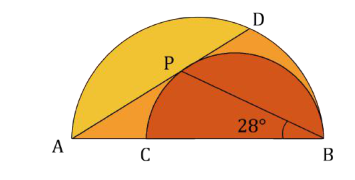
$AB$ and $BC$ are diameters of semicircles $ADB$ and $CPB$, respectively. The line $AD$ is tangent to semicircle $CPB$ at $P$. Given $\angle PBC=28^\circ$, find $\angle PAC$.

Question illustration
  1. $32^\circ$
  2. $33^\circ$
  3. $34^\circ$
  4. $35^\circ$
  5. None of the above

Question 15

Prime numbers $a,b,c$ satisfy $abc=5(a+b+c)$. Find $a+b+c$.
  1. 11
  2. 12
  3. 13
  4. 14
  5. 15

Question 16

Let $a,b$ be real numbers such that $a>b$, $2^a+2^b=75$ and $2^{-a}+2^{-b}=12^{-1}$. Find $2^{a-b}$.
  1. 1
  2. 2
  3. 3
  4. 4
  5. None of the above

Question 17

A teacher wrote 4875, 4563 and a positive integer $N$ on the whiteboard and asked for their lowest common multiple. A student misread 4875 as 4275 but still obtained the correct answer. What is the least possible value of $N$?
  1. 1755
  2. 2375
  3. 2535
  4. 3705
  5. None of the above

Question 18

Find the real roots of $(x+1)(x+2)(x+3)(x+4)=24$.
  1. No real roots
  2. $1;\ 5$
  3. $0;\ -5$
  4. $2;\ -5$
  5. None of the above

Question 19

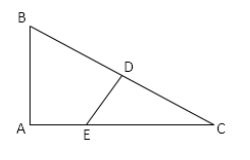
In right triangle $ABC$, $BC$ is the hypotenuse and $AC=5$. Point $D$ is the midpoint of $BC$, and $E$ lies on $AC$ as shown. Given $DE=AE=2$, find $AB$.
Question illustration
  1. $2\sqrt7$
  2. $\sqrt{15}$
  3. $\sqrt{20}$
  4. $3\sqrt7$
  5. $\sqrt{35}$

Question 20

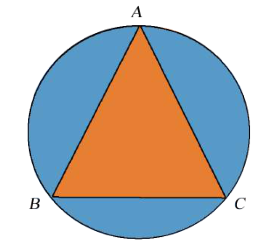
The vertices of equilateral triangle $ABC$ lie on a circle. Find the area of the circle, given that the side of the triangle is $2\sqrt3$.

Question illustration
  1. $3\pi$
  2. $4\pi$
  3. $5\pi$
  4. $6\pi$
  5. None of the above