IMSO 2007 Taiwan Selection — Science First Round Next → Source instructions (1–30): Each question has four choices. Select the best answer and write its letter on the separate answer sheet. Each correct answer is worth 4 points. Time limit: 60 minutes.
food
carbon dioxide
water
chlorophyll
The wheels and gears of a machine are greased in order to decrease
potential energy
efficiency
output
friction
Weather forecasts are more accurate today than in the past due to
global warming
air-quality control
plate tectonics
use of images from space
The endocrine system produces chemicals that affect organ functions. These chemicals are called
nutrients
hormones
microbes
wastes
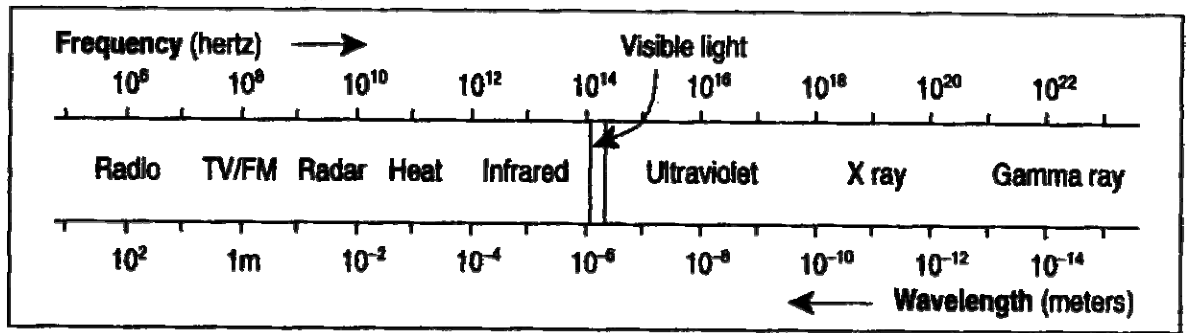
The diagram below shows the frequency and wavelength of various types of electromagnetic energy. Which type of electromagnetic wave has a wavelength of approximately $10^{-10}$ meter and a frequency of $10^{18}$ hertz?
infrared
radio
X ray
radar
The presence of some similar structures in all vertebrates suggests that these vertebrates
all develop at the same rate
evolved from different animals that appeared on Earth at the same time
all develop internally and rely on nutrients supplied by the mother
may have an evolutionary relationship
Which part of a cell allows nutrients and other materials to enter or leave the cell?
cytoplasm
nucleus
chloroplast
cell membrane
Base your answer on the supplied table comparing human population and atmospheric sulfur dioxide (SO₂) over time.
The human population has increased while the amount of SO₂ has decreased.
The human population has decreased while the amount of SO₂ has increased.
Both the human population and the amount of SO₂ have increased.
Both the human population and the amount of SO₂ have decreased.
Base your answer on the supplied table comparing human population and atmospheric sulfur dioxide (SO₂) over time.
storing nuclear waste
collecting solar energy
using wind energy
burning fossil fuels
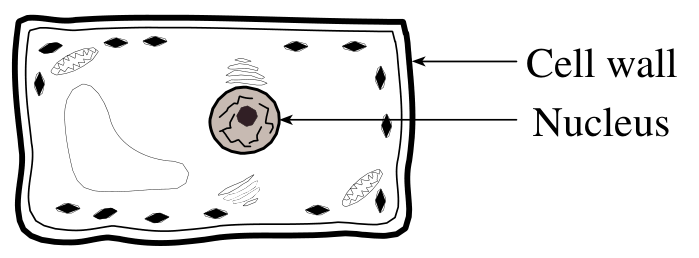
The diagram below shows a cell. This cell would be found in which type of organism?
animals
fungi
viruses
plants
Rocks are classified as igneous, metamorphic, or sedimentary according to
their color
their shape
how they formed
the minerals they contain
Sand and iron particles that are similar in size and color are mixed together in a beaker. What would be the best method of separating the particles?
Use tweezers to separate them.
Use a magnet to separate them.
Add water to the mixture.
Pour the mixture into a filter.
Nutrients, water and carbon dioxide are returned to the environment when
plants make food during photosynthesis.
decomposers break down dead matter.
organisms reproduce.
living things respire.
A plant cell and an animal cell are shown below. Which conclusion can be made from these diagrams?
Plant and animal cells interact to make new organisms.
Plant and animal cells are similar in the way they grow and divide.
Animal cells require oxygen to release the energy stored in food while plant cells do not.
Nerve cells are present in plant and animal cells.
In one variety of corn, the kernels turn red when exposed to sunlight. In the absence of sunlight, the kernels remain yellow. Based on this information, it can be concluded that the color of these corn kernels is due to the
process of selective breeding
rate of photosynthesis
effect of environment on gene expression
composition of the soil
Toxins can harm a developing fetus. They usually enter the fetus by the process of
blood flow from the mother to the fetus
active transport from the ovary
diffusion across placental membranes
recombination of genes from the fetus and mother
When you are exercising, your body gets warmer because…
Much of sweat is produced, it may cause you are feeling hot
You are thirsty and need a lot of fresh water to drink
Active respiration, which may cause amount of energy is discharged
Your body makes an adaptation by improving the temperature
Plants are genetically modified to become resistant to unfavorable conditions. Which of the following can be examples of genetically modified plants?
III and IV only
I, III and IV only
I, II and IV only
I, II, III and IV
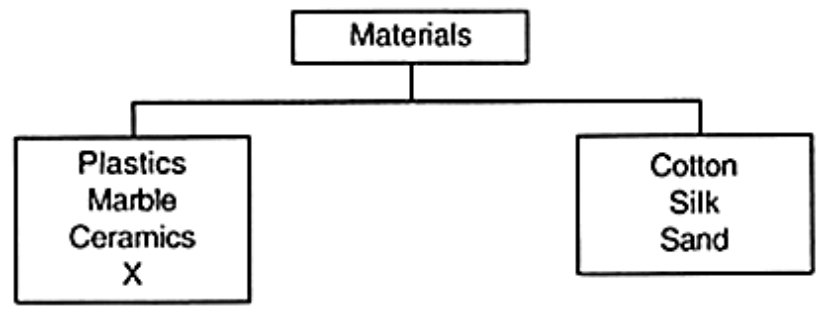
Which of the following can be X?
Materials branch into: left Plastics, Marble, Ceramics, X; right Cotton, Silk, Sand. No branch category labels are printed.
A. Alloys
B. Rocks
C. Wood
D. Lodestones
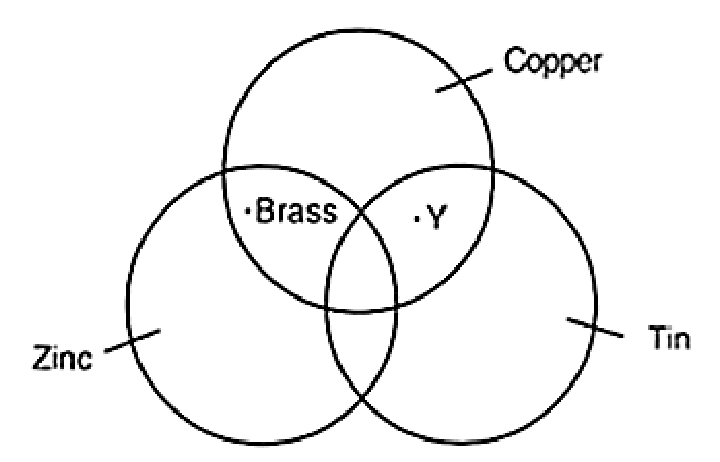
The above Venn diagram shows the materials that are mixed to form alloys. What can Y represent?
Steel
Titanium
Bronze
Aluminum
Next →