Skip to content / Đến nội dung
ThichHocToan.com

IMSO 2023 Science International – Theory II

Question 1

Study the infographic below which shows the on-going cycle of antibiotic resistance spread among humans, animals, and environment.
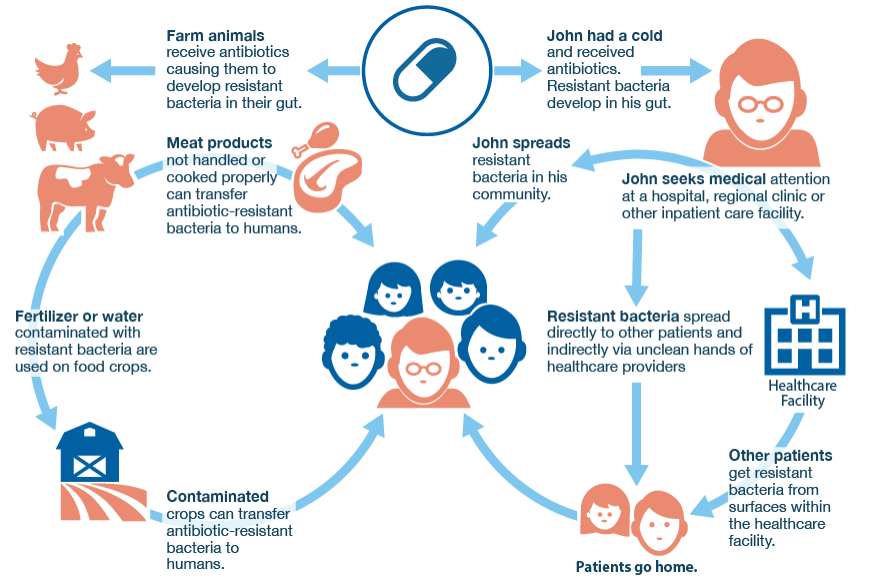
Question illustration

a) John never took medicine with antibiotics but he still developed antibiotic resistance in his body. Explain. [1.5 points]

b) How should we use antibiotics to prevent the resistance effect? [1.5 points]
Question 2

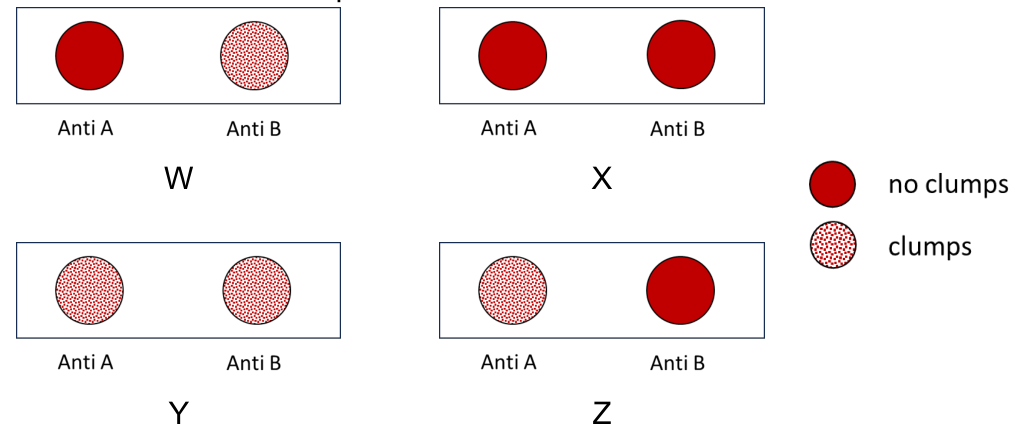
Four individuals carried out blood group tests using Anti A and Anti B serum. The results of the four are shown in the picture below.

Question illustration

a) Identify the blood types of the four individuals above. [2 points]

| Individual | W | X | Y | Z |
| --- | --- | --- | --- | --- |
| Blood type | | | | |

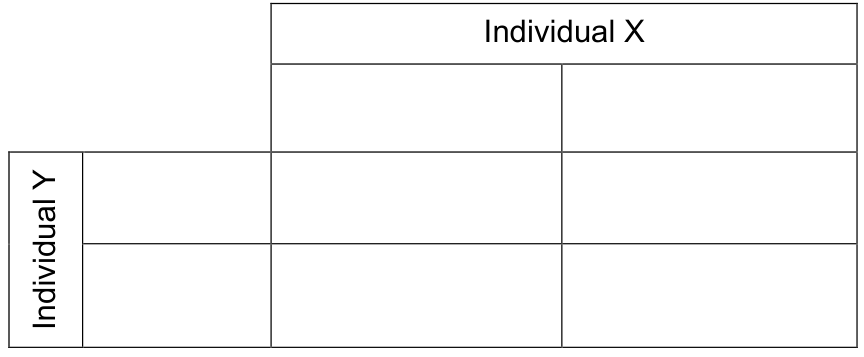
b) If individuals Y and X are husband and wife, then what blood types might their children have? Explain your answer using Punnett square. [2 points]

Question illustration

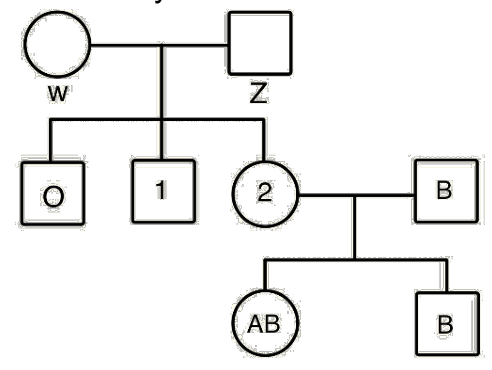
c) The pedigree below shows the family tree of individuals W and Z. [2 points]

Question illustration

State blood type of:

i) Individual 1

ii) Individual 2

Question 3

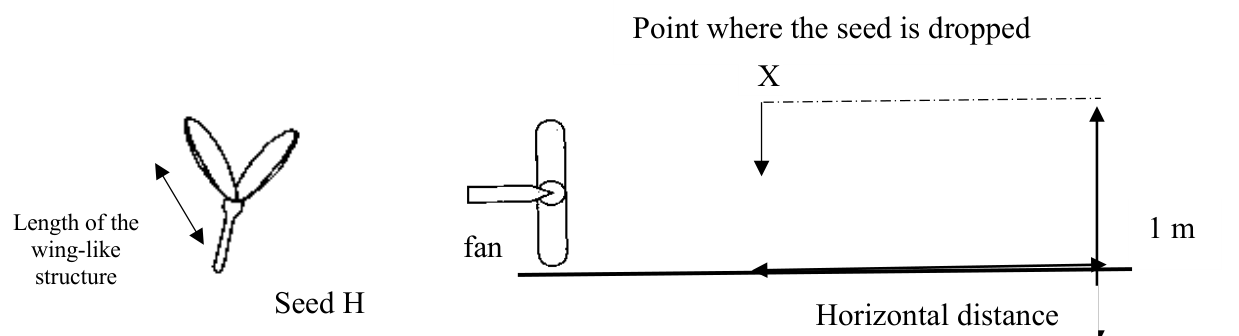
Earl wanted to find out how the wing-like structure of a seed affects the distance it will travel in wind. He cut the length of the wing of Seed H. he dropped it down from a height of 1 m and measured the horizontal distance it traveled as shown in the set-up below.

Question illustration

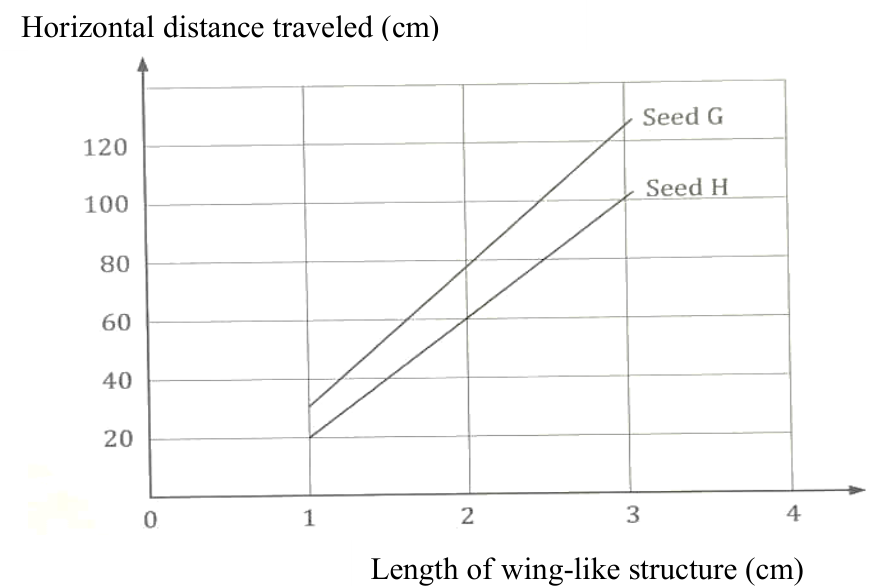
Based on the result, the following graph was plotted.

Question illustration

(a) What is the relationship between the length of the wing-like structure of Seed H and the horizontal distance traveled? [1.5 point]

(b) Using the graph, predict the horizontal distance traveled by Seed H when its wing-like structure is less than 1 cm. [1 point]

(c) Earl repeated the experiment with Seed H and Seed J which are obtained from the same plant as Seed H. Seed G was lighter that Seed H and Seed J was the heaviest among the three seeds. The results for Seed G were plotted in the graph above. Plot the result for Seed J on the graph above. [2.5 points]

(d) Other than the length of the wing-like structure, name another factor that has affected the horizontal distance traveled by the seed. [1 point]

Question 4

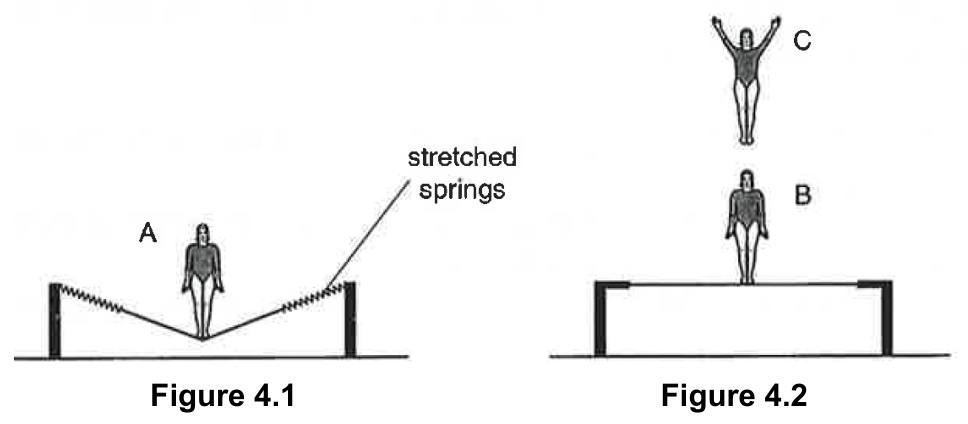
The diagram below shows a gymnast on a trampoline. At position A in Figure 4.1, the gymnast starts to rise. She passes through B in Figure 4.2 and reaches her maximum height at C.

Question illustration

(a) (i) State the form of energy stored in the stretched springs shown in Figure 4.1. [1 point]

(ii) State the form of energy gained by the gymnast between B and C. [1 point]

(b) The gymnast has a mass of 45.0 kg. When the gymnast is at B, her speed is 10.0 m/s. Calculate her kinetic energy at point B. [1.5 points]

(c) The energy stored in the stretched springs shown in Figure 4.1 is greater than 2250 J. Explain. [1.5 points]

Question 5

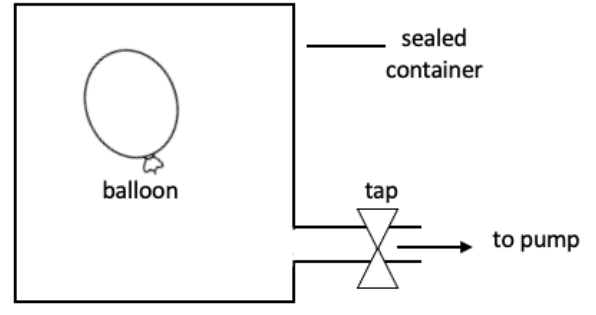
The diagram shows a balloon placed inside a sealed rigid container connected to an air pump. The pump was switched on to extract a little air from the sealed container.

Question illustration

(a) Describe what happens to the balloon as little air is extracted from the container. [1.5 points]

(b) Explain your observation above making reference to the pressure and volume of the gas inside the balloon. [1.5 points]

(c) Sketch a volume-pressure graph to show the relationship between the volume and pressure of the gas inside the balloon. [2 points]

Question 6

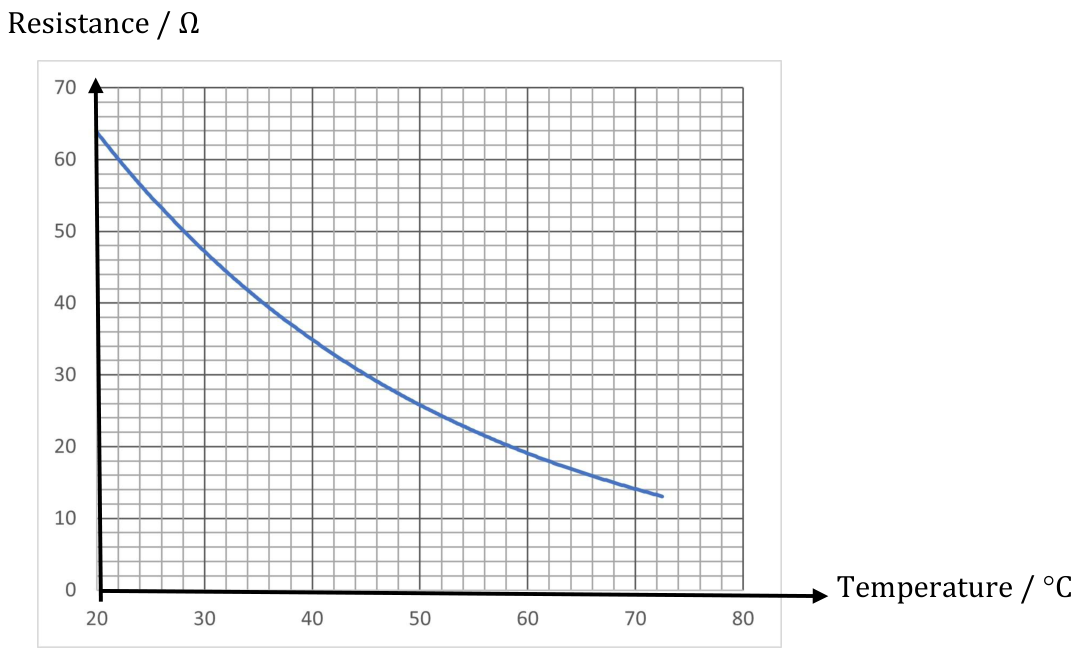
The graph below shows how the resistance of the thermistor changes with temperature.

Question illustration

(a) Using information from the graph above, deduce the current through the thermistor at a temperature of 50°C if the voltage across it is at 5.2 V. [3 points]

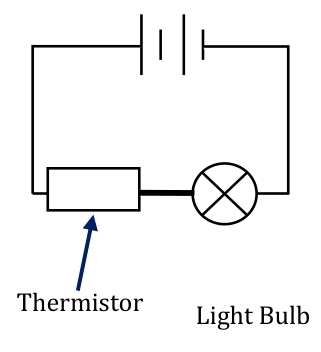
(b) A thermistor is a resistance thermometer or a resistor whose resistance is dependent on temperature. The thermistor is used in the circuit below.

Question illustration

Explain what happens to the brightness of the light bulb when temperature increases. [2 points]

Question 7

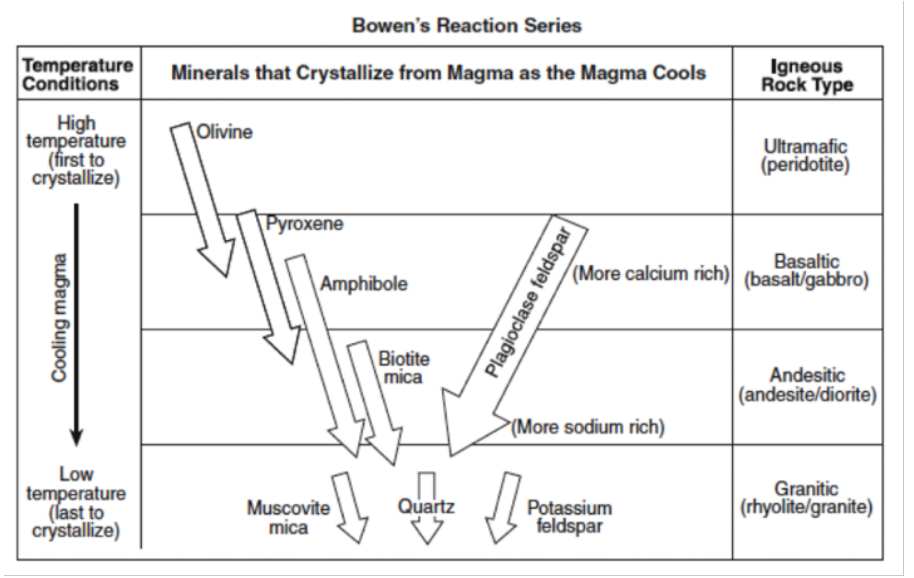
The diagram below is the Bowen’s Reaction Series. It shows the sequence in which minerals crystallize as magma cools and forms different types of igneous rocks from the same magma. The arrow for each mineral represents the relative temperature range at which that mineral crystallizes.

Question illustration

a. How is the chemical composition of plagioclase feldspar found in basaltic rock different from the chemical composition of plagioclase feldspar found in granitic rock? [1.5 points]

b. Describe the temperature conditions that explain why olivine and quartz are not usually found in the same igneous rock type. [1.5 points]

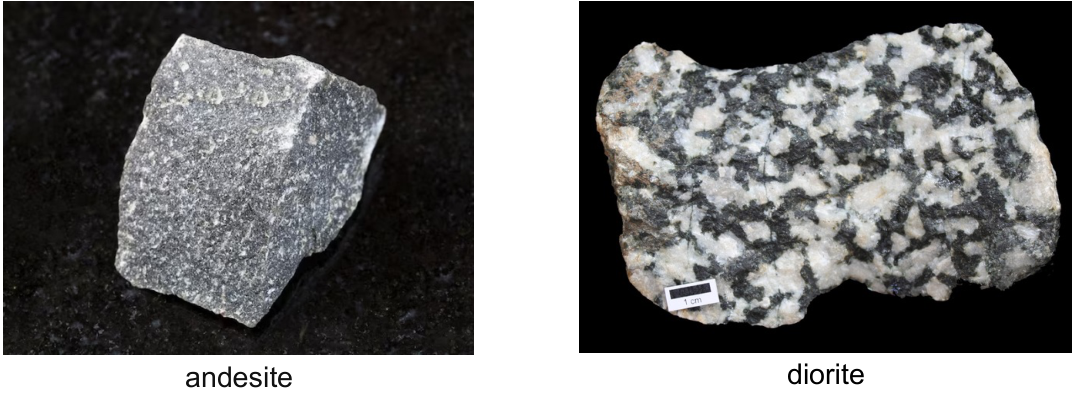
c. Identify two similarities and two differences between the igneous rocks andesite and diorite. [4 points]

Question illustration

| similarities | differences |
| --- | --- |
| | |

Question 8

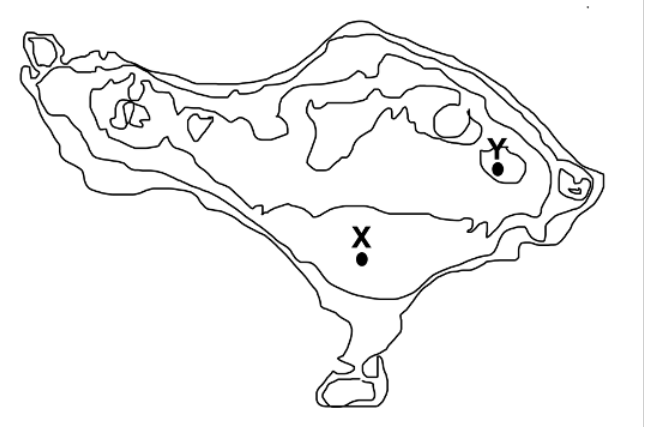
The figure below shows the topographic map of Bali, Indonesia. Points A, B, X, and Y represent surface locations on the island.

a. The average annual air temperature at location X is approximately 28°C, while the average annual air temperature at location Y is approximately 20°C. Explain why location Y has cooler average temperatures compared to location X. [1.5 points]

Question illustration

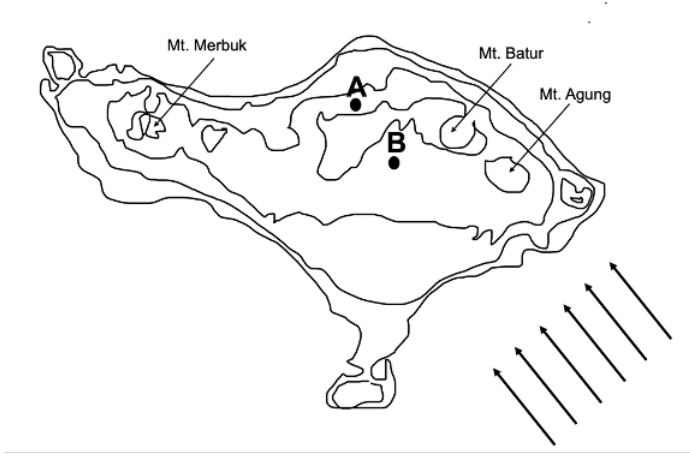
b. The map below shows the locations of three volcanoes on the island of Bali. The arrows represent the direction of the planetary winds. Points A and B represent surface locations on the island. Explain why location B usually receives more annual precipitation than location A. [1.5 points]

Question illustration

Question 9

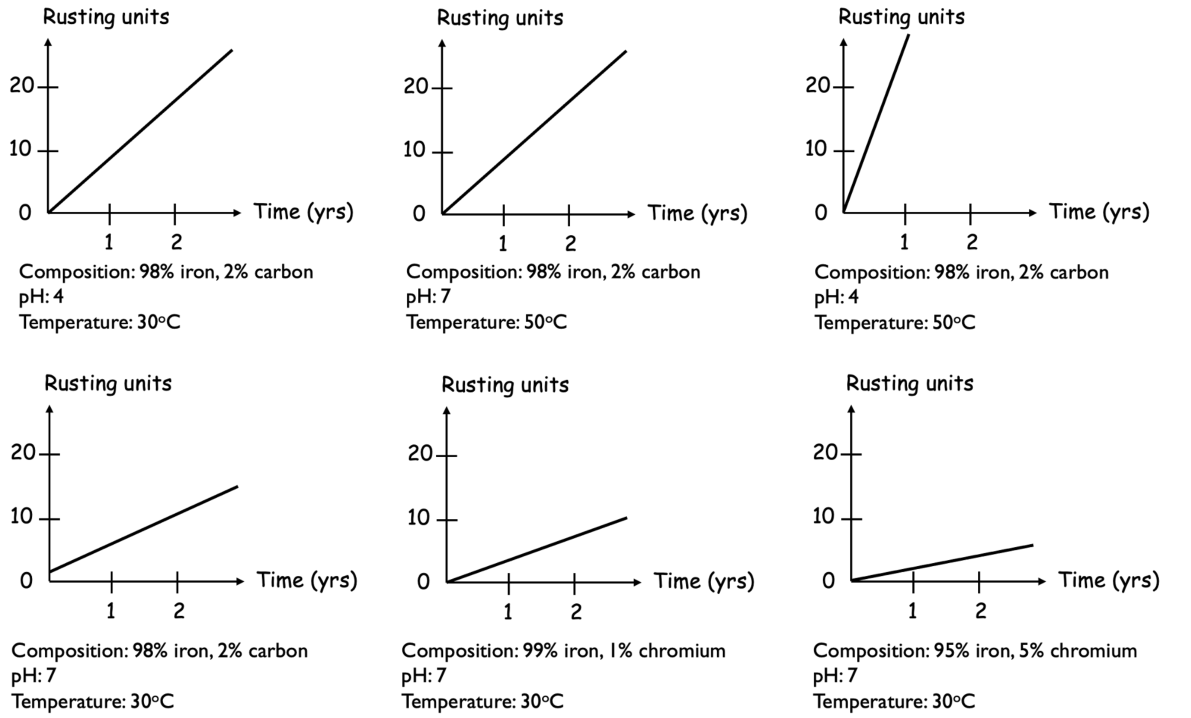
The speed at which the chemical change of steel rusting varies with conditions and composition. The graphs below show how the amount of rusting depends upon composition of the steel, pH and temperature.

Question illustration

a. Write a word equation and a chemical equation for the rusting process. [1 point]

| Word equation | |
| --- | --- |
| | |
| Chemical equation | |
| | |

b. Identify two (2) conditions that helped reduced rusting of steel. [2 points]

c. Steel rusts by the chemical combination of iron (in steel) with oxygen and water in the air. Suggest and explain one way that rusting of steel can be prevented. [2 points]

| Method | Reason |
| --- | --- |
| | |