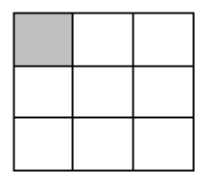
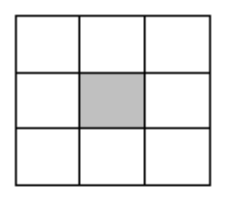
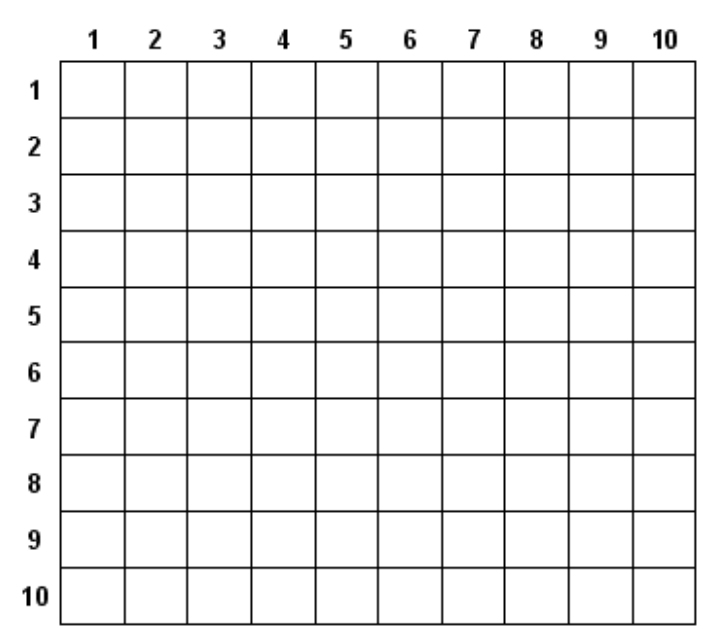
Removing the upper-left cell of a $3\times3$ grid leaves 11 squares: eight unit squares and three $2\times2$ squares. Removing its central cell leaves only eight unit squares.
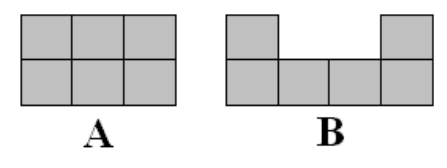
Shapes A and B each consist of six unit cells.
In each part, remove one copy of the specified shape from the $10\times10$ grid, keeping its boundary on grid lines:
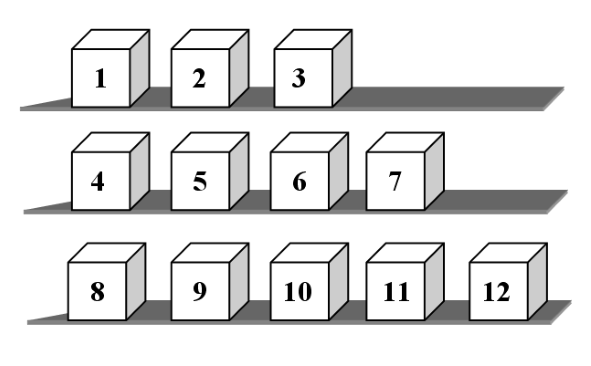
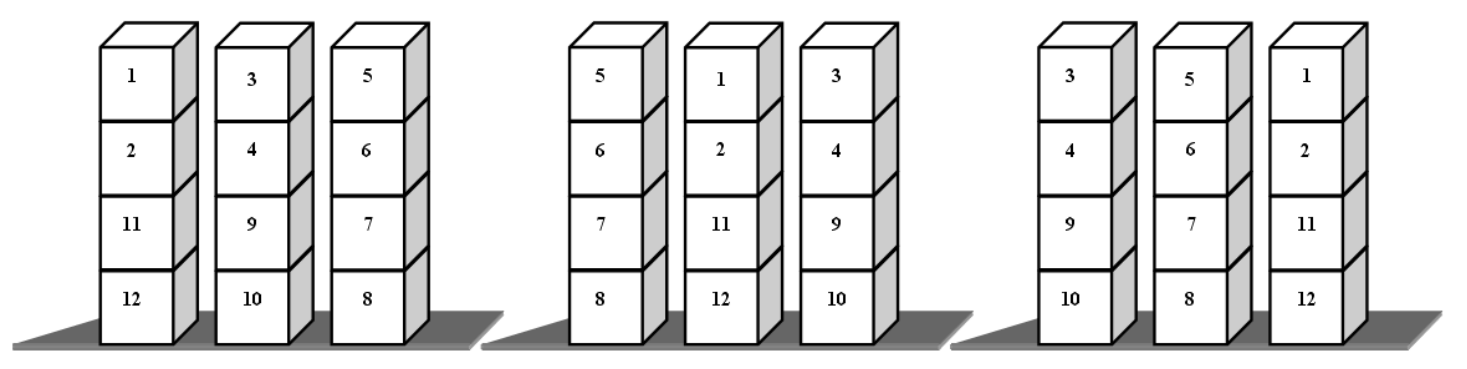
Arrange them into three stacks of equal height. The sums in all three stacks must be equal, and numbers must increase from top to bottom. The three examples below are considered the same arrangement. List as many different arrangements as possible.
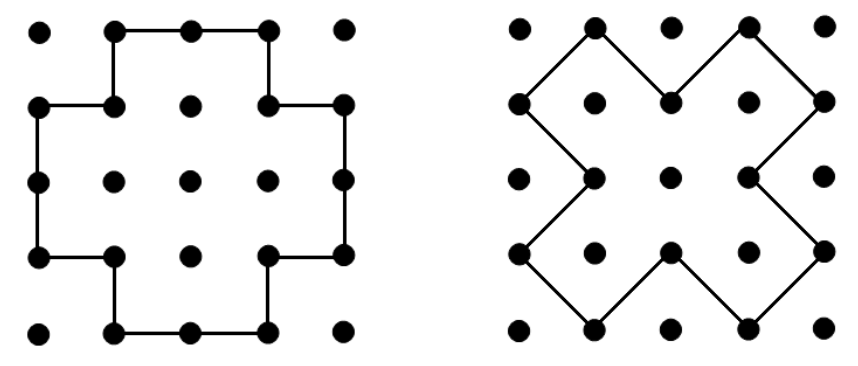
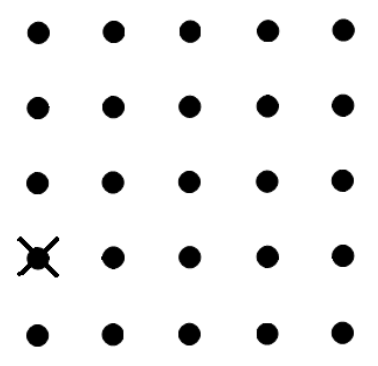
Consider the $5\times5$ geoboard. The two illustrated crosses each surround five pins.
A. Find every square surrounding nine pins.
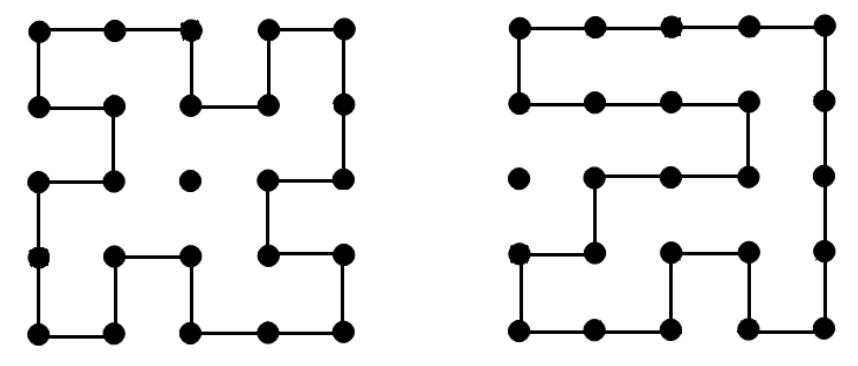
A closed shape can also use 24 pins: start at a pin, move to the next pin horizontally or vertically, visit each pin at most once, and return to the starting pin. Two examples are shown.
Some pins are always part of any such 24-pin shape; one is marked below.
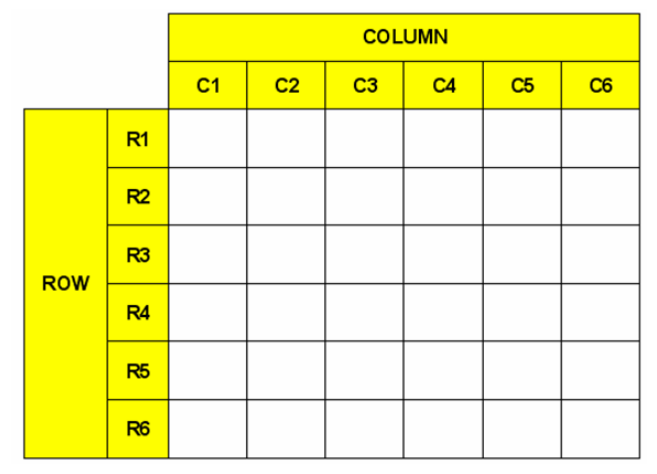
Fill every cell of this $6\times6$ table with a number from 1 through 9, following all the row and column rules.
- R1: sum 21.
- R2: sum 39.
- R3: six consecutive numbers in order.
- R4: the largest and smallest entries are adjacent.
- R5: exactly two entries are 9.
- R6: sum 21.
- C1: exactly two 9s; the minimum entry is 2.
- C2: six consecutive numbers in order.
- C3: exactly two 3s; sum 21.
- C4: exactly two 8s; no entry is 4.
- C5: exactly two 6s; sum 40.
- C6: no entry is 7.