Skip to content / Đến nội dung
ThichHocToan.com

IMSO 2007 Mathematics - International Exploration

Question 1

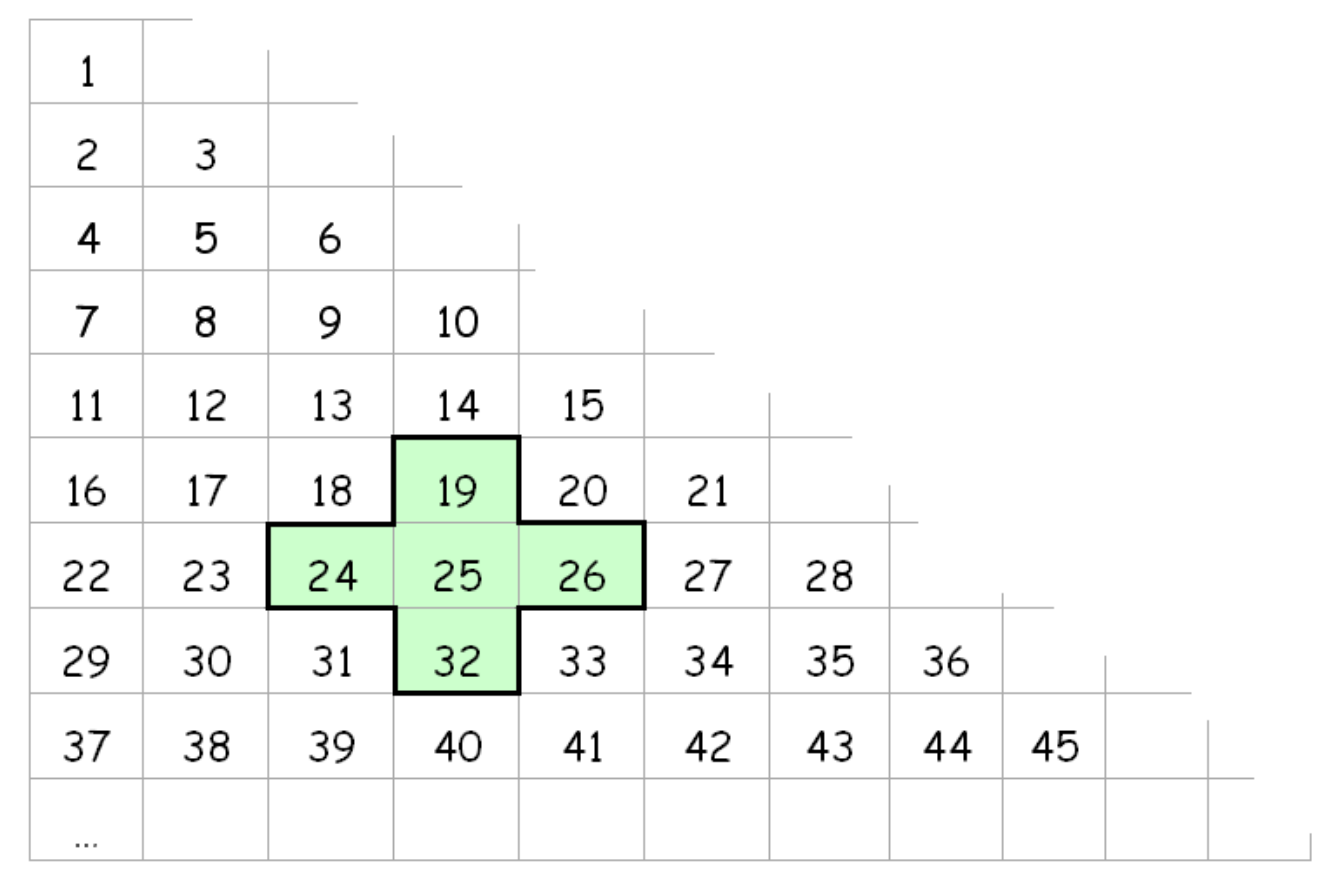
Positive numbers are written in order beginning with 1 in the pattern shown. A cross encloses five numbers; the example has centre 25.
Question illustration

(a) The sum of the numbers enclosed by a cross with centre 72 is 361. What is the sum for centre 75?
(b) What is the largest number enclosed by the cross with centre 103?
(c) A cross encloses numbers with sum 1151. What is its centre number?
Question 2

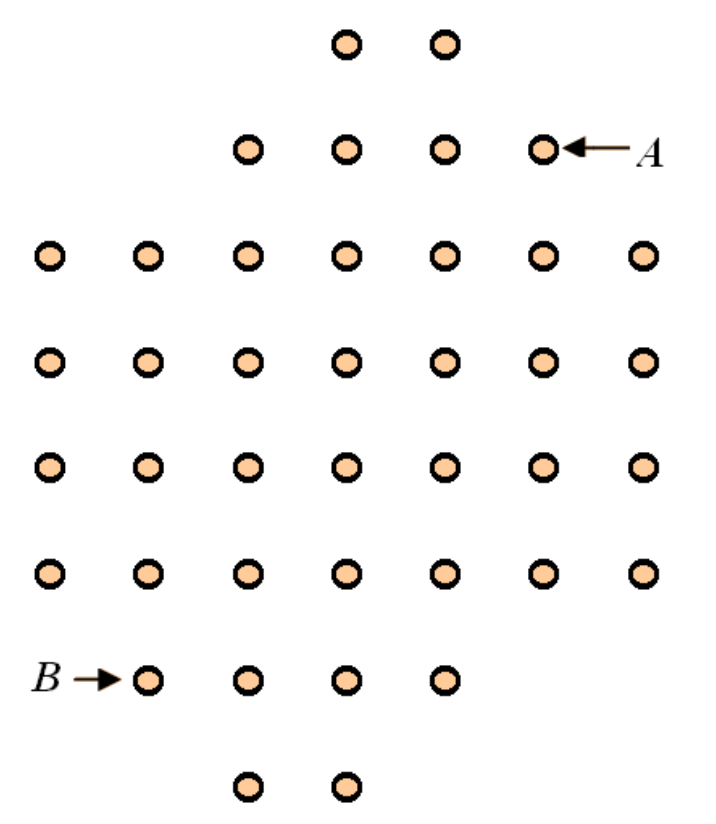
There are 40 dots on the paper. The vertical or horizontal distance between neighbouring dots is 1 cm. A and B are labelled as shown.

Question illustration

A 39-centimetre string is pulled from A to B so that it passes through as many dots as possible. Draw one possibility.

Question 3

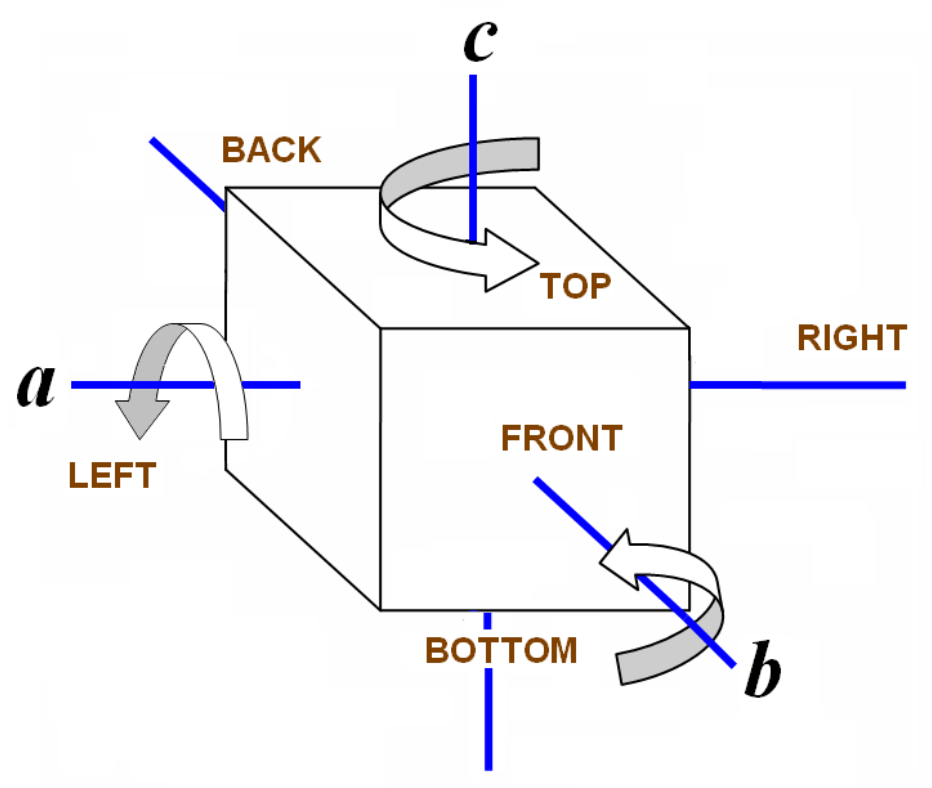
A cube can be rotated about any of the three axes a, b and c shown.

Question illustration

(i) A is a 90-degree turn about axis a in the arrow direction.
(ii) B is a 90-degree turn about axis b in the arrow direction.
(iii) C is a 90-degree turn about axis c in the arrow direction.
(iv) Consecutive letters are performed from left to right: AB means A followed immediately by B.
(v) Powers repeat a move, so $A^2$ means A twice.

One face is marked IMSO.
(a) If IMSO starts on the front, where will it be after $A^3B$?
(b) If IMSO is on the bottom after ABC, where was it before those moves?
(c) Start with IMSO on the front. Write as many sequences as you can that return this face to the front, using each of A, B and C at most twice.

Question 4

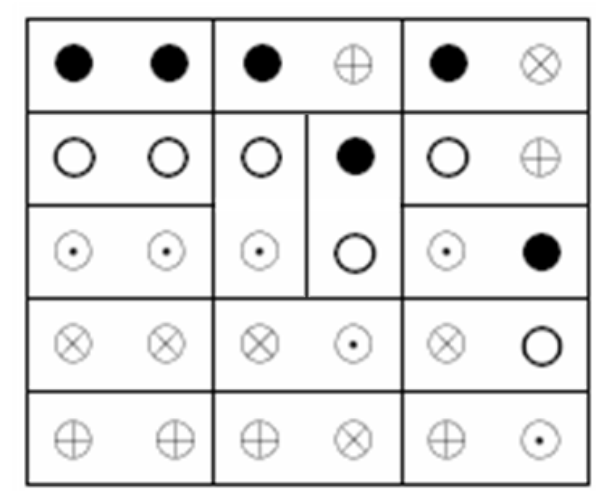
A puzzle consists of fifteen domino pieces. They can be arranged as follows.

Question illustration

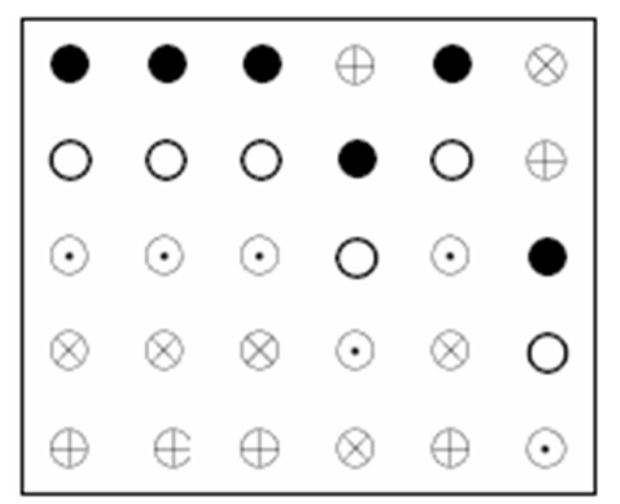
The same arrangement, with the boundaries between individual dominoes removed, is the following $5\times6$ array.

Question illustration

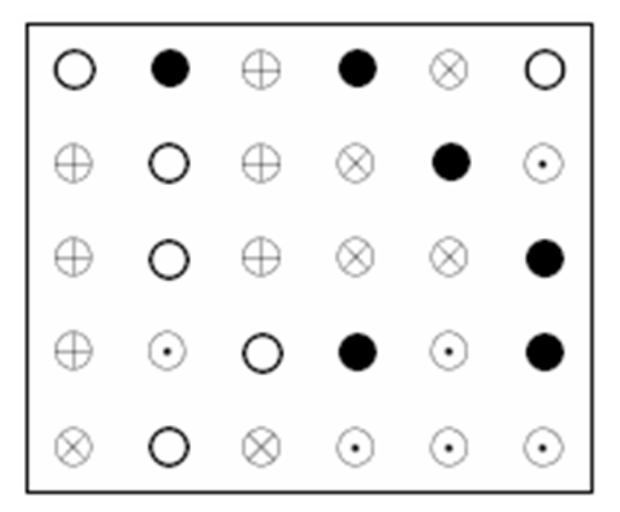
Determine where each domino piece lies in the target configuration below by drawing its boundaries.

Question illustration

Question 5

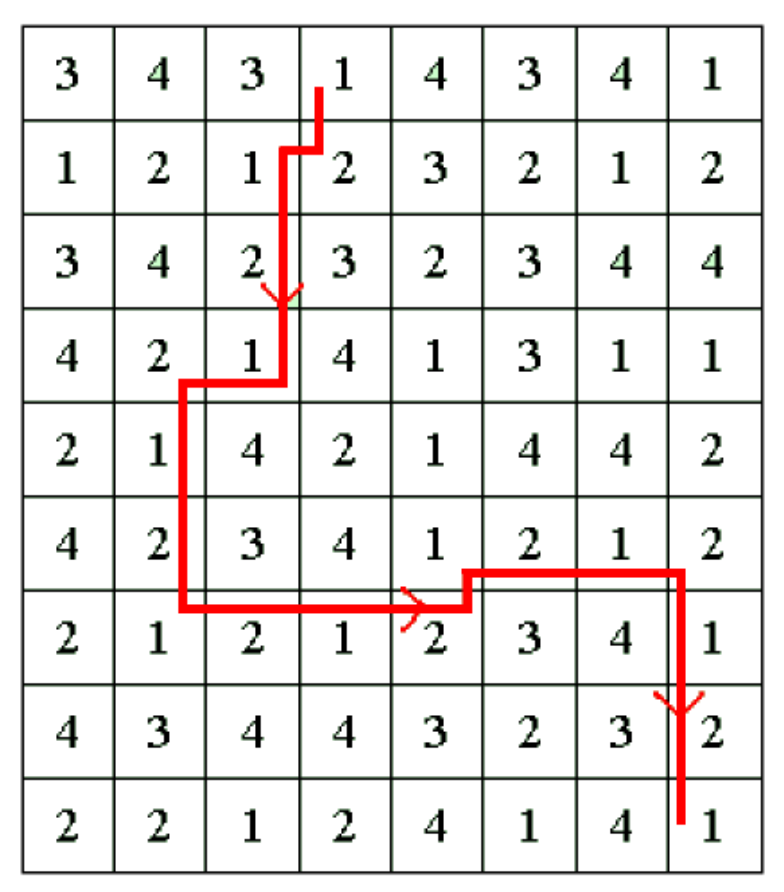
The rectangular array below must be crossed from the top row to the bottom row.
(i) Only up, down, left and right moves are allowed; no diagonal moves.
(ii) A route visits every cell at most once, although different routes may share cells.
(iii) The digits on a route form at least two repeated blocks. Examples: 1,2,1,2,1,2 has block 1,2; 2,1,3,2,1,3 has block 2,1,3; 1,3,4,2,1,3,4,2 has block 1,3,4,2. The final block need not be complete.

Question illustration

Draw as many routes as you can from any top-row cell to any bottom-row cell that obey these rules. The red route above is already printed in the source.

Question 6

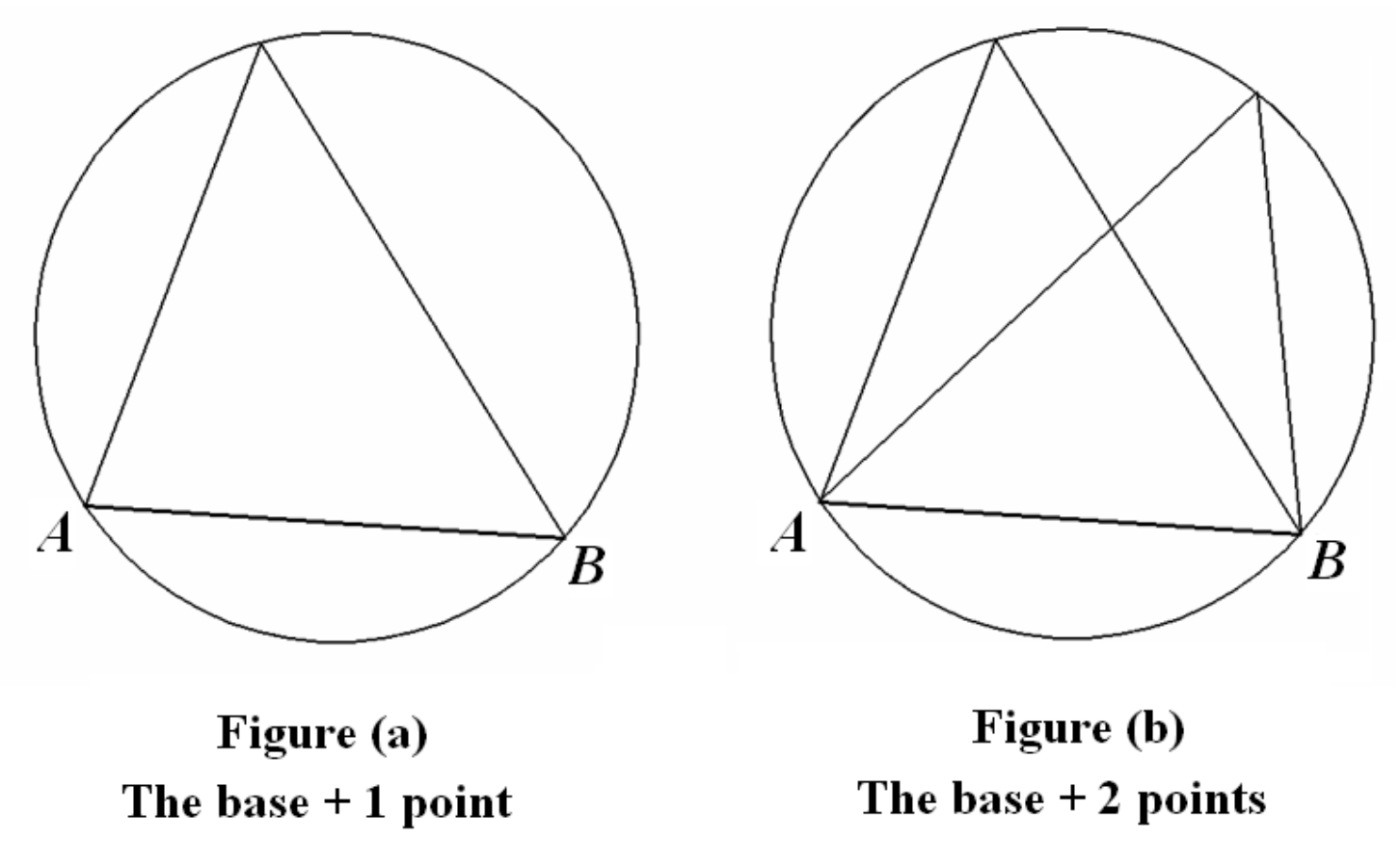
In the figures, chord AB is the base. Choose points on the circle above this base and connect each point to both A and B with straight line segments. Figure (a), with one point, contains one triangle. Figure (b), with two points, contains five triangles.

Question illustration

(a) How many triangles can be constructed with the base and 3 points?
(b) How many triangles can be constructed with the base and 5 points?
(c) What is the least number of points needed to construct at least 120 triangles?