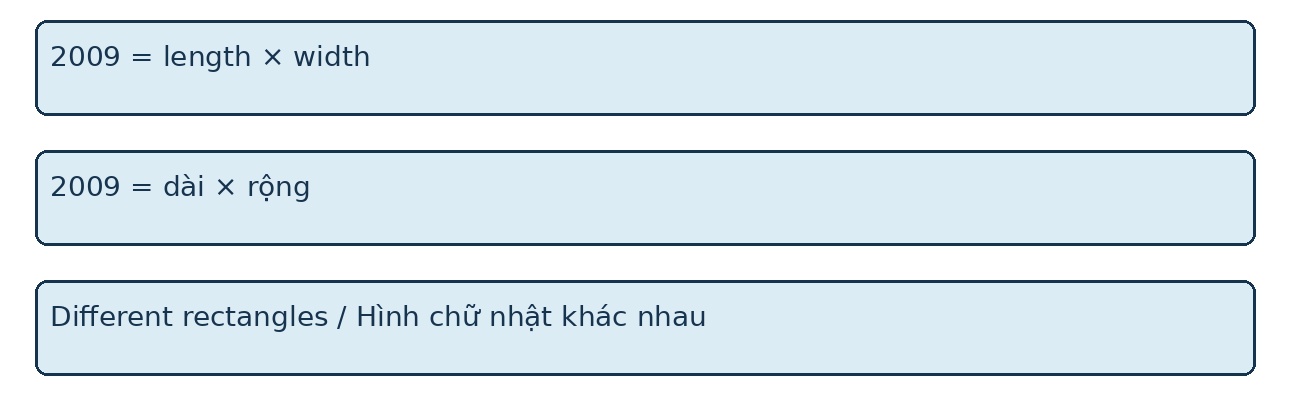
For every two-digit natural number, subtract its units digit from its tens digit and write the result on a board. Add all these results. What is the final sum?
Two flashing lights stand along a light display. The first is on for 3 seconds, off for 2 seconds, and repeats. The second is on for 4 seconds, off for 2 seconds, and repeats. They have just switched on simultaneously after being off. In how many seconds will they next start to light up simultaneously in this way?
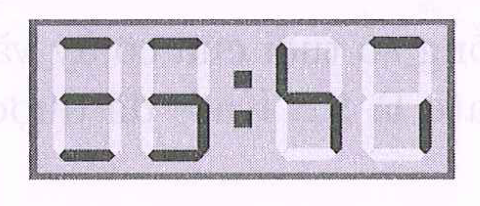
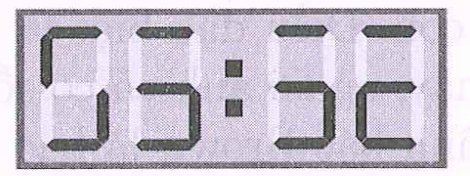
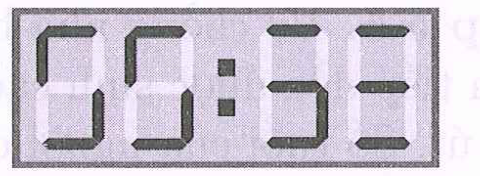
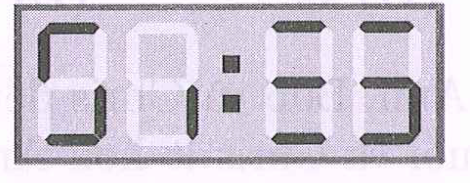
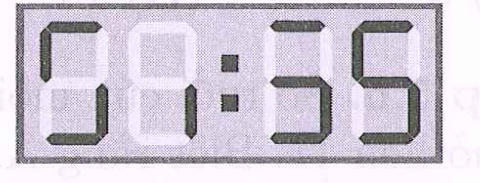
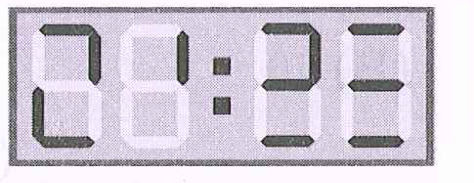
A digital clock displays each digit using seven segments, as illustrated. Five segments of the clock are broken and can no longer change colour; a broken segment always remains white. The clock currently shows the illustrated display. Which option shows its display 3 hours 45 minutes later?
Use the source-intended 24-hour display, 00:00–23:59.
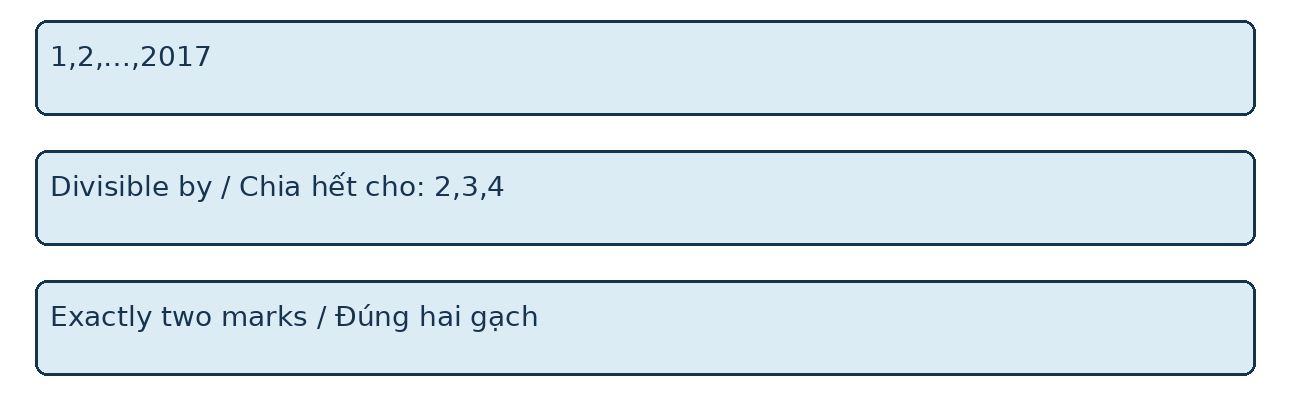
Michael writes every integer from 1 to 2017 on a board and underlines multiples of 2. Peter underlines multiples of 3, and Lily underlines multiples of 4. How many integers are underlined exactly twice?
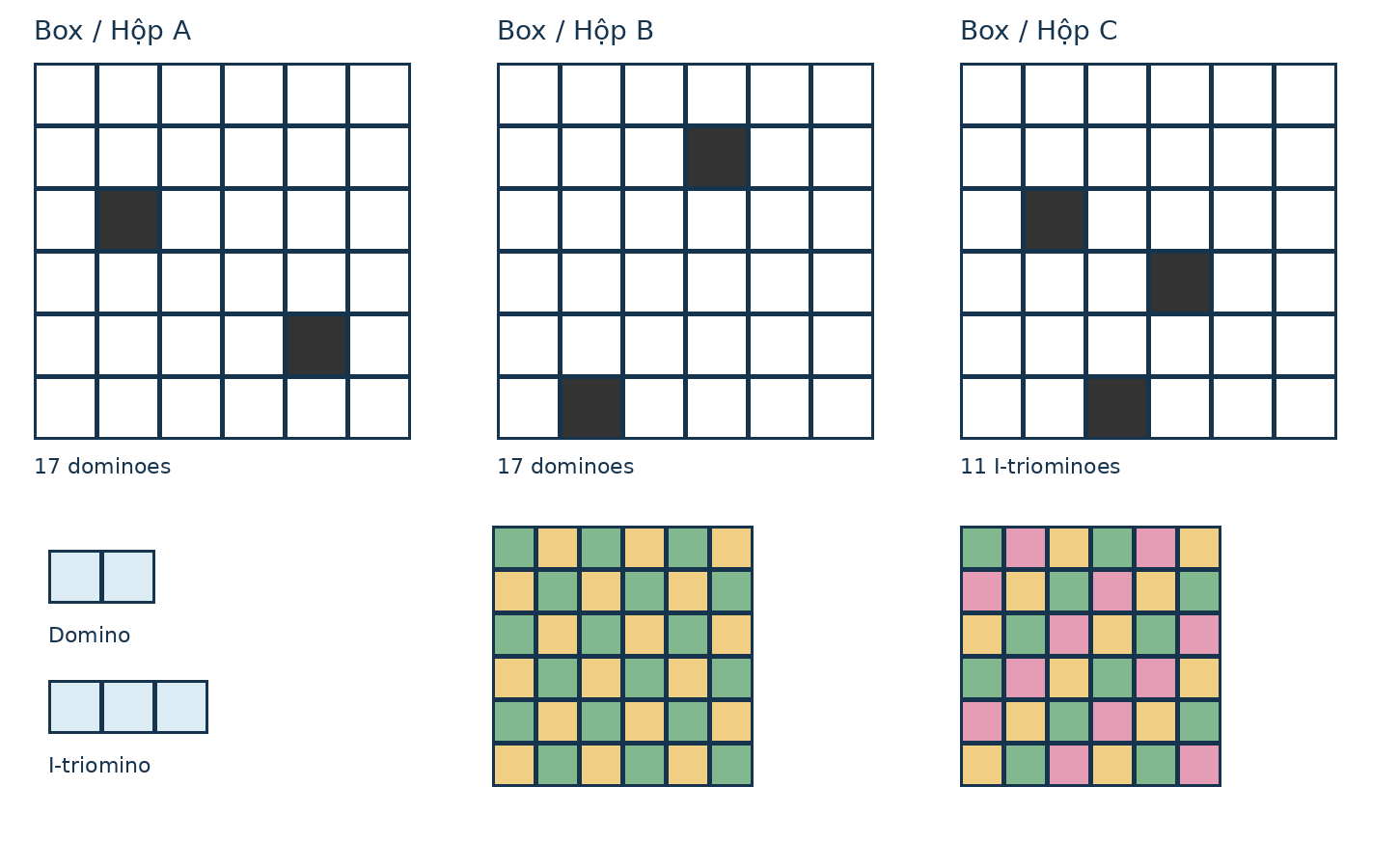
In Silicon Valley, south of San Francisco Bay, Dr John invents three types of chips, A, B and C, and stores them in boxes with different locks encoded by square grids with some cells removed. A box opens if the remaining cells can be covered exactly by the illustrated polyominoes, with no overlap. Some locks were carelessly designed and cannot open. Investigate all the following questions.
1. Box A has the illustrated 6×6 board with two black cells removed. Can Dr John open it using 17 dominoes? If so, show a tiling.
2. Box B has a different illustrated 6×6 board with two cells removed. Dr John cannot tile it with 17 dominoes, so he colours the full board alternately green and yellow as shown. How many cells of each colour are there? What colours are the removed cells, and how many of each colour remain? How many green and yellow cells does each domino cover, and how many would 17 dominoes cover? By comparing these numbers, decide whether box B can open; show a tiling if it can.
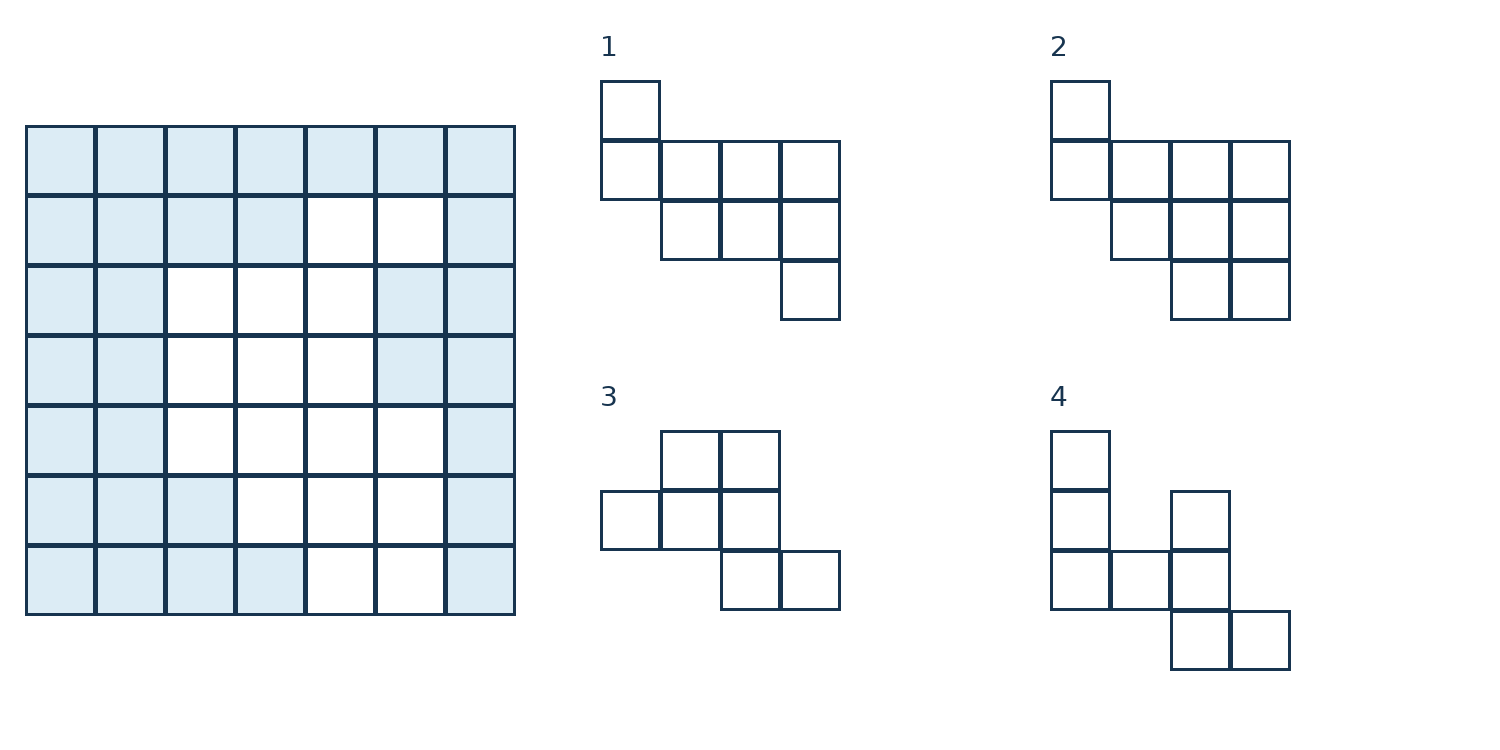
3. Box C has the illustrated 6×6 board with three cells removed and requires 11 straight I-triominoes. Dr John observes that the preceding two-colour test does not settle it, and colours the board in the illustrated repeating three-colour pattern instead. Using this colouring, decide whether box C can open; show a tiling if it can.
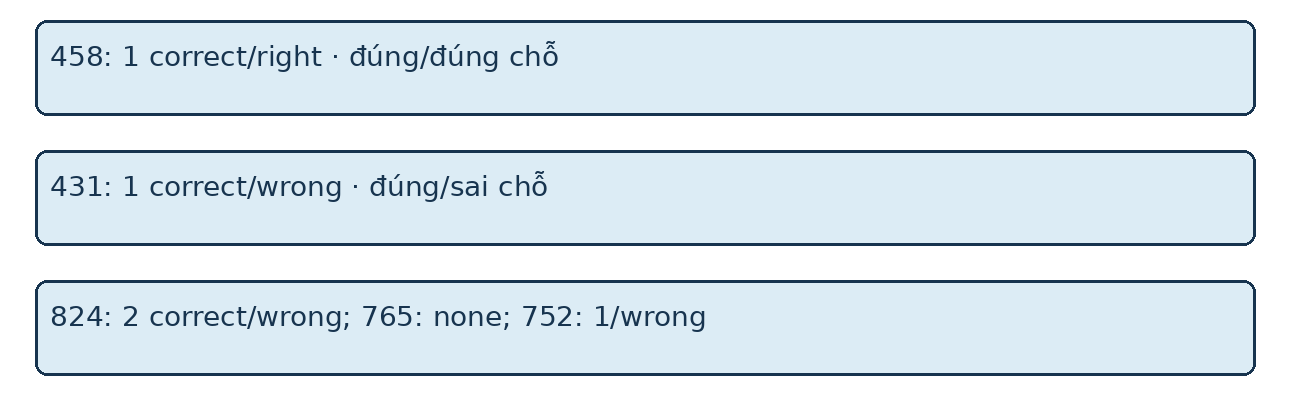
Alice chooses a secret three-digit number. David makes these guesses and receives the following exact clues: 458 has one correct digit, in the correct position; 431 has one correct digit, in the wrong position; 824 has two correct digits, both in wrong positions; 765 has no correct digits; 752 has one correct digit, in the wrong position. What is Alice’s number?
A domino row is correct when the touching halves of consecutive dominoes have equal numbers of dots. Tony has the illustrated row. What is the minimum number of dominoes he must turn around to make it correct?
2
3
4
5
Tony cannot obtain a correct row by turning pieces.
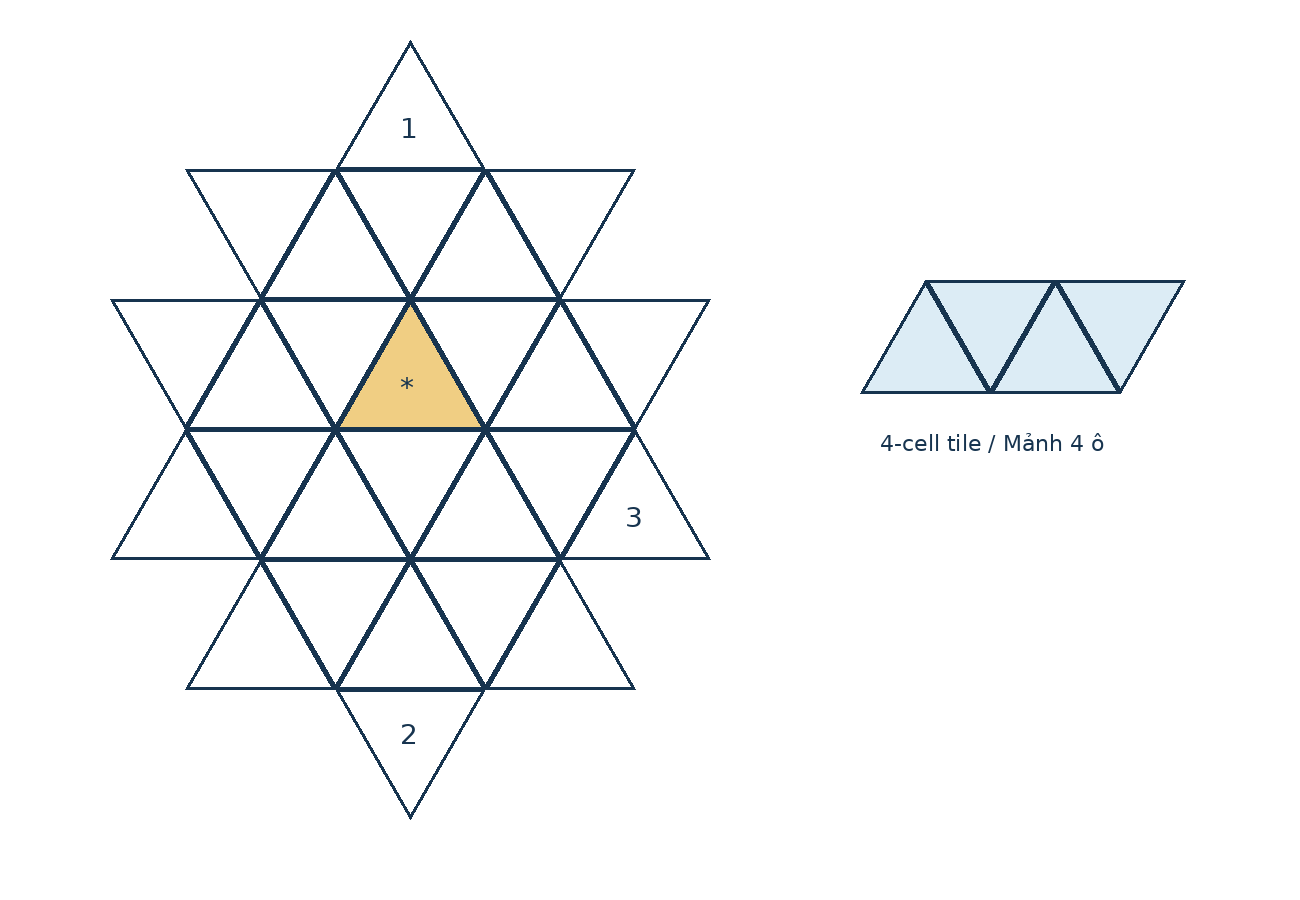
Alice puts a positive integer no greater than 4 in each triangular cell. Whenever the illustrated parallelogram tile covers exactly four cells of the grid, those cells must contain four different numbers. Some values are shown. Which number can she put in the cell marked *?
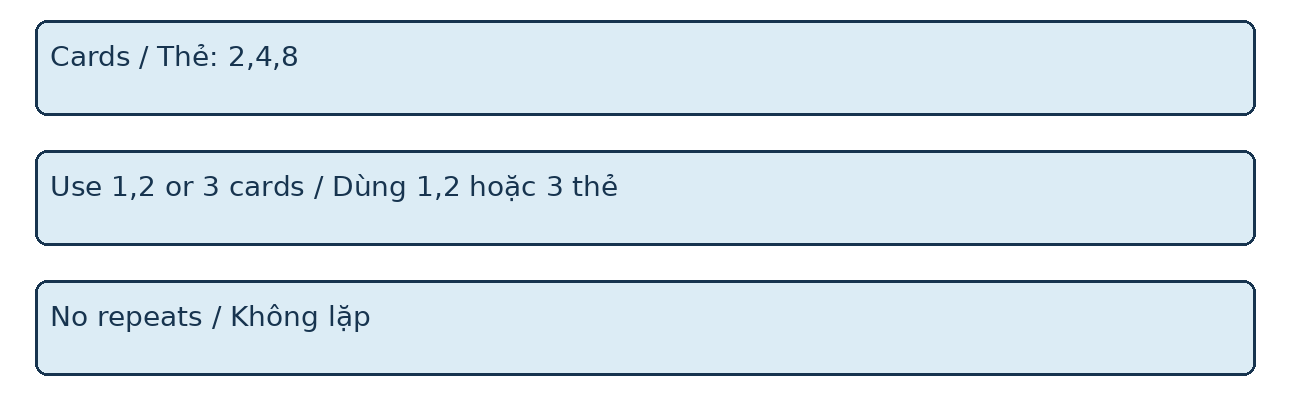
Peter has three cards bearing 2, 4, 8. He uses them to form every possible positive integer, using any nonempty selection without reusing a card. How many different integers can he obtain?
A nonempty selection of the cards may be used; no card is reused.
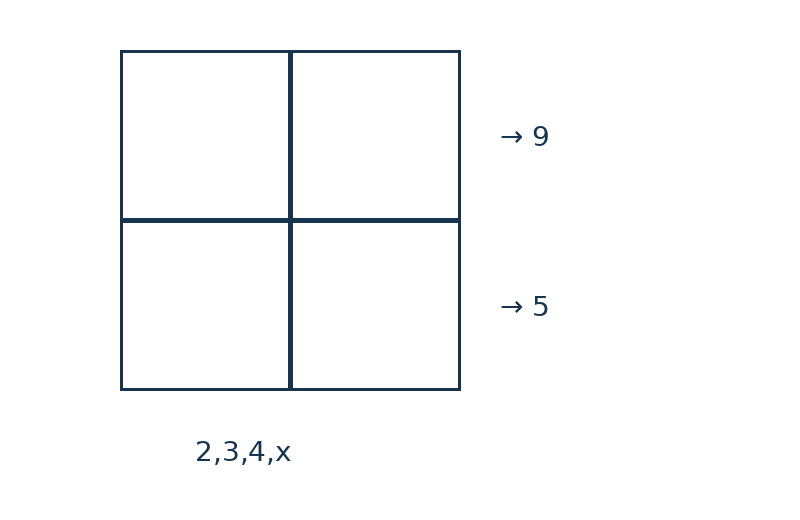
The numbers 2, 3, 4 and x, where x differs from 2, 3, 4, are written in the illustrated 2×2 grid. The top row sums to 9 and the bottom row to 5. What is x?
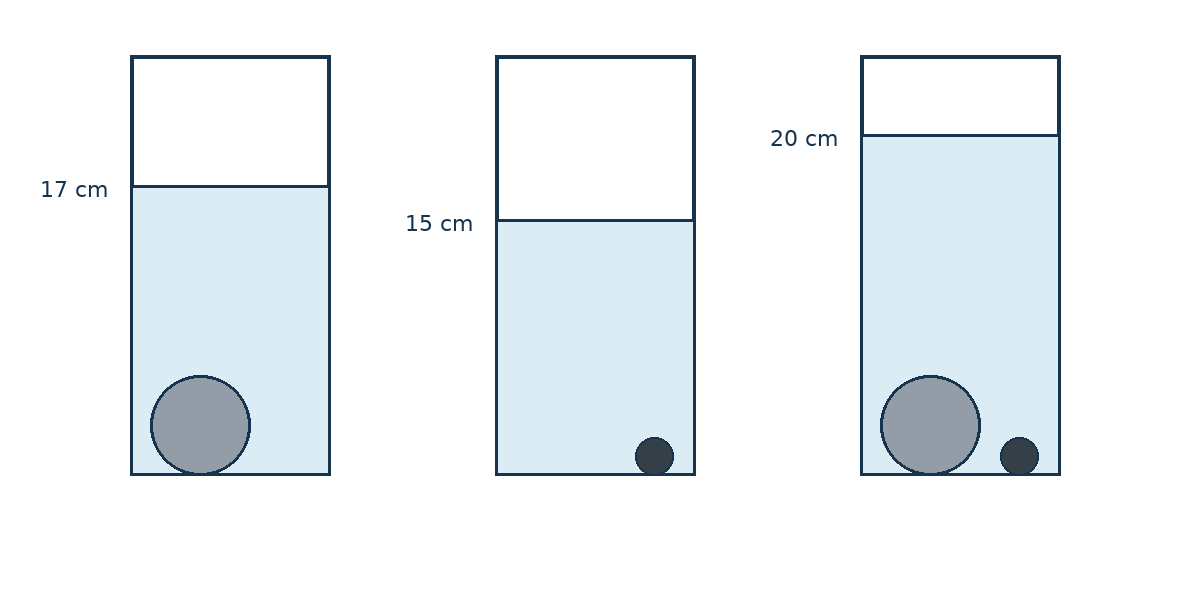
Three identical vessels initially contain equal amounts of water. Two identical grey balls and two identical black balls are distributed among them as illustrated, producing the shown water levels. What was the initial water depth in each vessel?
Use the pictured constant-cross-section vessels, fully submerged balls and no water loss.
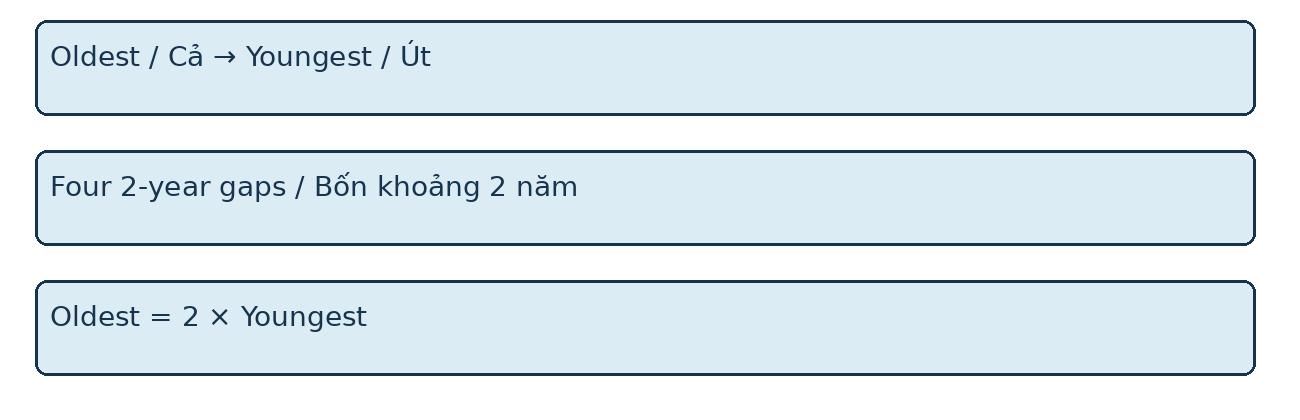
The Browns have five children, with consecutive children born two years apart. This year the oldest is twice as old as the youngest. How old is the fourth child, counting from oldest to youngest?
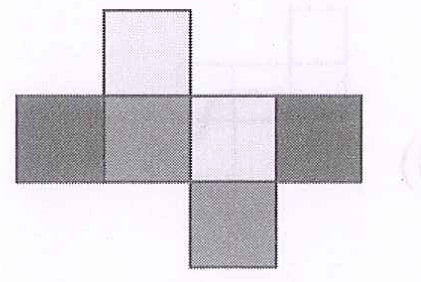
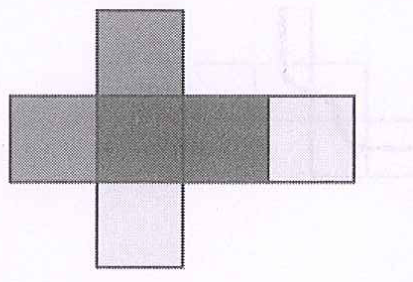
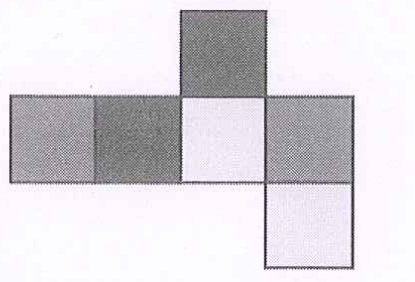
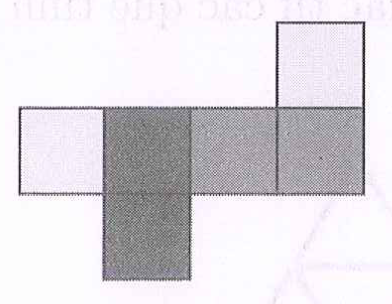
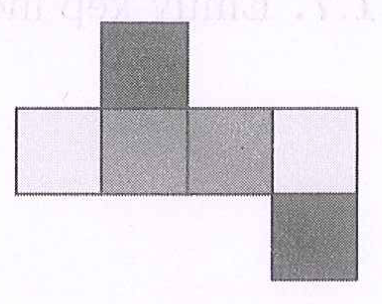
Hitachi wants to fold a cube whose faces use three colours, one colour per face, with every pair of opposite faces having different colours. Which card net cannot make such a cube?
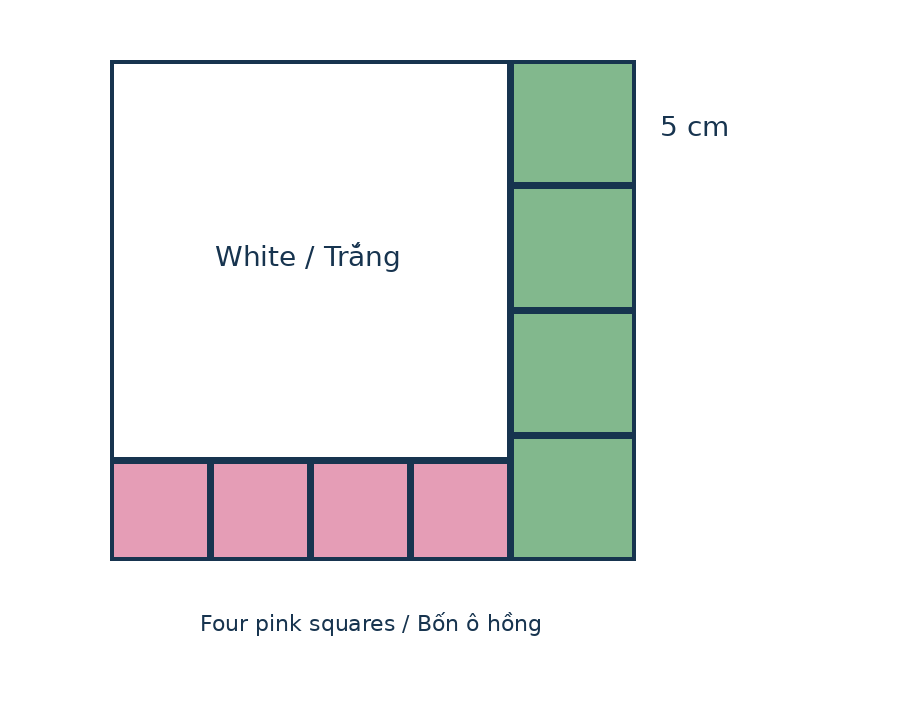
A rectangle is divided into nine squares as shown. Each green square has side 5 cm; all pink squares have equal sides. What is the perimeter of the white square?
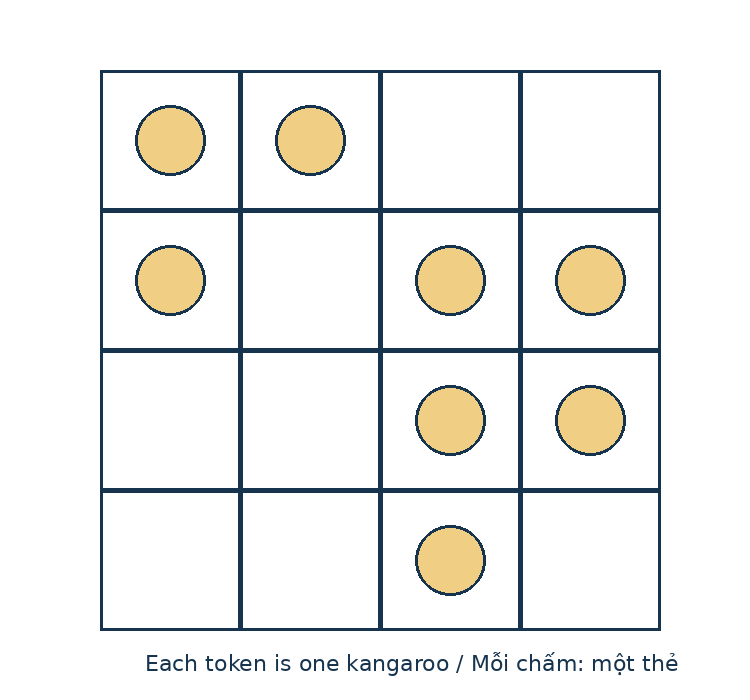
Alice puts eight kangaroo cards on the illustrated grid. In one move Peter may move one card to any empty cell. His aim is to leave exactly two cards in every row and column. What is the minimum number of moves?
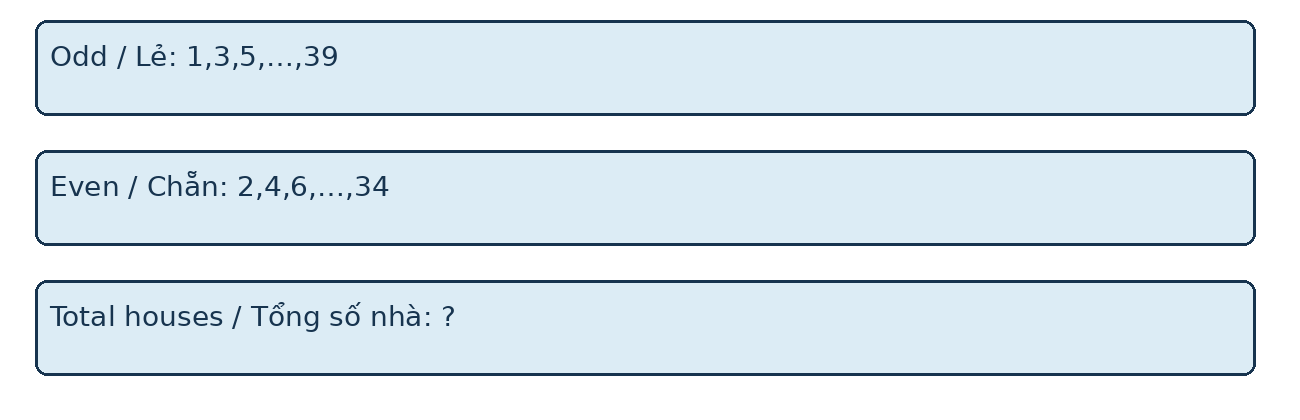
On the right side of Green Tree Street, houses are numbered with consecutive positive odd integers from 1 to 39. On the opposite side, houses have consecutive even numbers from 2 to 34. How many houses are there altogether?