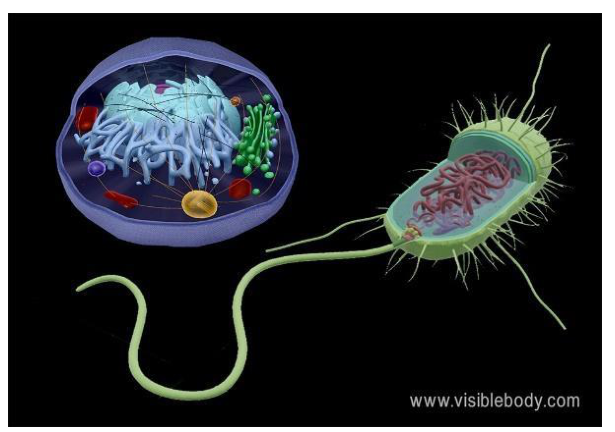
What cell theory states that mitochondria and chloroplasts are each derived from the uptake of bacteria forming a symbiotic relationship with their host cell?
Which is NOT true about the comparison between Prokaryotes and Eukaryotes?
A. Prokaryotes and eukaryotes differ in size.
B. They differ in the presence of a membrane-bound nucleus.
C. Prokaryotes and eukaryotes have similar containment in DNA arrangements.
D. Prokaryotes are organisms consist of a single prokaryotic cell while Eukaryotes are organisms containing multicellular eukaryotic cells.
Editorial task: assess the alternatives and justify whether a unique answer exists.
Mark and Jane are teenagers who are conscious about their pimples because although not life-threatening, pimples are acne that can persist for years and is known to have serious psychosocial effects such as decreased self-esteem, depression, frustration, and social withdrawal among them. What causes this acne?
Fatty acids are carboxylic acids with long hydrocarbon chains attached to a carboxylate group. How does a saturated fatty acid differ from an unsaturated fatty acid?
The hydrocarbon chain in an unsaturated fatty acid contains one or more multiple bonds.
The hydrocarbon chain in a saturated fatty acid contains one or more multiple bonds.
The hydrocarbon chain in an unsaturated fatty acid contains no more than one multiple bonds.
The hydrocarbon chain in an unsaturated fatty acid contains no double or triple bond.
How do colloidal dispersions differ from true solutions with regard to dispersed particle size and homogeneity?
A. Colloidal dispersions consist of particles that are much smaller than the average molecules and cannot scatter light.
B. Colloidal dispersions consist of particles that are much bigger than the average molecules and are big enough to scatter light.
C. Colloidal dispersions consist of particles that are much bigger than the average molecules but not big enough to scatter light.
D. Colloidal dispersions consist of particles that are on the microscopic scale, thus appearing homogeneous but are big enough to scatter light.
Editorial task: assess the alternatives and justify whether a unique answer exists.
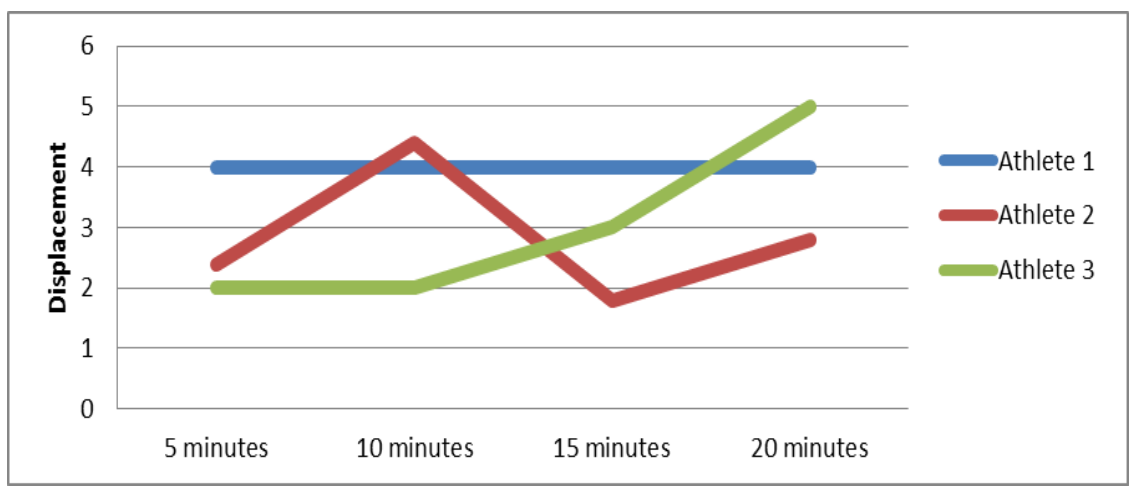
Observe the graph below and check how the changes in position of the three athletes displays their displacement. Answer the questions that follow. Which of the athletes has travelled the longest at 20 minute-time interval?
Interpretation note: compare total distance over the displayed 5–20 minute record only; no motion before 5 minutes is specified.
An ambulance is hurriedly running in a highway due to an emergency and its siren emits soundwaves at a frequency of 100 KHz. An SHS student standing in the highway perceives the sound of the siren at 250 KHz as the ambulance approaches but perceived it to be 80 KHz as it moves away. This phenomenon is called ______?
What conclusion can be derived from the diagram below?
A. Silver has greater density than gold.
B. Gold has greater density than Silver
C. A silver cube should have a greater volume to have the same mass as gold
D. A Gold cube should have a greater volume to have the same mass as silver
Editorial task: assess the alternatives and justify whether a unique answer exists.
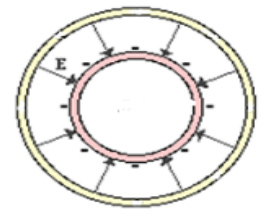
Given the diagram below, what characteristic of electric fields inside conductors can be derived?
A. Electric fields are strongest along the most curved surface.
B. Excess charges exist in the outer surface of the conductor.
C. Electric fields are directed perpendicular to the surface of the conducting object
D. If an object has reached electrostatic equilibrium, there is no parallel electric field component
Editorial task: assess the alternatives and justify whether a unique answer exists.
Which of the following is TRUE about geothermal energy?
A. Geothermal energy is owned by the local environment.
B. The initial costs associated with a geothermal power plant are low.
C. There is no risk of hazardous substances during drilling.
D. A geothermal power plant can be placed almost anywhere.
Editorial task: assess the alternatives and justify whether a unique answer exists.