Skip to content / Đến nội dung
ThichHocToan.com

PIMSO 2023 - Science - Secondary 2 - National Round

Question 1

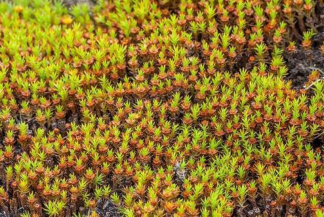
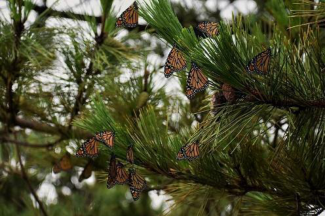
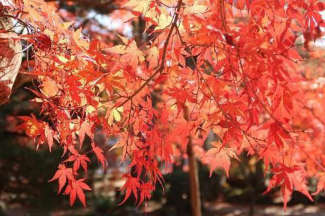
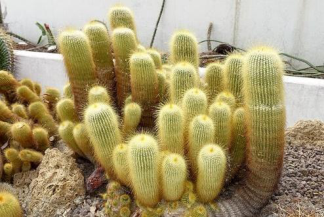
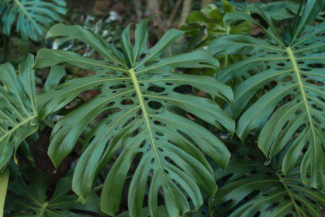
Which of the following plants does not contain vascular structure?
  1. Question illustration
  2. Question illustration
  3. Question illustration
  4. Question illustration
  5. Question illustration

Question 2

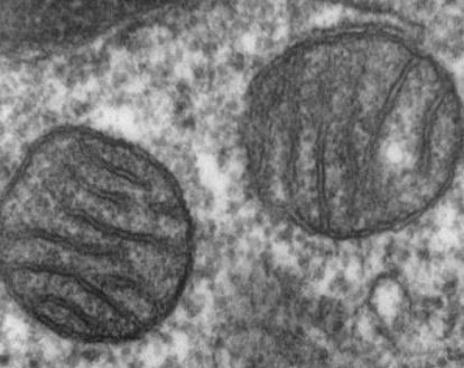
What is the function of the organelle captured by the electron microscope as shown below?

Question illustration

Editorial assumption: Select the principal function conventionally associated with the pictured organelle.
  1. Contain the genetic material of the cell
  2. Make ribosomes which synthesize proteins
  3. Sort, pack, and transport proteins to designated sites
  4. Produce energy to support cellular functions
  5. Break down food particles and used organelles

Question 3

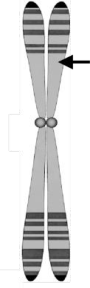
What specific structure is pointed by the black arrow below?

Question illustration
  1. Chromatin
  2. Chromatid
  3. Chromosome
  4. Centromere
  5. Telomere

Question 4

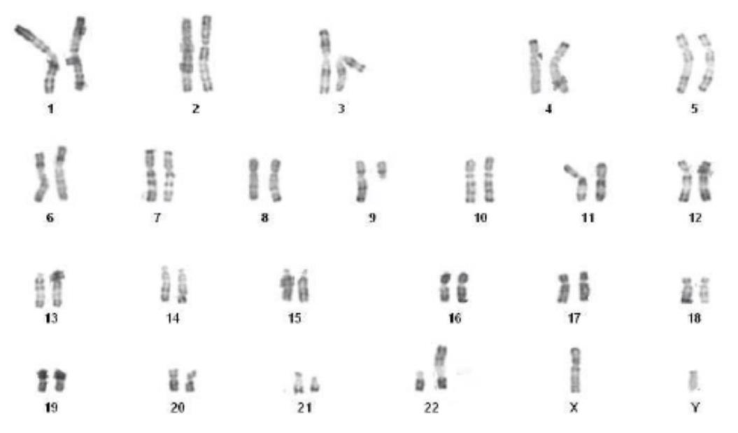
The following image shows a karyotype of a male patient suffering from azoospermia. What type of chromosomal aberration is observed in the patient's genome?

Question illustration
  1. Deletion
  2. Duplication
  3. Reciprocal translocation
  4. Nonreciprocal translocation
  5. Robertsonian translocation

Question 5

Which of the following statements does NOT describe the differences between prokaryotes and eukaryotes?
  1. Eukaryotes have membrane-bound organelles, prokaryotes do not have.
  2. Eukaryotes have chromosomes in nucleoid, prokaryotes have chromosomes in nucleus.
  3. Eukaryotes have linear chromosomes, prokaryotes have circular chromosomes.
  4. Eukaryotes have larger ribosomal subunits than prokaryotes.
  5. Eukaryotes are usually multicellular, prokaryotes are unicellular.

Question 6

Which of the following respiratory diseases that are caused by microorganisms should be treated with antibiotics?
  1. Common cold
  2. Influenza
  3. Severe acute respiratory syndrome
  4. Middle East respiratory syndrome
  5. Tuberculosis

Question 7

After months of exposure in air, 1.9 g of nail made of steel rusted partially. The rusting process, forming a compound of iron and oxygen (which comes from air) stopped only once the whole surface of the nail was covered in rust, effectively protecting the iron under the surface from rusting. What can you say about the mass of this nail upon rusting?

Editorial assumption: Assume no rust or other material is lost from the nail.
  1. The insides were protected so the mass should still be 1.9 g because the rusting stops
  2. The mass should be less than 1.9 g because the insides were protected
  3. The mass should still be 1.9 g because of the law of conservation of mass
  4. The mass should be more than 1.9 g because of oxygen incorporates in the material
  5. Nothing meaningful could be said based on the information given

Question 8

In the early 20th century, Marie and Pierre Curie were working on radioactivity of pitchblende, known by then to contain the element uranium. However, they found anomalous trace quantities of another material that were much more radioactive than uranium. After labouring for several months, exhausting all physical and chemical processes to extract and purify the material, they were able to make measurements of its physical properties. This was a sign that they discovered a new:
  1. element
  2. compound
  3. phenomenon
  4. property
  5. state of matter

Question 9

Camille the chemist is given a mixture of two liquids A and B and the following table showing their properties:
A: density 0.79 g/mL; freezing point −98 °C; boiling point 65 °C; colorless; completely miscible in water and acetone.
B: density 0.97 g/mL; freezing point −95 °C; boiling point 110 °C; colorless; solubility 0.53 g/L in water, completely miscible in ethanol.
What is the best separation method should you use to purify the mixture?
  1. filtration
  2. distillation
  3. recrystallization
  4. chromatography
  5. extraction

Question 10

Some rubbing alcohols that you use on your hand to kill bacteria contain ethanol. Ethanol is made up of carbon, oxygen, and hydrogen. In an experiment, a chemist determined that 160 g of ethanol contains 83 g of carbon and 56 g of oxygen. How much hydrogen is in the sample of ethanol?
  1. 83 g
  2. 56 g
  3. 160 g
  4. 21 g
  5. cannot be determined from the given information

Question 11

An unknown compound was determined to contain only carbon and hydrogen. 12.0 g sample of the compound was found to contain 1.60 g hydrogen. A chemical engineer in a factory received a 6.0 kg sample of the compound for analysis. From the given information, determine the mass of carbon in the sample received.

Original choices:
A. 0.80 kg
B. 0.8 kg
C. 5.20 kg
D. 5.2 kg
E. None of the above

Editorial review: explain the result and whether the source determines a unique answer.

Question 12

You are helping your parents to cook sinigang, a popular Filipino dish composed of meat and vegetables in a clear sour broth: They asked you to boil some water to make soup and notify them as soon as the water starts to boil at 100 °C. You told them that it started to boil after ten minutes, but they are not yet ready preparing the meat and vegetables. So to conserve energy, they asked you to lower the heat. You lowered the heat just enough so that some bubbles still appear to rise to the top of the water, although it is not boiling vigorously anymore. What is the temperature of the water at this point?

Question illustration

Editorial assumption: Assume the water is still boiling at equilibrium at the same atmospheric pressure.
  1. 95 °C
  2. not exactly 95 °C but still below 100 °C
  3. 100 °C
  4. around 105 °C
  5. Cannot be determined from the given information

Question 13

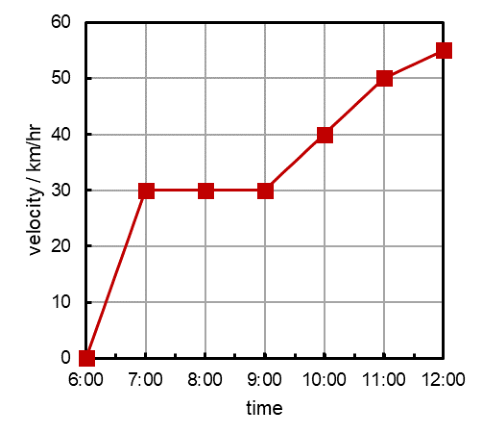
A ship leaves Manila bay at 6:00. Shown below is the distance travelled by the ship over time. When is the ship NOT affected by a net force?

Question illustration

Original choices:
A. From 6:00 to 8:00
B. From 7:00 to 9:00
C. From 8:00 to 10:00
D. From 9:00 to 11:00
E. From 10:00 to 12:00

Editorial review: explain the result and whether the source determines a unique answer.

Question 14

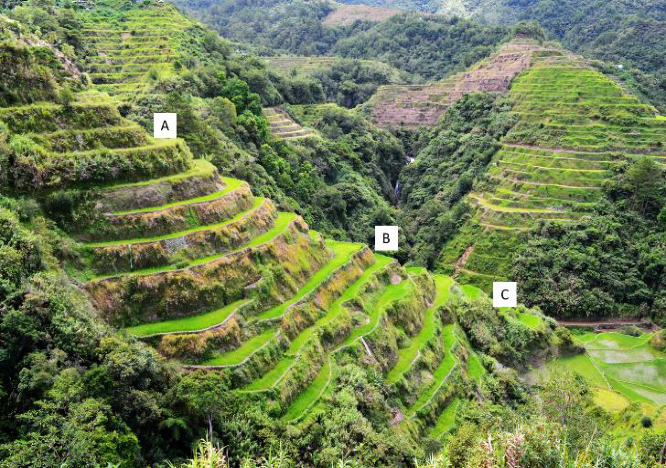
The Banaue Rice Terraces is a famous Philippine landmark. Built over a thousand years ago, the terraces allowed to grow rice even on mountains. On which part of the rice terraces would you have the highest kinetic energy?

Question illustration

Original choices:
A. A
B. B
C. C

Editorial review: explain the result and whether the source determines a unique answer.
Question 15

Which of the following is NOT accelerating?

Editorial assumption: Use the intended idealization: steady straight flight and a raindrop below terminal speed.
  1. an airplane flying at its maximum speed 900 km/hr
  2. an airplane starting to lift off
  3. a drop of rain falling
  4. a jeepney stopping for passengers
  5. none of the above

Question 16

What happens to the kinetic energy of an object when its velocity doubles as the acceleration remains constant?
  1. The kinetic energy is divided by 4
  2. The kinetic energy halves
  3. The kinetic energy remains constant
  4. The kinetic energy doubles
  5. The kinetic energy quadruples (4x)

Question 17

Which of the following colors in the visible spectrum has the lowest energy?

Editorial assumption: Compare individual photon energies.
  1. Violet
  2. Blue
  3. Green
  4. Yellow
  5. Red

Question 18

What would happen to the gravitational force between two planetary objects when the distance between them doubles?
  1. The force is divided by 4
  2. The force halves
  3. The force remains constant
  4. The force doubles
  5. The force quadruples (4x)

Question 19

Which of the following greenhouse gasses is primarily contributed by the animal husbandry sector in modern-day global warming?
  1. Carbon monoxide
  2. Carbon dioxide
  3. Ozone
  4. Sulfur dioxide
  5. Methane

Question 20

Which of the following natural disasters is NOT associated with typhoons?
  1. Tsunami
  2. Landslide
  3. Flash flood
  4. Wind gusts
  5. Tidal surge