Skip to content / Đến nội dung
ThichHocToan.com

Bebras 2021 - Level 2

Question 1

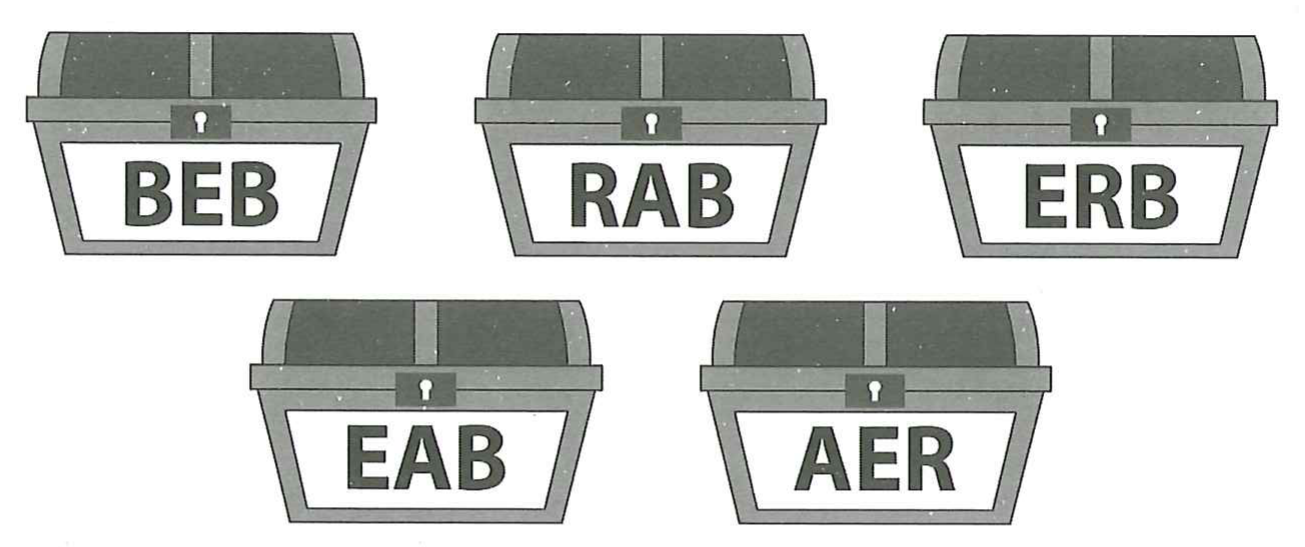
Beaver Alex has 5 chests coded as shown:
Question illustration

To open these chests, Alex has 5 keys marked with numbers. Identical digits correspond to identical letters, and different digits correspond to different letters.

Question illustration

Unfortunately, the number on one of the 5 keys has been erased. The picture above shows the numbers on the other 4 keys. Which of the following is the missing number?
  1. 369
  2. 349
  3. 496
  4. 463

Question 2

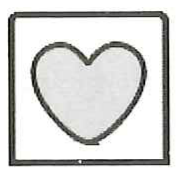
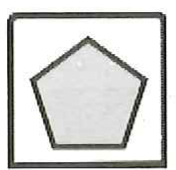
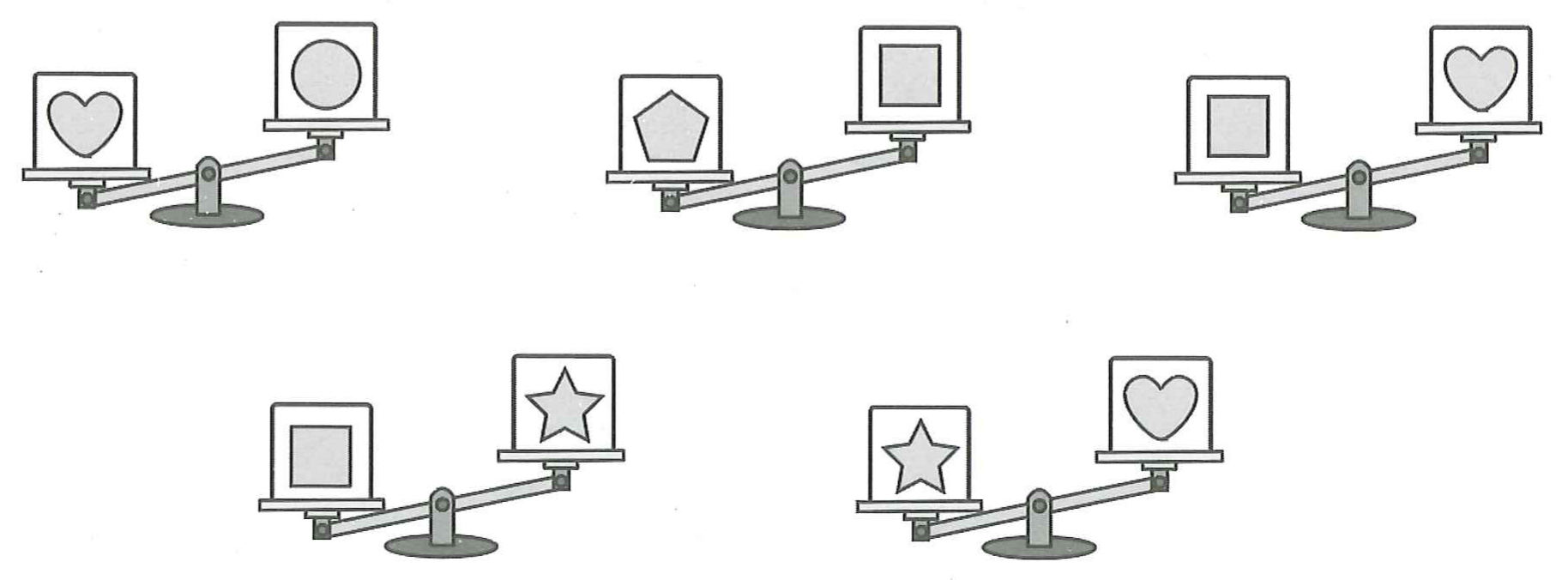
Beaver Alice has 5 gift boxes, printed with different shapes to distinguish them. The picture shows the balance positions when she puts the boxes on a two-pan balance.

Question illustration

Which of the 5 gift boxes is the heaviest?
  1. Question illustration
  2. Question illustration
  3. Question illustration
  4. Cannot be determined

Question 3

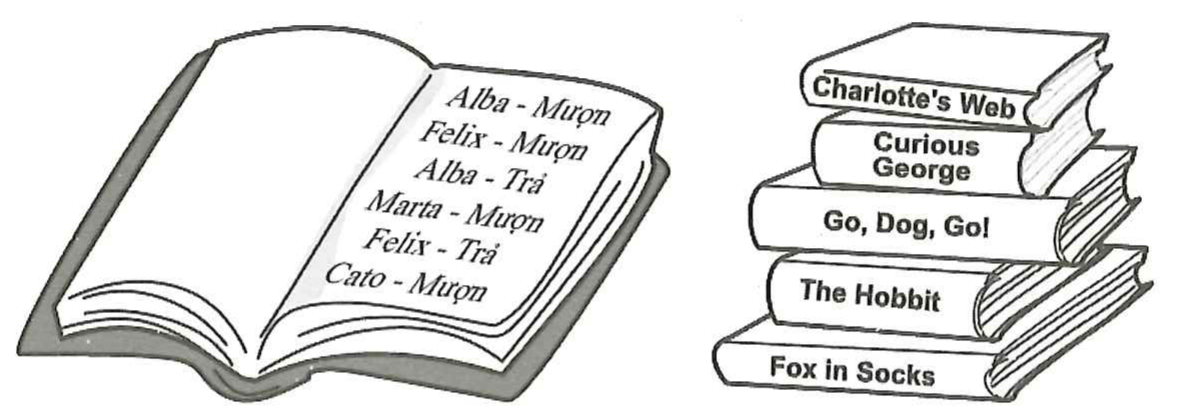
The beaver village library has just one stack of books. Anyone borrowing a book must write their name in the log and take the top book from the stack. Similarly, anyone returning a book must write their name in the log and place the book on top of the stack.

Question illustration

In the picture, the right-hand side shows the stack at the beginning of the day, and the left-hand side shows the log entries. In order, the log reads: Alba — borrow; Felix — borrow; Alba — return; Marta — borrow; Felix — return; Cato — borrow. Which book did Cato borrow?
  1. Charlotte’s Web
  2. Curious George
  3. Go, Dog, Go!
  4. The Hobbit

Question 4

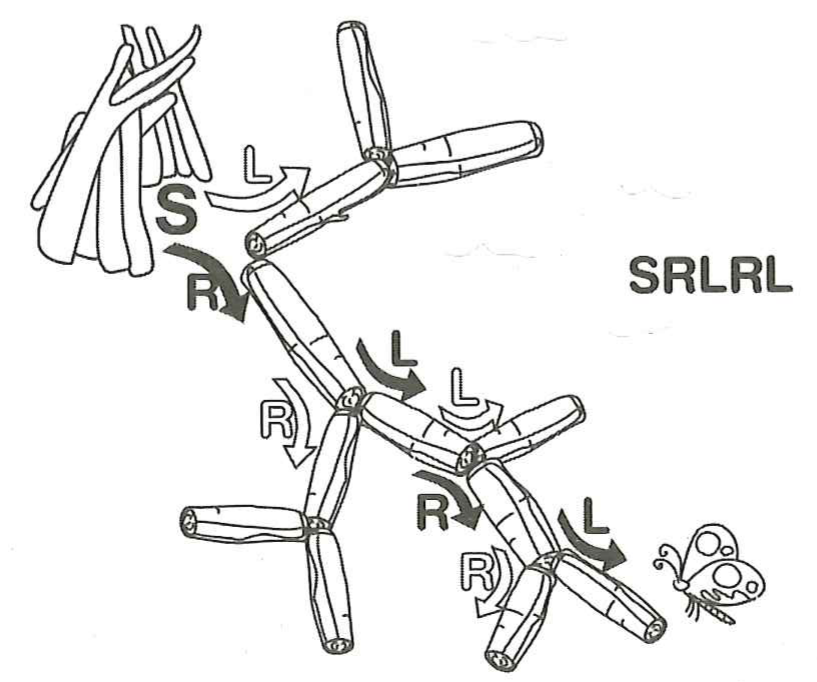
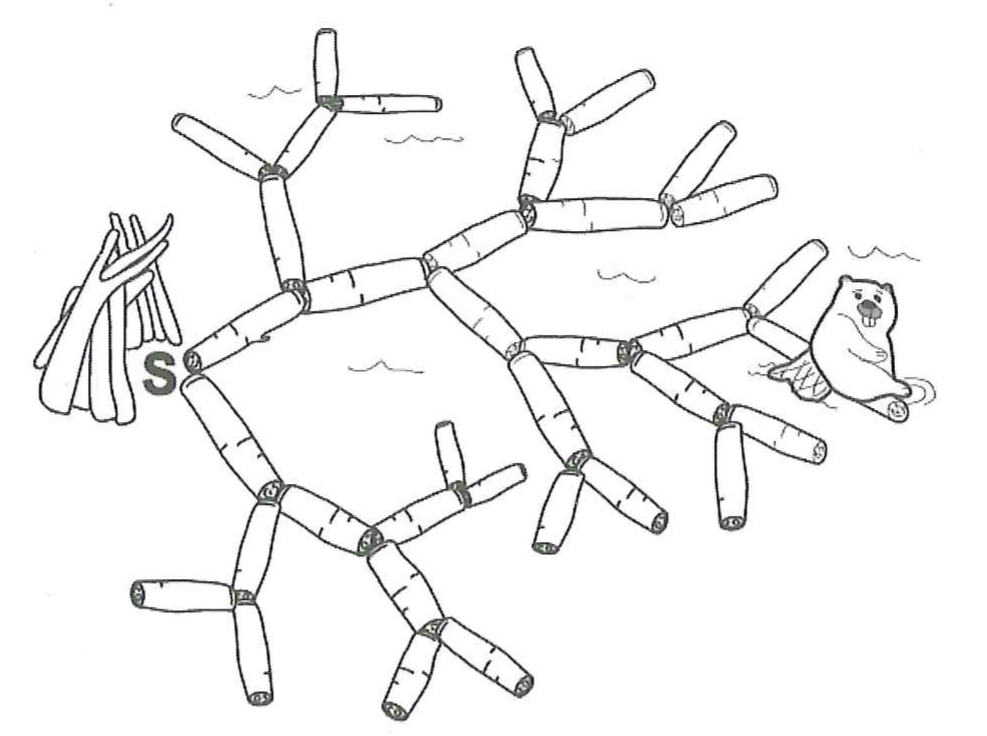
To remember how to reach places along wooden paths, the beavers record their turns (the choices at three-way junctions) throughout a journey. They record a right turn as R (right) and a left turn as L (left).

For example, on the paths below, the route from S to the butterfly is recorded as: S R L R L.

Question illustration

One fine day, a beaver sets out from home to enjoy the scenery and stops at the position shown below. How many R characters and how many L characters are in the record of this journey?

Question illustration
  1. 3 R characters, 3 L characters
  2. 3 R characters, 2 L characters
  3. 2 R characters, 4 L characters
  4. 2 R characters, 3 L characters

Question 5

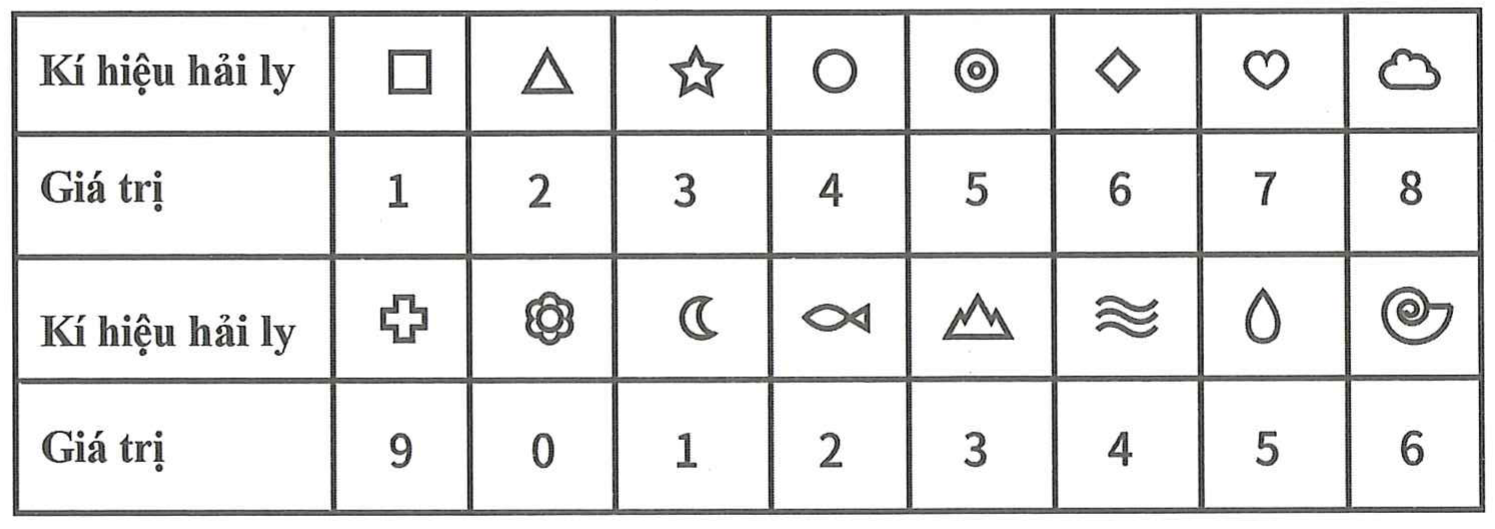
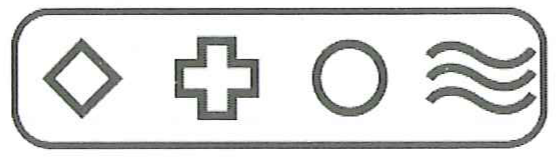
The beavers often use pictures instead of digits to mark objects. The table below shows the symbols and their corresponding values. “Kí hiệu hải ly” means “Beaver symbol”; “Giá trị” means “Value”.

Question illustration

Symbol values by position in the source image, from left to right:

| Row / Position | 1 | 2 | 3 | 4 | 5 | 6 | 7 | 8 |
| --- | --- | --- | --- | --- | --- | --- | --- | --- |
| Upper symbol row | 1 | 2 | 3 | 4 | 5 | 6 | 7 | 8 |
| Lower symbol row | 9 | 0 | 1 | 2 | 3 | 4 | 5 | 6 |

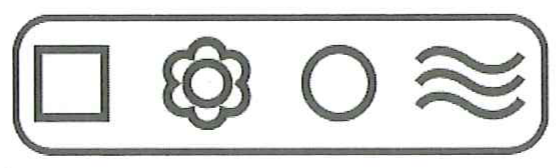
For example, the sequence Question illustration represents 56432.
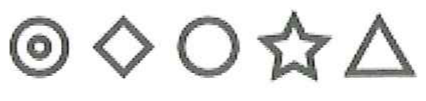
Beaver Alex used the following sequence to mark his favorite book.

Question illustration

Which sequence below has the same value?
  1. Question illustration
  2. Question illustration
  3. Question illustration
  4. Question illustration

Question 6

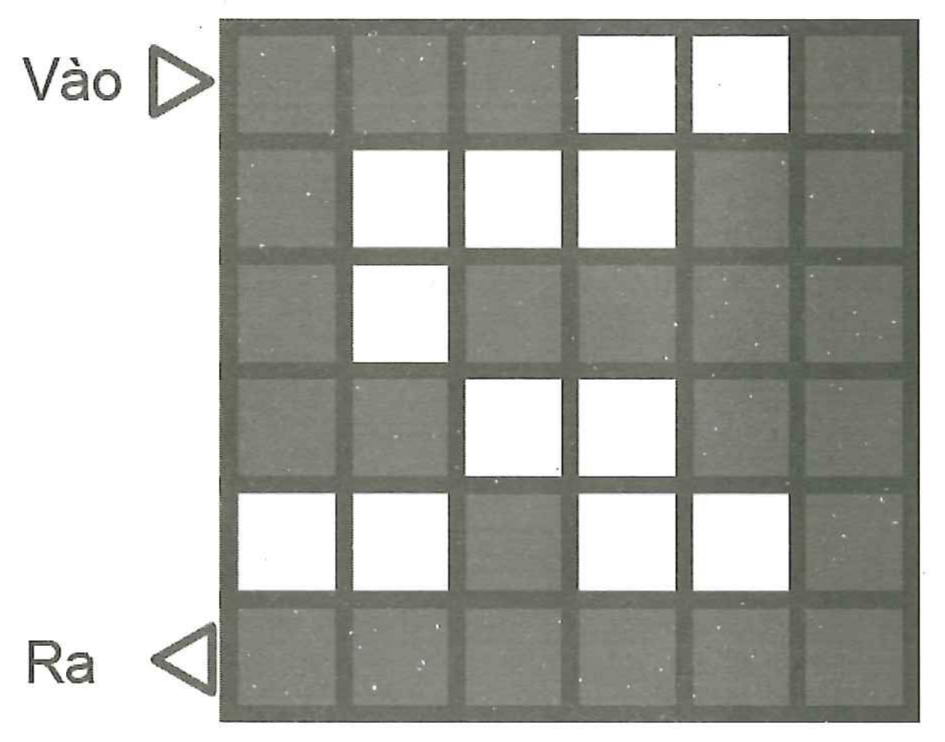
The beavers have a place called the path of light, an area made of 36 special tiles. Each tile has a lamp, which changes state whenever a beaver passes over that tile.

Each time a beaver uses the path of light, they enter through the entrance, walk over the tiles and leave through the exit. From each tile they may step to a neighboring tile sharing an edge. After one journey, Beaver Alex obtains the lamp pattern shown below.

Question illustration

Alex does not like this pattern and wants to start again. First he must turn all the lamps on (white).

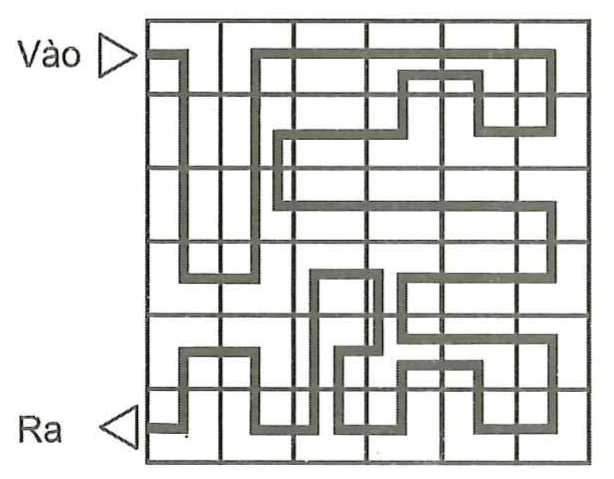
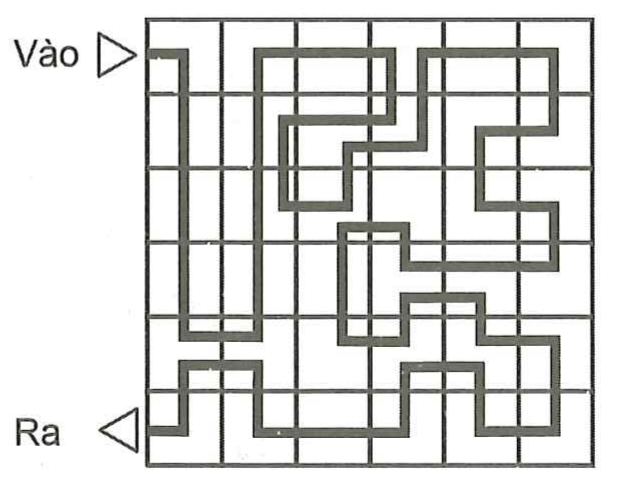
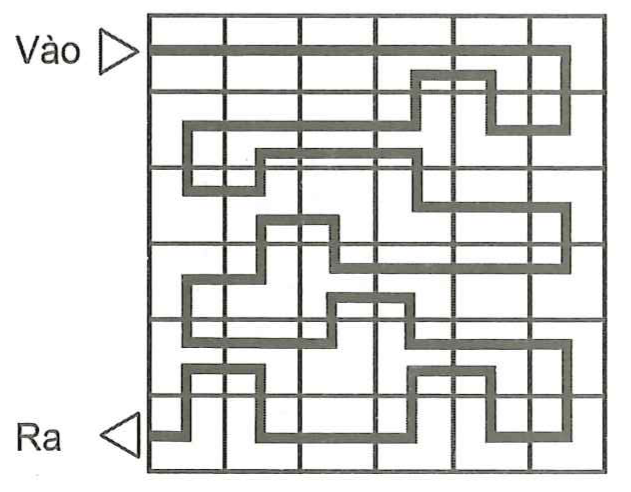
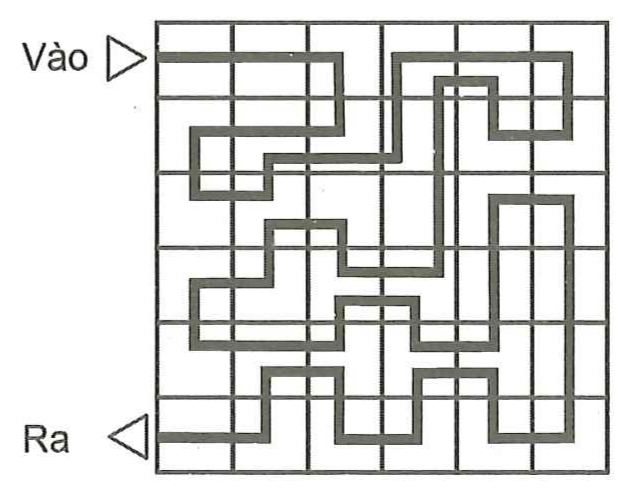
Which route below lets Alex do this? In the diagrams, Vào = entrance and Ra = exit.
  1. Question illustration
  2. Question illustration
  3. Question illustration
  4. Question illustration

Question 7

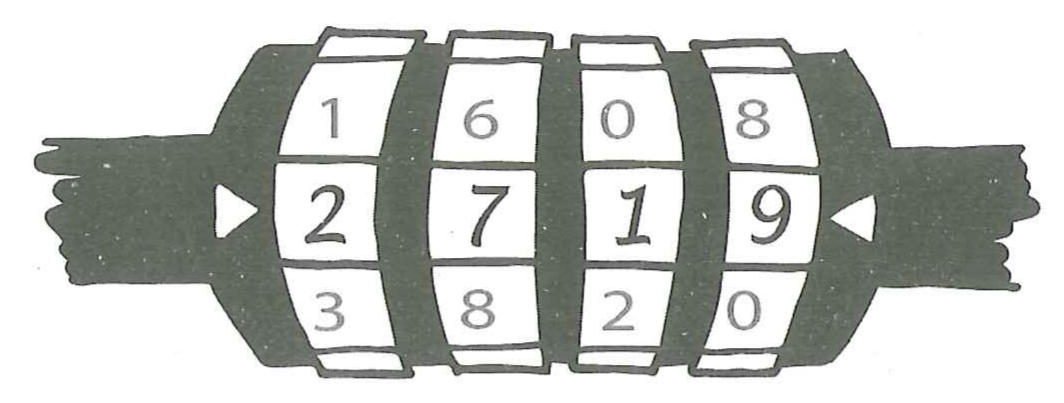
A combination lock can be opened only when its digit wheels are turned to the correct positions. Each wheel can be turned in either direction (upward or downward).

Question illustration

In the example, the lock currently reads 2719. Turning the rightmost wheel changes the units digit. Moving that wheel upward one position gives 0, while moving it downward one position gives 8.

What is the minimum number of one-position turns needed to open the lock, if the correct combination is 4383?
  1. 21
  2. 19
  3. 17
  4. 13

Question 8

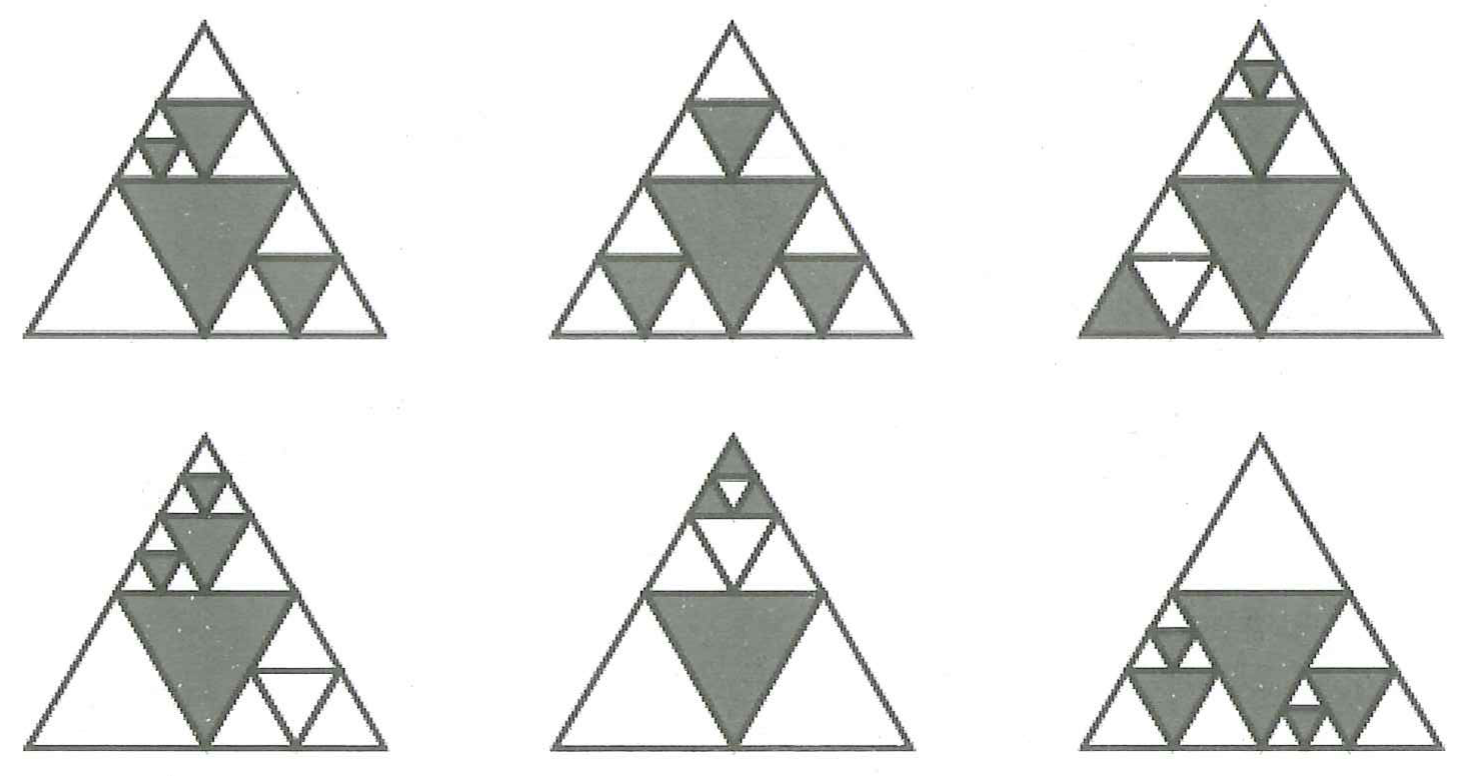
A beaver engineer makes triangular windows as follows:

- **Step 1:** Make an equilateral triangular window frame.
- **Step 2:** Join the midpoints of its sides to form 4 new triangles.
- **Step 3:** Fit gray glass in the central one of the new panes.
- **Step 4:** Repeat steps 2 and 3 on any pane that does not yet have glass.

The engineer may repeat step 4 any number of times. How many of the windows shown below can the engineer make?

Question illustration
  1. 2
  2. 3
  3. 4
  4. 5

Question 9

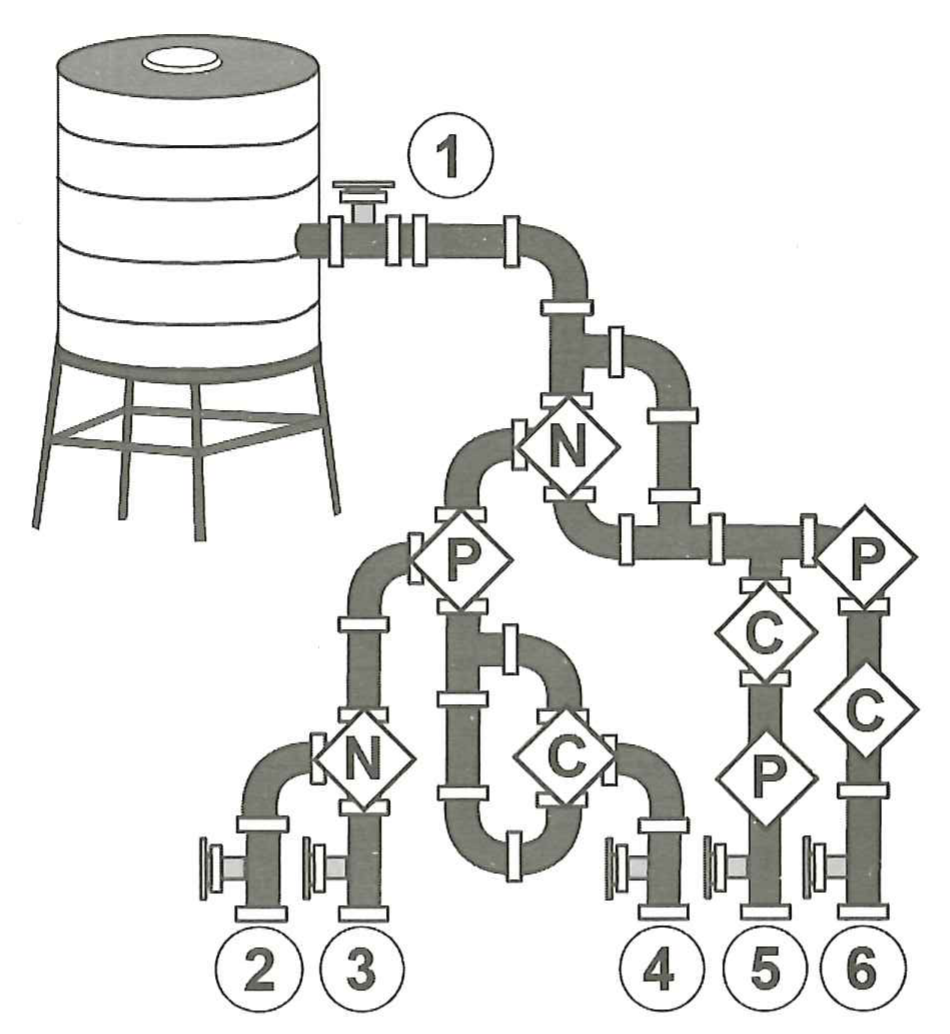
To clean their city’s domestic water supply, the beavers have built a water filter. To complete treatment, water must pass through filters N, P and C in exactly that order.

Question illustration

Valve 1 is open and all the other valves are closed. Among valves 2 to 6, how many can the beavers open to be certain that the water from that outlet has been filtered in the correct sequence?
  1. 1
  2. 2
  3. 4
  4. 5

Question 10

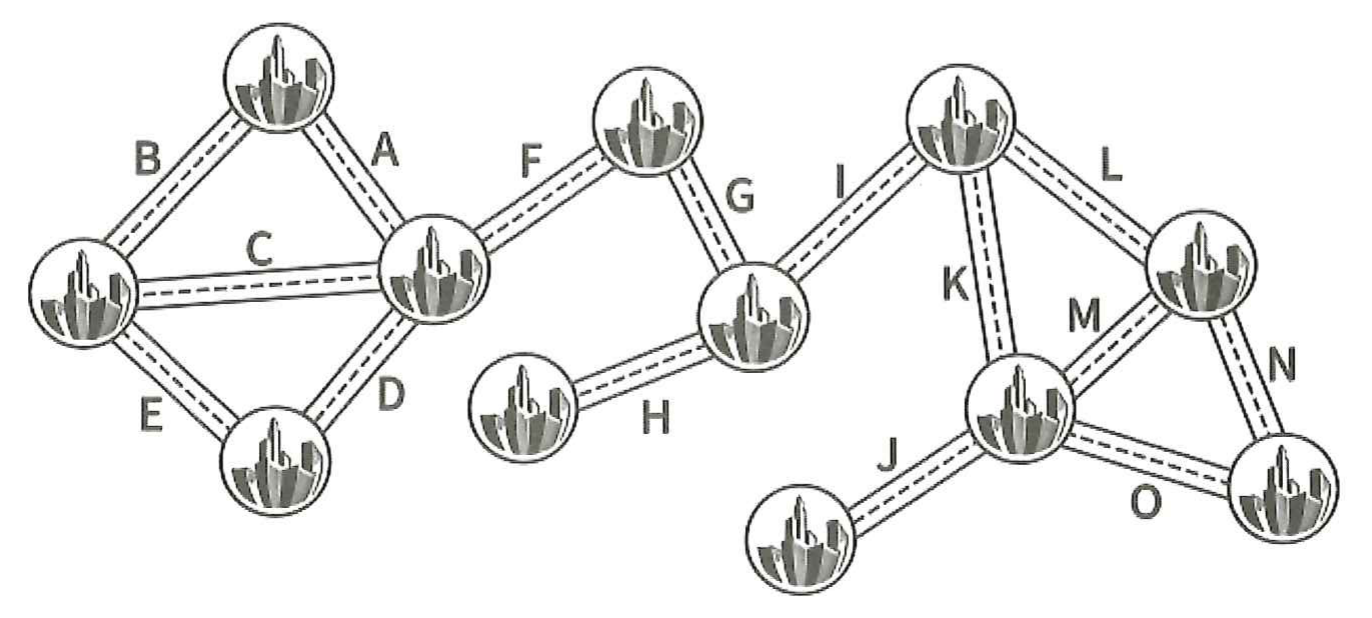
Beaverland has 12 cities. Highways labelled A to O connect them as shown.

Question illustration

A group of cities is called an **economic community** if every pair of cities in the group is connected either directly by a highway or indirectly through one or more other cities in the group. In the diagram, all 12 cities currently belong to one economic community.

Because of the Covid-19 outbreak, the mayors decide to block two highways to split the country into three separate economic communities. To minimize economic disruption, the smallest community must contain as many cities as possible. The mayors quickly find a way to meet these requirements. How many cities are in the smallest of the three resulting communities?
  1. 2
  2. 3
  3. 4
  4. 5

Question 11

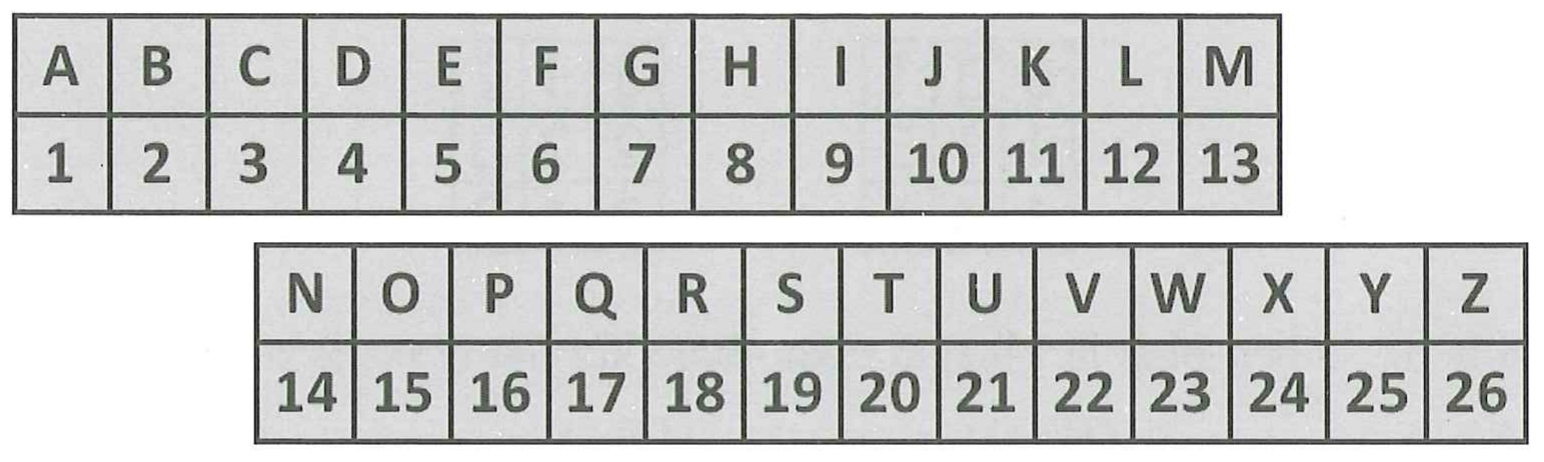
To add two letters, the beavers add their positions in the alphabet. The result is the letter corresponding to the sum.

Question illustration

| Letter | A | B | C | D | E | F | G | H | I | J | K | L | M |
| --- | --- | --- | --- | --- | --- | --- | --- | --- | --- | --- | --- | --- | --- |
| Value | 1 | 2 | 3 | 4 | 5 | 6 | 7 | 8 | 9 | 10 | 11 | 12 | 13 |

| Letter | N | O | P | Q | R | S | T | U | V | W | X | Y | Z |
| --- | --- | --- | --- | --- | --- | --- | --- | --- | --- | --- | --- | --- | --- |
| Value | 14 | 15 | 16 | 17 | 18 | 19 | 20 | 21 | 22 | 23 | 24 | 25 | 26 |

For example: $A+A=B$; $A+B=C$. If the result is greater than 26, counting continues from A. For example: $Z+B=B$; $Y+C=B$.

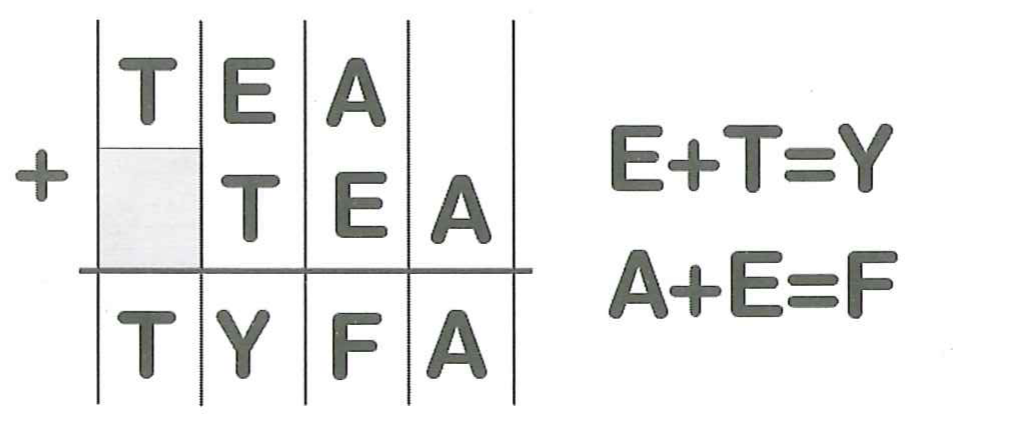
Beaver Lenka uses this rule to encode messages:

- Choose a random number and call it the **key**.
- Write the message on one line, then write it again on the next line, shifted to the right by the number of positions specified by the key.
- Add the letters in each column to obtain the encoded result.

For example, encoding TEA with key 1 gives TYFA.

Question illustration

What does Lenka obtain by encoding **COMPUTER** with key 3?
  1. COMSJGUMTER
  2. COPEHJMTER
  3. COMGJSMUTER
  4. COPHJEUTER

Question 12

The beavers have devised an interesting way to encode the letters I, T, O, C and L using a $3\times3$ numerical grid. First they draw the letters on $3\times3$ square grids as follows:

Question illustration

Text transcription of the letter pictures: 0 = white cell, 1 = gray cell; rows run top to bottom and columns left to right.

I

| Row / Column | 1 | 2 | 3 |
| --- | --- | --- | --- |
| 1 | 0 | 1 | 0 |
| 2 | 0 | 1 | 0 |
| 3 | 0 | 1 | 0 |

T

| Row / Column | 1 | 2 | 3 |
| --- | --- | --- | --- |
| 1 | 1 | 1 | 1 |
| 2 | 0 | 1 | 0 |
| 3 | 0 | 1 | 0 |

O

| Row / Column | 1 | 2 | 3 |
| --- | --- | --- | --- |
| 1 | 1 | 1 | 1 |
| 2 | 1 | 0 | 1 |
| 3 | 1 | 1 | 1 |

C

| Row / Column | 1 | 2 | 3 |
| --- | --- | --- | --- |
| 1 | 1 | 1 | 1 |
| 2 | 1 | 0 | 0 |
| 3 | 1 | 1 | 1 |

L

| Row / Column | 1 | 2 | 3 |
| --- | --- | --- | --- |
| 1 | 1 | 0 | 0 |
| 2 | 1 | 0 | 0 |
| 3 | 1 | 1 | 1 |

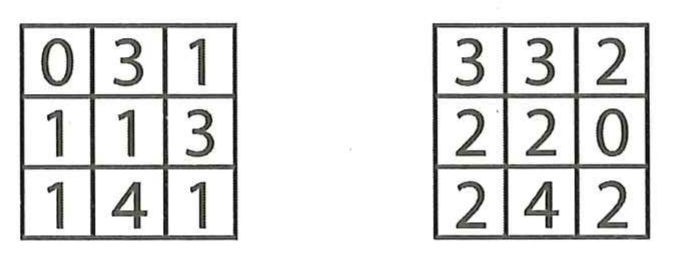
To encode a letter, they inspect each cell in its picture and enter the number of cells at the same position with the same color in the pictures of the other 4 letters.

For example, I is encoded by the left-hand grid below.

Question illustration

Left numerical grid (the example for I):

| Row / Column | 1 | 2 | 3 |
| --- | --- | --- | --- |
| 1 | 0 | 3 | 1 |
| 2 | 1 | 1 | 3 |
| 3 | 1 | 4 | 1 |

Right numerical grid to identify:

| Row / Column | 1 | 2 | 3 |
| --- | --- | --- | --- |
| 1 | 3 | 3 | 2 |
| 2 | 2 | 2 | 0 |
| 3 | 2 | 4 | 2 |

Which letter produces the right-hand numerical grid?
  1. T
  2. O
  3. C
  4. L

Question 13

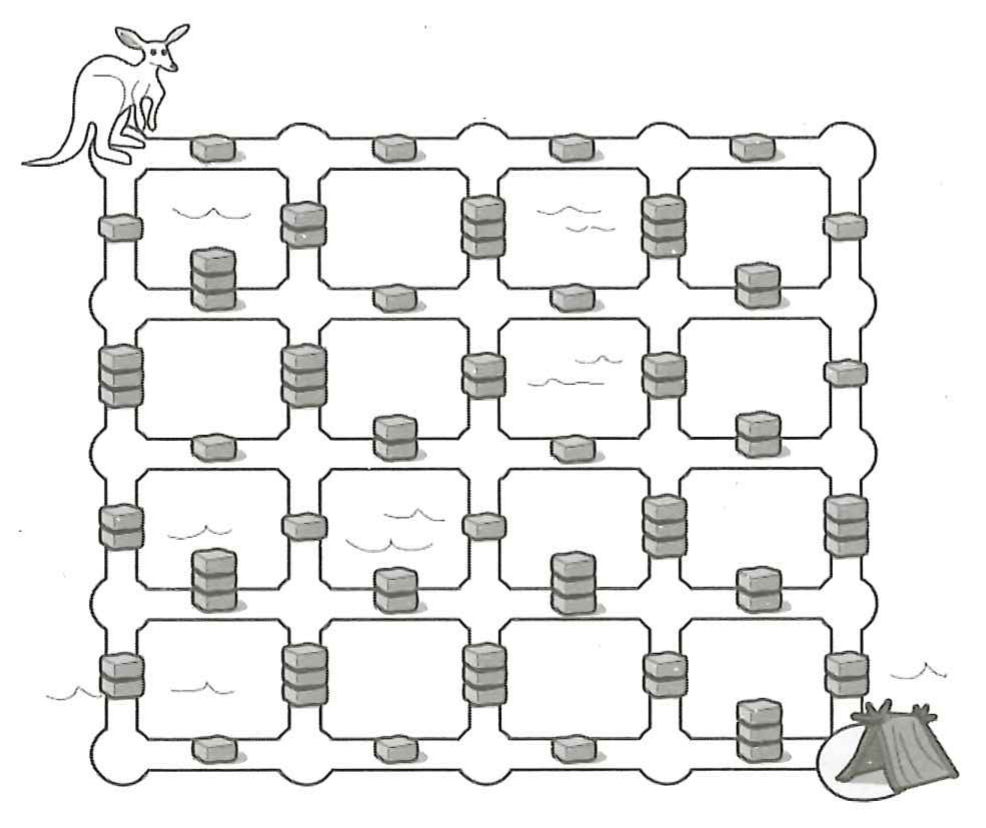
Kangaroo wants to get home by jumping along the paths below. Kangaroo can jump only horizontally (left or right) or vertically (up or down), and can jump over a pile of stones only if it contains no more than two stones.

Question illustration

The distance between two neighboring intersections is called one road segment. What is the minimum number of road segments Kangaroo must jump to reach home in the bottom-right corner?
  1. 12
  2. 17
  3. 14
  4. 20

Question 14

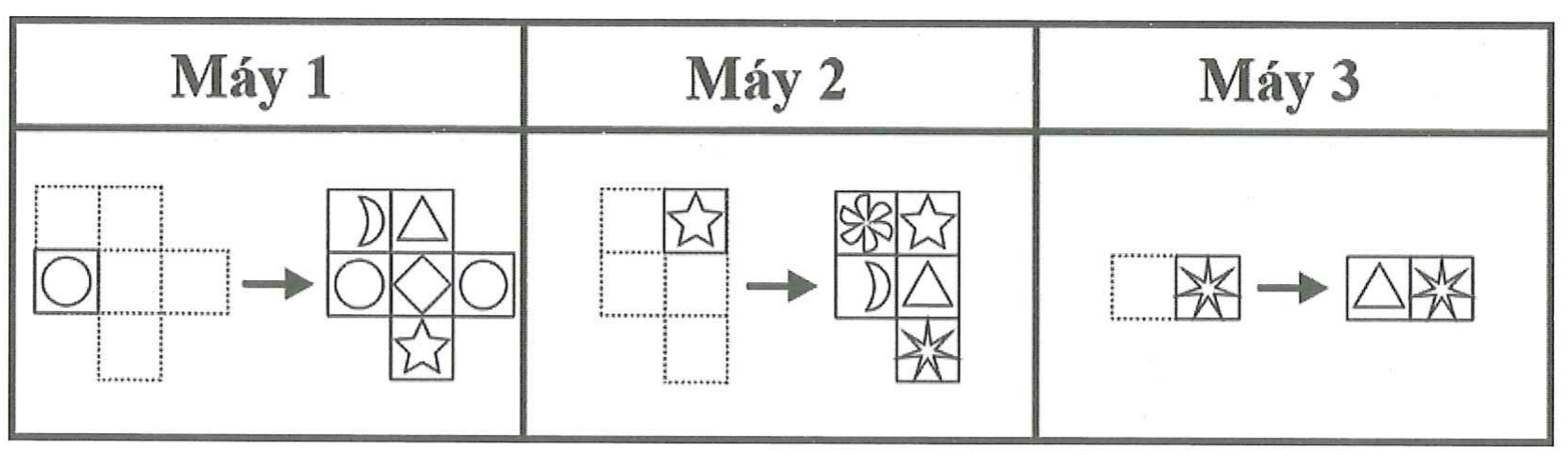
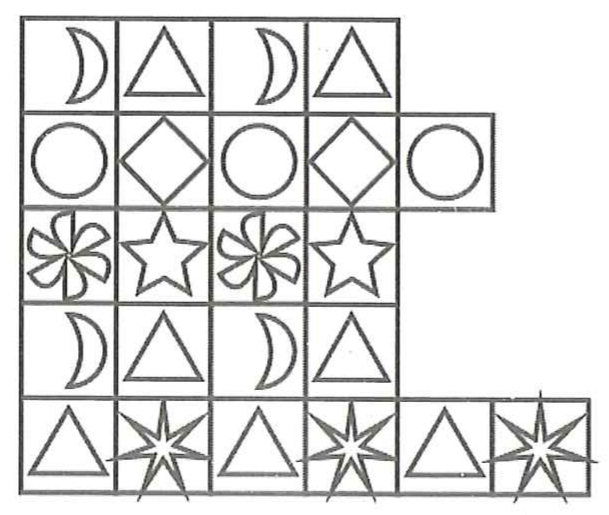
The beavers have three carving machines. Each machine takes a block with a given engraved shape and adds other shapes according to its own rule, as shown below. The headings Máy 1, Máy 2, Máy 3 mean Machine 1, Machine 2, Machine 3.

Question illustration

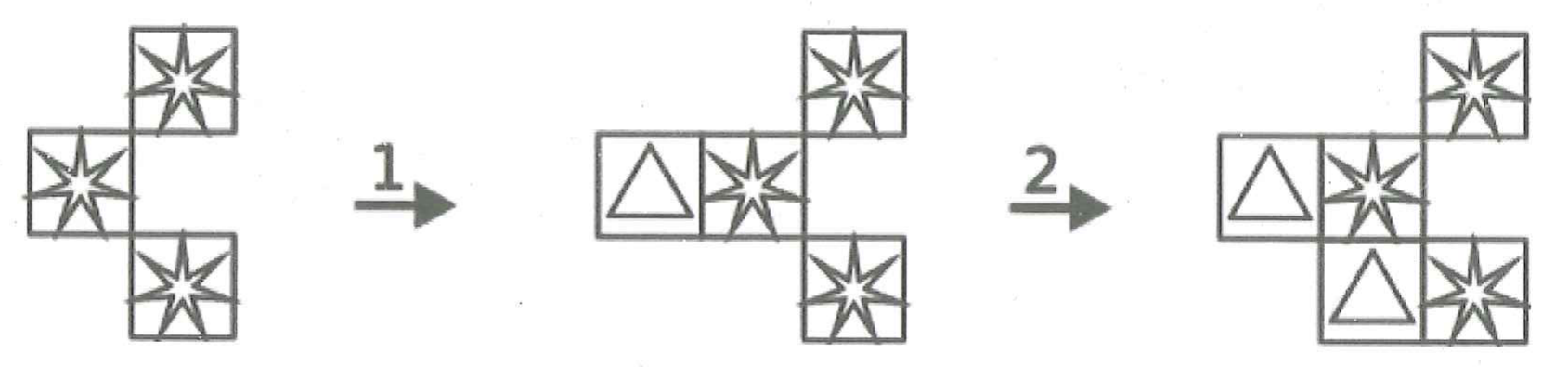
For example, the following picture shows two uses of Machine 3 to obtain a new carved pattern.

Question illustration

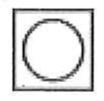
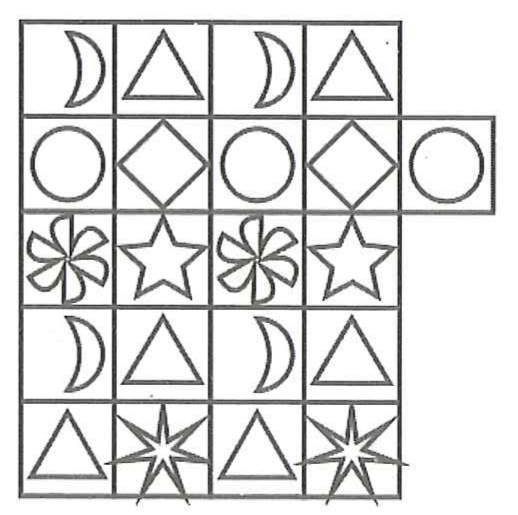
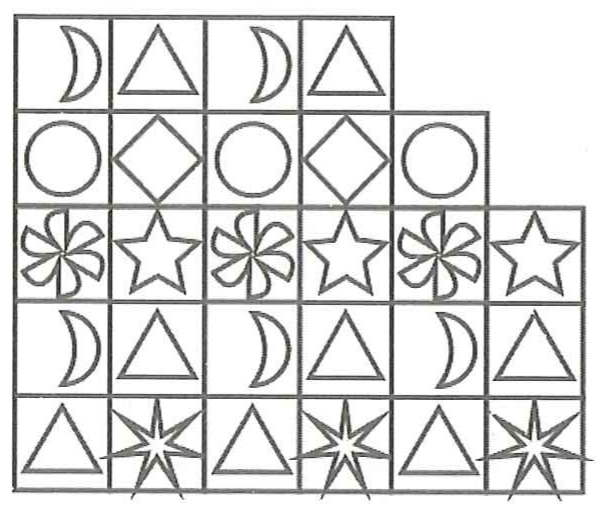
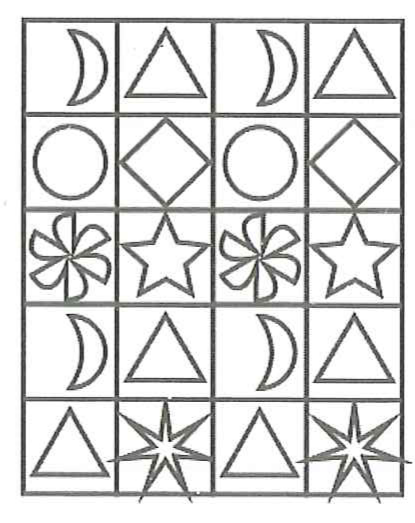
Starting with the block Question illustration and these three machines, which of the following patterns can the beavers produce?
  1. Question illustration
  2. Question illustration
  3. Question illustration
  4. Question illustration

Question 15

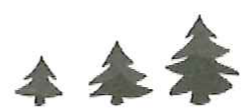
A beaver has 9 fir trees of three types (Question illustration), with 3 trees of each type. Trees of the same type have the same height, while different types have different heights. The beaver plants the 9 trees in a $3\times3$ garden so that each type occurs exactly once in each row and each column. At each position around the garden, the beaver puts a sign showing how many trees in the corresponding row or column can be seen from that position. Shorter trees behind taller trees are hidden. The illustration below gives an example of the signs for the arrangement shown.
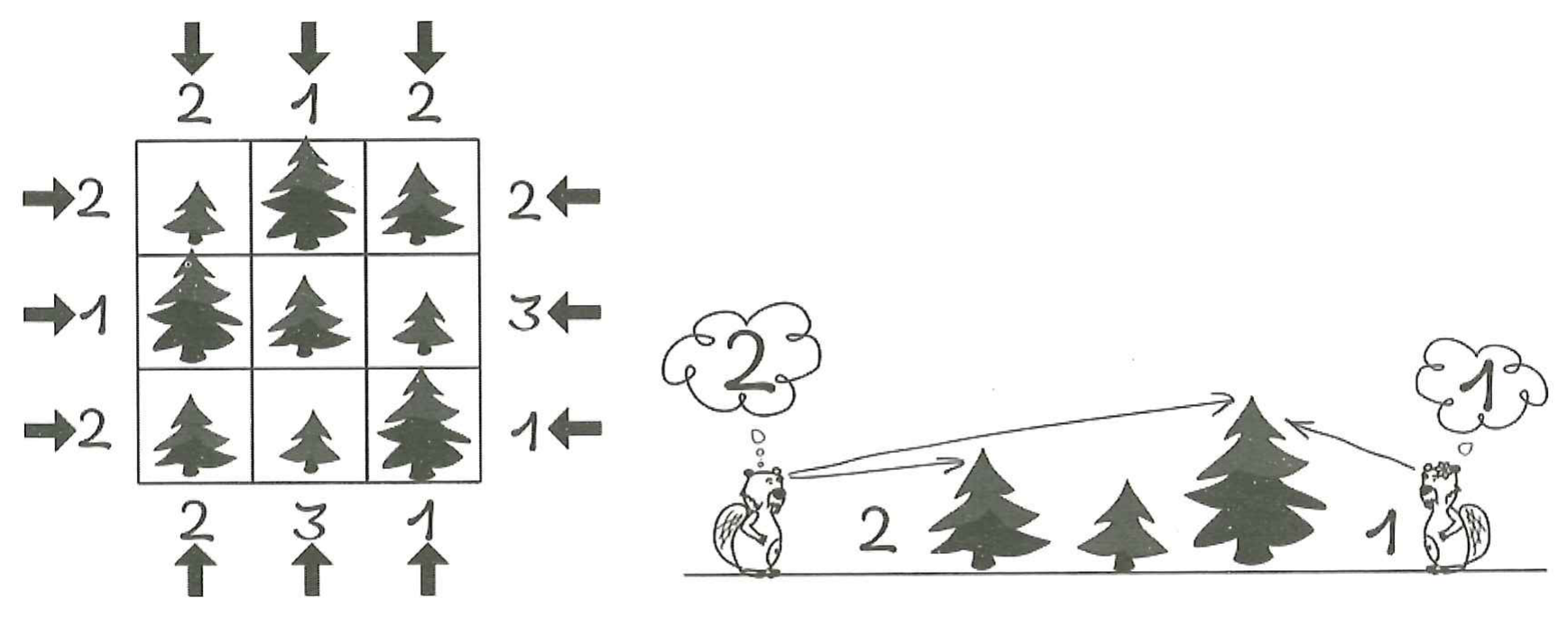
Question illustration

Example-picture data, with rows top to bottom and columns left to right:

| Row / Column | 1 | 2 | 3 |
| --- | --- | --- | --- |
| 1 | Short | Tall | Medium |
| 2 | Tall | Medium | Short |
| 3 | Medium | Short | Tall |

Numbers shown in the example:

| Viewing side | Row/column 1 | Row/column 2 | Row/column 3 |
| --- | --- | --- | --- |
| Left (rows) | 2 | 1 | 2 |
| Right (rows) | 2 | 3 | 1 |
| Top (columns) | 2 | 1 | 2 |
| Bottom (columns) | 2 | 3 | 1 |

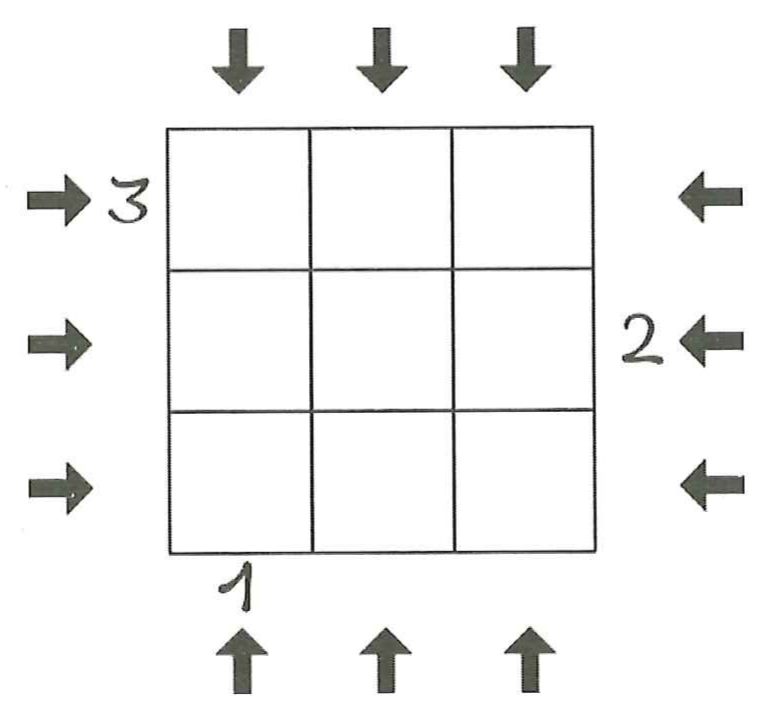
The following diagram shows some signs already placed around the garden. What is the sum of all the numbers around the garden when all signs are in place?

Question illustration

Clues for the puzzle to solve; — means no number is given, not zero:

| Viewing side | Row/column 1 | Row/column 2 | Row/column 3 |
| --- | --- | --- | --- |
| Left (rows) | 3 | — | — |
| Right (rows) | — | 2 | — |
| Top (columns) | — | — | — |
| Bottom (columns) | 1 | — | — |
  1. 18
  2. 22
  3. 24
  4. 36