Question 2
Total time: 120 minutes for both parts together. Printed name: __________ ID: __________.
Instructions: Do not open the test booklet until told to do so. Write your name and ID in the spaces provided. Write answers only on the supplied answer sheet, using blue/black pens or pencils. Diagrams are aids and are not drawn to scale. The invigilator collects all contest papers afterwards.
PART 2: MOLLUSKS — EXPERIMENT 1
Introduction: Mollusks are interesting animals whose species count ranks second only to arthropods. Snails and clams are familiar mollusk groups. Organisms are classified into species, genus, family, order, and so on, using their characteristics. This experiment develops familiarity with mollusk morphology to study their diversity.
In binomial nomenclature, the first word is the generic name identifying the genus; the second is the specific name distinguishing the species within it. Capitalize the first letter of the genus, use lower case for the specific name, and italicize both words (or underline them when handwritten). Example: *Sermyla tornatella*.
Caution: Shell specimens may have sharp edges; handle with care.
Aim: Identify the scientific names of freshwater snails using shell morphology and the family/species identification keys.
Materials: Four shells from four freshwater snail species; a photograph showing the four shells labeled A–D; Key 1 for four families; Keys 2–5 for species of those families; magnifying glass; gloves.
Procedure: Identify each shell in turn. Locate its main features using Figures 1–3 and compare them with the keys.
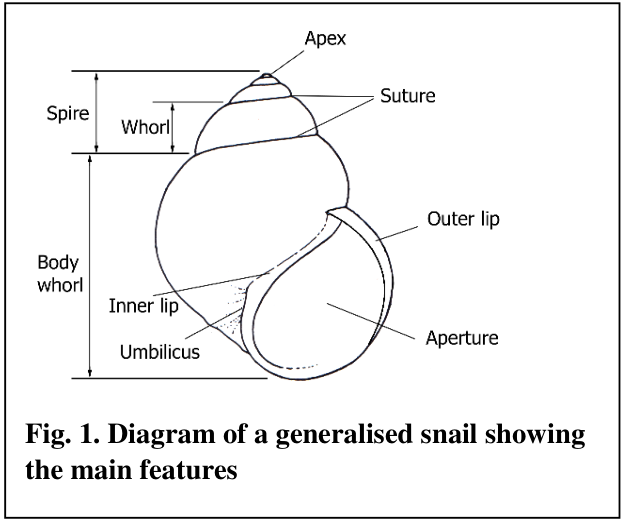
Figure 1: Main features of a generalized snail shell.
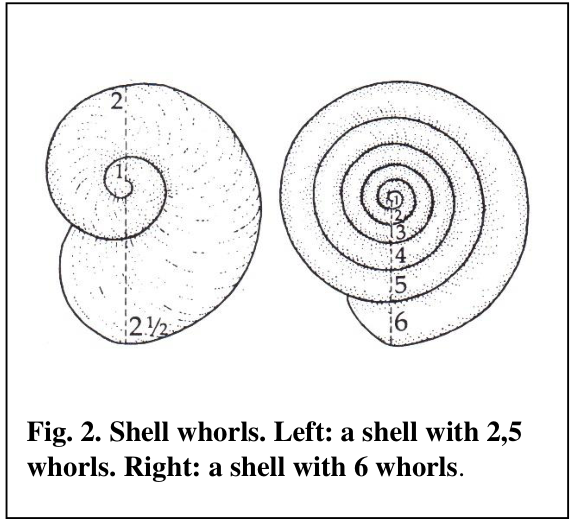
Figure 2: Left, 2.5 whorls; right, 6 whorls.
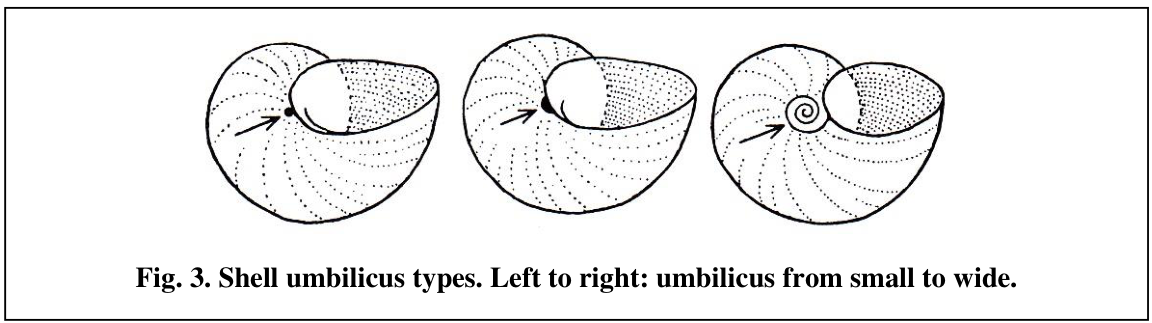
Figure 3: Umbilicus increasing from small to wide, left to right.
Step 1: Remove one shell from its bag and observe the whole specimen.
Step 2: Compare it with the photograph to identify its label A, B, C or D.
Step 3: Start at the first pair of alternatives in Key 1. Select the description fitting the specimen and follow the indicated next pair until you identify its family. For example, a sharply conical shell goes to pair 2; a globular to ovate-conical shell goes to pair 3.
Question 1: Identify the scientific family name of each shell and write it in the answer sheet. [2 points per shell, 8 total]
| Shell label | Family name |
| --- | --- |
| A | ____________ |
| B | ____________ |
| C | ____________ |
| D | ____________ |
Step 4: After identifying each family, use its corresponding Key 2, 3, 4 or 5 to identify the species.
Question 2: Identify the scientific species name of each shell and write it in the answer sheet. [2 points per shell, 8 total]
| Shell label | Species name |
| --- | --- |
| A | ____________ |
| B | ____________ |
| C | ____________ |
| D | ____________ |
IDENTIFICATION KEYS
Each pair gives two alternative descriptions of an unidentified shell. Follow the indicated number or terminal name. Source spellings are retained.
Key 1: Families of freshwater snails
| Choice | Characteristic | Go to / name |
| --- | --- | --- |
| 1a | Shell sharply conical | 2 |
| 1b | Shell globular to ovate-conical | 3 |
| 2a | Aperture waterdrop-shaped | Thiaridae |
| 2b | Aperture nearly round | Viviparidae |
| 3a | Aperture round | Stenothyridae |
| 3b | Aperture pear-shaped | Ampulariidae |
Key 2: Species of Thiaridae
| Choice | Characteristic | Go to / name |
| --- | --- | --- |
| 1a | Only one kind of raised ridge, not parallel to the suture | Sermyla tornatella |
| 1b | Raised ridges parallel to the suture | 2 |
| 2a | Raised ridges develop into spines | Thiara scabra |
| 2b | Raised ridges do not develop into spines | 3 |
| 3a | Ridges interrupted, forming rows of tubercles | Tarebia grannifera |
| 3b | Ridges continuous and parallel to suture | Melanoides tuberculatus |
Key 3: Species of Viviparidae
| Choice | Characteristic | Go to / name |
| --- | --- | --- |
| 1a | Shell without raised ridges | 2 |
| 1b | Raised ridges parallel to suture | 3 |
| 2a | Wide umbilicus | Cipangopaludina lecythoides |
| 2b | Narrow umbilicus | Sinotaia aeruginosa |
| 3a | Round aperture | Filopaludina polygramma |
| 3b | Waterdrop-shaped aperture | Angulyagra boettgeri |
Key 4: Species of Stenothyridae
| Choice | Characteristic | Go to / name |
| --- | --- | --- |
| 1a | Aperture has both outer and inner lips | 2 |
| 1b | Aperture has only an outer or an inner lip | 3 |
| 2a | Apex acute-angled and not truncate | Stenothyra polita |
| 2b | Apex truncate | Stenothyra ovata |
| 3a | Aperture lips extended | Stenothyra messageri |
| 3b | Aperture lips not extended | Stenothyra alba |
Key 5: Species of Ampullariidae
| Choice | Characteristic | Go to / name |
| --- | --- | --- |
| 1a | No umbilicus | 2 |
| 1b | Very wide umbilicus | 3 |
| 2a | No colored lines on shell surface | Pila polita |
| 2b | Colored lines on shell surface | Pila ampullacea |
| 3a | Spire distinctly elevated above body whorl | Pomacea maculata |
| 3b | Spire low above body whorl, almost flat | Ampullaria turbinis |
Editorial availability note: The supplied files do not include the separate photograph of the four labeled specimens or the physical shells. These teaching diagrams are not the A–D specimens. Leave identifications blank until the specimens and label photograph are available.
Instructions: Do not open the test booklet until told to do so. Write your name and ID in the spaces provided. Write answers only on the supplied answer sheet, using blue/black pens or pencils. Diagrams are aids and are not drawn to scale. The invigilator collects all contest papers afterwards.
PART 2: MOLLUSKS — EXPERIMENT 1
Introduction: Mollusks are interesting animals whose species count ranks second only to arthropods. Snails and clams are familiar mollusk groups. Organisms are classified into species, genus, family, order, and so on, using their characteristics. This experiment develops familiarity with mollusk morphology to study their diversity.
In binomial nomenclature, the first word is the generic name identifying the genus; the second is the specific name distinguishing the species within it. Capitalize the first letter of the genus, use lower case for the specific name, and italicize both words (or underline them when handwritten). Example: *Sermyla tornatella*.
Caution: Shell specimens may have sharp edges; handle with care.
Aim: Identify the scientific names of freshwater snails using shell morphology and the family/species identification keys.
Materials: Four shells from four freshwater snail species; a photograph showing the four shells labeled A–D; Key 1 for four families; Keys 2–5 for species of those families; magnifying glass; gloves.
Procedure: Identify each shell in turn. Locate its main features using Figures 1–3 and compare them with the keys.
Figure 1: Main features of a generalized snail shell.
Figure 2: Left, 2.5 whorls; right, 6 whorls.
Figure 3: Umbilicus increasing from small to wide, left to right.
Step 1: Remove one shell from its bag and observe the whole specimen.
Step 2: Compare it with the photograph to identify its label A, B, C or D.
Step 3: Start at the first pair of alternatives in Key 1. Select the description fitting the specimen and follow the indicated next pair until you identify its family. For example, a sharply conical shell goes to pair 2; a globular to ovate-conical shell goes to pair 3.
Question 1: Identify the scientific family name of each shell and write it in the answer sheet. [2 points per shell, 8 total]
| Shell label | Family name |
| --- | --- |
| A | ____________ |
| B | ____________ |
| C | ____________ |
| D | ____________ |
Step 4: After identifying each family, use its corresponding Key 2, 3, 4 or 5 to identify the species.
Question 2: Identify the scientific species name of each shell and write it in the answer sheet. [2 points per shell, 8 total]
| Shell label | Species name |
| --- | --- |
| A | ____________ |
| B | ____________ |
| C | ____________ |
| D | ____________ |
IDENTIFICATION KEYS
Each pair gives two alternative descriptions of an unidentified shell. Follow the indicated number or terminal name. Source spellings are retained.
Key 1: Families of freshwater snails
| Choice | Characteristic | Go to / name |
| --- | --- | --- |
| 1a | Shell sharply conical | 2 |
| 1b | Shell globular to ovate-conical | 3 |
| 2a | Aperture waterdrop-shaped | Thiaridae |
| 2b | Aperture nearly round | Viviparidae |
| 3a | Aperture round | Stenothyridae |
| 3b | Aperture pear-shaped | Ampulariidae |
Key 2: Species of Thiaridae
| Choice | Characteristic | Go to / name |
| --- | --- | --- |
| 1a | Only one kind of raised ridge, not parallel to the suture | Sermyla tornatella |
| 1b | Raised ridges parallel to the suture | 2 |
| 2a | Raised ridges develop into spines | Thiara scabra |
| 2b | Raised ridges do not develop into spines | 3 |
| 3a | Ridges interrupted, forming rows of tubercles | Tarebia grannifera |
| 3b | Ridges continuous and parallel to suture | Melanoides tuberculatus |
Key 3: Species of Viviparidae
| Choice | Characteristic | Go to / name |
| --- | --- | --- |
| 1a | Shell without raised ridges | 2 |
| 1b | Raised ridges parallel to suture | 3 |
| 2a | Wide umbilicus | Cipangopaludina lecythoides |
| 2b | Narrow umbilicus | Sinotaia aeruginosa |
| 3a | Round aperture | Filopaludina polygramma |
| 3b | Waterdrop-shaped aperture | Angulyagra boettgeri |
Key 4: Species of Stenothyridae
| Choice | Characteristic | Go to / name |
| --- | --- | --- |
| 1a | Aperture has both outer and inner lips | 2 |
| 1b | Aperture has only an outer or an inner lip | 3 |
| 2a | Apex acute-angled and not truncate | Stenothyra polita |
| 2b | Apex truncate | Stenothyra ovata |
| 3a | Aperture lips extended | Stenothyra messageri |
| 3b | Aperture lips not extended | Stenothyra alba |
Key 5: Species of Ampullariidae
| Choice | Characteristic | Go to / name |
| --- | --- | --- |
| 1a | No umbilicus | 2 |
| 1b | Very wide umbilicus | 3 |
| 2a | No colored lines on shell surface | Pila polita |
| 2b | Colored lines on shell surface | Pila ampullacea |
| 3a | Spire distinctly elevated above body whorl | Pomacea maculata |
| 3b | Spire low above body whorl, almost flat | Ampullaria turbinis |
Editorial availability note: The supplied files do not include the separate photograph of the four labeled specimens or the physical shells. These teaching diagrams are not the A–D specimens. Leave identifications blank until the specimens and label photograph are available.