Question 3
The diagram shows a triangular chessboard. A chess piece called a castle, indicated by $C$, may attack along any of the three directions highlighted below.
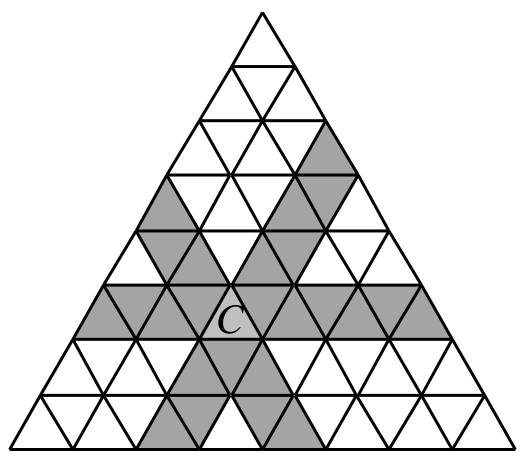
(a) Place as many castles as possible on the board so that no two castles can attack each other. (3 marks)
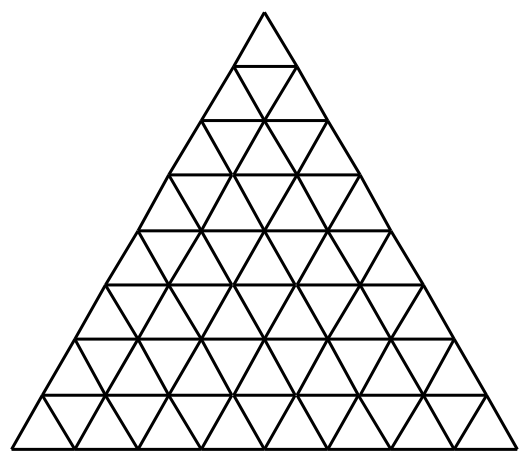
(b) A chess piece called a bishop, indicated by $B$, may attack along the direction of any of its angles. The two diagrams show examples of its attack ranges; the broken lines indicate the directions of the angles.
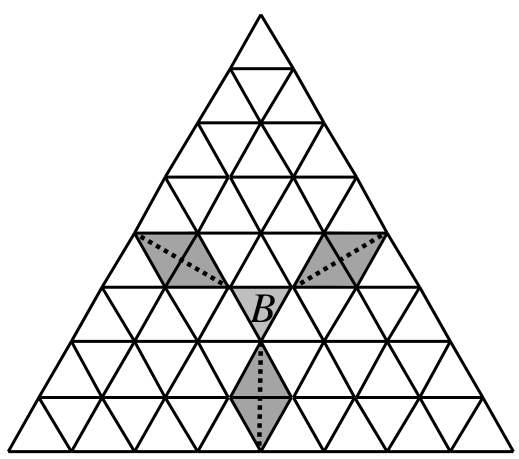
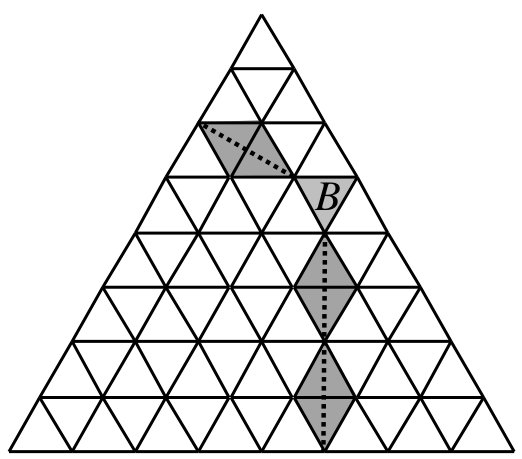
Place as many bishops as possible on the board so that no bishop attacks another. (3 marks)
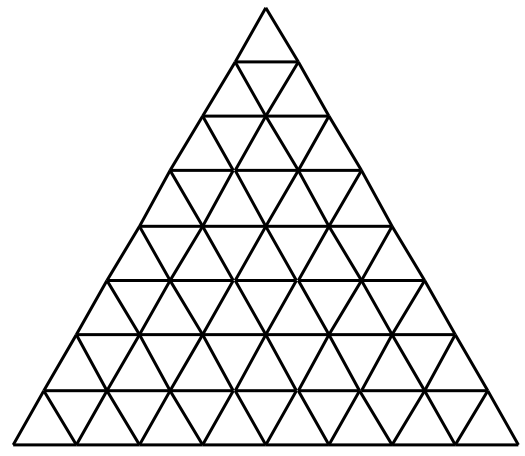
The answer sheet asks for the number of pieces and a placement diagram for each part, with no partial score within each part.
(a) Place as many castles as possible on the board so that no two castles can attack each other. (3 marks)
(b) A chess piece called a bishop, indicated by $B$, may attack along the direction of any of its angles. The two diagrams show examples of its attack ranges; the broken lines indicate the directions of the angles.
Place as many bishops as possible on the board so that no bishop attacks another. (3 marks)
The answer sheet asks for the number of pieces and a placement diagram for each part, with no partial score within each part.