Question 3
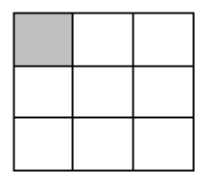
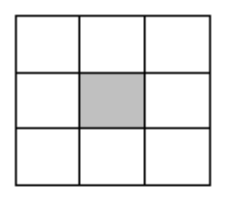
Removing the upper-left cell of a $3\times3$ grid leaves 11 squares: eight unit squares and three $2\times2$ squares. Removing its central cell leaves only eight unit squares.
Shapes A and B each consist of six unit cells.
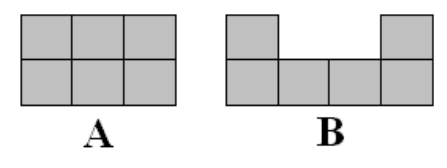
In each part, remove one copy of the specified shape from the $10\times10$ grid, keeping its boundary on grid lines:
(a) A, to leave the minimum number of squares.
(b) A, to leave the maximum number of squares.
(c) B, to leave the minimum number of squares.
(d) B, to leave the maximum number of squares.
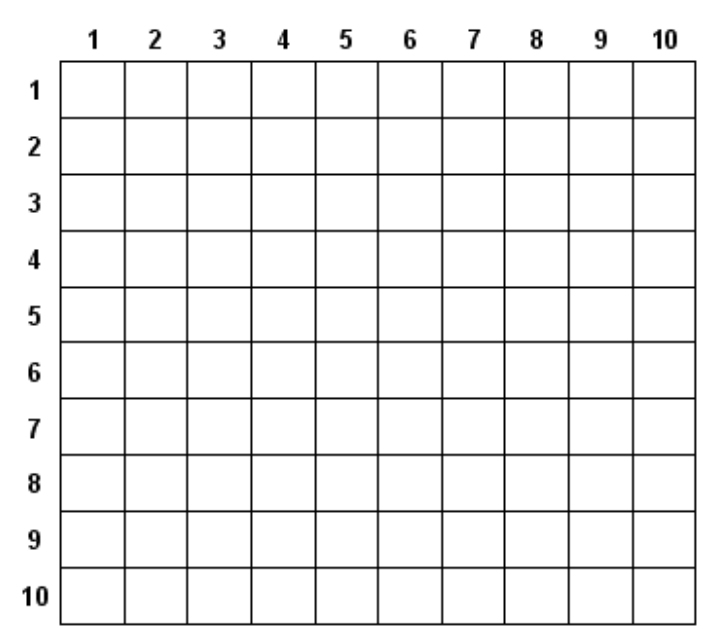
Shapes A and B each consist of six unit cells.
In each part, remove one copy of the specified shape from the $10\times10$ grid, keeping its boundary on grid lines:
(a) A, to leave the minimum number of squares.
(b) A, to leave the maximum number of squares.
(c) B, to leave the minimum number of squares.
(d) B, to leave the maximum number of squares.