Question 9
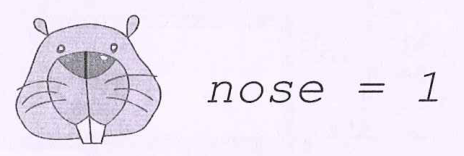
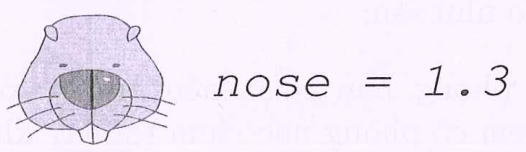
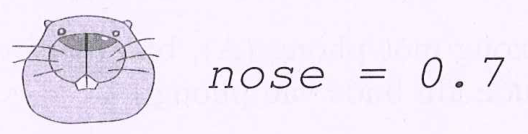
A shop uses computer vision to recognize customers' actions. It can identify looking straight ahead, lowering the head or raising the head from the apparent length of the bridge of the nose, called nose.
- If $nose=1$, the customer is looking straight ahead.
- When the customer nods and lowers the head, the bridge of the nose appears longer, so $nose>1$.
- When the customer tilts the head upward, $nose<1$.
To buy $n$ tickets, the customer must nod $n$ times and then tilt the head upward. The control program starts when the customer stands in front of the machine looking straight ahead.
Which comparison blocks should be inserted, from top to bottom, into the program below so it works as required?
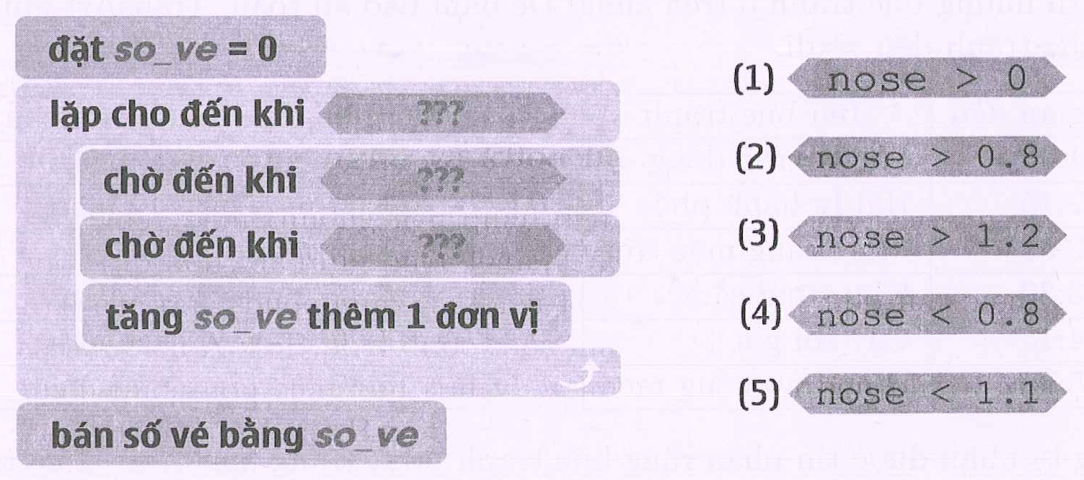
Editable program transcription:
set so_ve = 0
repeat until ???:
- wait until ???
- wait until ???
- increase so_ve by 1
sell so_ve tickets
Comparison blocks: (1) $nose>0$; (2) $nose>0.8$; (3) $nose>1.2$; (4) $nose<0.8$; (5) $nose<1.1$.
- If $nose=1$, the customer is looking straight ahead.
- When the customer nods and lowers the head, the bridge of the nose appears longer, so $nose>1$.
- When the customer tilts the head upward, $nose<1$.
To buy $n$ tickets, the customer must nod $n$ times and then tilt the head upward. The control program starts when the customer stands in front of the machine looking straight ahead.
Which comparison blocks should be inserted, from top to bottom, into the program below so it works as required?
Editable program transcription:
set so_ve = 0
repeat until ???:
- wait until ???
- wait until ???
- increase so_ve by 1
sell so_ve tickets
Comparison blocks: (1) $nose>0$; (2) $nose>0.8$; (3) $nose>1.2$; (4) $nose<0.8$; (5) $nose<1.1$.