Question 10
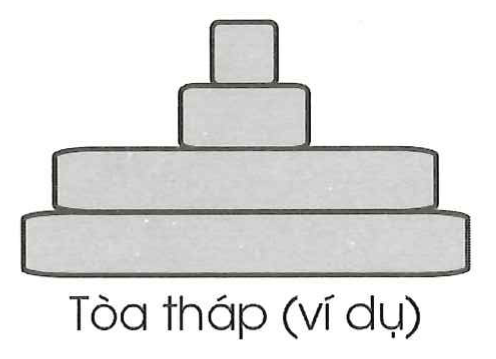
Alex the beaver has wooden bars of equal height and the lengths illustrated below. He wants to use the bars to form three towers of equal height. In each tower, every bar is shorter than any bar below it, if there is one.
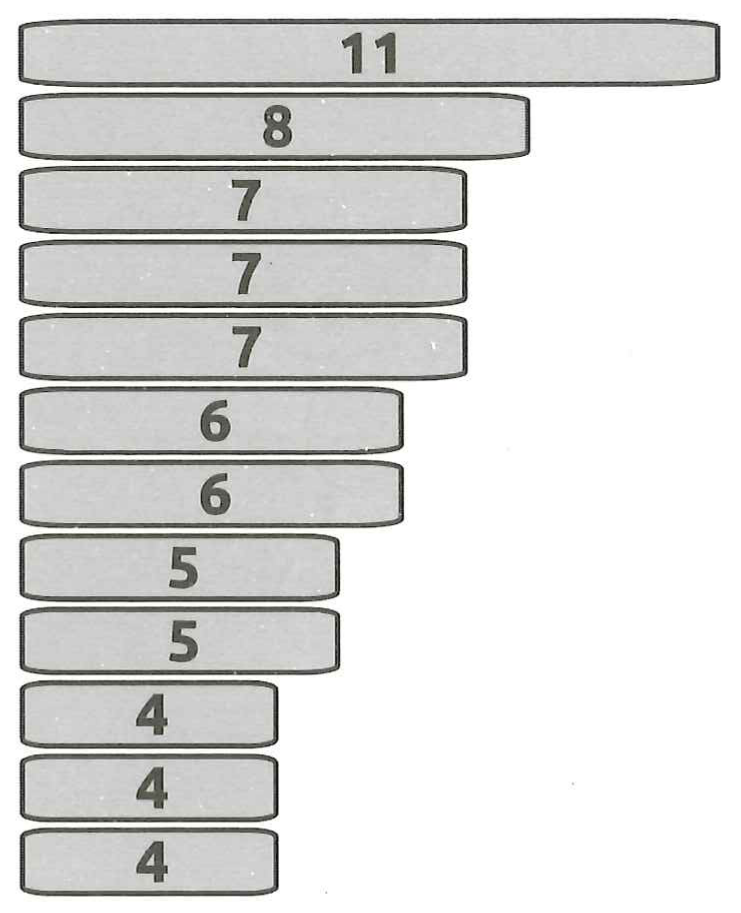
Lengths in the source, top to bottom: 11,8,7,7,7,6,6,5,5,4,4,4.
After making the towers, Alex calculates their deviation: the greatest difference between any two of the three sums of bar lengths within a tower. What is the smallest deviation he can obtain?
Approved editorial clarification: use all twelve bars, so each tower contains four bars. The source does not expressly say “all”; this intended interpretation is required for its grading key. The result if unused bars are allowed is discussed separately in the solution.
Lengths in the source, top to bottom: 11,8,7,7,7,6,6,5,5,4,4,4.
After making the towers, Alex calculates their deviation: the greatest difference between any two of the three sums of bar lengths within a tower. What is the smallest deviation he can obtain?
Approved editorial clarification: use all twelve bars, so each tower contains four bars. The source does not expressly say “all”; this intended interpretation is required for its grading key. The result if unused bars are allowed is discussed separately in the solution.