Question 8
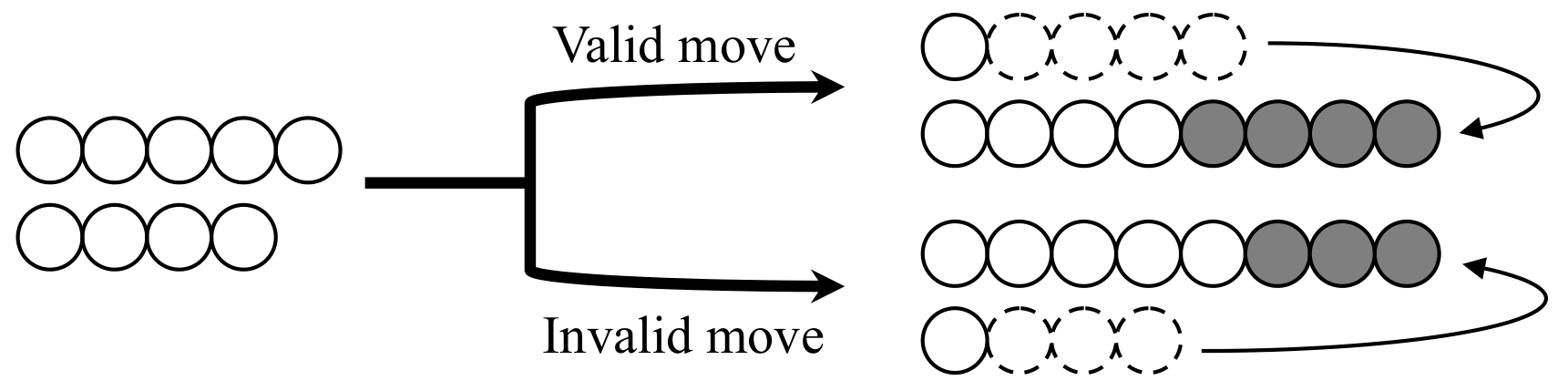
Some marbles are arranged in several rows. In each turn, a number of marbles is moved from one row to another such that the number of marbles moved equals the number of marbles in the target row just before the move. For example, there are 9 marbles that are arranged in 2 rows, as shown in the diagram below. One valid move and one invalid move are also shown.
Now, as shown in the diagram below, 24 marbles are arranged in three rows: 11 in the first row, 7 in the second row and 6 in the third row. Using the same procedure as above, what is the minimum number of turns required such that each row contains exactly 8 marbles?
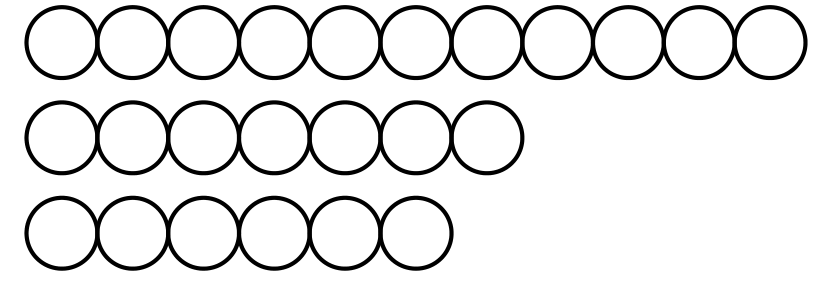
Now, as shown in the diagram below, 24 marbles are arranged in three rows: 11 in the first row, 7 in the second row and 6 in the third row. Using the same procedure as above, what is the minimum number of turns required such that each row contains exactly 8 marbles?