Skip to content / Đến nội dung
ThichHocToan.com

VTMO 2026 - Grade 5 - Semifinal - SET 3 - Self-study

Question 1

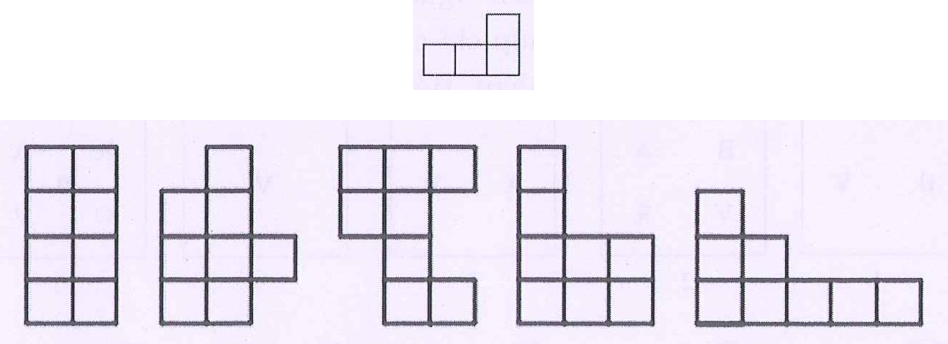
An L-shaped tile is made of four unit squares, as shown. How many of the five shapes below can be made by joining two such tiles? Practice clarification: the tiles may be rotated and turned over.

Question illustration
  1. 1
  2. 2
  3. 3
  4. 4
  5. 5

Question 2

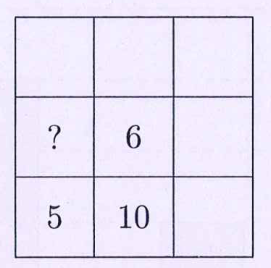
Fill the $3\times3$ grid so that each row, each column and each diagonal has sum 18. What number belongs in the cell marked “?”?

Question illustration
  1. 4
  2. 5
  3. 6
  4. 8
  5. 10

Question 3

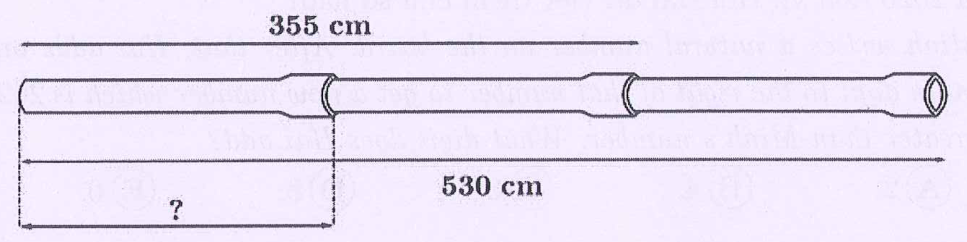
We have three identical water pipes. The figure shows a total length of 355 cm when two are joined and 530 cm when three are joined. What is the length of one pipe?

Question illustration
  1. 180 cm
  2. 175 cm
  3. 170 cm
  4. 165 cm
  5. 160 cm

Question 4

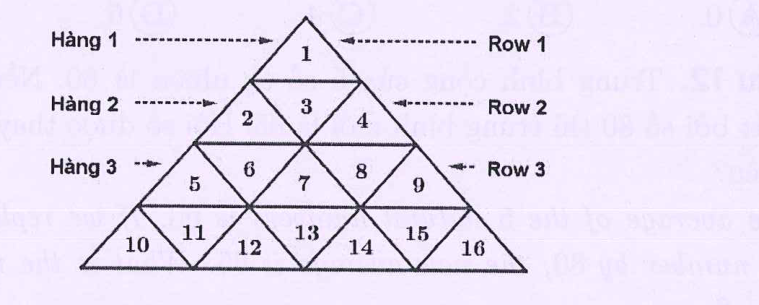
Numbers are arranged in a triangle as shown. There are 3 numbers in row 2 and 5 numbers in row 3. Following the same pattern, what is the first (leftmost) number in row 20?

Question illustration
  1. 362
  2. 400
  3. 401
  4. 324
  5. 200

Question 5

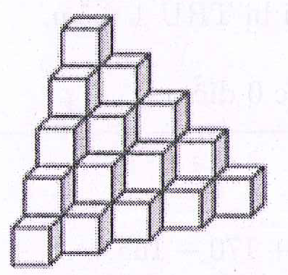
The tower below is built from unit cubes with edge length 1 cm. How many unit cubes are in the tower? There are no gaps inside it.

Question illustration
  1. 31
  2. 32
  3. 33
  4. 34
  5. 35

Question 6

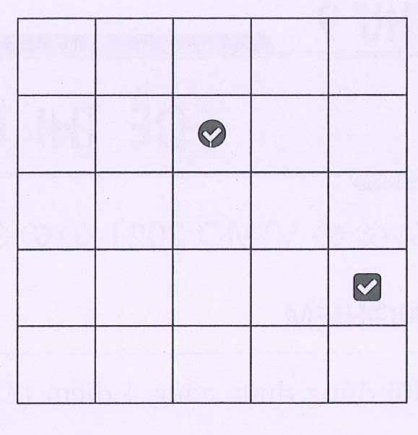
In the figure, how many squares contain the circular tick mark but do not contain the square tick mark?

Question illustration
  1. 1
  2. 11
  3. 12
  4. 24
  5. None of these

Question 7

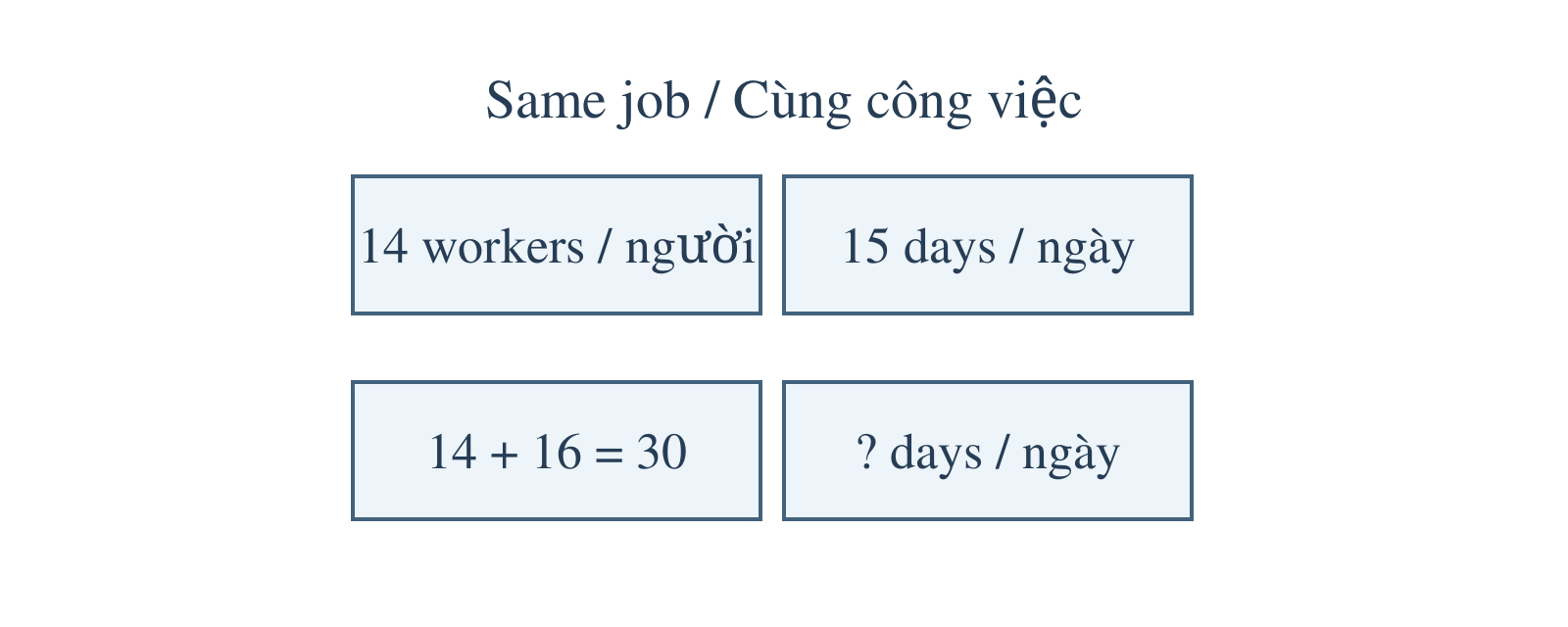
A team of 14 workers repairs a road in 15 days. If 16 more workers join the team, how many days will the same repair take? Editorial clarification: every worker works at the same constant daily rate.

Question illustration
  1. 5 days
  2. 9 days
  3. 7 days
  4. 8 days
  5. 10 days

Question 8

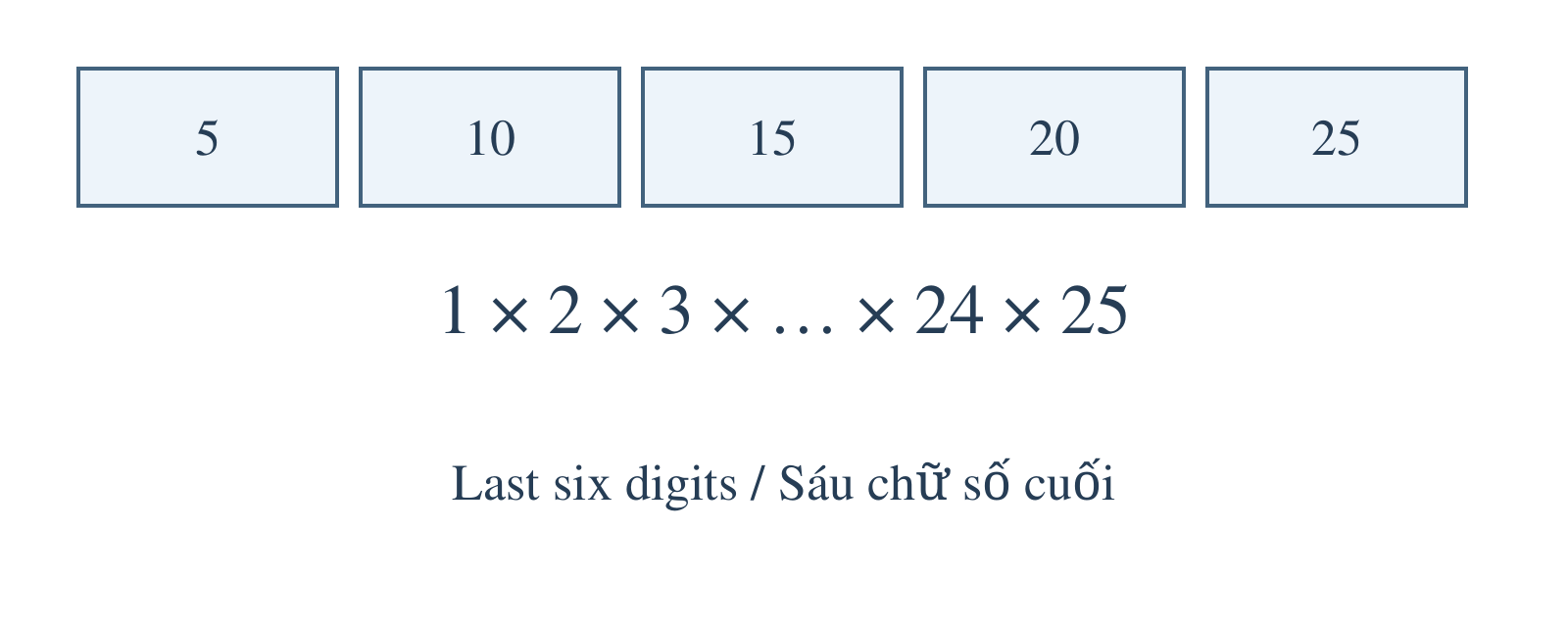
What is the sum of the last six digits of the product $1\times2\times3\times4\times\cdots\times24\times25$?

Question illustration
  1. 0
  2. 12
  3. 16
  4. 20
  5. 10

Question 9

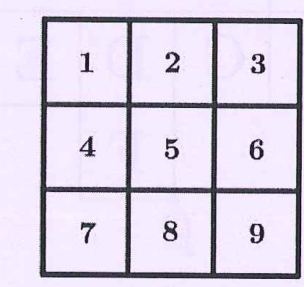
Thanh selects three numbers from the $3\times3$ table below, choosing exactly one number from each row and each column. What is the greatest possible product of the three selected numbers?

Question illustration
  1. 45
  2. 162
  3. 168
  4. 105
  5. 504

Question 10

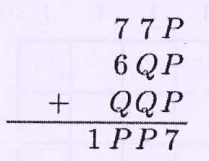
In the addition shown, $P$ and $Q$ are digits. Find $P+Q$.

Question illustration
  1. 9
  2. 12
  3. 13
  4. 14
  5. 15

Question 11

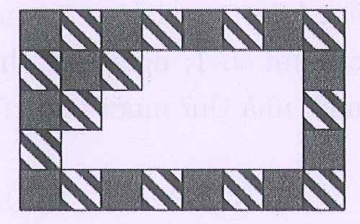
A rectangular wall pattern uses two types of tiles: grey tiles and striped tiles. Some tiles have fallen off, as shown. How many grey tiles have fallen off?

Question illustration
  1. 5
  2. 6
  3. 7
  4. 8
  5. 9

Question 12

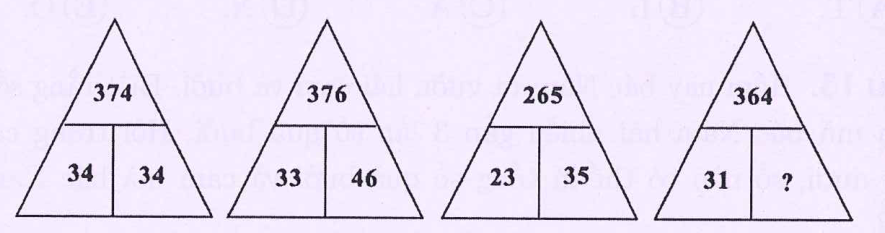
Find the missing number in the last triangle.

Question illustration
  1. 11
  2. 22
  3. 44
  4. 54
  5. 64

Question 13

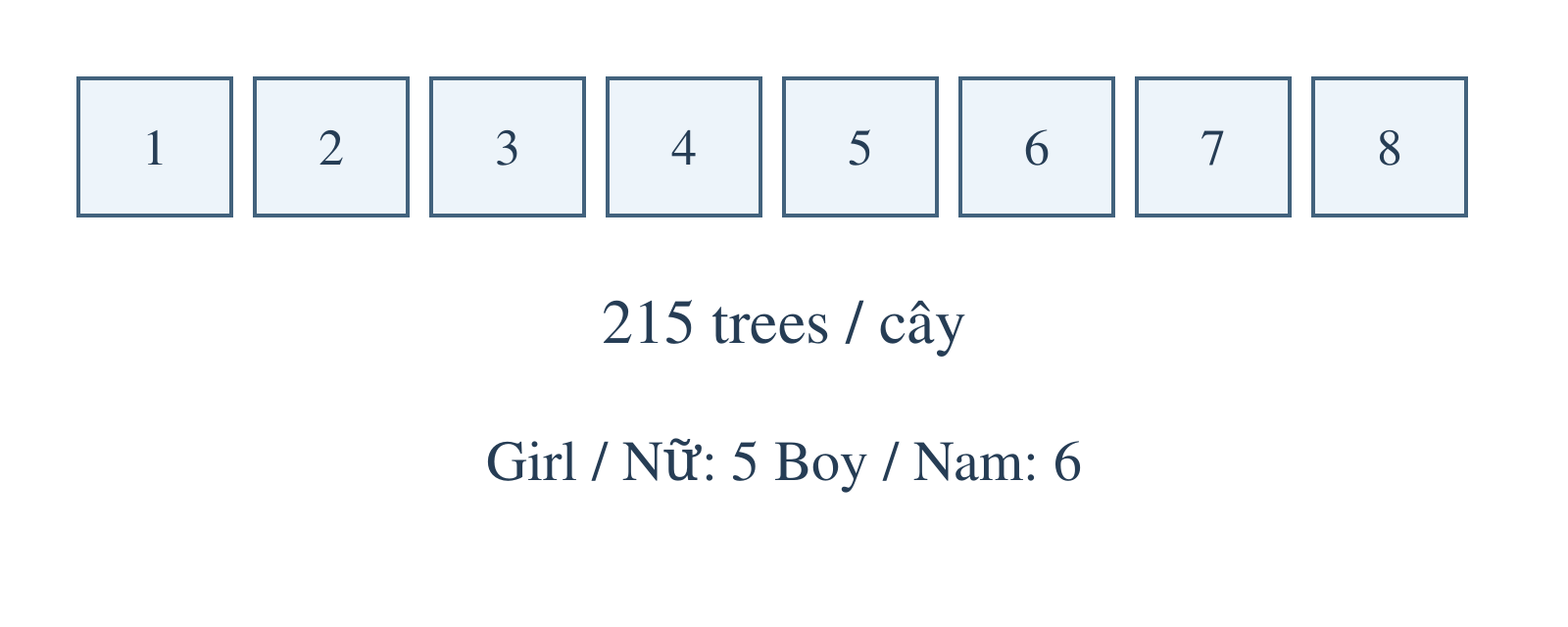
Class 5A is divided into 8 groups with equal numbers of pupils to plant trees. The class plants 215 trees in total. Each girl plants 5 trees and each boy plants 6 trees. How many girls are in the class?

Question illustration
  1. 40
  2. 30
  3. 25
  4. 15
  5. 10

Question 14

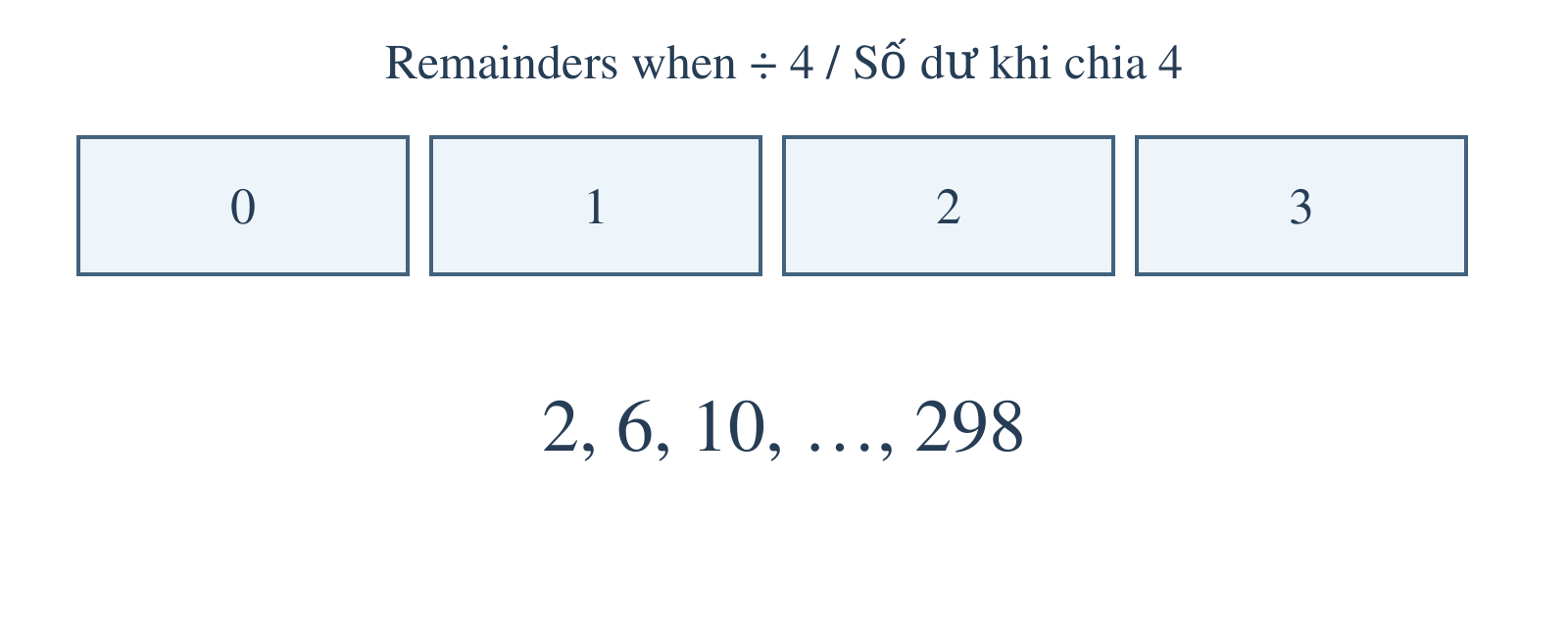
How many natural numbers less than 300 are divisible by 2 but not divisible by 4?

Question illustration
  1. 75
  2. 74
  3. 73
  4. 72
  5. 71

Question 15

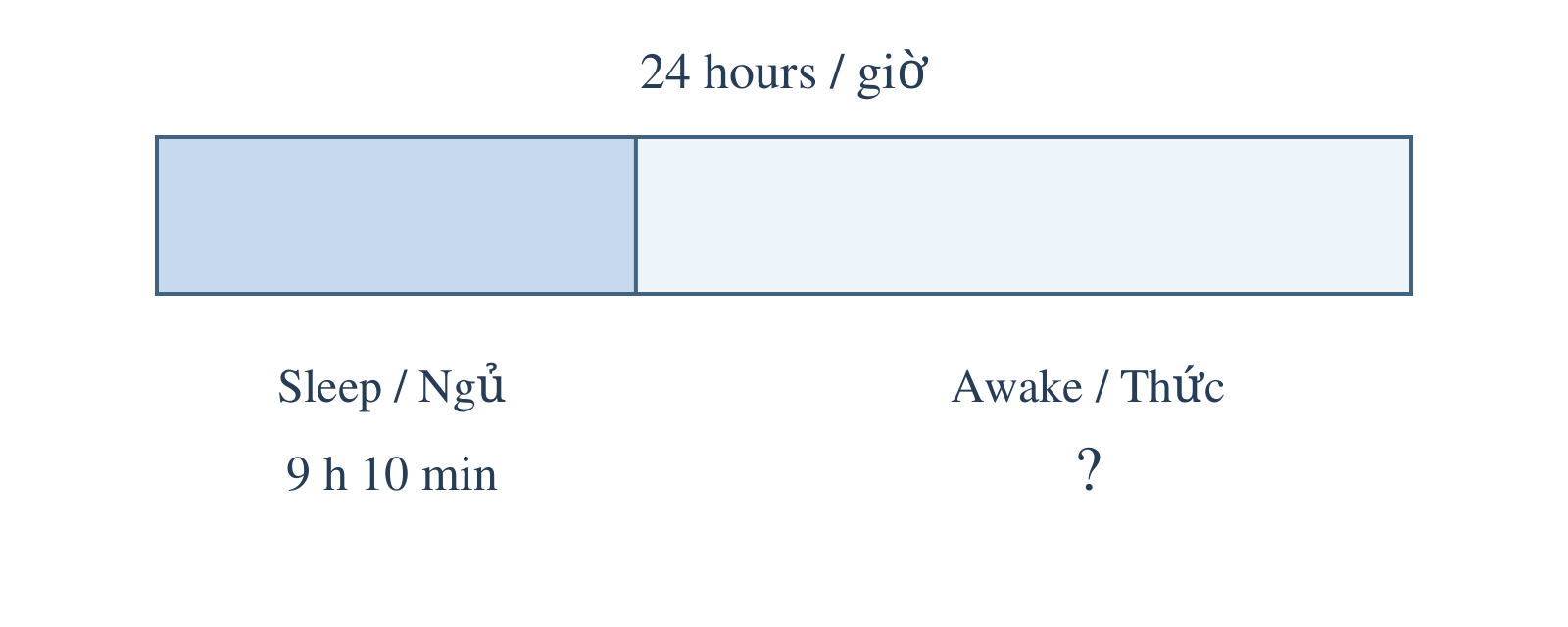
Quang sleeps for a total of 9 hours 10 minutes in one day. How long is he awake that day?

Question illustration
  1. 13 hours 10 minutes
  2. 15 hours 50 minutes
  3. 14 hours 50 minutes
  4. 16 hours 10 minutes
  5. 2 hours 50 minutes

Question 16

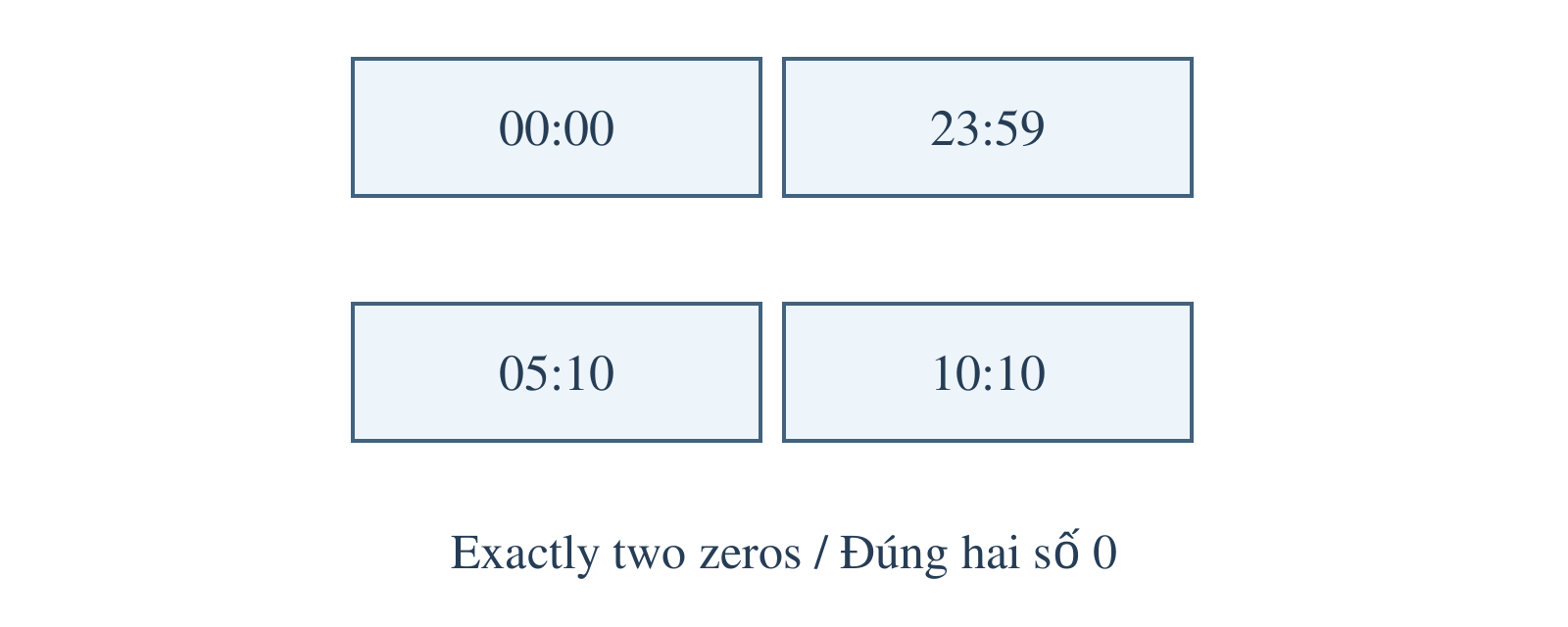
A digital clock displays every minute of the day from 00:00 to 23:59. How many displayed times contain exactly two digits 0? For example, 05:10 and 10:10 both satisfy the condition.

Question illustration

Question 17

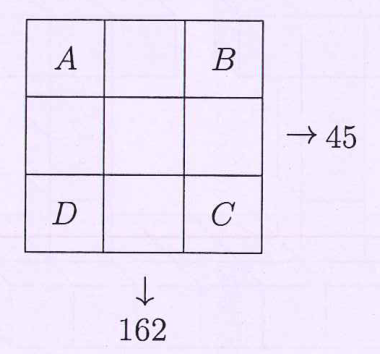
Fill a $3\times3$ grid with the numbers 1 to 9, using each exactly once. The product of the middle row is 45 and that of the middle column is 162, as shown. Find $A+B+C+D$.

Question illustration

Question 18

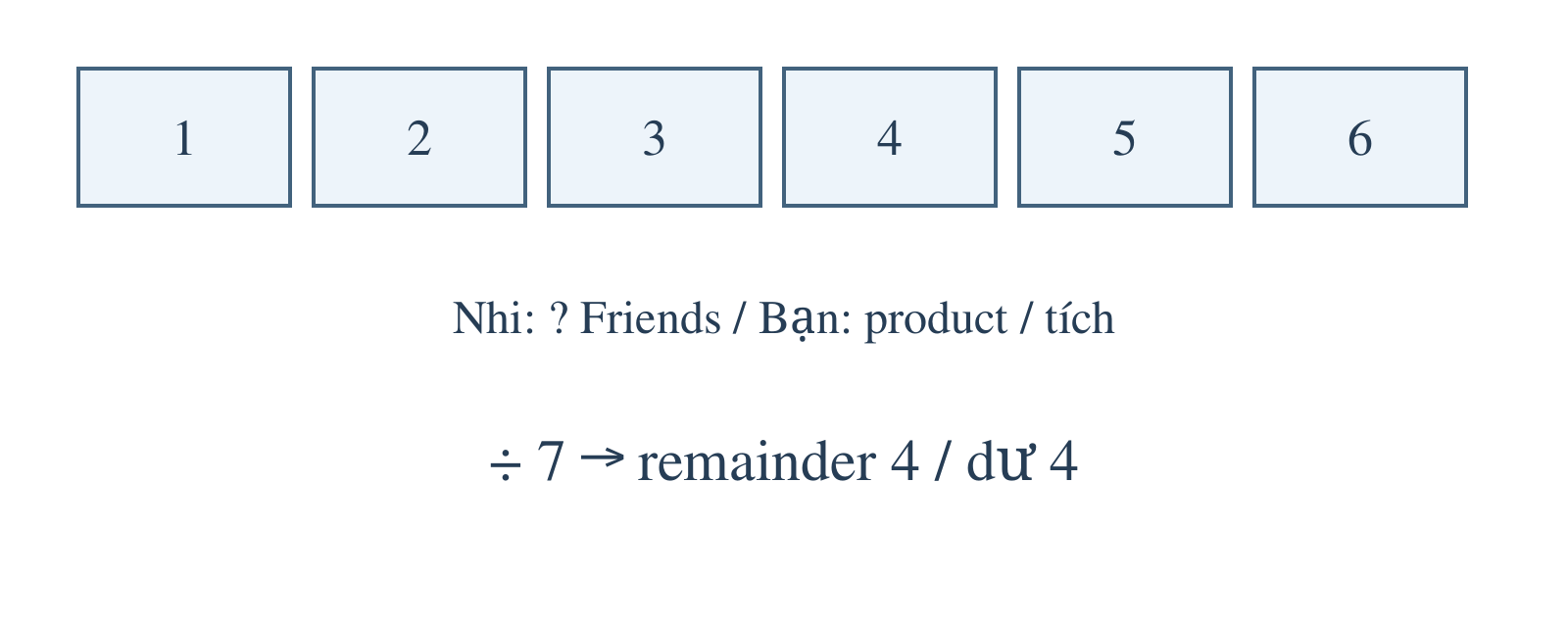
Nhi and five friends each roll a six-sided die numbered 1 to 6. All six results are different. The product of her five friends’ results leaves remainder 4 when divided by 7. What number did Nhi roll?

Question illustration

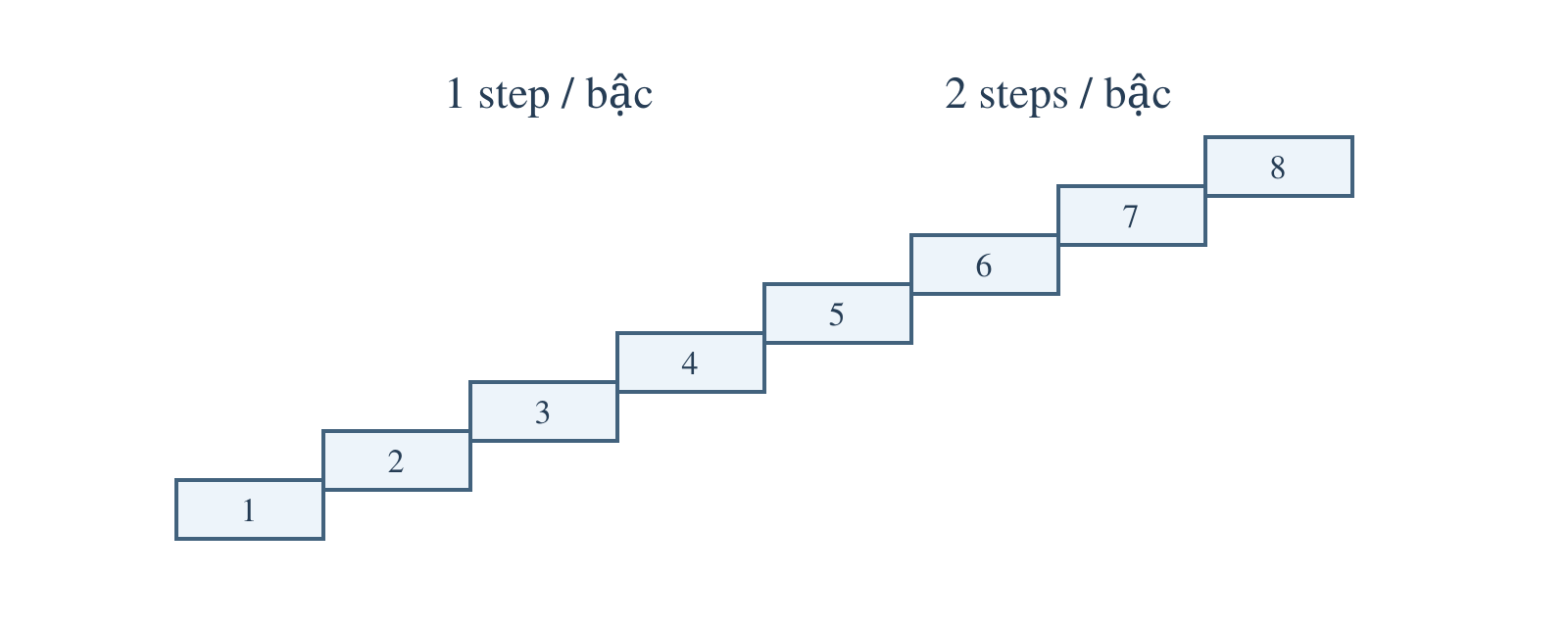
Question 19

Tí can climb either 1 step or 2 steps at a time. In how many different ways can he climb a staircase with 8 steps?

Question illustration

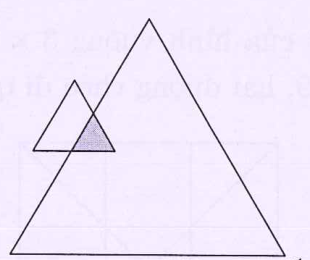
Question 20

The sum of the areas of the two triangles below is $120\text{ cm}^2$ (the diagram is not to scale). The shaded overlap is $\frac13$ of the smaller triangle and $\frac19$ of the larger triangle. Find the shaded area in square centimetres.
Question illustration