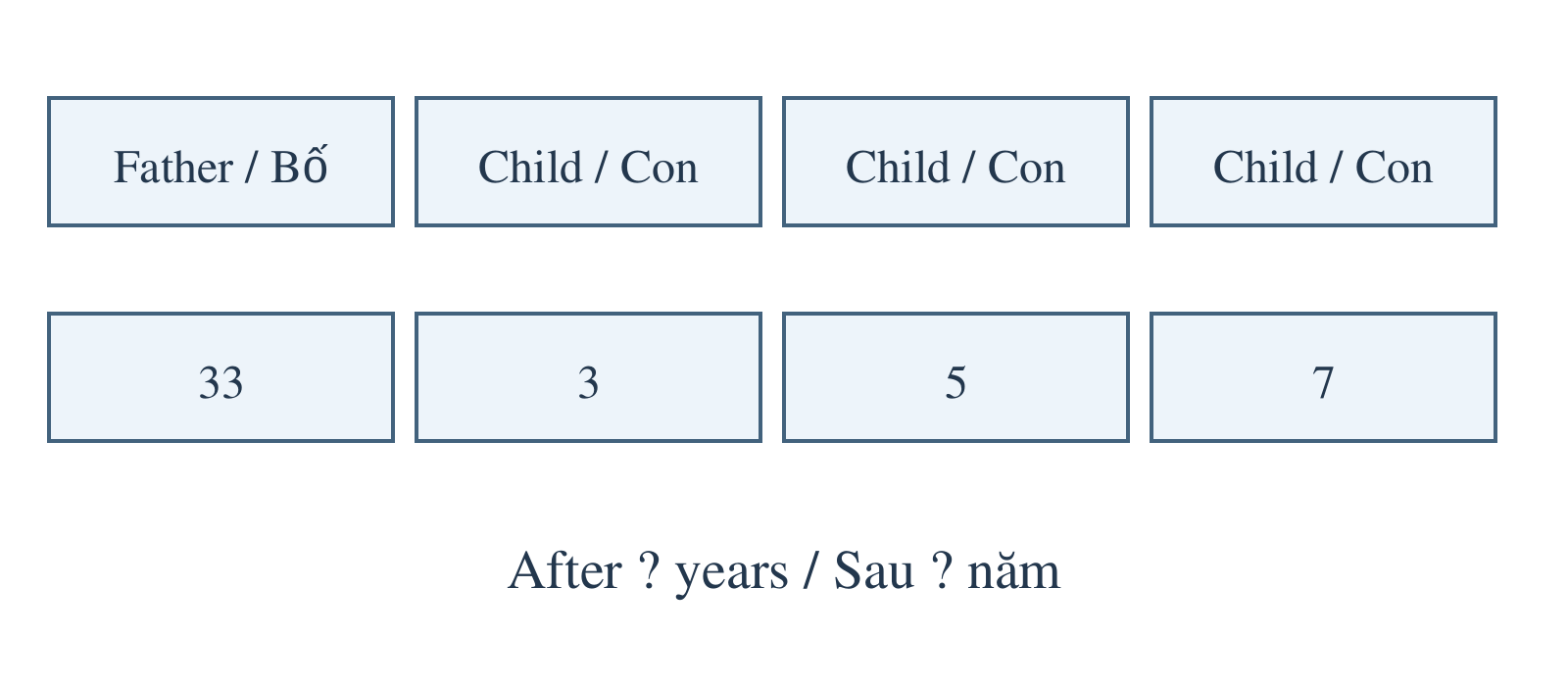
A father is 33 years old, and his three children are 3, 5 and 7. In how many years will the sum of the children’s ages equal their father’s age at that time?
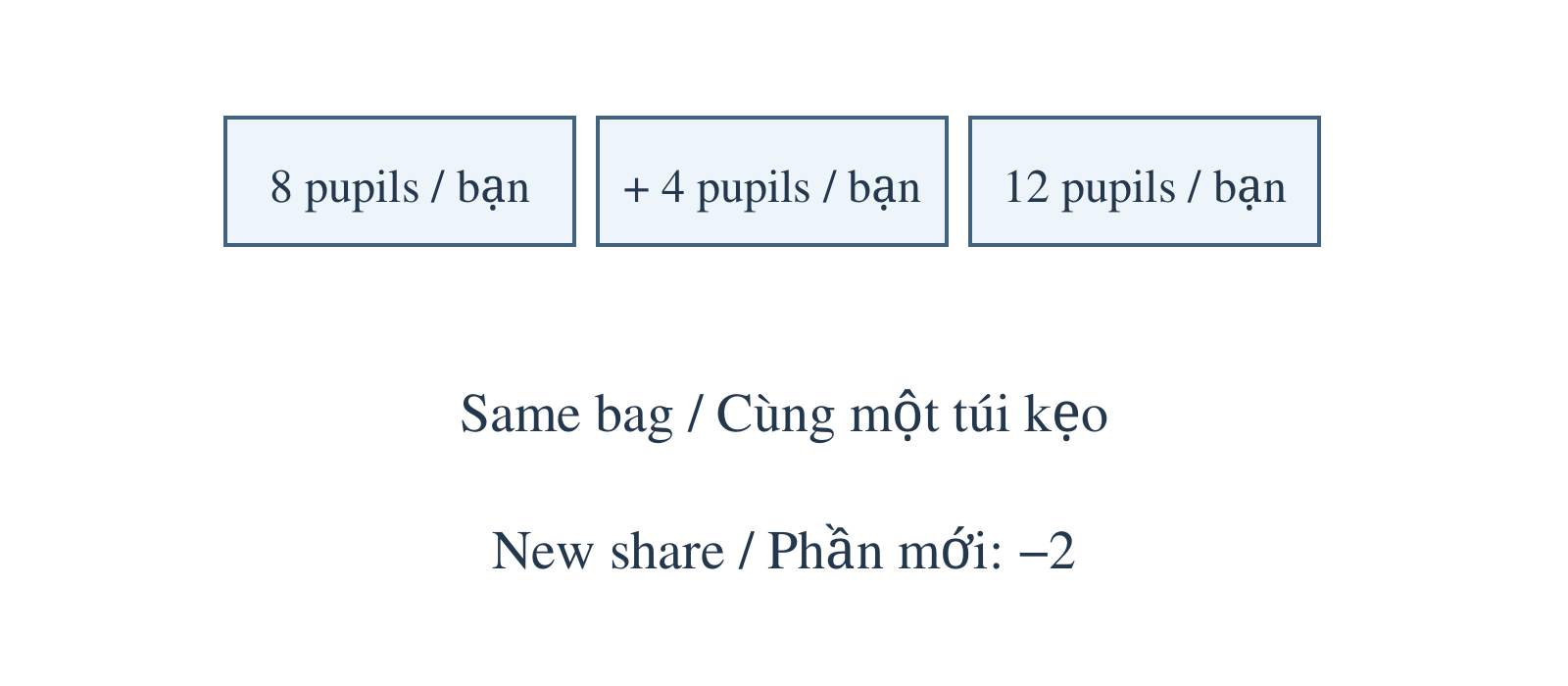
A teacher has a bag of candies that can be shared equally among 8 pupils with none left over. Four more pupils join. When all the candies are shared equally among everyone, each pupil receives 2 fewer candies than originally planned. How many candies are in the bag?
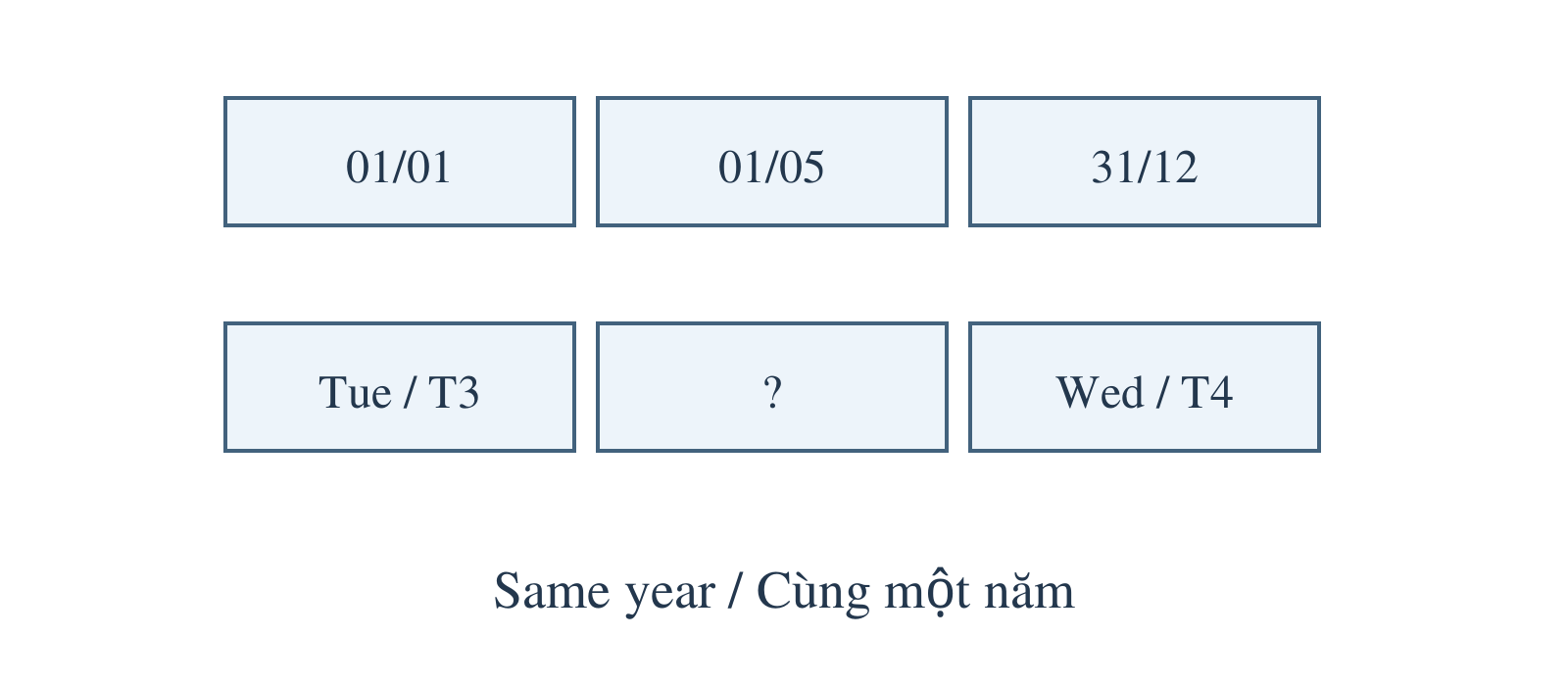
In a certain year, January 1 is a Tuesday and December 31 is a Wednesday. What day of the week is May 1? Use these answer codes: Sunday 0001; Monday 0002; Tuesday 0003; Wednesday 0004; Thursday 0005; Friday 0006; Saturday 0007.
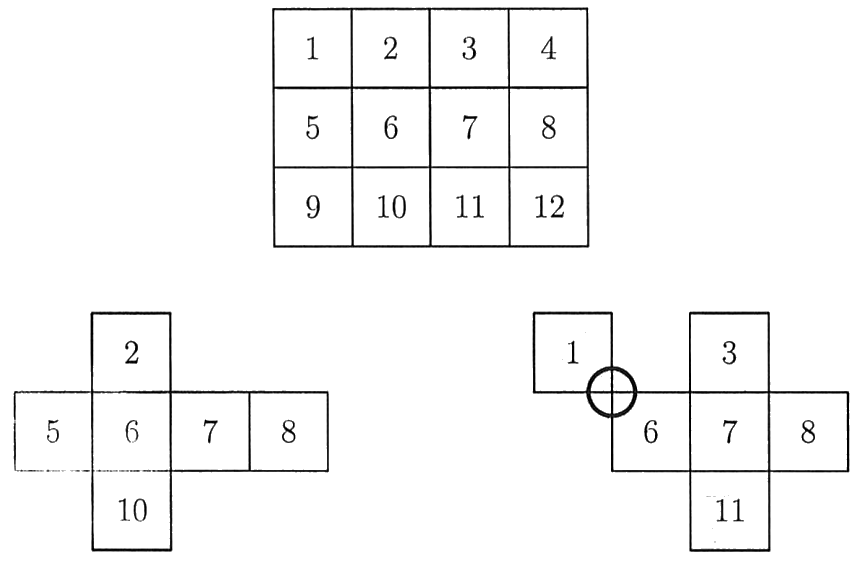
An cuts out six squares from the numbered rectangular card shown to form a connected net that folds into a cube. Connections must be along full edges, not just corners. An then adds the numbers on the cube’s faces. What is the greatest possible sum? The first example is allowed; the second is not, because the square numbered 1 touches the rest only at a corner.
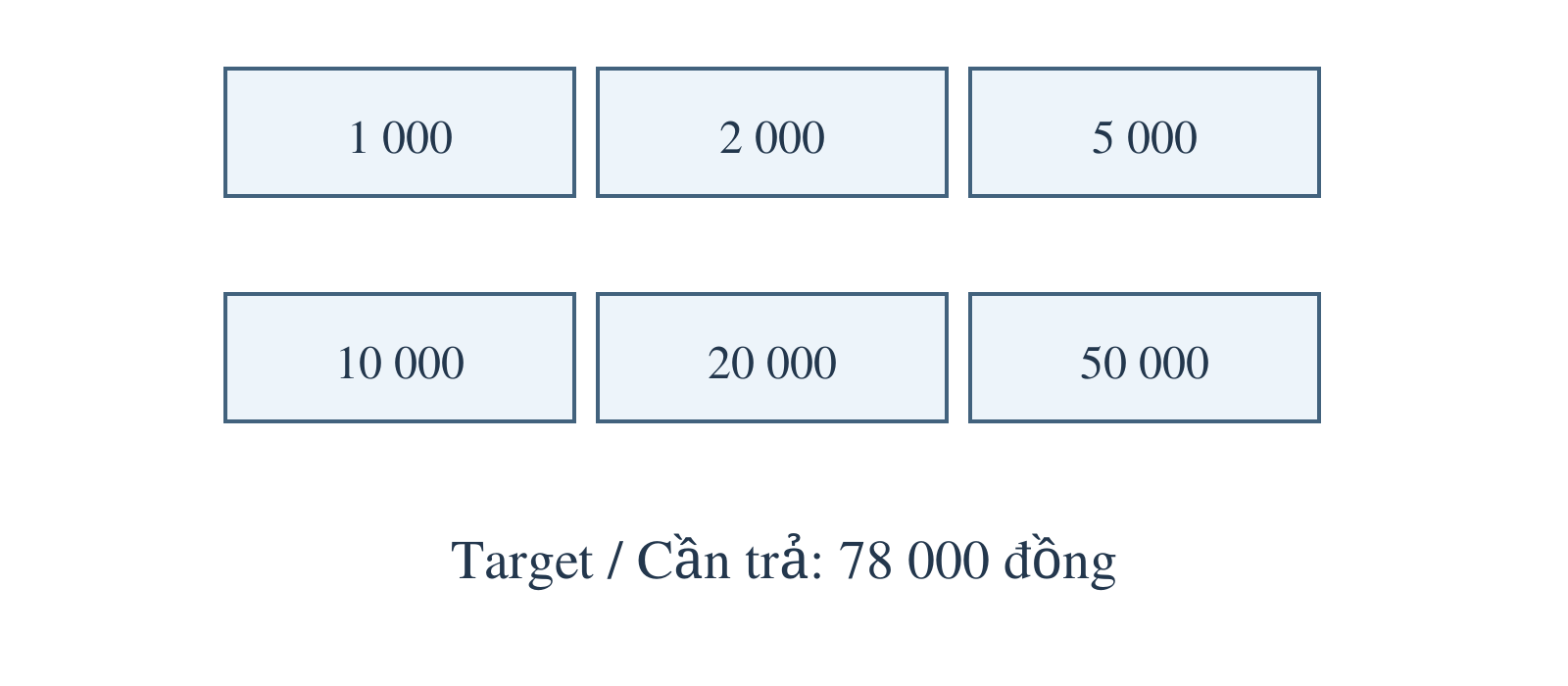
Pi buys school supplies for exactly 78,000 đồng. What is the smallest number of banknotes needed to pay this amount exactly? Practice convention: available banknote values are 1,000, 2,000, 5,000, 10,000, 20,000 and 50,000 đồng; any value may be used more than once.
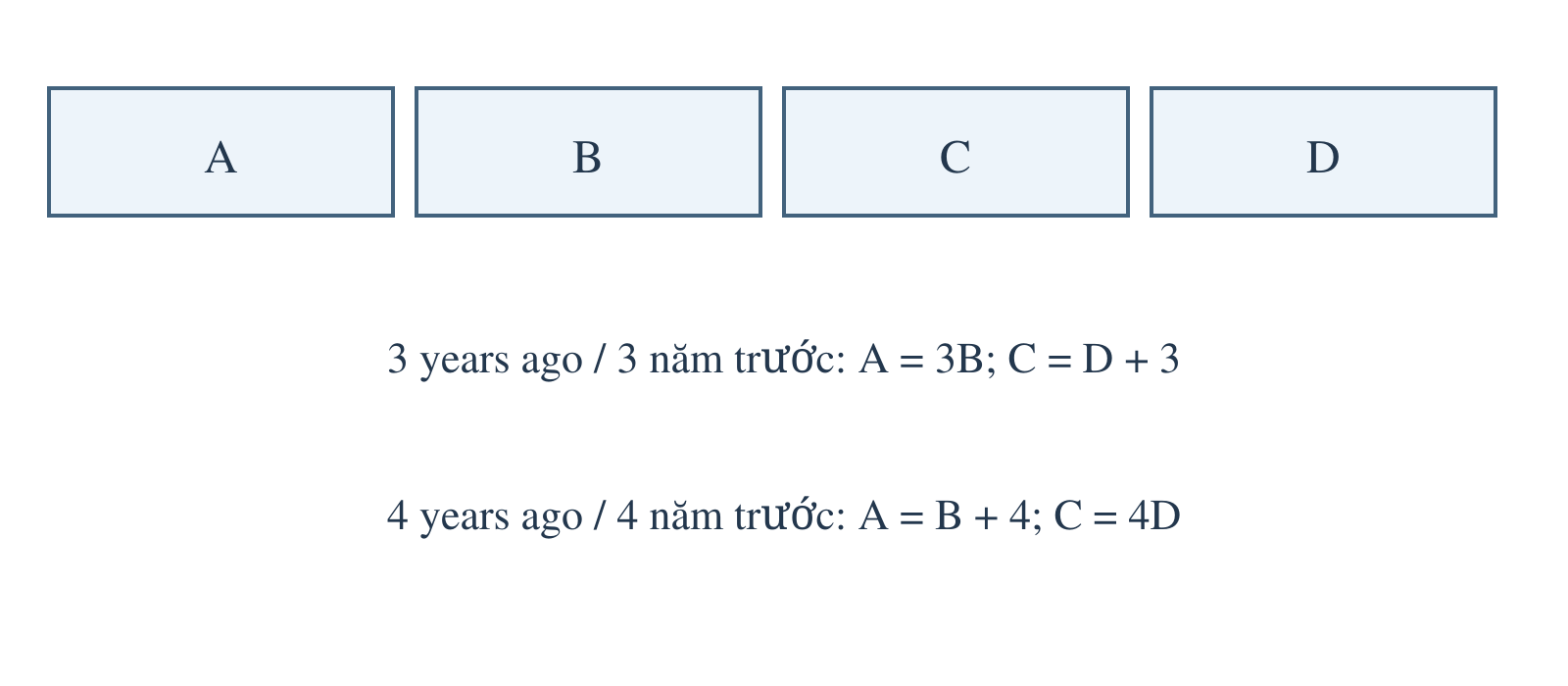
A, B, C and D are four cousins. Three years ago, A was three times as old as B, while C was 3 years older than D. Four years ago, A was 4 years older than B, while C was four times as old as D. How old is each cousin now? Explain your reasoning.
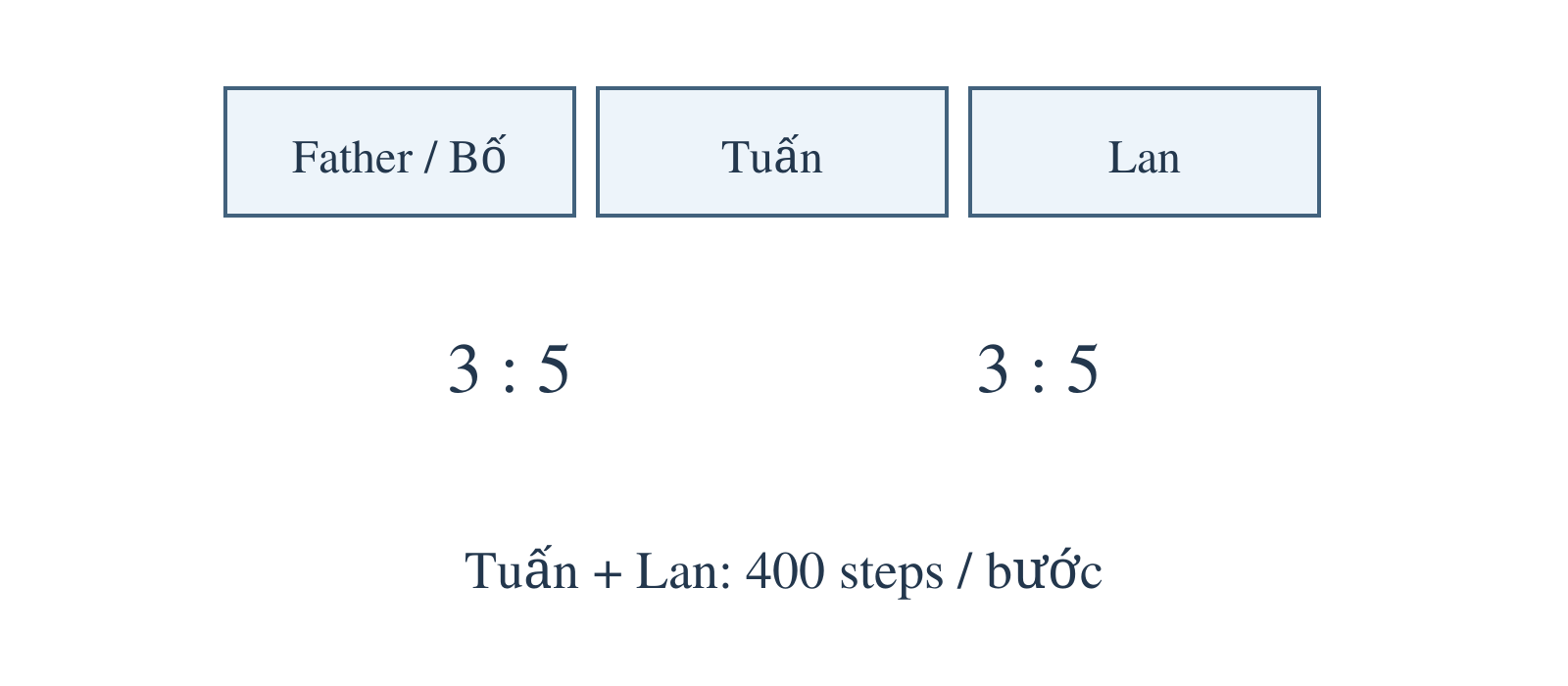
A father walks to school with his children Tuấn and Lan. In the time the father takes 3 steps, Tuấn takes 5 steps. In the time Tuấn takes 3 steps, Lan takes 5 steps. Tuấn and Lan take 400 steps altogether. How many steps does the father take? Explain your reasoning.
Tí loves reading. On an odd-numbered date, Tí reads twice as many pages as the date number; for example, on the 7th, Tí reads $7\times2=14$ pages. On an even-numbered date, Tí reads half as many pages as the date number; for example, on the 10th, Tí reads $10\div2=5$ pages. How many pages does Tí read during the whole month of March? Explain your reasoning.
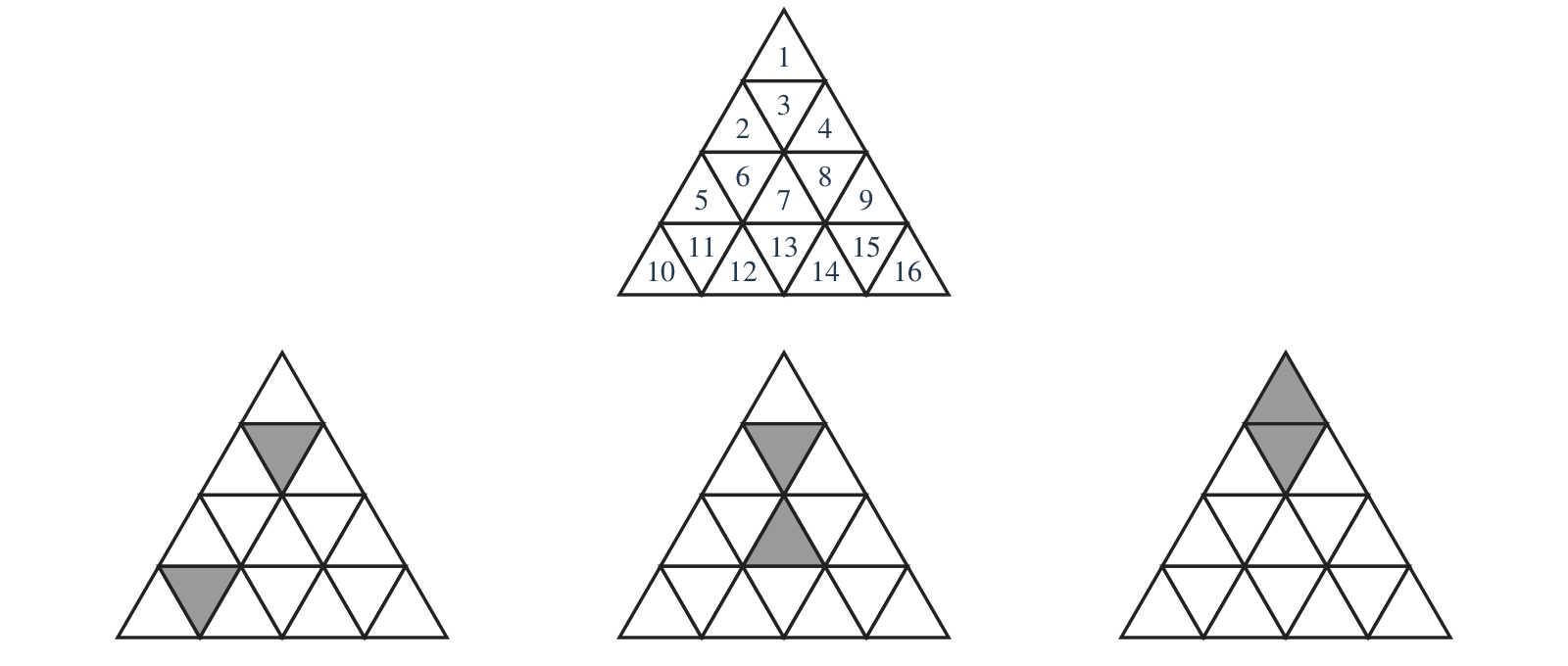
The figure consists of 16 small triangles. Hạnh chooses two small triangles with no common vertex and no common side. How many different choices are possible? Choosing triangles 1 and 7 is the same choice as choosing 7 and 1. The three examples below the numbered figure show, from left to right: no common point; a common vertex; a common side.
At 14:00, teacher Tom writes 12 on the board. Every 5 minutes Jerry erases the number and replaces it by the product of its two digits plus 12. For example, at 14:05 he writes $1\times2+12=14$. What number is on the board at 15:30?
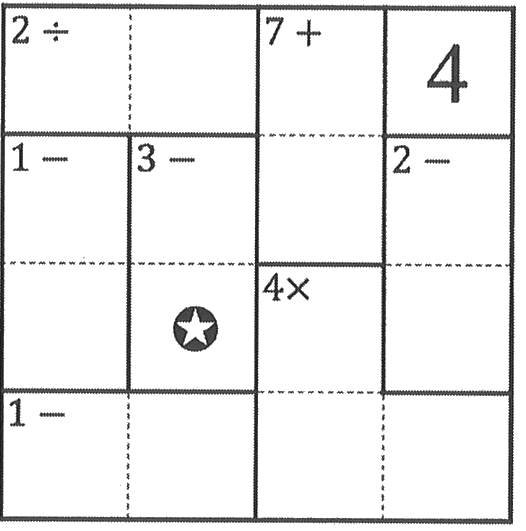
KenKen is a Japanese number puzzle. The 4×4 square is divided into cages by thick lines. Each cage has a target number and an operation. Examples: 7+ means that all numbers in the cage sum to 7; 2− means that the difference of its two numbers is 2; 2÷ means that the quotient of its two numbers is 2; 4× means that the product of all its numbers is 4. Fill the grid with 1, 2, 3, 4 so that every row and every column contains each number once and all cage conditions hold. What number belongs in the starred cell?