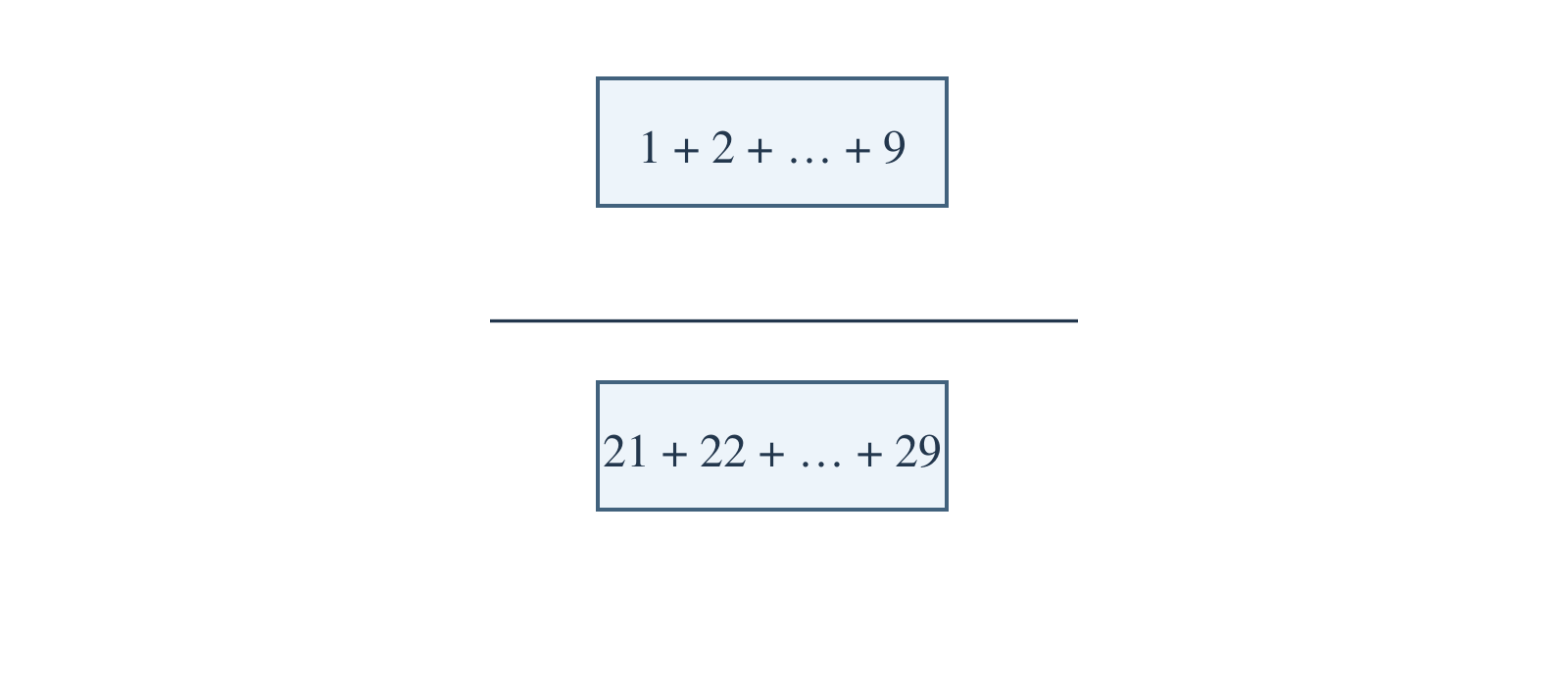
Bình starts with $\frac{1+2+3+4+\cdots+9}{21+22+23+24+\cdots+29}$. He removes one term from the numerator and one term from the denominator so that the remaining fraction is $\frac15$. What is the sum of the two removed numbers?
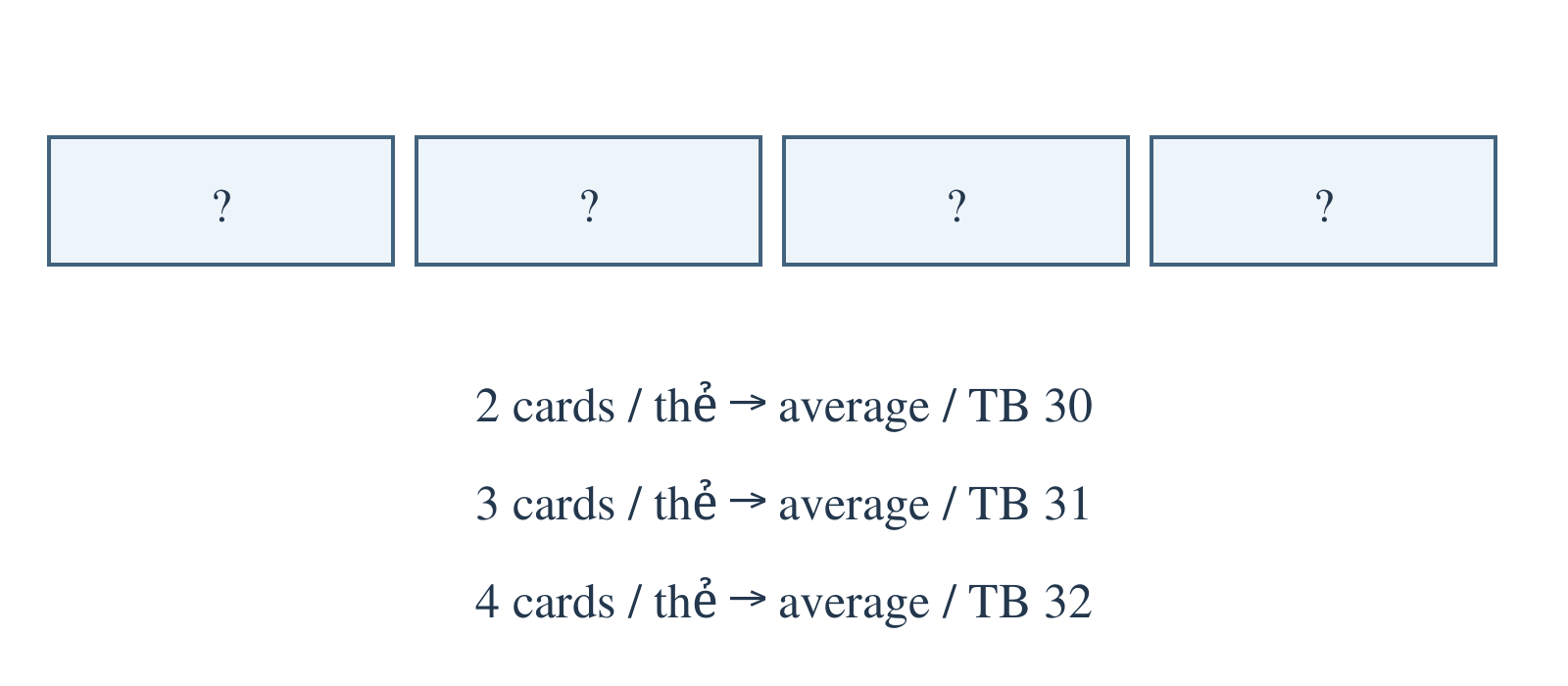
Châu has four cards bearing four distinct natural numbers greater than 0. In round 1 she selects two cards whose average is 30. In round 2 she selects three cards whose average is 31. In round 3 she selects all four cards whose average is 32. How many different sets of four numbers satisfy these conditions? For example, 1,3,5,7 and 1,5,7,3 are the same set. Explain your reasoning.
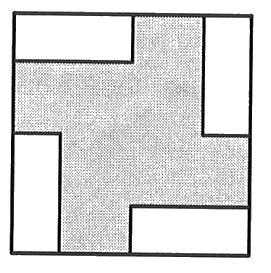
Four identical rectangles are arranged inside a square, leaving four white rectangular regions as shown, with no overlaps. The square has perimeter 72 cm. The grey area exceeds the total white area by 36 square centimetres. Find the perimeter of one of the original rectangles.
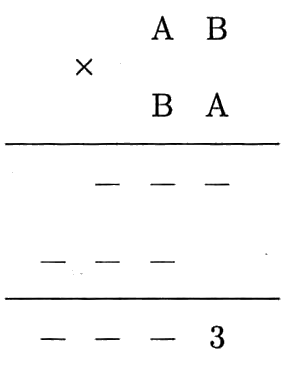
In the multiplication shown, different letters stand for different digits. Each dash stands for one digit; the two partial products each have three digits and the final product has four digits ending in 3. Find the product.
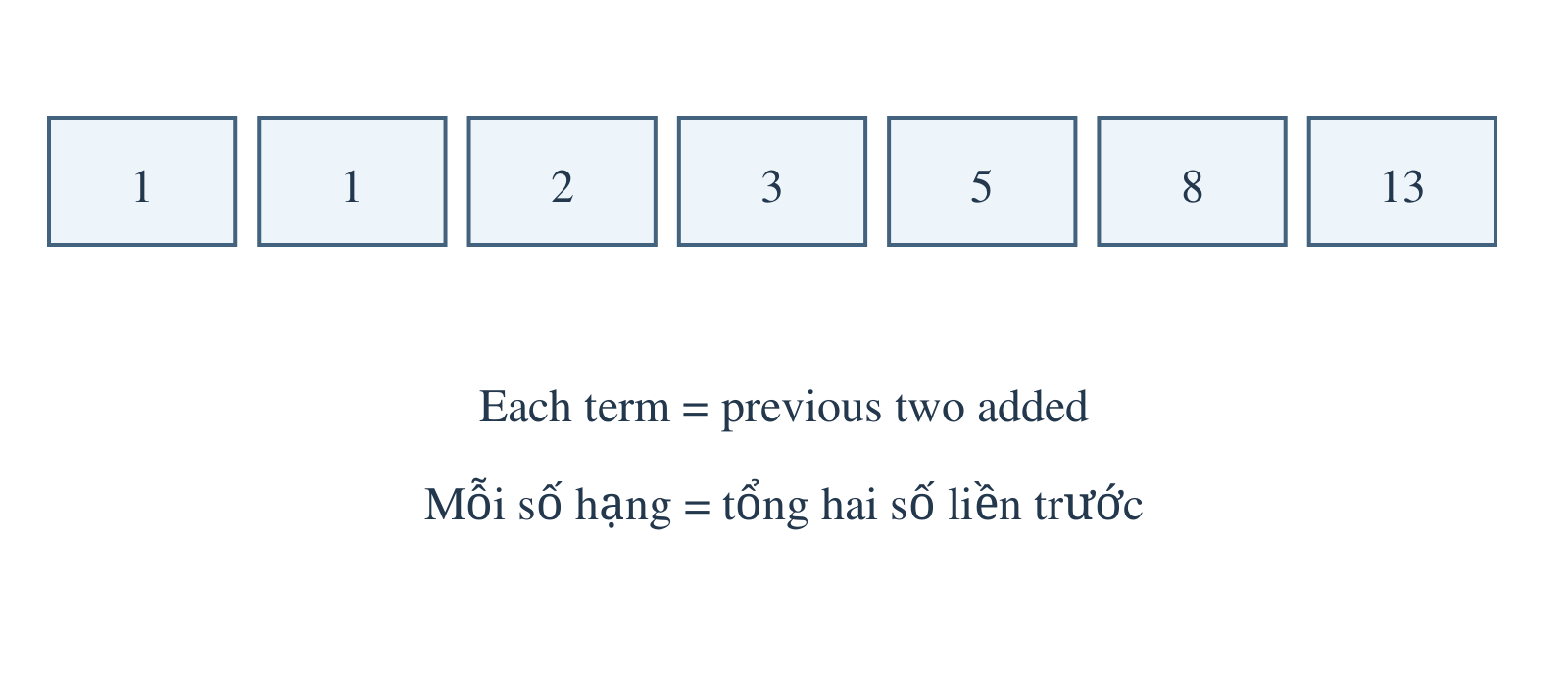
The Fibonacci sequence begins 1, 1, 2, 3, 5, 8, 13, 21, 34, …; each later term is the sum of the previous two. How many of its first 100 terms are even?
Using the digits 1, 2, 3, 4, 5 and 6, how many three-digit numbers with three distinct digits have an even digit sum? For example, 123 has distinct digits and an even digit sum.
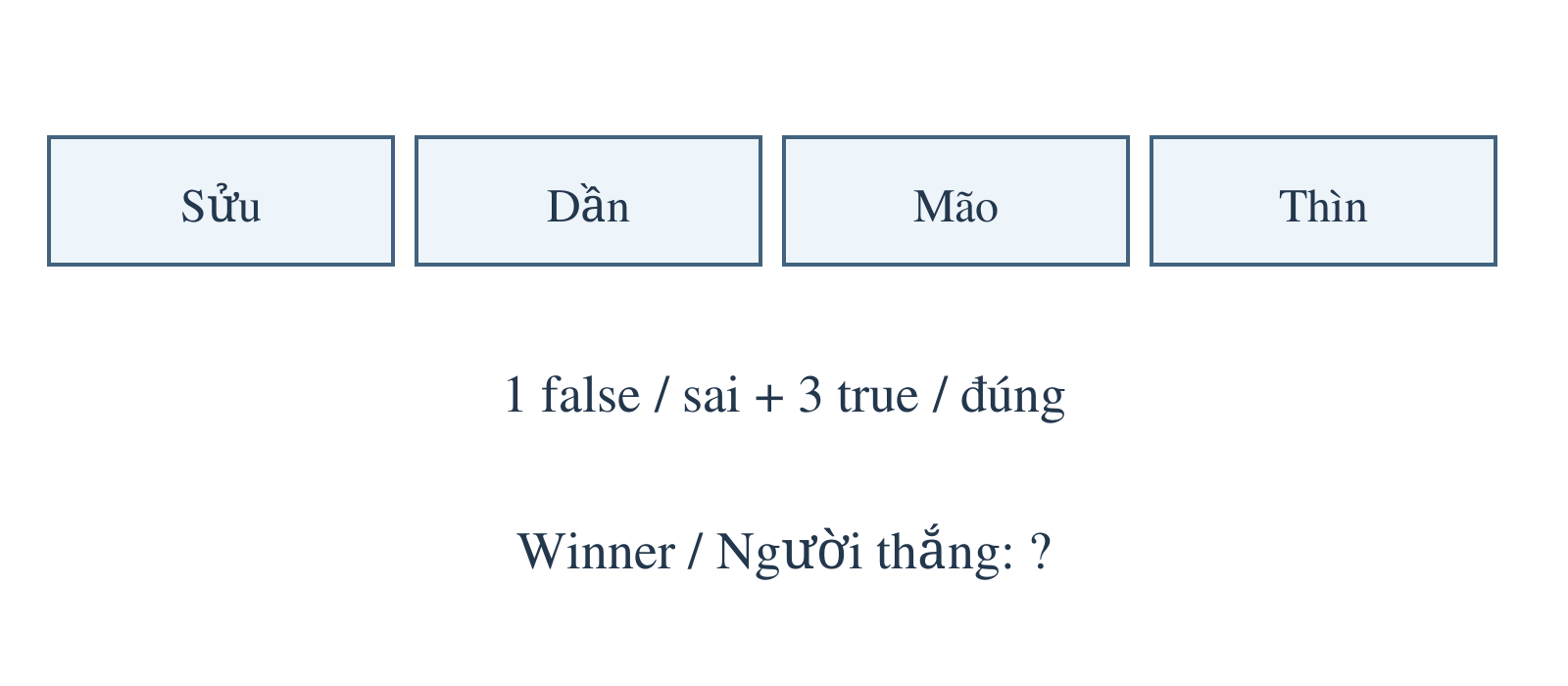
Tí’s four friends Sửu, Dần, Mão and Thìn hold a running race. Afterwards Sửu says, “Mão finished first.” Dần says, “Unfortunately, I did not finish first.” Mão says, “Dần won.” Thìn says, “I did not win.” Tí knows exactly one statement is false and the other three are true. Who won? Explain your reasoning.
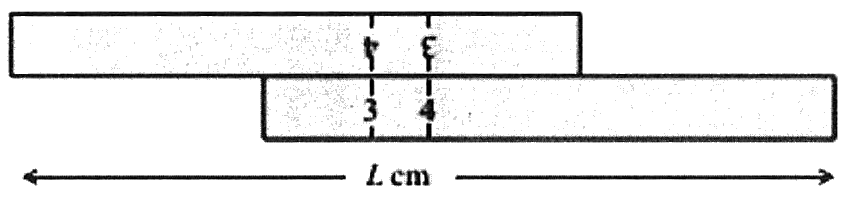
Two old rulers are each 15 cm long and were marked from 0 to 15 cm. All centimetre marks have faded except 3 cm and 4 cm. The rulers are placed in opposite directions and overlapped as shown: the 3 cm mark on each ruler coincides with the 4 cm mark on the other. Find their total end-to-end length L.
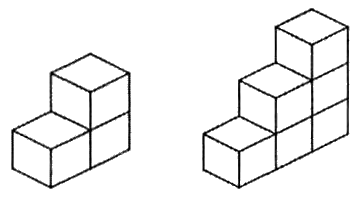
In a children’s carpentry contest, Trung builds a staircase one cube thick from wooden cubes as shown. A 2-step staircase uses 3 cubes; a 3-step staircase uses 6 cubes. Painting one small cube face takes 10 ml of paint. How many 500 ml cans are needed to paint every outside face of a 10-step staircase, including its underside?
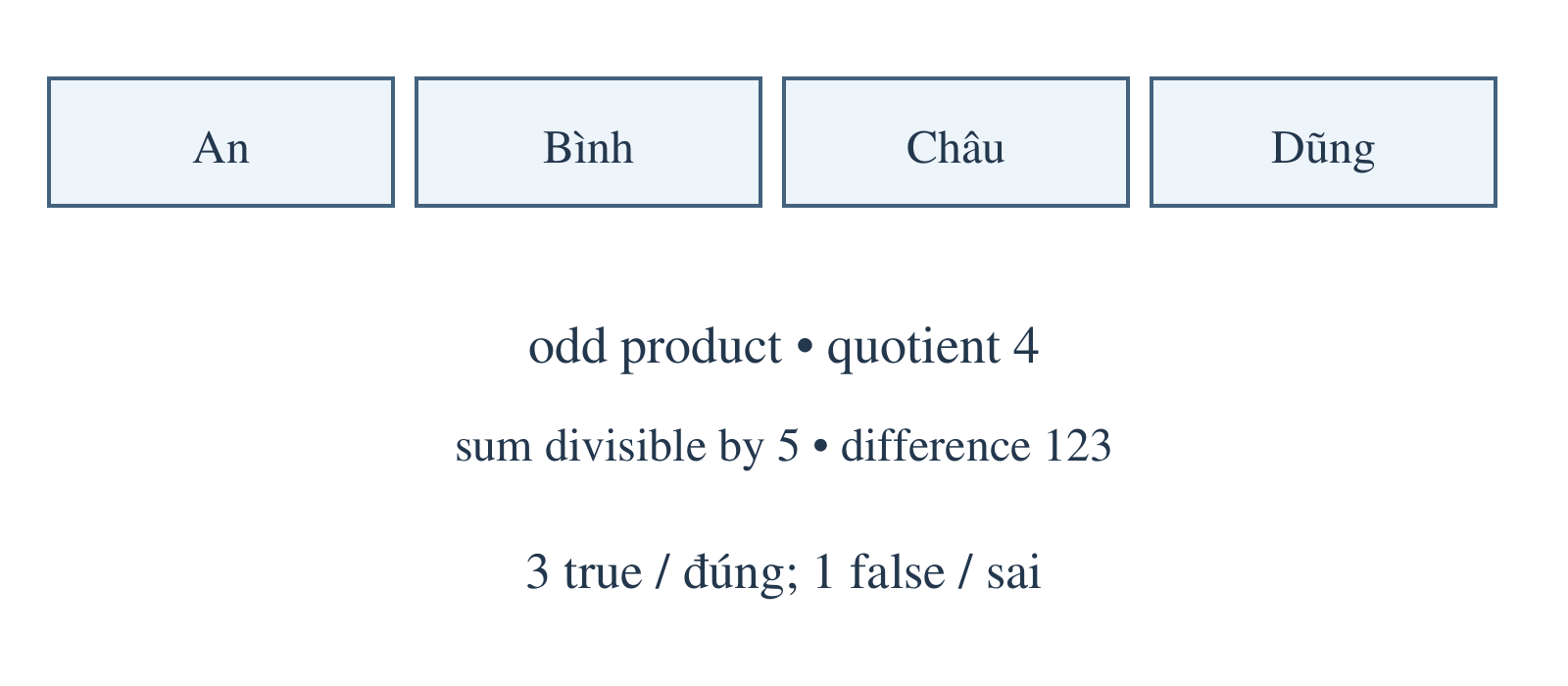
A teacher writes two natural numbers on the board. An says their product is odd. Bình says their quotient is 4. Châu says their sum is divisible by 5. Dũng says their difference is 123. The teacher says exactly three statements are true and one is false. Find the two numbers. Explain your reasoning.