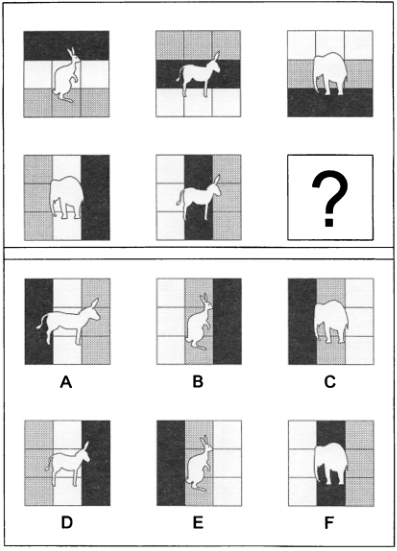
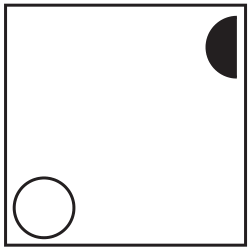
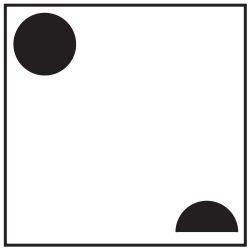
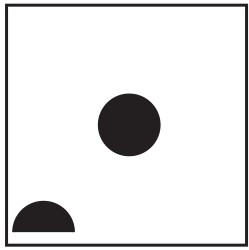
Which tile comes next? Use this two-part rule: each lower background is the background directly above rotated 90° clockwise; every row contains a kangaroo, a donkey and an elephant once. Animal silhouettes stay upright.
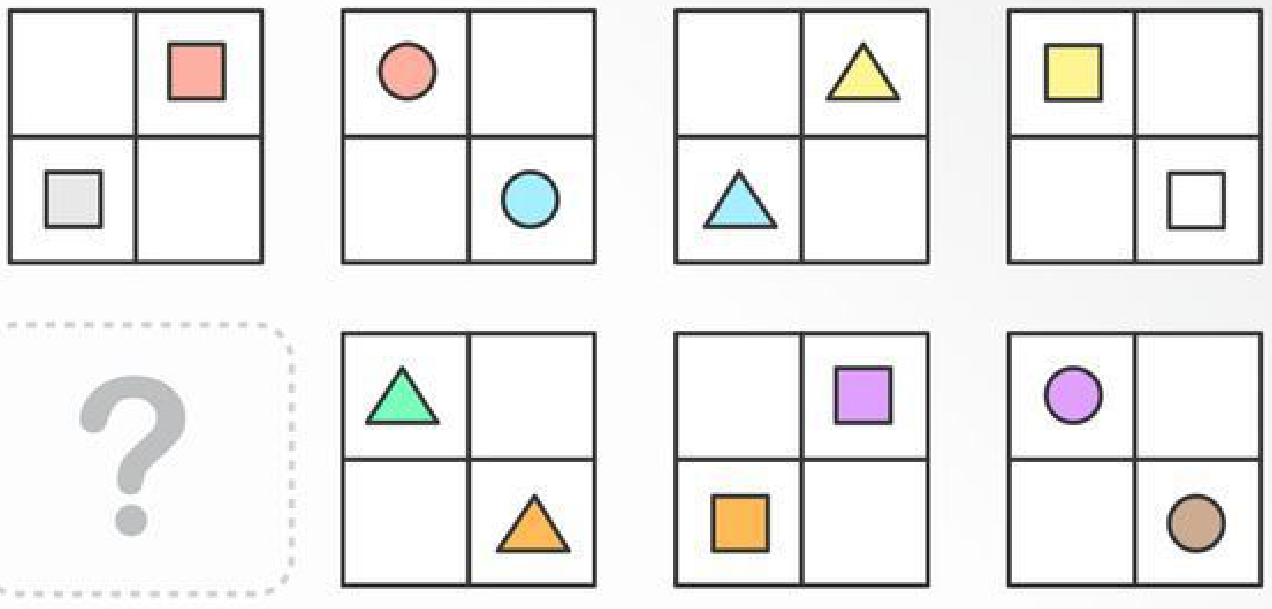
AI reconstruction. Read left to right across the top row, then the bottom row. Complete the sequence. Added rules: shapes repeat square, circle, triangle; odd positions use upper-right/lower-left, even positions upper-left/lower-right. Upper colours are equal in pairs (1,2), (3,4), (5,6), (7,8); lower colours match in pairs (2,3), (4,5), (6,7).
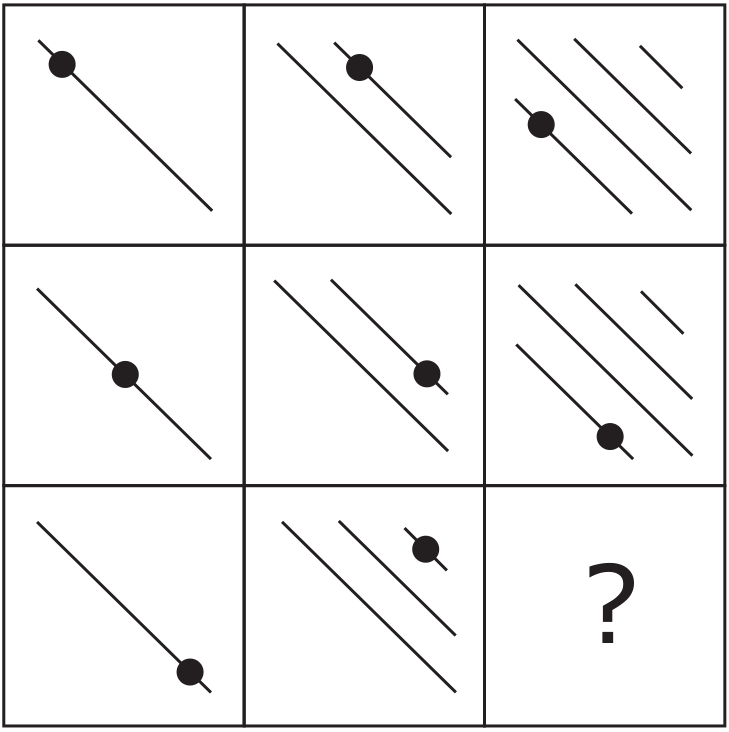
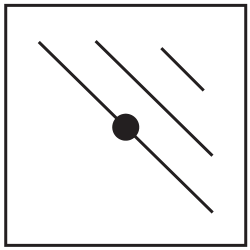
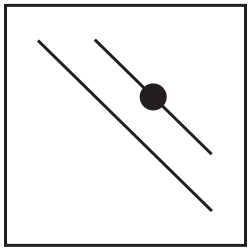
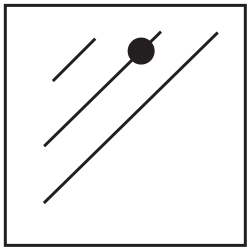
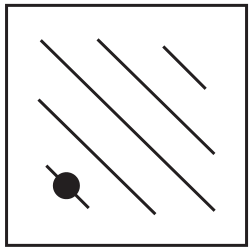
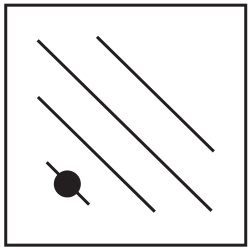
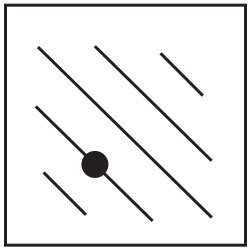
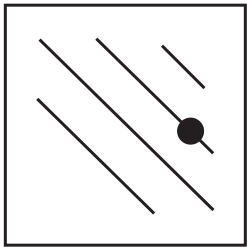
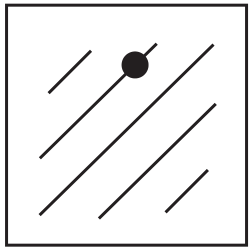
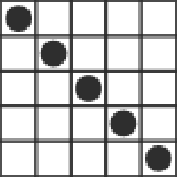
AI reconstruction: Choose the missing cell. Read down columns. The dot traverses a long diagonal in three steps, a medium one in two and a short one in one; completed lines remain visible. After the upper-right side, continue on the lower-left side.
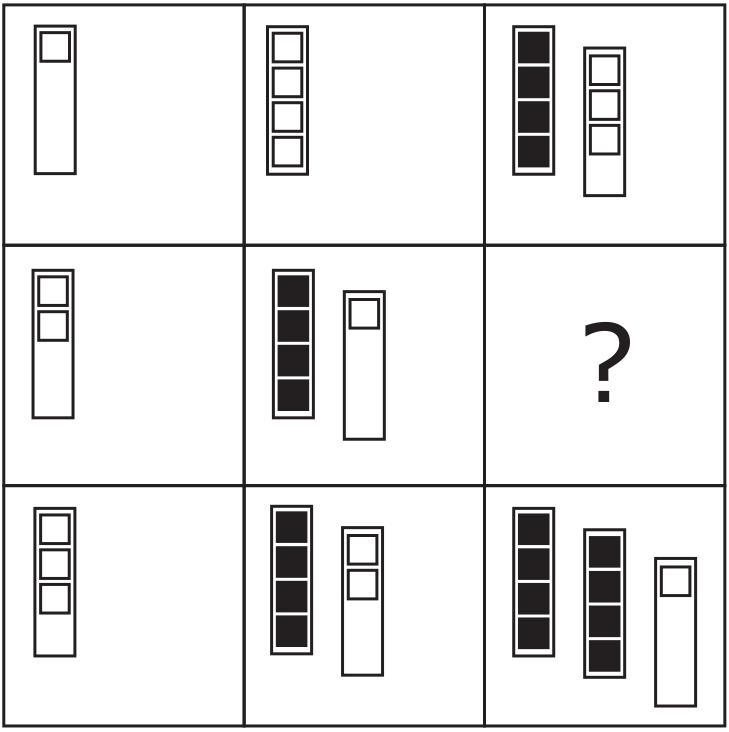
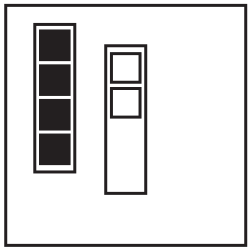
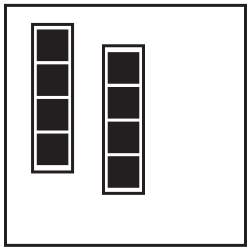
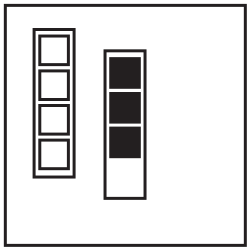
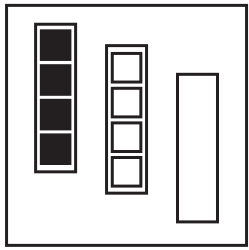
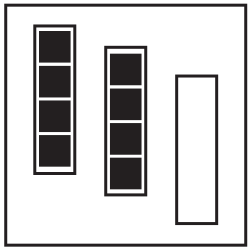
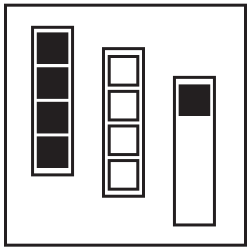
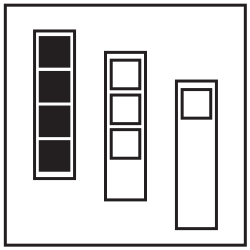
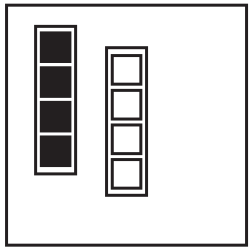
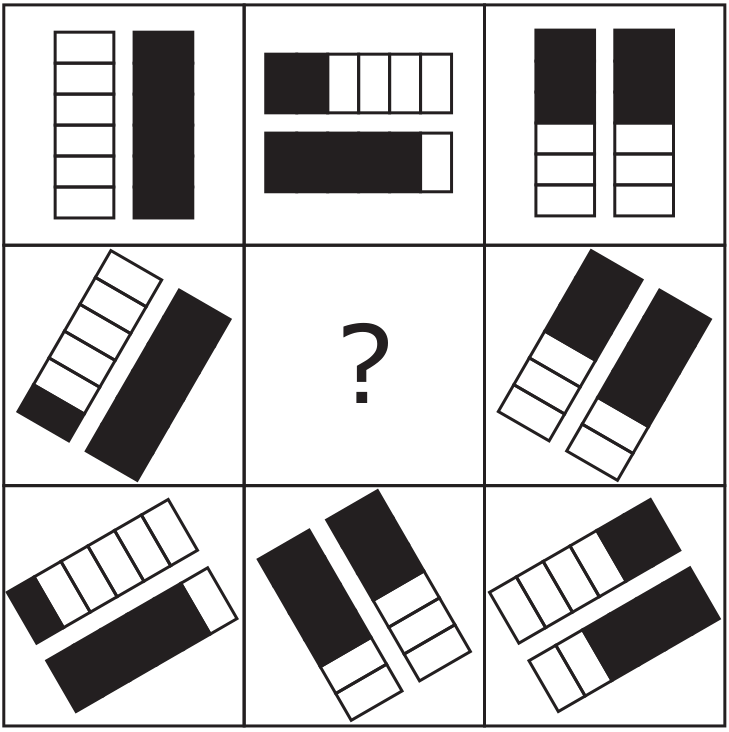
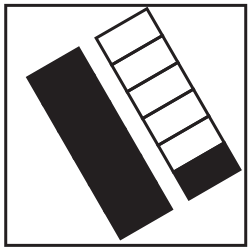
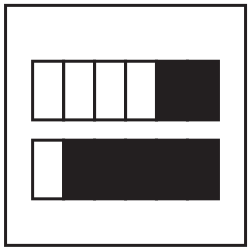
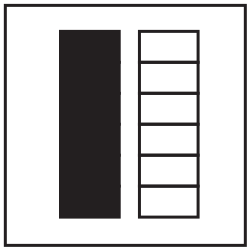
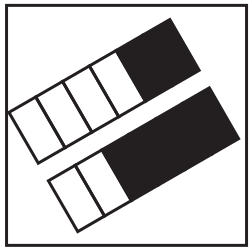
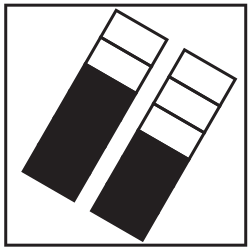
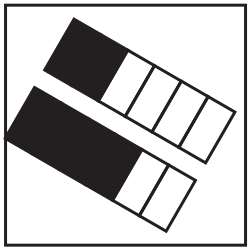
AI reconstruction: Choose the missing cell. Read down columns and add one square per step. A completed bar stays unfilled until the next step, when it turns black and a new bar begins with one unfilled square.
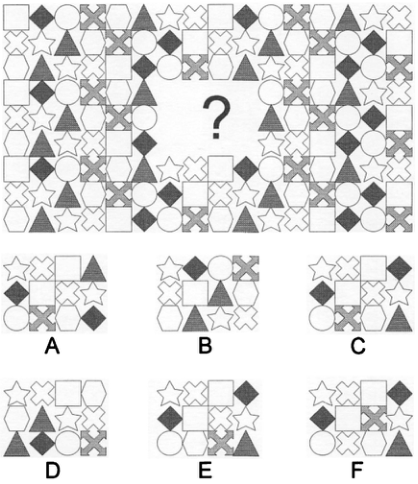
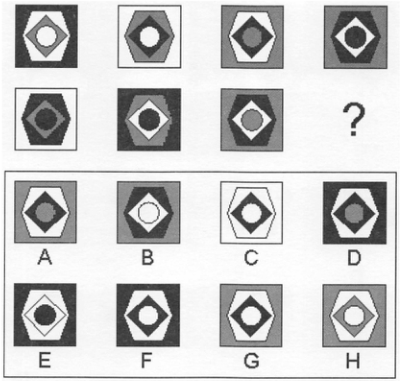
Select the missing tile. Use the same transformation from each upper tile to the tile directly beneath it: exchange black and white regions while leaving grey regions unchanged.
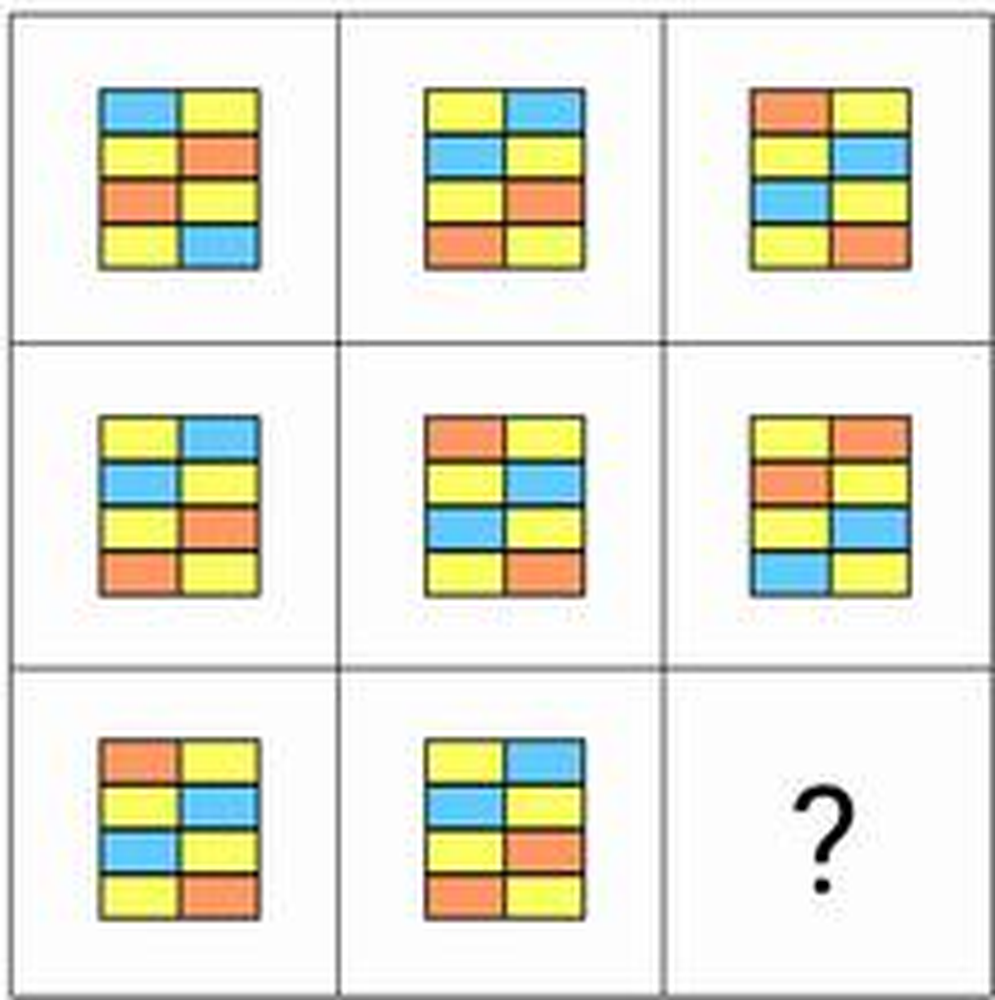
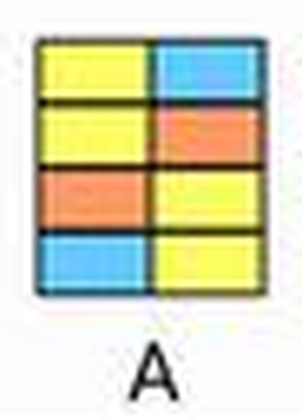
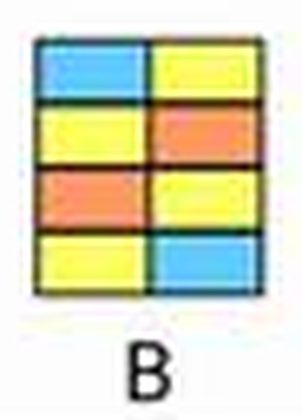
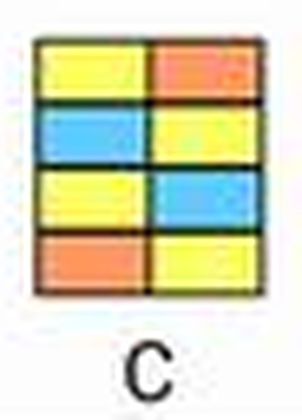
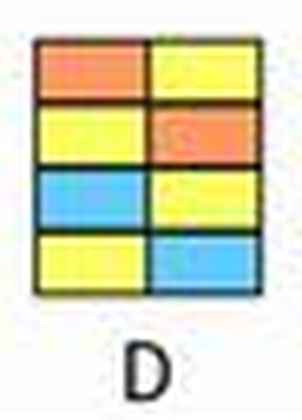
AI reconstruction: Choose the missing colored grid. Added rule: Within each matrix row, repeat the same cyclic vertical shift shown between its first two grids. Move whole horizontal pairs together, wrapping pairs that leave one end to the other end. The shift direction may differ between matrix rows.
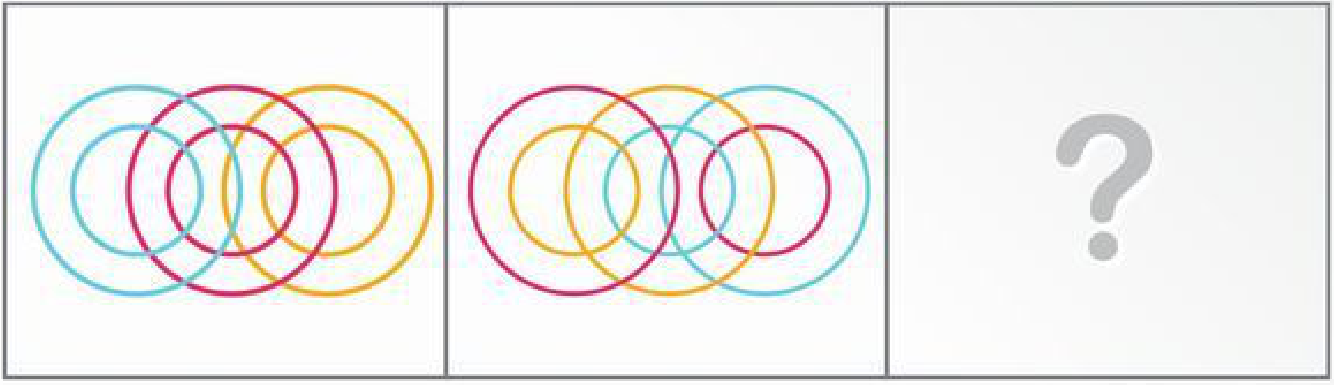
AI reconstruction. Continue the three-position ring pattern. At every step, move the outer-ring colours one position left cyclically, and the inner-ring colours one position right cyclically. Keep the three centres fixed. Which picture comes next?
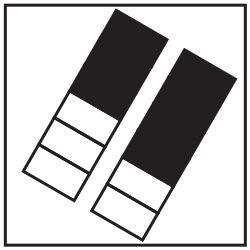
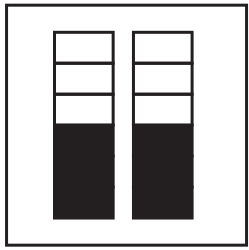
AI reconstruction: Choose the missing cell. Read down each column, then continue at the top of the next column. Track each six-segment bar through the rotations.
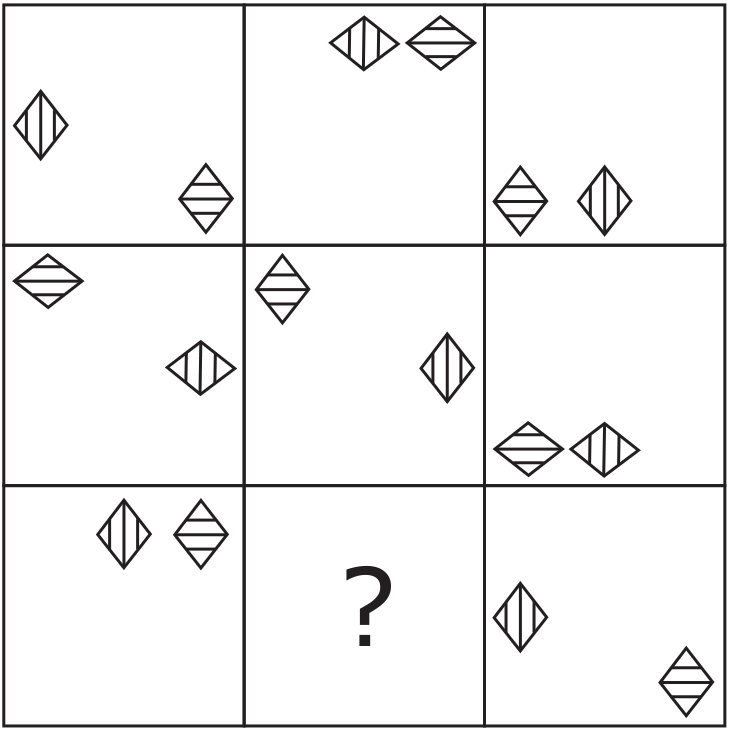
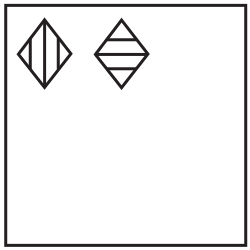
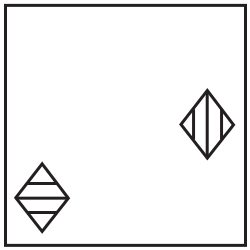
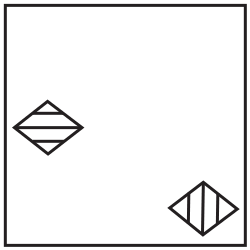
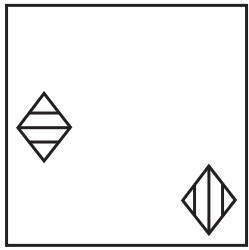
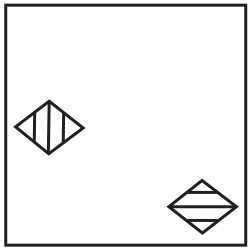
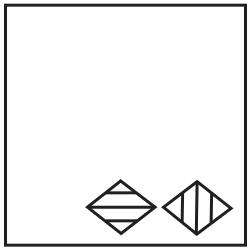
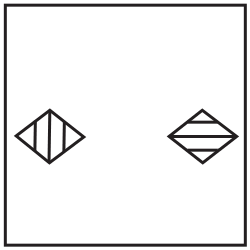
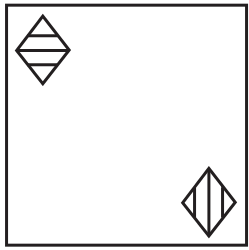
AI reconstruction: Choose the missing cell. Read down each column, then continue in the next. Track the two original diamonds through both their movement and their quarter-turn rotations, including the stripes.
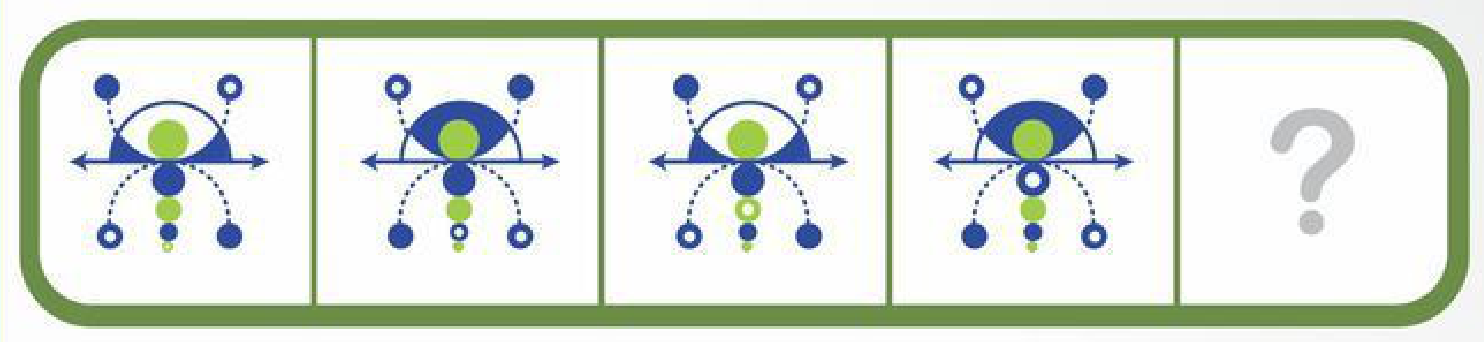
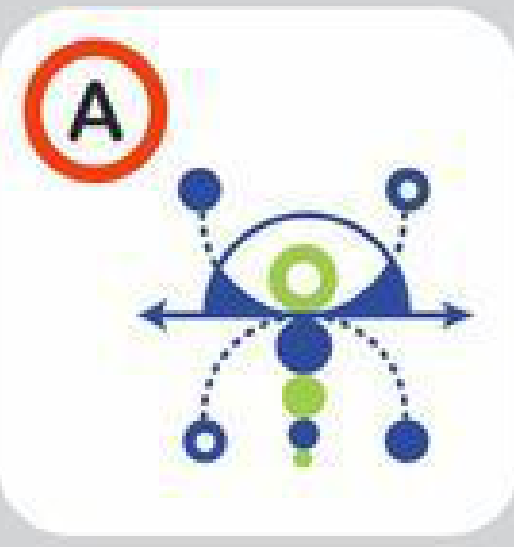
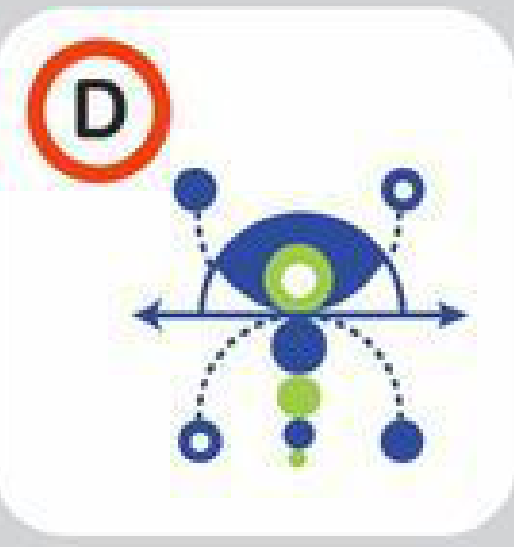
AI reconstruction. Treat the five central circles, from the tiny bottom circle up to the eye, as fixed slots. The hollow one moves upward one slot per frame. The surrounding blue fills alternate between the two displayed states. Continue both rules.
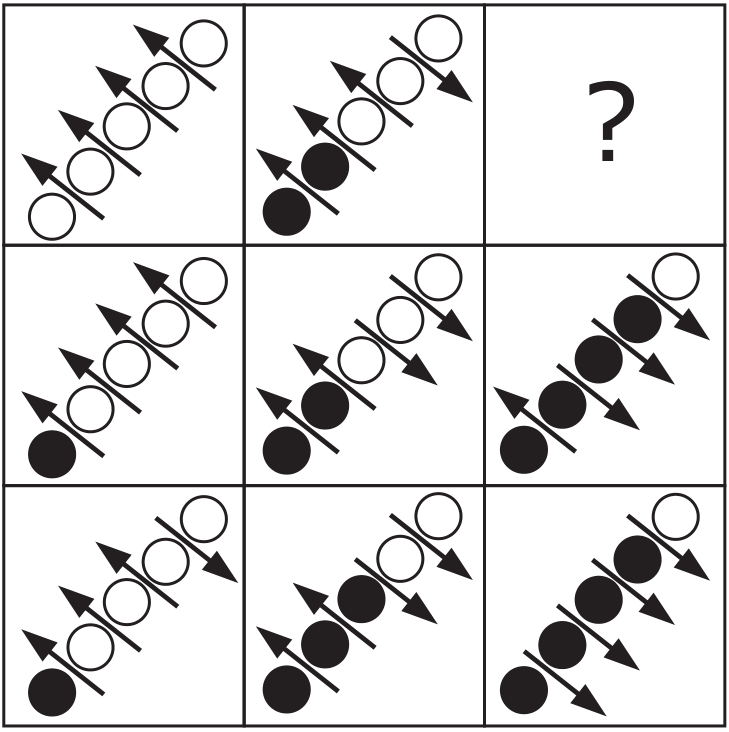
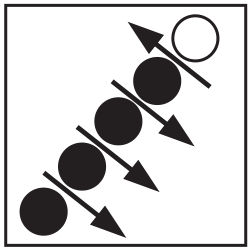
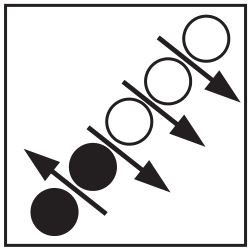
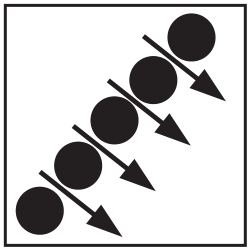
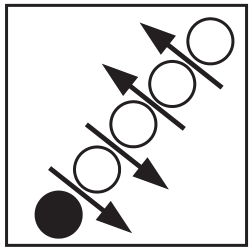
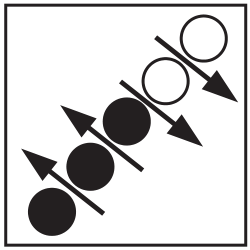
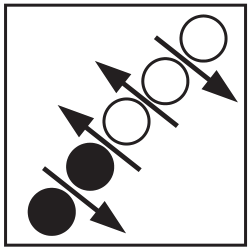
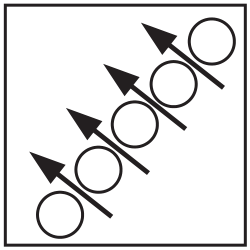
AI reconstruction: Choose the missing cell. Read down each column, then start the next column. Alternate between shading one more circle and reversing one more arrow.
AI reconstruction (rule clarification): use successive four-figure blocks. Each block contains two starting figures followed, in the same order, by their 180° rotations.
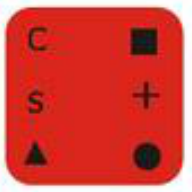
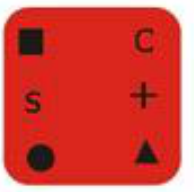
AI reconstruction: Added conditions. Number the six places as top-left, top-right, middle-left, middle-right, bottom-left and bottom-right. Alternate two moves. On moves 1,3,5,… cycle top-right → bottom-right → middle-left → top-right. On moves 2,4,6,… cycle top-left → bottom-left → middle-right → top-left. Move each symbol as a whole. Choose the next tile.
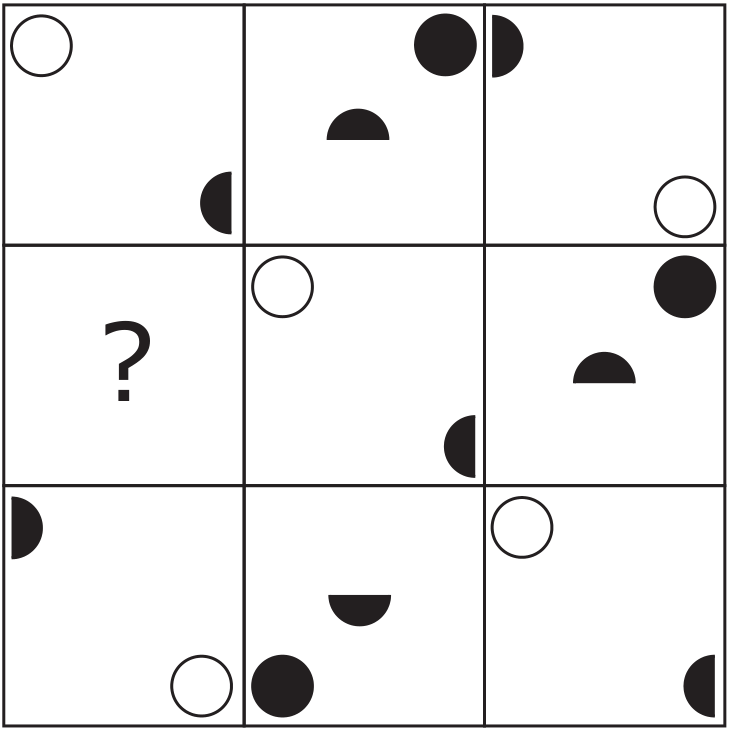
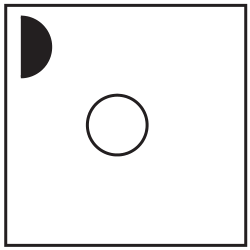
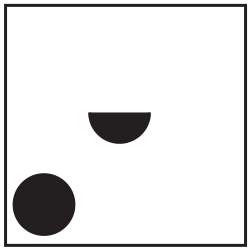
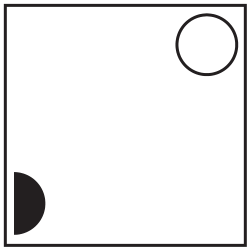
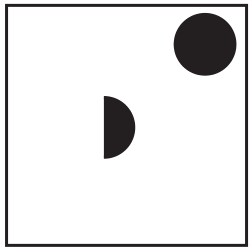
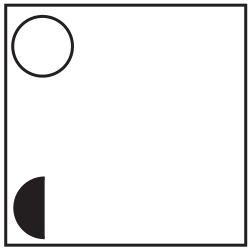
AI reconstruction: Choose the missing cell. Read left to right, row by row. Track the circle around the corners and the semicircle back and forth along the upper-left to lower-right diagonal.
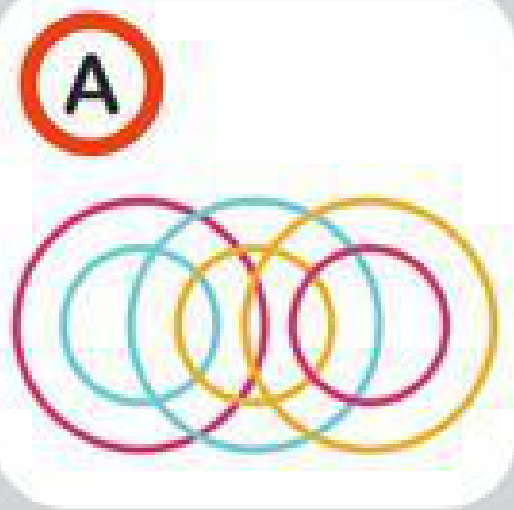
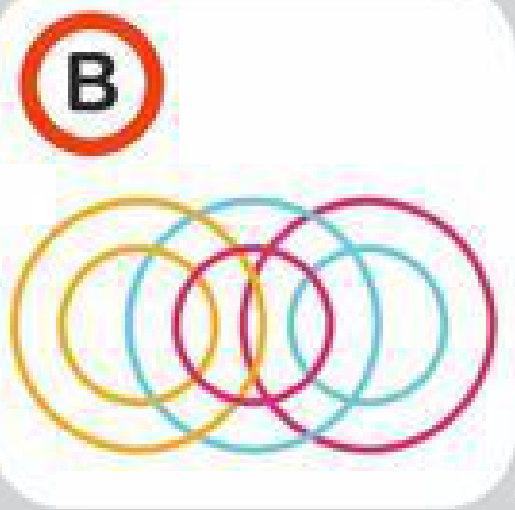
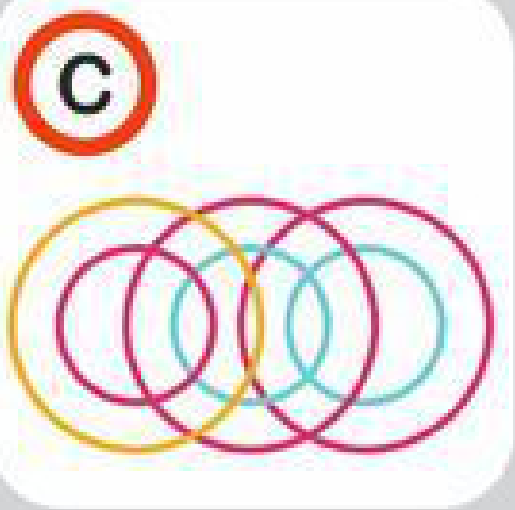
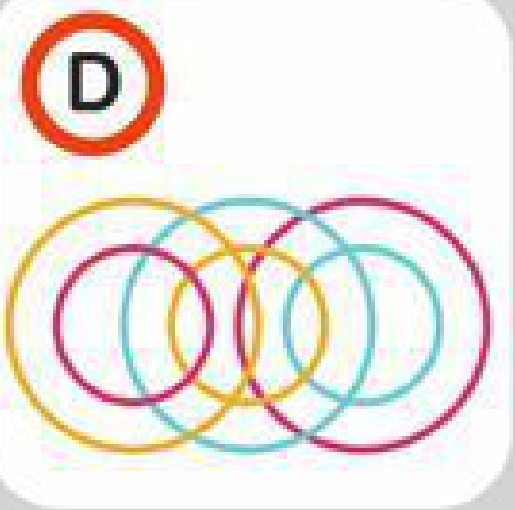
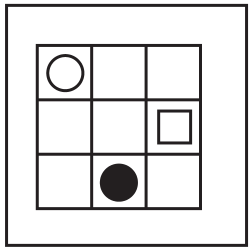
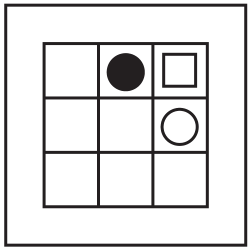
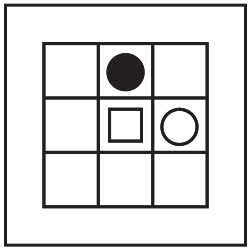
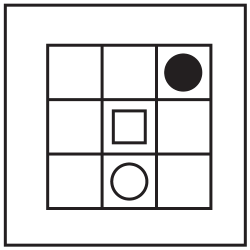
AI reconstruction: Added rule: Repeat the two-picture cycle in the same positions: the first picture, then the second picture. Choose the next picture.
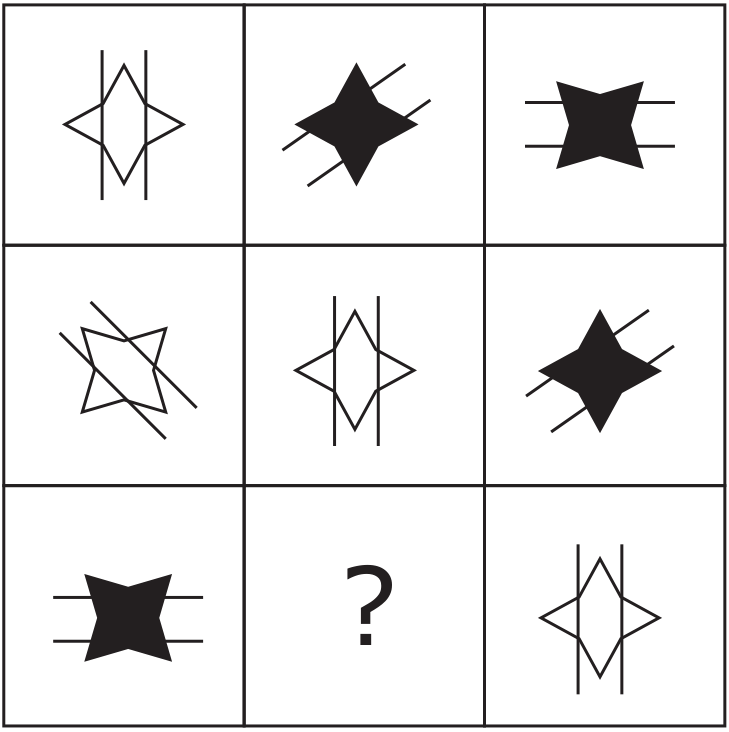
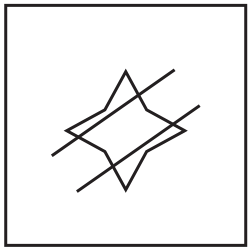
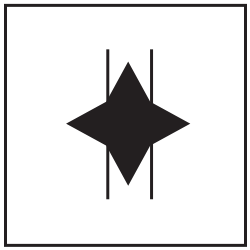
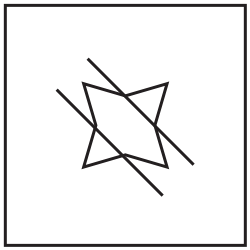
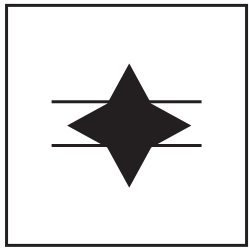
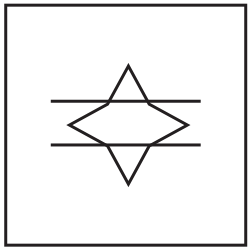
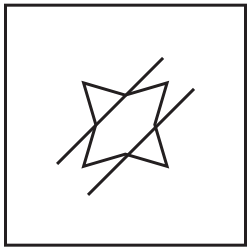
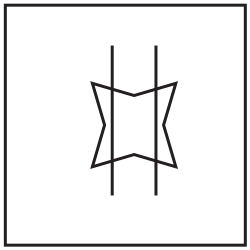
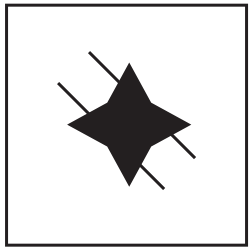
AI reconstruction: Choose the missing cell. Read left to right through the rows. The pair of lines rotates at every step; the star alternates between changing fill and turning.