SEAMO self-study edition 2027; not an official 2027 paper. Original source years are retained. 25 questions, 90 minutes; Q1–10: 3 points, Q11–20: 4 points, Q21–25: 6 points, total 100. Original response types and all subparts are preserved. Verified is an editorial convention; source defects, necessary assumptions and unresolved mathematical uncertainty are disclosed.
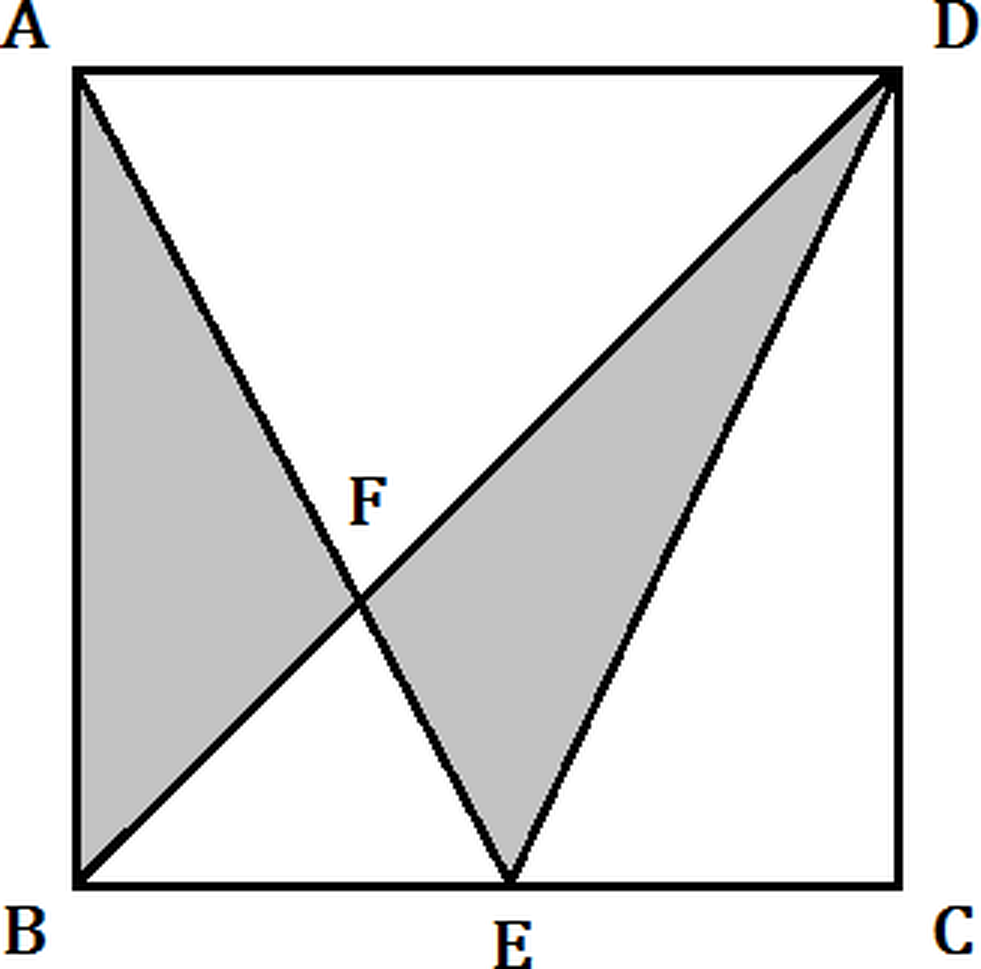
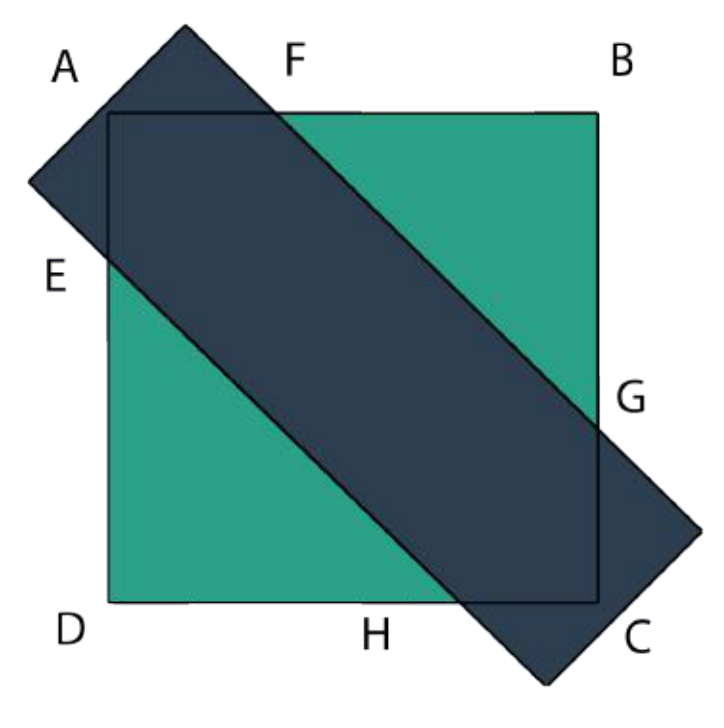
In the figure, the shaded area is $60\text{ cm}^2$. E is the midpoint of BC, and F is the intersection of AE and BD. Find the area of square ABCD in square centimetres.
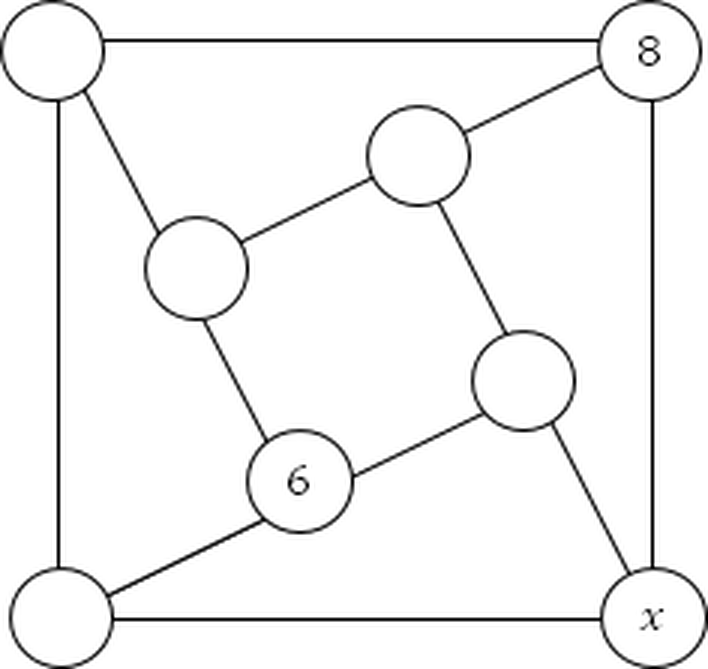
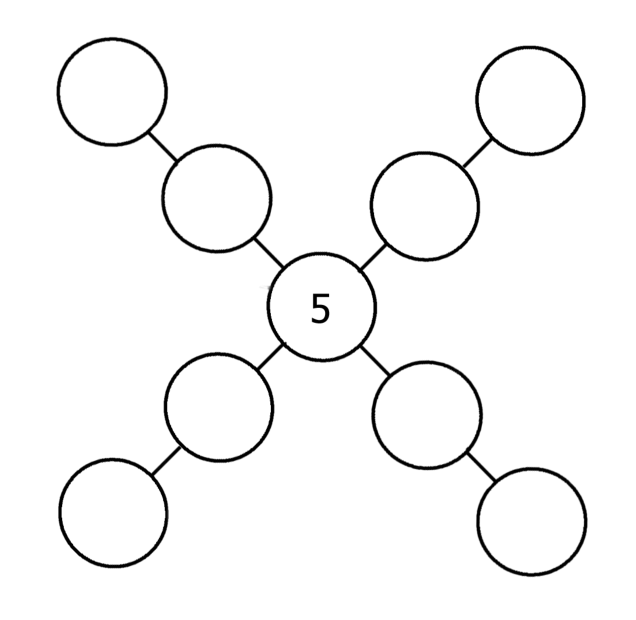
The numbers 1 through 8 are placed in the circles, each used once, so that every drawn straight line containing three circles has the same sum. Find x.
Use each integer from 1 through 8 exactly once. Only the four straight lines that contain three circles must have equal sums.
Ali takes $\frac13$ of the stones from a bag. Bala then takes $\frac13$ of the remaining stones, and Chakor takes $\frac13$ of what then remains. There are 32 stones left. How many stones were in the bag at first?
If Ms. Woodley gives 5 sweets to each student, she has 32 sweets left. If she gives each student 8 sweets, five students receive none. How many sweets does she have?
In the second distribution, all sweets are used: every student except the five receives exactly 8 sweets.
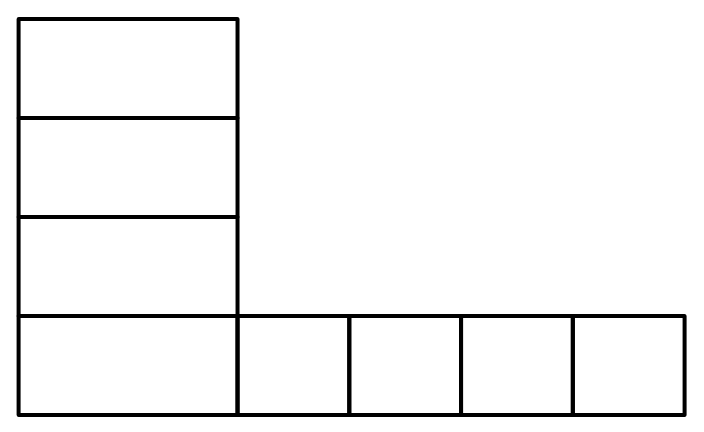
ABCD is a square and EFGH is a rectangle. The figure gives $FB=2AF$, $BG=2GC$, $DH=2HC$ and $DE=2AE$. Given $FB=4\text{ cm}$, find the area of EFGH in square centimetres.
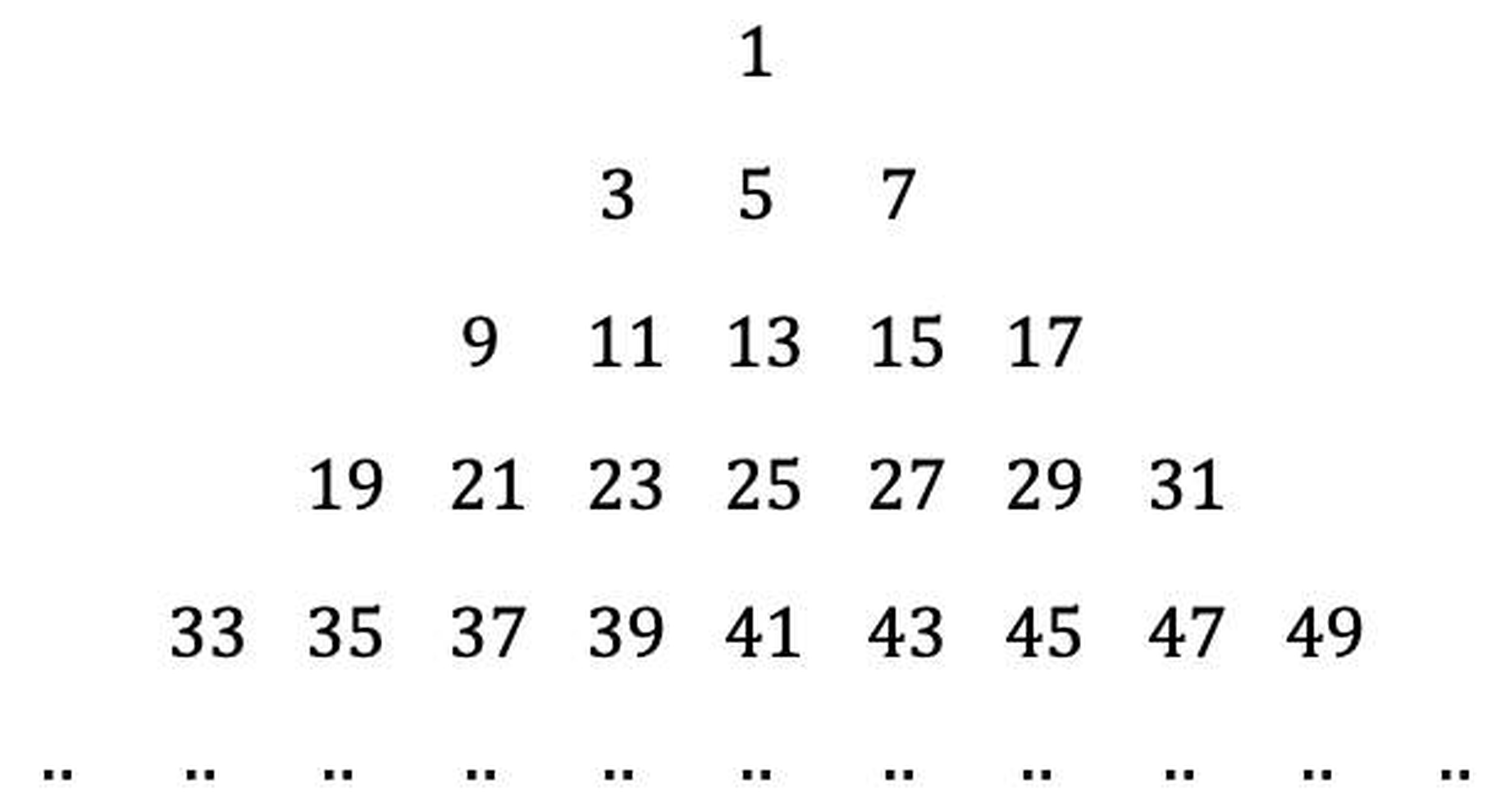
Given $6\bullet5=6+5-4+3-2=8$ and $7\bullet3=7+6-5=8$, find $10\bullet6$.
For this self-study item, a bullet b means: write b consecutive descending terms starting at a, put plus between the first two terms, and then alternate minus and plus. This is the intended continuation suggested by the examples, not a uniquely determined definition from two examples alone.
A fruit seller packs oranges into bags. If he puts 5 oranges in each bag, 14 oranges remain. The source then says: “If he packs 7 oranges into each bag, he will need another 2 bags.” How many oranges does he have?
Source correction for self-study: replace “need another 2 bags” by “have 2 bags left unused”, with all used bags full. Answer the corrected version; the literal printed wording is inconsistent with the options.
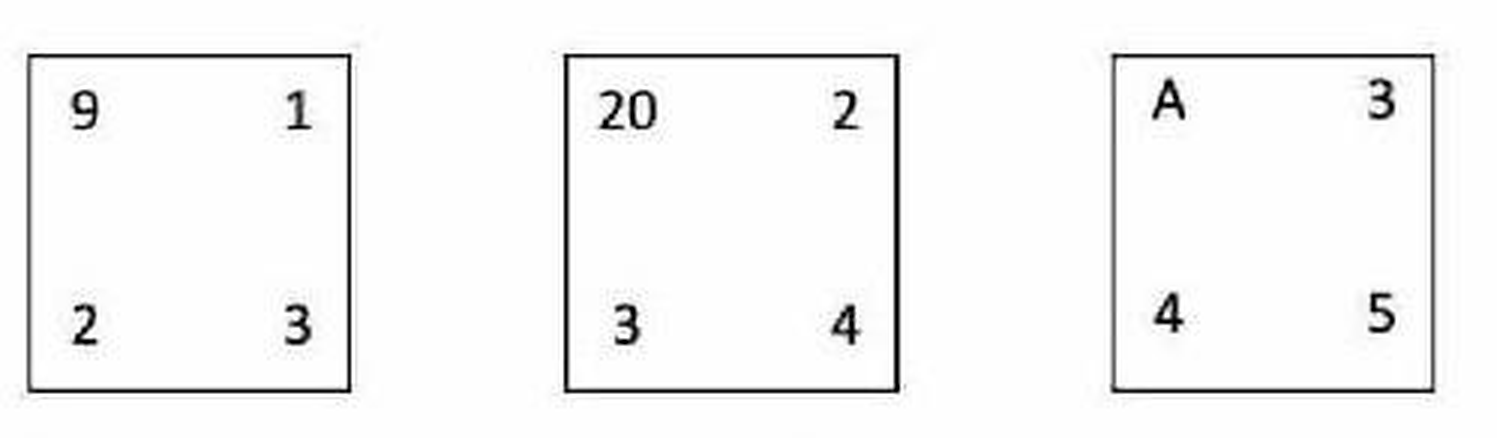
Use the same simple arithmetic relationship among the four corners in all three boxes, as intended by this pattern puzzle. The source does not define a rule, so other artificial rules are possible.
Alan, Ben and Chad run a 100-metre race. When Alan finishes, Ben is 10 m behind him. When Ben finishes, Chad is 10 m behind him. How far is Chad from the finish when Alan finishes? Give metres.
Assume the runners start together from the same line and each runs at a constant speed.