Jack and his father’s weight add up to 100 kg. If Jack loses 4 kg, he will be exactly half of his father’s weight. What is the difference between their weights, in kg?
**Editorial note:** Find the difference before Jack loses weight; his father’s weight stays unchanged. Choose one option.
A basket contains an equal number of balls and pebbles. They are either white or black. The number of white balls is 30 and the total number of black items is 30. If the difference between the number of black and white balls is 20, find the number of white pebbles.
**Editorial note:** Enter only the number, without units.
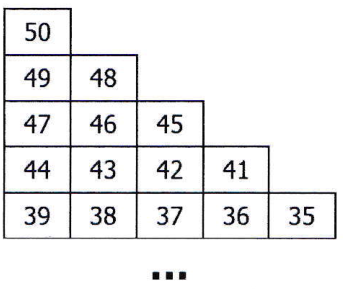
If the cells are added in the same pattern, which row will have the number 25?
**Editorial note:** Keep the printed fifth row exactly as shown. For this exercise, continue after 35 with 34, 33, 32, …, and put one more cell in each new row. Count the top row as row 1. Choose one option.
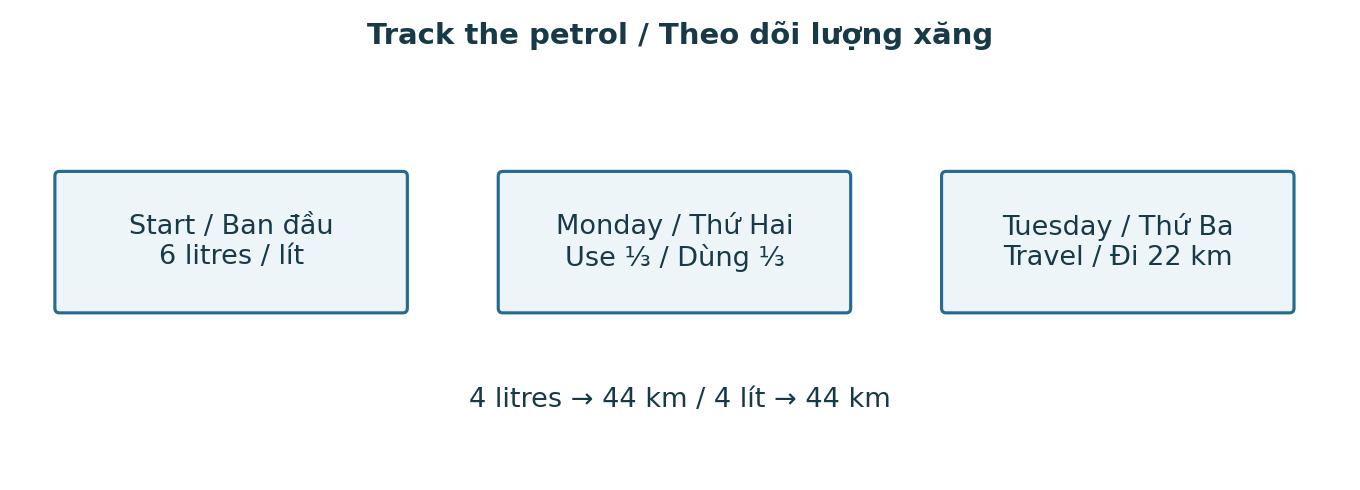
A car travels 44 km using 4 litres of petrol. Tom starts with 6 litres and uses one-third of it on Monday. He travels another 22 km on Tuesday. How many kilometres can the car travel with the petrol left? Assume the same fuel use per kilometre throughout and no extra petrol is added.
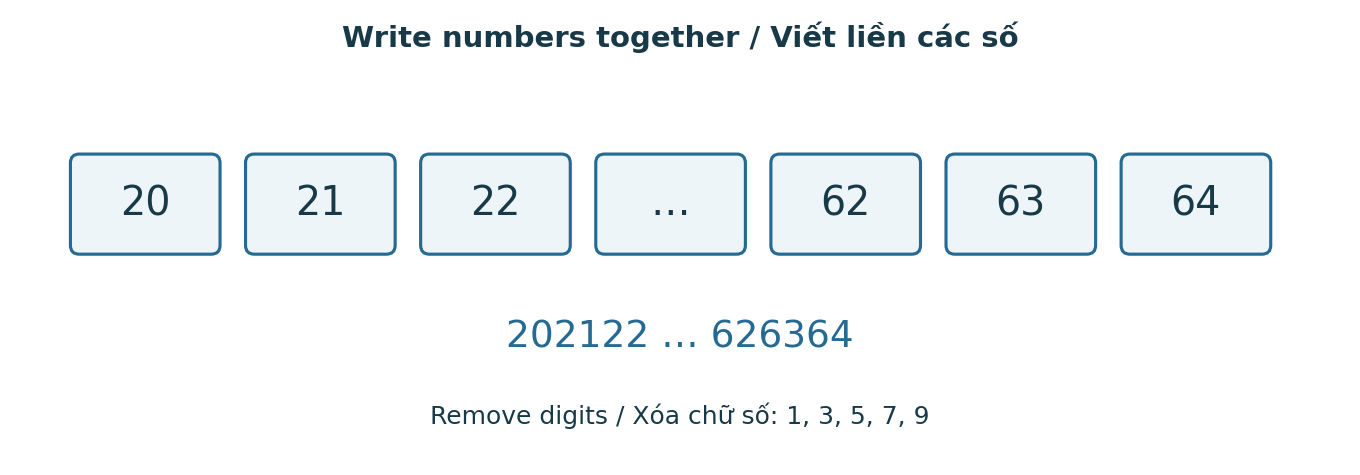
The numbers $20,21,22,\ldots,63,64$ are written together as the 90-digit number $2021222324\ldots626364$. All the odd digits are removed. How many digits remain? Remove individual digits 1, 3, 5, 7 and 9, not whole numbers that contain them.
A 5-digit number is a palindrome, meaning it reads the same forward and backward. It satisfies these conditions:
- The sum of the first three digits is 14.
- The third digit is half of the second digit.
- The sum of the second, third and fourth digits is 15.
Find the number.
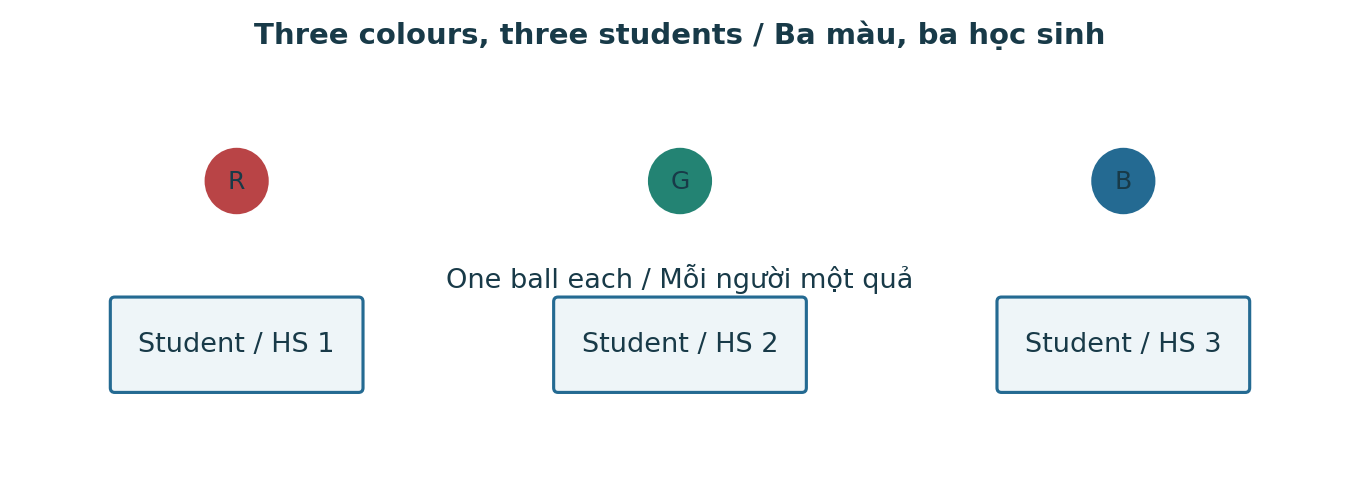
Three students each pick one ball from a bag containing three balls of different colours. How many different assignments are possible? Each ball is taken once, without replacement; students are distinct.