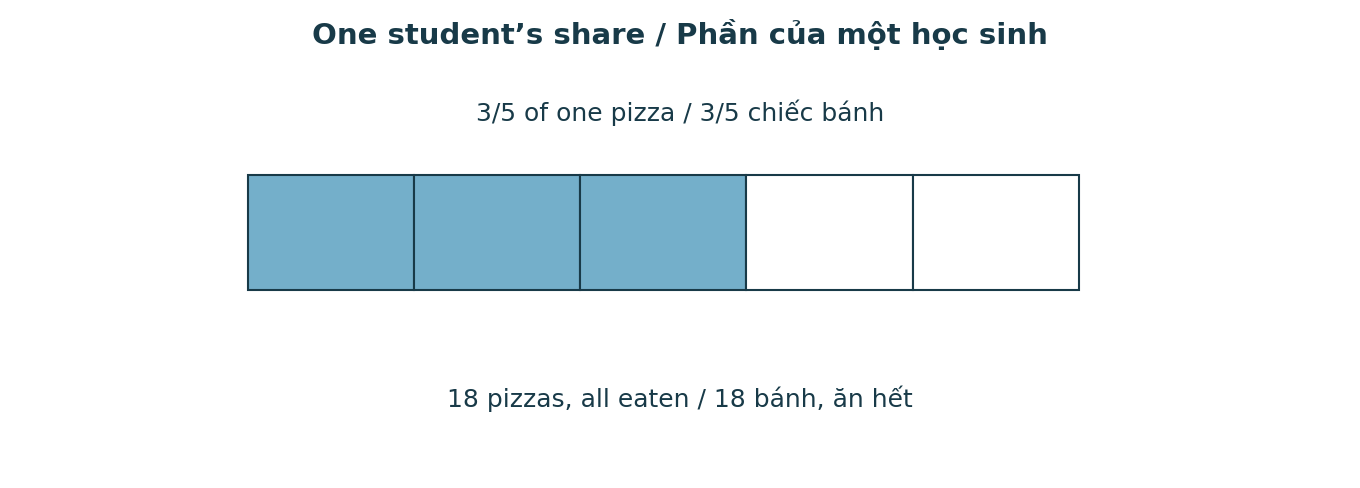
Each student eats three-fifths of a pizza. Eighteen pizzas are ordered. How many students are there? Assume all 18 pizzas are eaten by these students, with none left over.
There are three boxes labelled 1, 2 and 3. Each box contains different numbers of different coloured marbles.
- The number of yellow marbles is half the sum of the red and blue marbles.
- There are more blue marbles than red marbles.
- Box 1 has 10 marbles.
- The total number of marbles is 60.
How many blue marbles are there?
**Assumption for this self-study exercise:** Each box contains marbles of just one colour, and the three boxes contain red, yellow and blue marbles, one colour per box. This is the interpretation used by the source solution; the original wording does not state it clearly.
Harry brought a few marbles to school. He distributed one-third of the marbles among his friends on the bus. He then gave 20 marbles to his classmates. Now he is left with only one-fourth of his marbles. How many marbles did he have at first?
Both fractions refer to his original number of marbles.
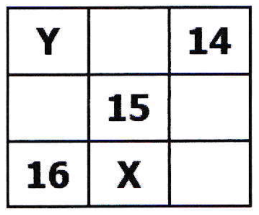
Fill the grid with the numbers 11 to 19, using each once, so that each row and each column sums to 45. What is X + Y?
For this self-study edition, if the stated conditions allow more than one completed grid, enter any one possible value of X + Y. No extra diagonal condition is imposed.
Jack and his father’s weight add up to 100 kg. If Jack loses 4 kg, he will be exactly half of his father’s weight. What is the difference between their weights, in kg?
**Editorial note:** Find the difference before Jack loses weight; his father’s weight stays unchanged. Choose one option.
The lamp is more costly than the watch and the candle stand. The candle stand is less expensive than the watch but more expensive than the basket. Which is the second most expensive item? Use the booklet options below.
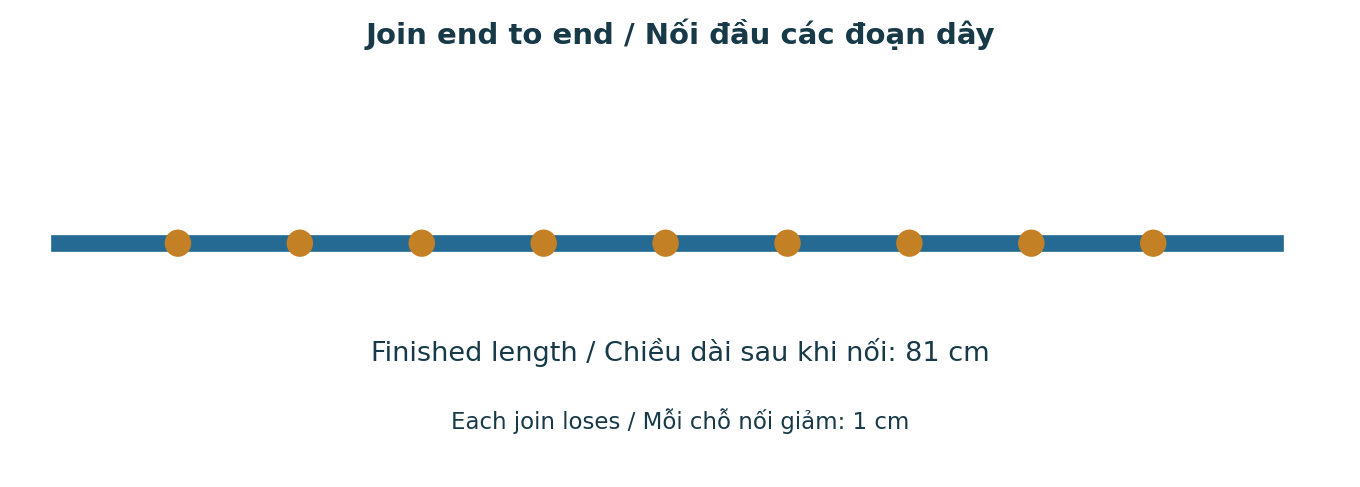
Ten small ropes of equal length are knotted together to form a big rope 81 cm long. The question says the knotted area is 1 cm for every rope. How long is each small rope, in centimetres?
Use the source model: join the ten ropes end to end in one open chain; each join reduces the total length by 1 cm.