Skip to content / Đến nội dung
ThichHocToan.com

AMO 2027 Grade 2 SET 2 - Self-study

Question 1

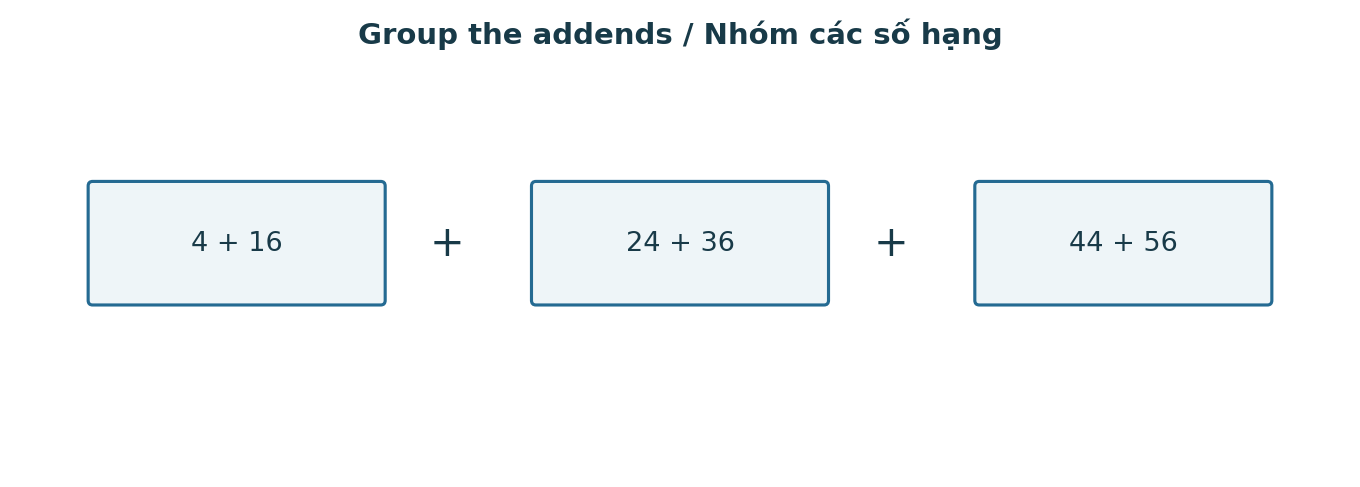
Find the sum: $4+16+24+36+44+56$.

Question illustration

Choose one option.
  1. 160
  2. 170
  3. 180
  4. 190
  5. 200

Question 2

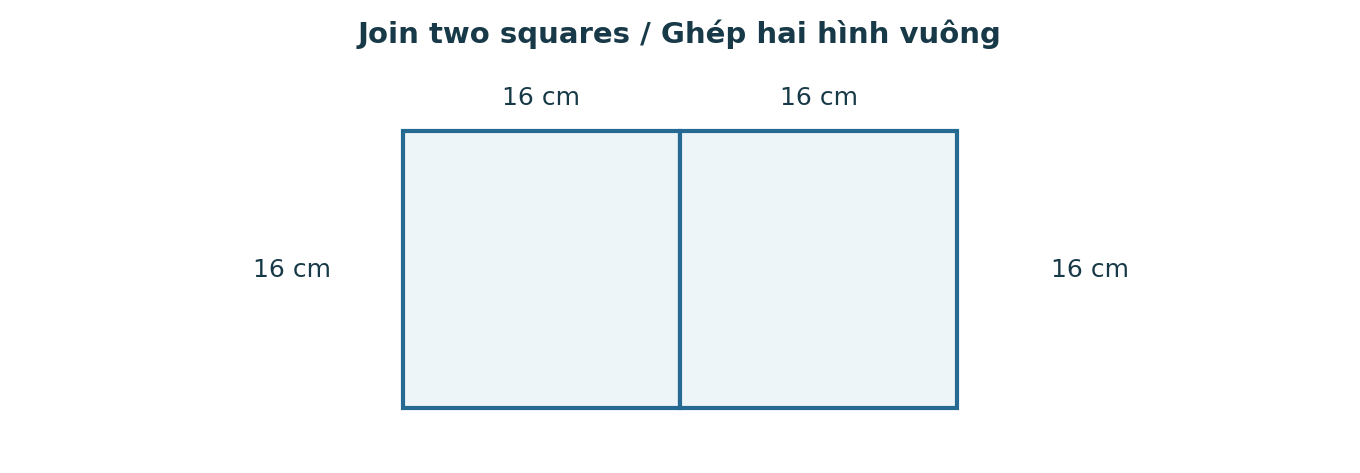
Two identical squares, each with side length 16 cm, are joined along one whole side to make a rectangle. What is the perimeter of the rectangle, in centimetres?

Question illustration

Enter one whole number, without units.

Question 3

Find the difference between two factors of 72 such that their sum is 40.

Choose one option.
  1. 60
  2. 32
  3. 36
  4. 9
  5. 24

Question 4

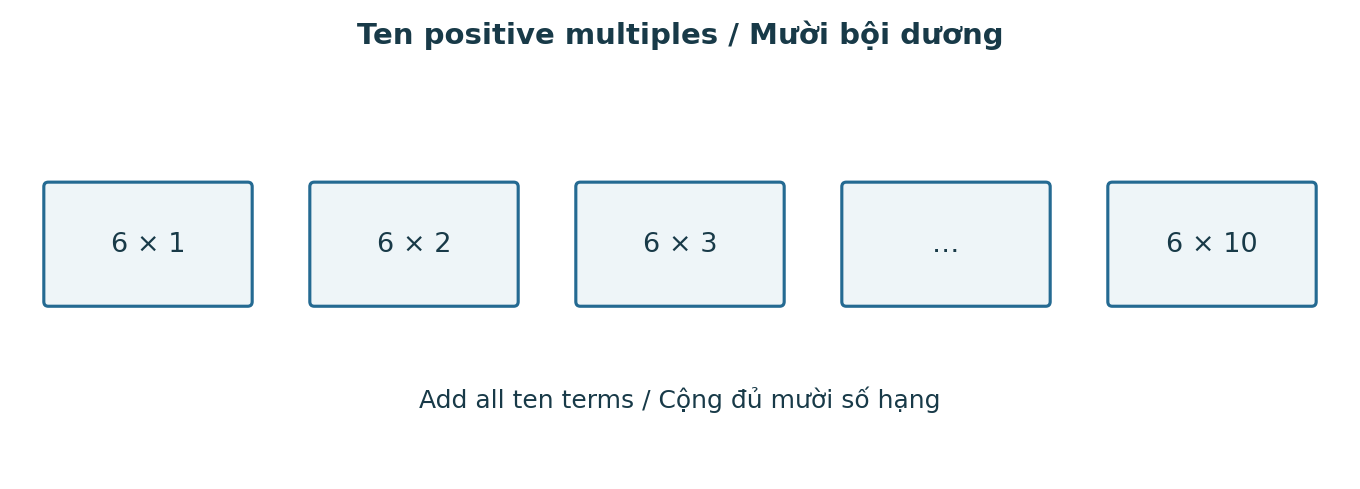
What is the sum of the first 10 positive multiples of 6, starting with 6?

Question illustration

Enter one whole number, without units.

Question 5

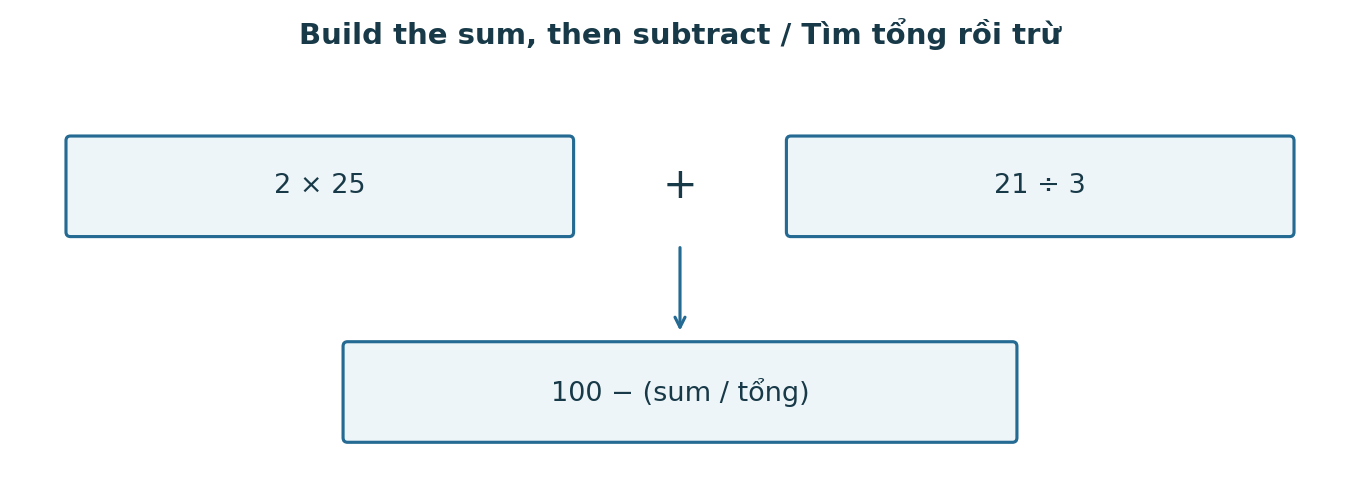
Add double of 25 to one-third of 21. Subtract that sum from 100. What is the final number?

Question illustration

Choose one option.
  1. 60
  2. 29
  3. 43
  4. 57
  5. 71

Question 6

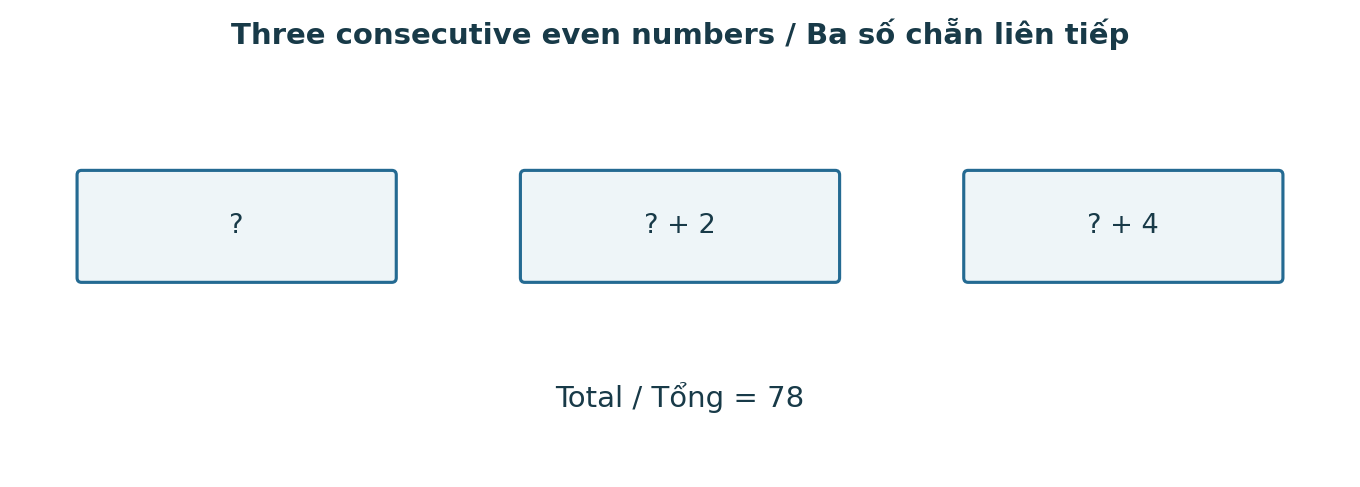
The sum of three consecutive even numbers is 78. Find the largest number.

Question illustration

Enter one whole number, without units.

Question 7

Fill in the operations to make the following equation true. Follow the order of operations strictly from left to right, not the usual BODMAS order: $45\ \square\ 54\ \square\ 11\ \square\ 2=18$.

Choose one option.
  1. $\div,\ \times,\ +$
  2. $\div,\ \times,\ -$
  3. $+,\ \div,\ \times$
  4. $+,\ \times,\ \div$
  5. $+,\ \div,\ +$

Question 8

Harry scored 3 more marks than Alwin. Sophia scored the same as Harry. The sum of their scores was 51. How many marks did Alwin score?

Enter one whole number, without units.

Question 9

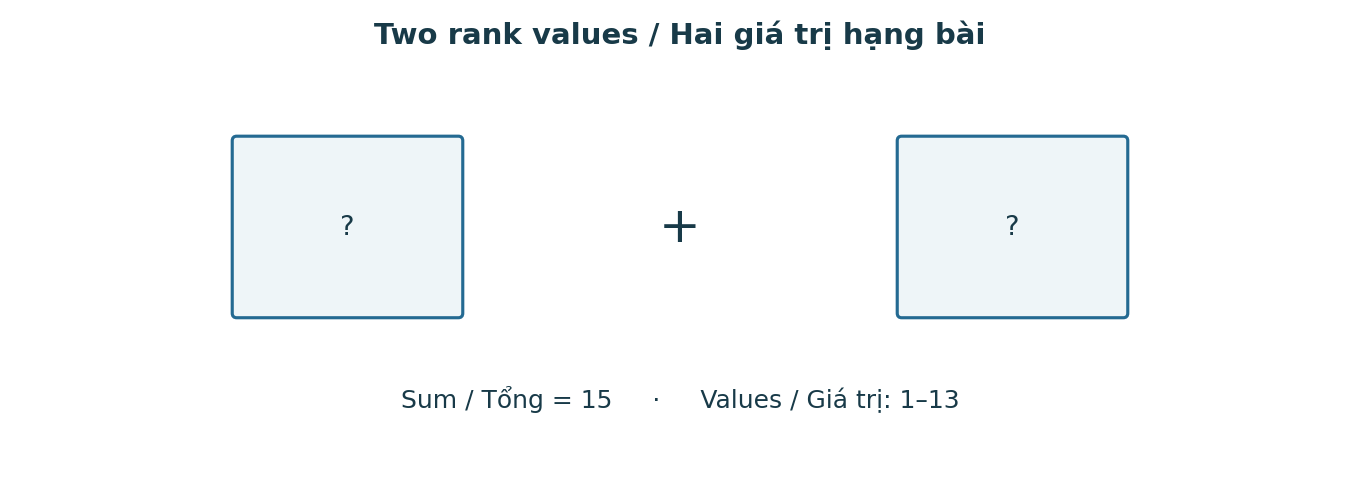
Alice picks two cards from a 52-card deck whose values sum to 15. How many combinations are possible? A = 1, J = 11, Q = 12, K = 13; the remaining ranks have values 2 to 10.

Count unordered pairs of rank values only. Ignore suits and do not count the reversed order again.

Question illustration

Enter one whole number, without units.

Question 10

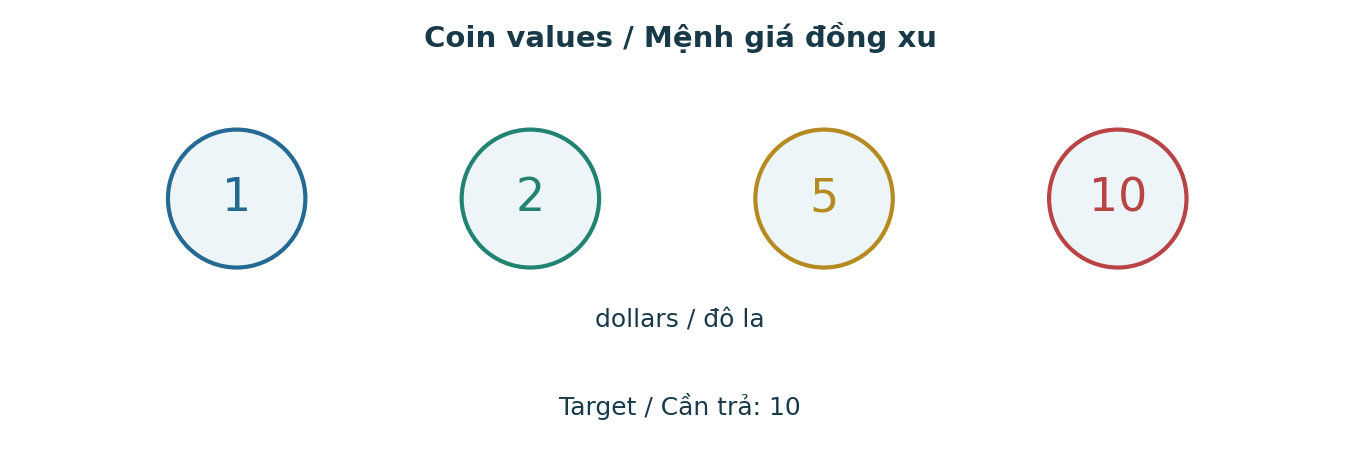
Freddy has 1-dollar, 2-dollar, 5-dollar and 10-dollar coins. How many different ways can he pay exactly 10 dollars using one or more coins? Assume he has enough coins of each value. A way is determined by how many coins of each value are used; changing their order does not create a new way.

Question illustration

Choose one option.
  1. 8
  2. 12
  3. 9
  4. 10
  5. 11

Question 11

The product of $58\times24$ is

**Editorial note:** Choose one option.
  1. More than 1500
  2. Between 1000 and 1500
  3. Between 500 and 1000
  4. Between 100 and 500
  5. Less than 100

Question 12

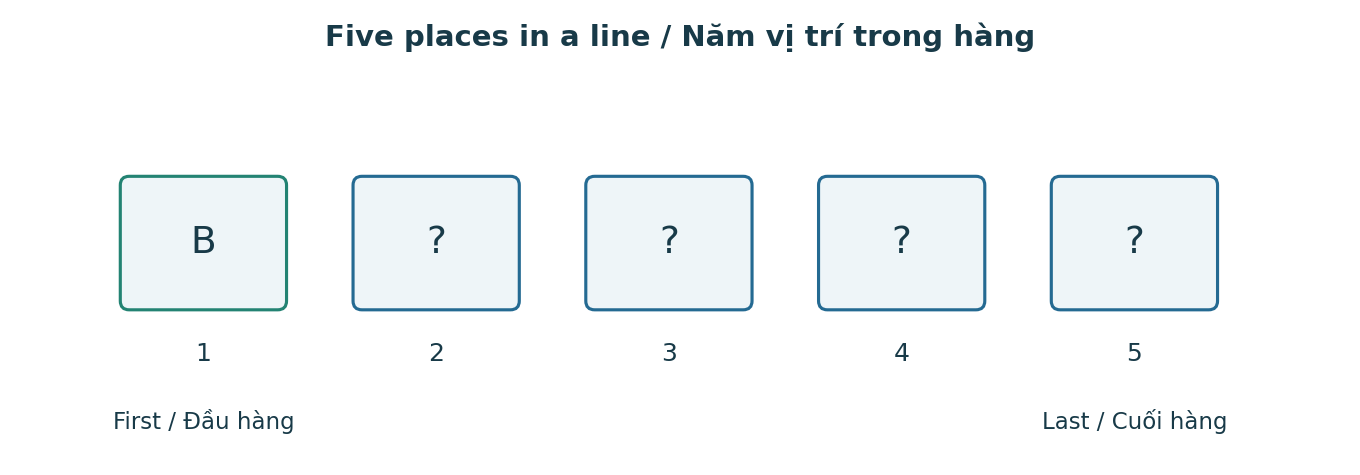
A, B, C, D and E were standing in a line. A was standing between B and D. E was not standing in the last place. B was standing first in line. Who was standing in the last place?

For this self-study question, use the source solution’s intended assumption: B, A and D occupy three consecutive places, with A immediately between B and D.

Question illustration

Choose one option.
  1. A
  2. B
  3. C
  4. D
  5. E

Question 13

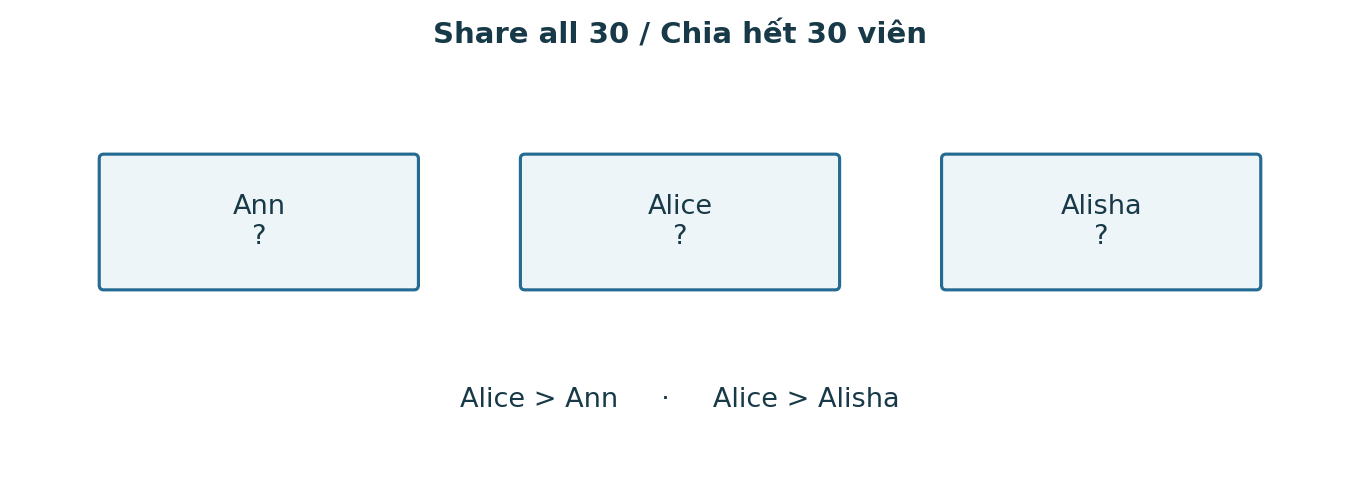
A jar of 30 chocolates is shared among Ann, Alice and Alisha. Alice takes more than either of the others. What is the least number she could take? All 30 chocolates are distributed whole.

Question illustration

Enter one whole number, without units.

Question 14

If the letters of the alphabet are represented by numbers starting with $A=1$, $B=2$, $C=3$, and so on, find the sum of the digits represented by the word SMART. (Note: DOG is written as 4157.)

Choose one option.
  1. 20
  2. 24
  3. 26
  4. 28
  5. 30

Question 15

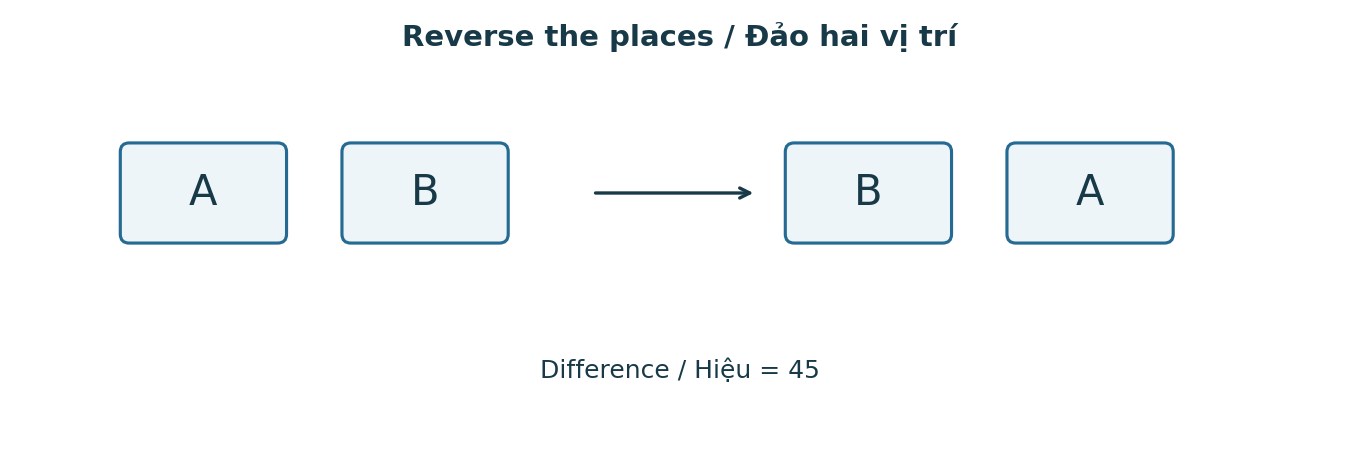
If the digits of a two-digit number are reversed to form a new number, the difference between the two numbers is 45. How many different such pairs are there?

Use the source convention: a reversed form may start with zero (for example, 04 means 4). Count each pair once, regardless of order.
Question illustration

Enter one whole number, without units.