Skip to content / Đến nội dung
ThichHocToan.com

SASMO 2027 · Grades 4-5 · SET 006 · Self-study

Question 1

Editorial self-study SET for 2027; not an official SASMO 2027 examination. Known source years remain in individual attributions. Time: 90 minutes. Platform scoring starts at 0: Q1–15 are worth 2 points each; Q16–25 are worth 4 points each; wrong and blank answers score 0; maximum 70. Official SASMO scoring instead starts at 15, deducts 1 for an incorrect Section A answer and has a maximum of 85. Verified means editorially checked; assumptions, source errors and mathematical uncertainty are disclosed where relevant.

Two women, Annie and Taylor, and two men, Bob and Jack, are athletes. One is a swimmer, one a skater, one a gymnast and one a soccer player. They sit around a square table.

1. The swimmer sits on Annie’s left.

2. The gymnast sits opposite Bob.

3. Taylor and Jack sit next to each other.

4. A woman sits on the skater’s left.

Who is the soccer player?

Assume one person sits on each side, all face the centre, and “left” means the adjacent seat to that person’s own left. Each person plays a different sport.
Question 2

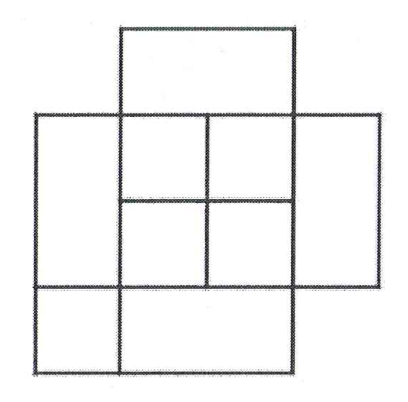
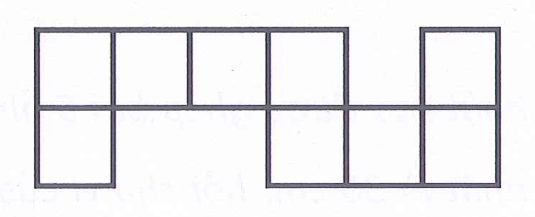
The figure is made of identical squares of side 4 cm. What is its perimeter, in cm?

Question illustration

Question 3

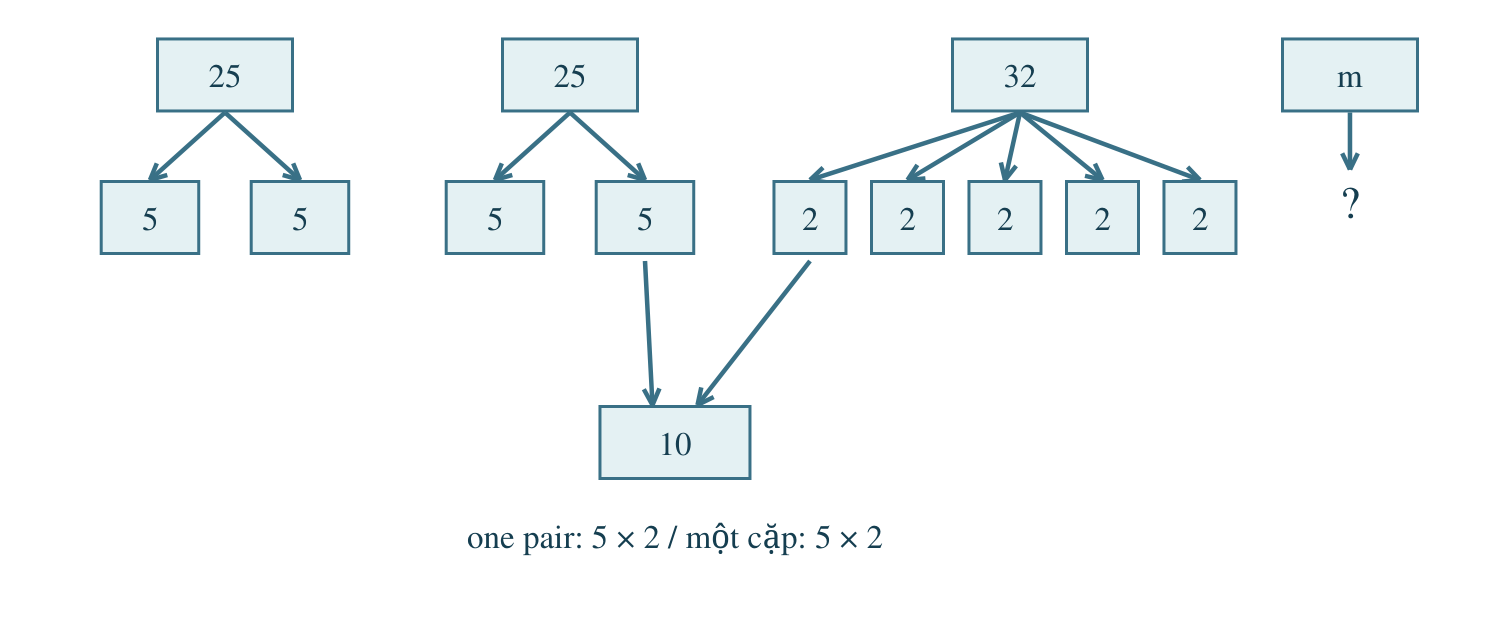
The last five digits of 25 × 25 × 32 × m are 00000. Find the smallest value of m.

The source does not specify the domain of m. Use its intended domain: m is a positive integer.

Question illustration
  1. 2
  2. 10
  3. 100
  4. 5
  5. None of the above

Question 4

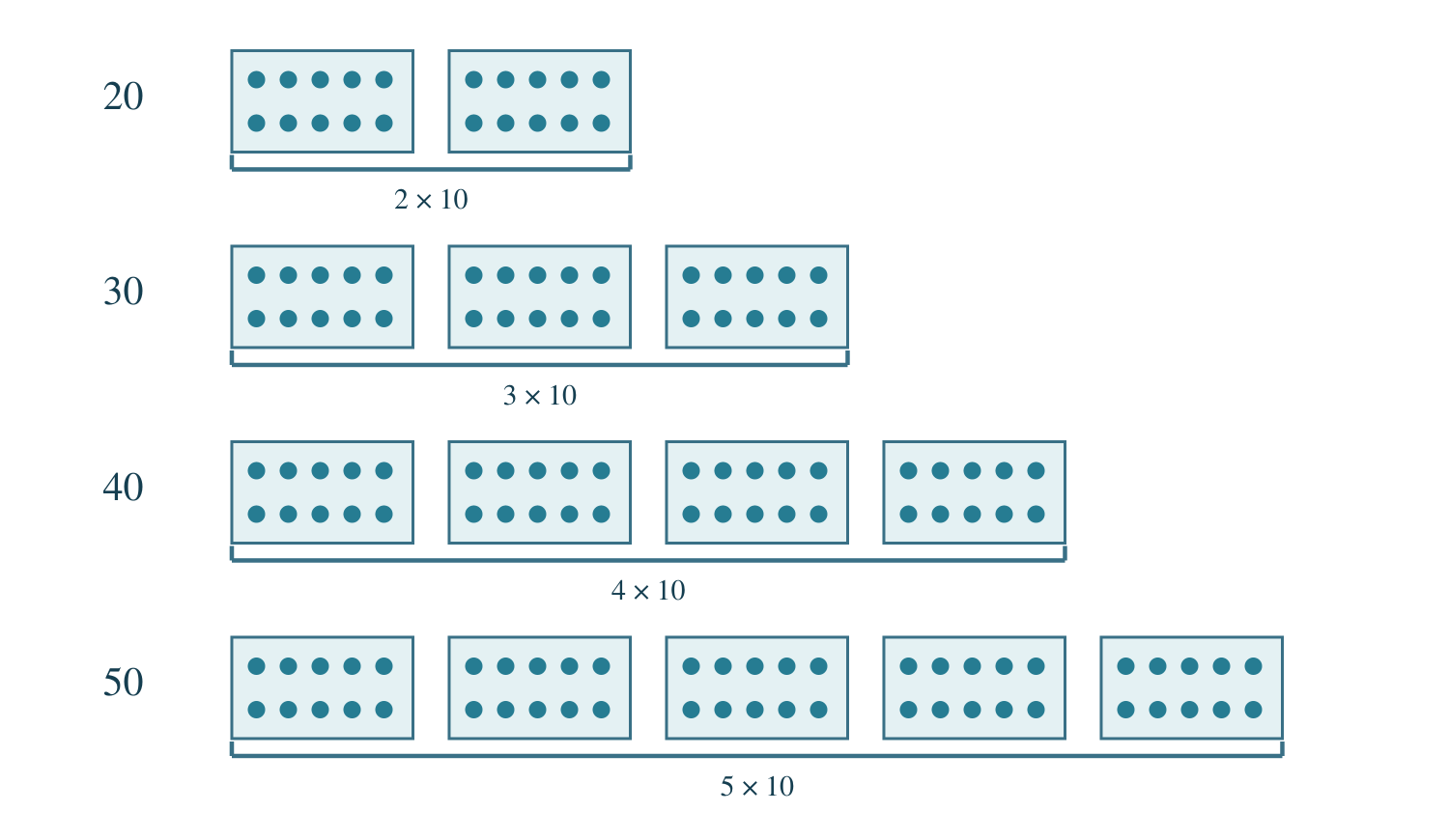
How many zeroes are at the end of 20 × 30 × 40 × 50?

Question illustration

Question 5

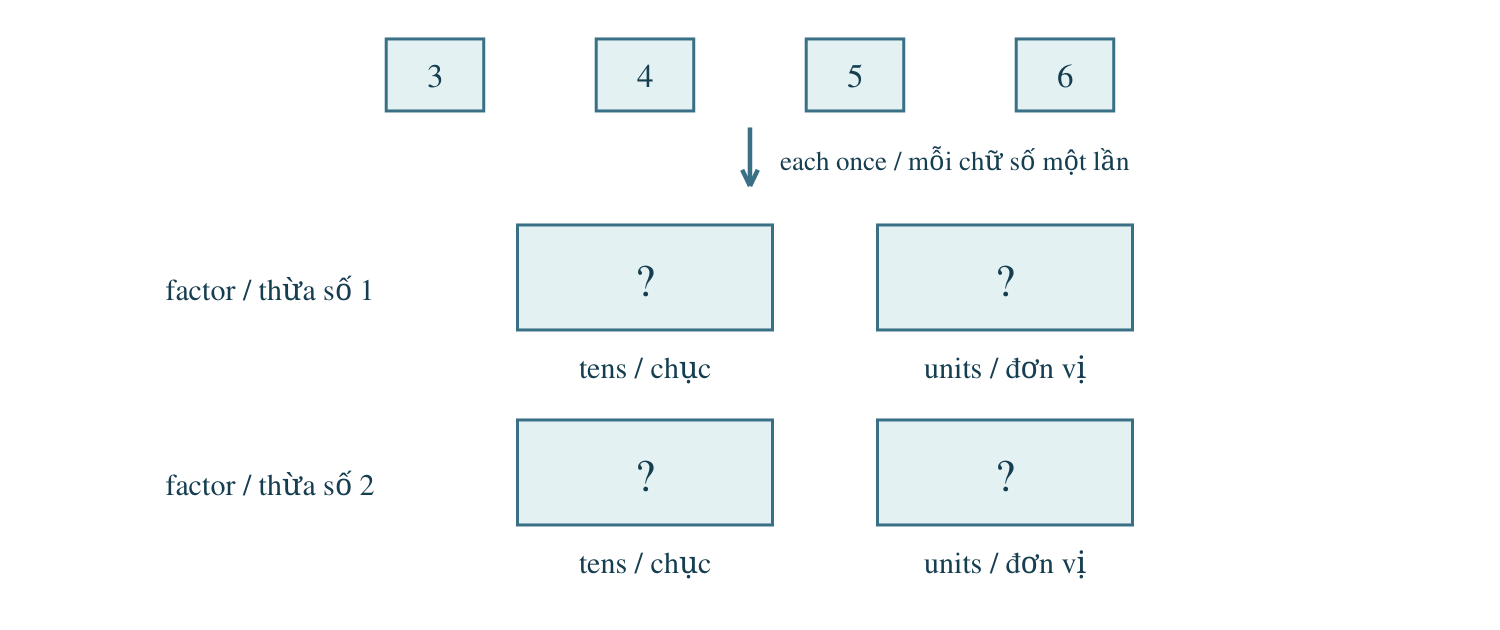
Use each digit 3, 4, 5 and 6 exactly once to form two two-digit numbers. What is the difference between their largest possible product and their smallest possible product?

Question illustration

Question 6

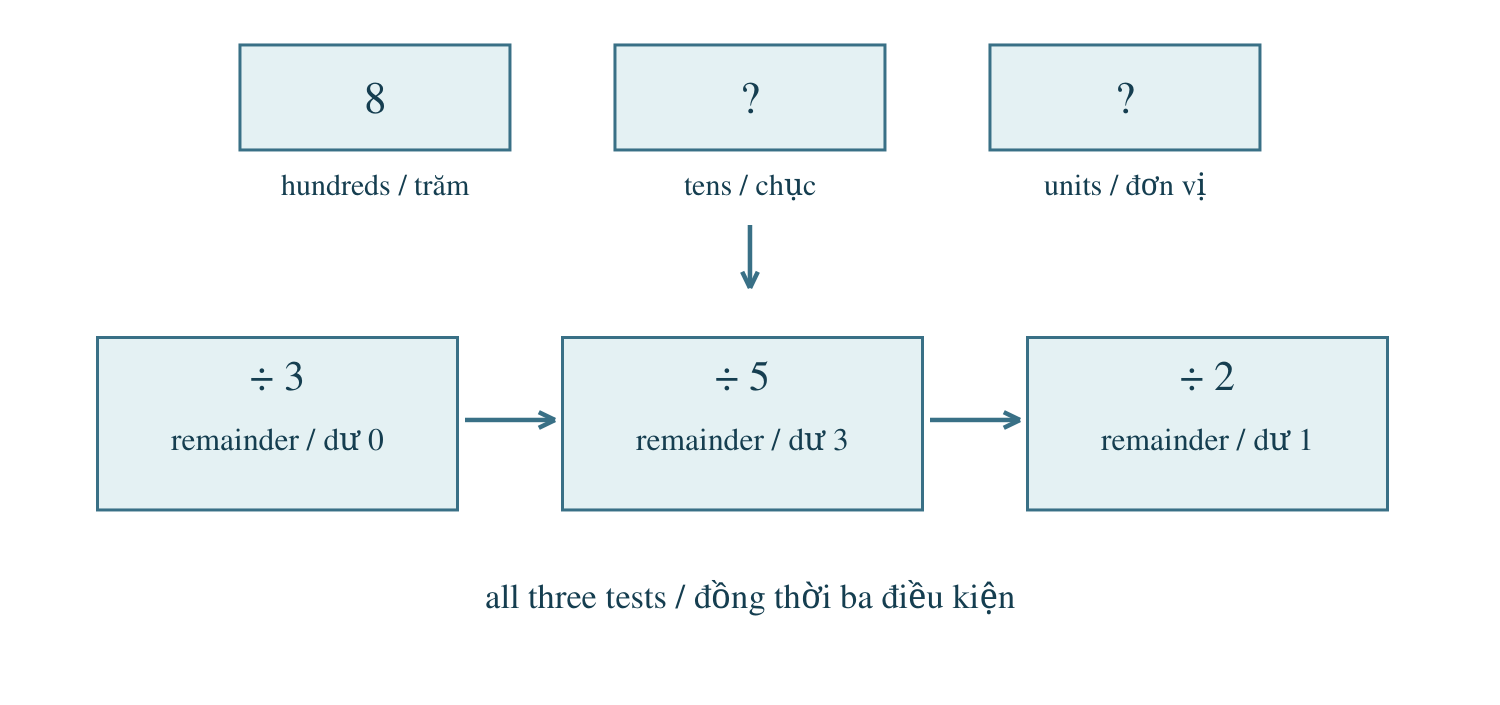
A three-digit number is divisible by 3. When divided by 5 and by 2, its remainders are 3 and 1 respectively. Its hundreds digit is 8. Find all such numbers. Enter them in increasing order, separated by commas.

The source asks for “this number”, but its conditions admit several numbers and its answer lists all of them. This edition asks for the complete list.

Question illustration

Question 7

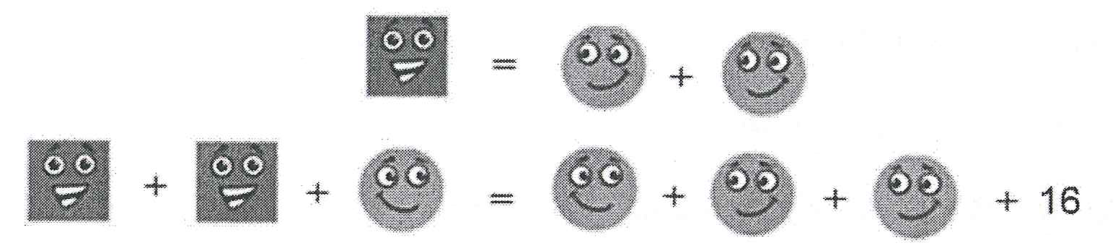
Use the two equations in the picture. What number does the circle represent?

Question illustration

Question 8

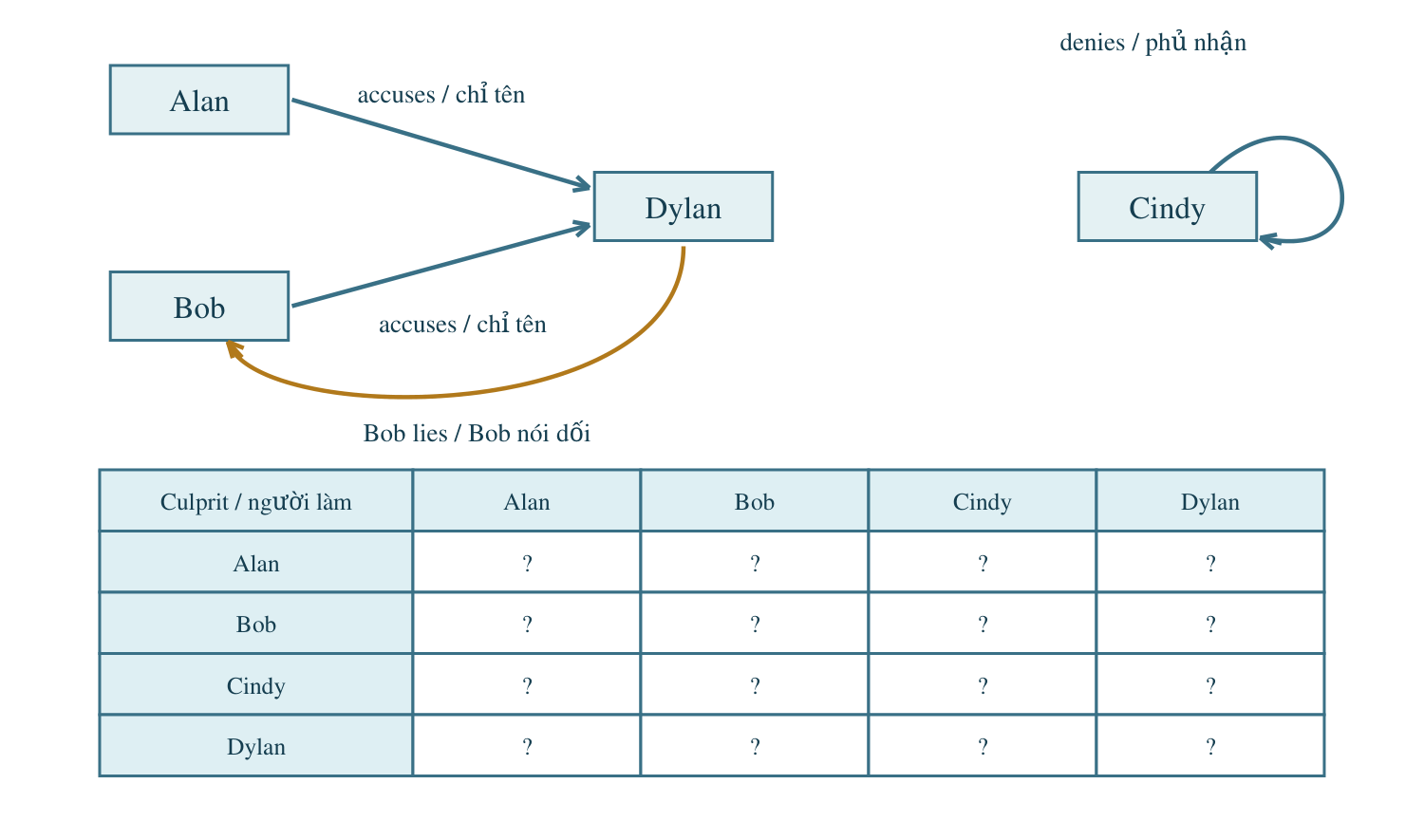
One of four students broke a window. Alan says, “Dylan broke it.” Bob says, “Dylan broke it.” Cindy says, “I did not break it.” Dylan says, “Bob is lying.” Exactly one student is telling the truth. Who broke the window?

Question illustration

Question 9

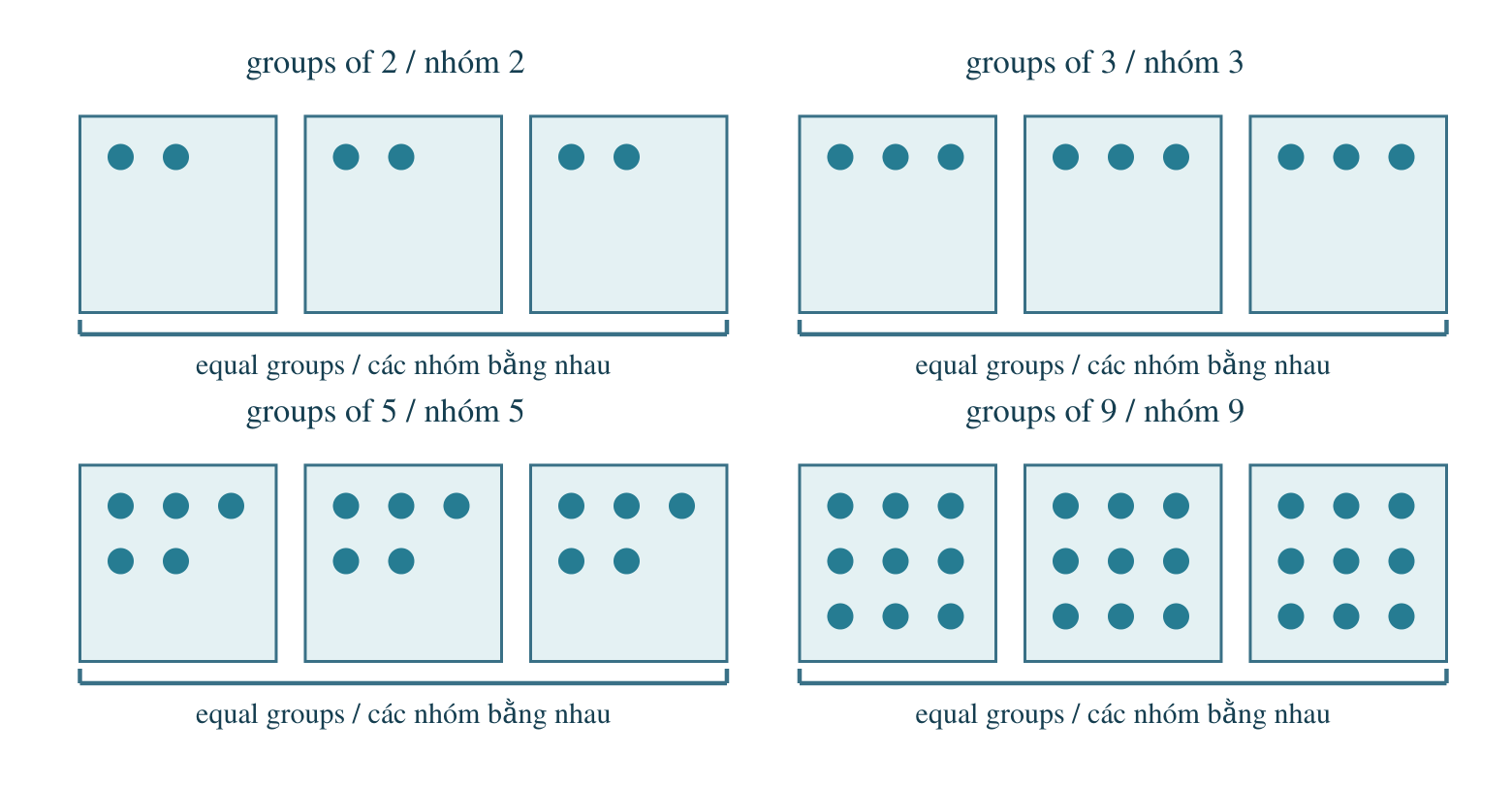
For each part, list all numbers that satisfy the requested divisibility test. Keep the numbers in their original order.

(a) Divisible by 2: 0, 21, 43, 120, 68, 75, 44, 89, 7, 18, 30, 888888.

(b) Divisible by 3: 0, 12, 30, 44, 78, 137, 9, 27, 800, 501, 603, 333333.

(c) Divisible by 5: 0, 32, 50, 44445, 700, 21, 905, 241, 17, 20, 800001, 55555.

(d) Divisible by 9: 12, 15, 17, 18, 40, 81, 153, 333, 9000, 0, 16201, 728, 5787.

Question illustration

Question 10

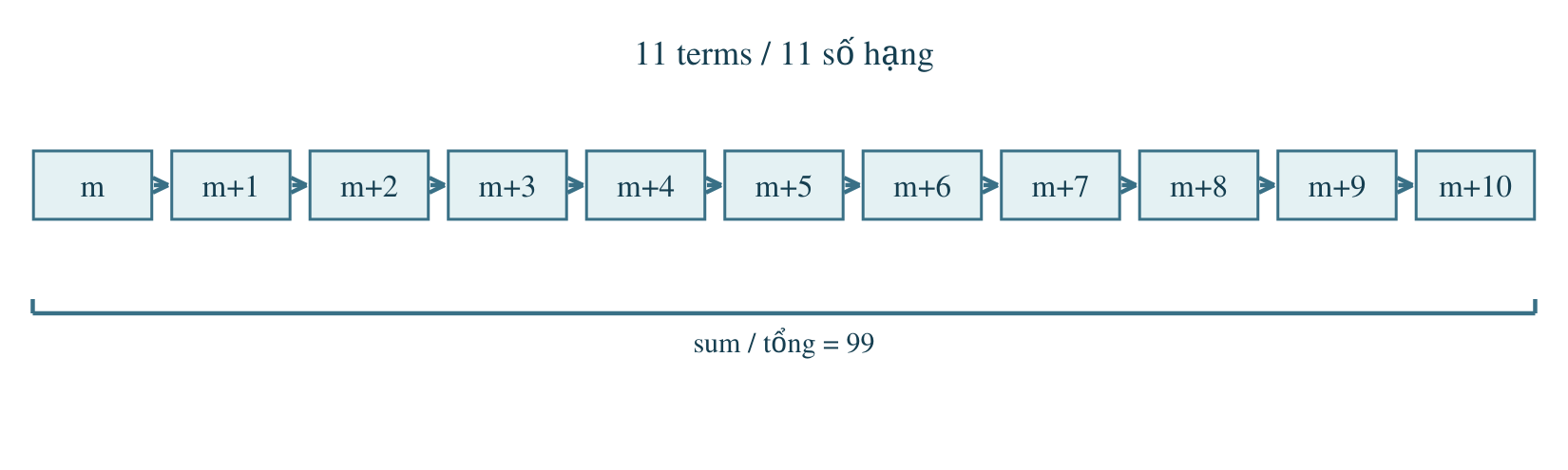
Define a ∗ b = a + (a + 1) + (a + 2) + … + (a + b). Find m if m ∗ 10 = 99.

Question illustration

Question 11

A, B and C are natural numbers and $\frac{24}{5}=A+\frac{1}{B+\frac{1}{C+1}}$. Find A + 2B + 3C.

Question illustration

Question 12

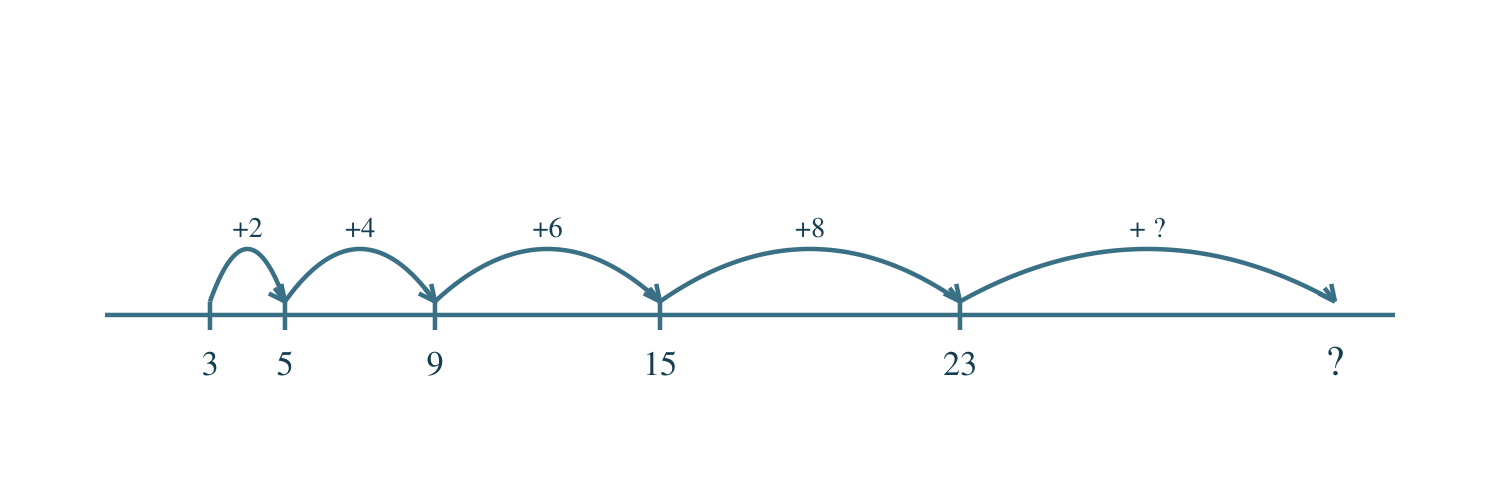
Find the next number: 3, 5, 9, 15, 23, …

As in the source solution, continue the pattern of consecutive even differences; a finite list alone does not determine a unique continuation.

Question illustration

Question 13

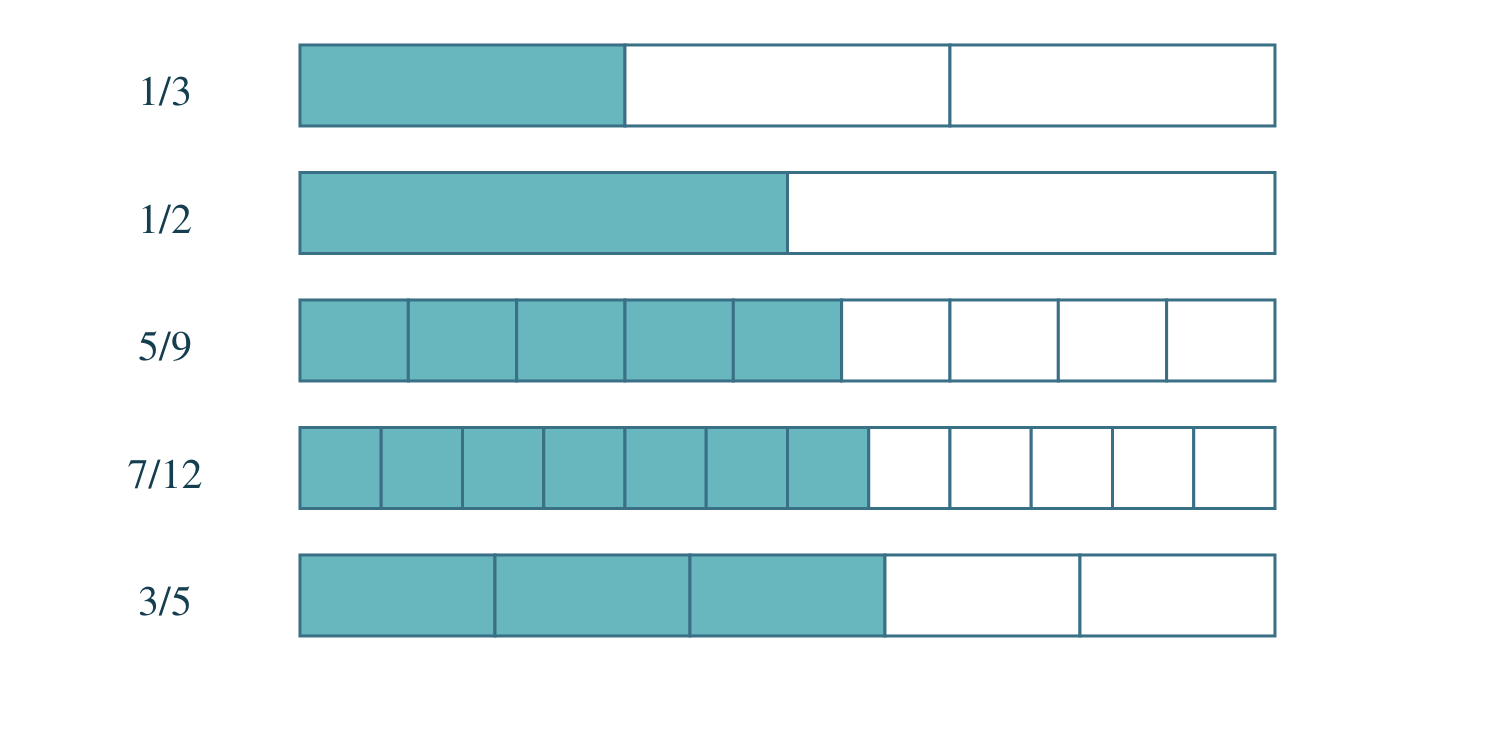
Find the next fraction: $\frac13,\ \frac12,\ \frac59,\ \frac7{12},\ \frac35,\ldots$

Use the source’s intended pattern: equivalent fractions can be written with numerators and denominators each forming an arithmetic sequence. Finite sequences can otherwise have other continuations.

Question illustration

Question 14

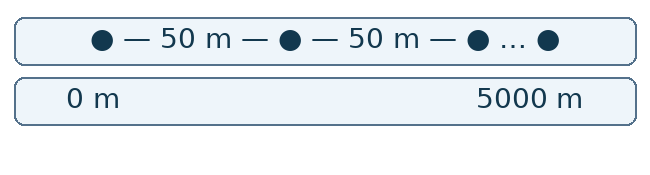
A road is 5 km long. Consecutive lampposts are 50 m apart, and both ends have a lamppost. How many lampposts are there?

Count one row of lampposts along the road, as intended in the source.

Question illustration
  1. 100
  2. 101
  3. 98
  4. 10
  5. None of the above

Question 15

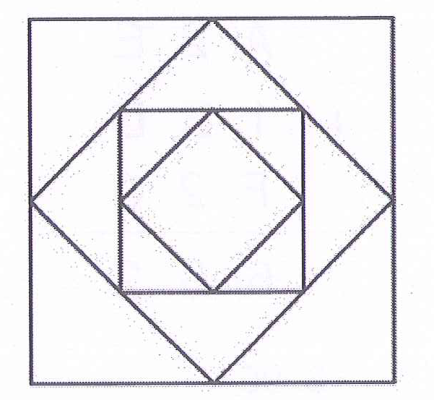
Starting with one square, draw each new square by joining the midpoints of the four sides of the previous square. Keep all drawn sides. How many triangles are there when the 2020th square has been drawn?

Question illustration
  1. 8064
  2. 8068
  3. 8076
  4. 8080
  5. None of the above

Question 16

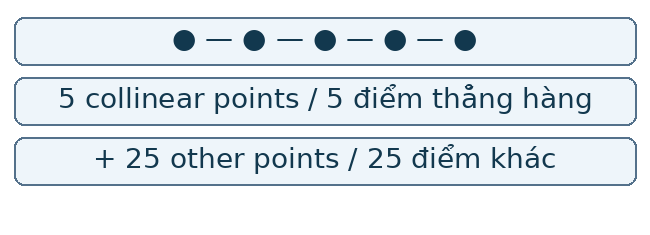
There are 30 points in a plane, with exactly five on one straight line. How many triangles can be formed using the given points as vertices?

The source solution assumes there are no other collinear triples. Use that assumption: every collinear triple lies among the five specified points.

Question illustration

Question 17

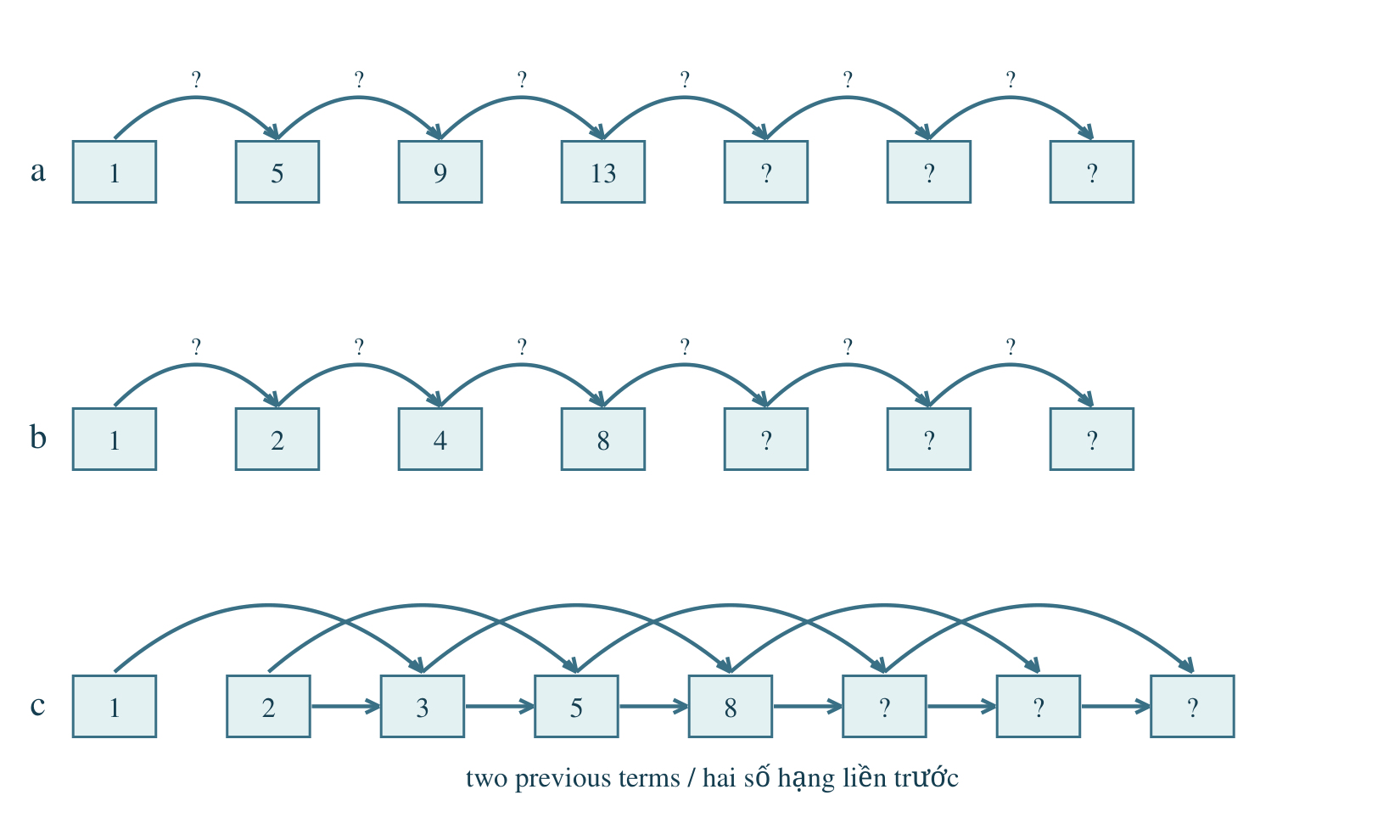
Write the next three terms in each sequence.

(a) 1, 5, 9, 13, …

(b) 1, 2, 4, 8, …

(c) 1, 2, 3, 5, 8, …

Explain the rule used for each part.

Question illustration

Question 19

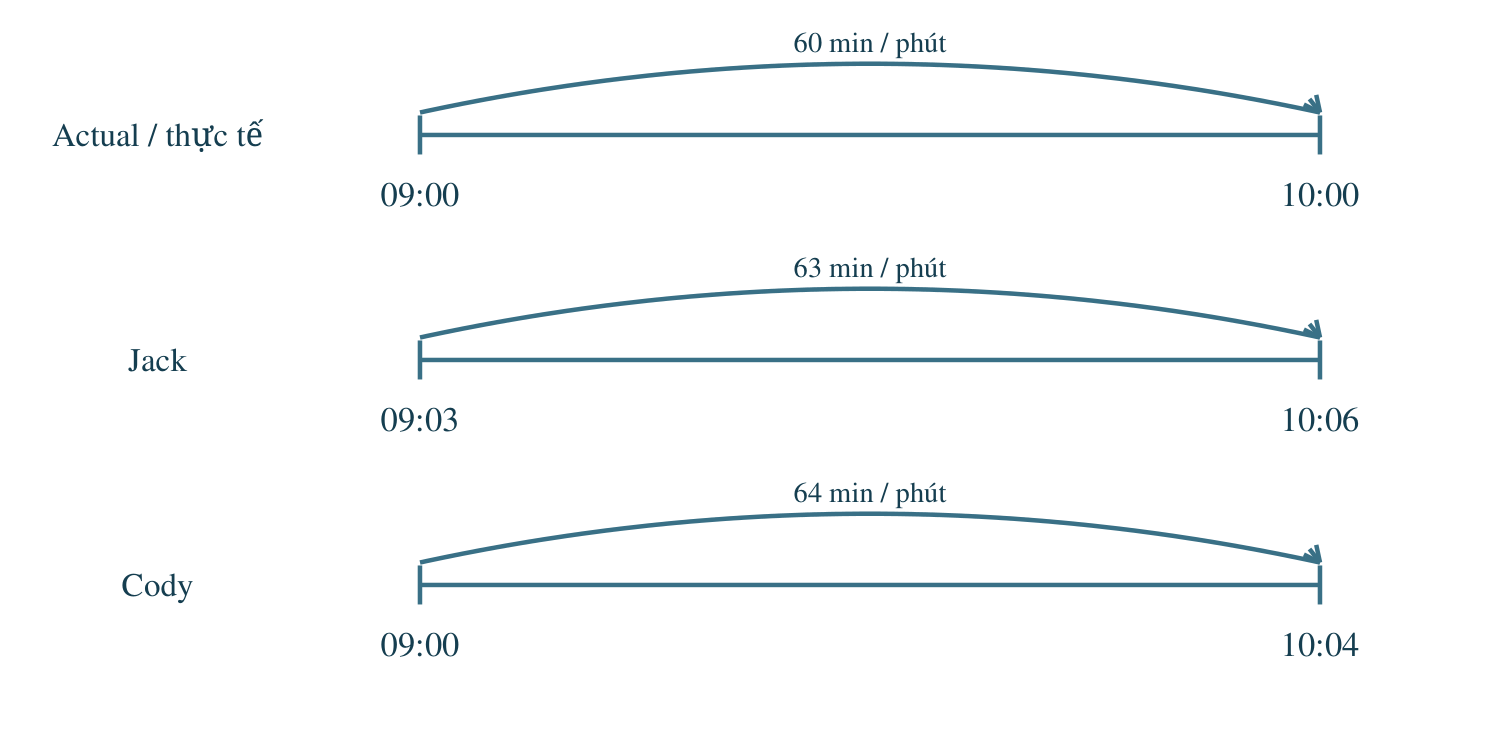
Jack’s watch gains 3 minutes per hour and Cody’s gains 4 minutes per hour. Each day Jack sets his watch correctly at 8 a.m. and Cody sets his correctly at 9 a.m. What is the actual time when their watches next show the same time after 9 a.m.? Enter HH:MM using the 24-hour clock.

Gains are measured per actual hour, at constant rates. Interpret the question as the next agreement after both daily resets.

Question illustration

Question 20

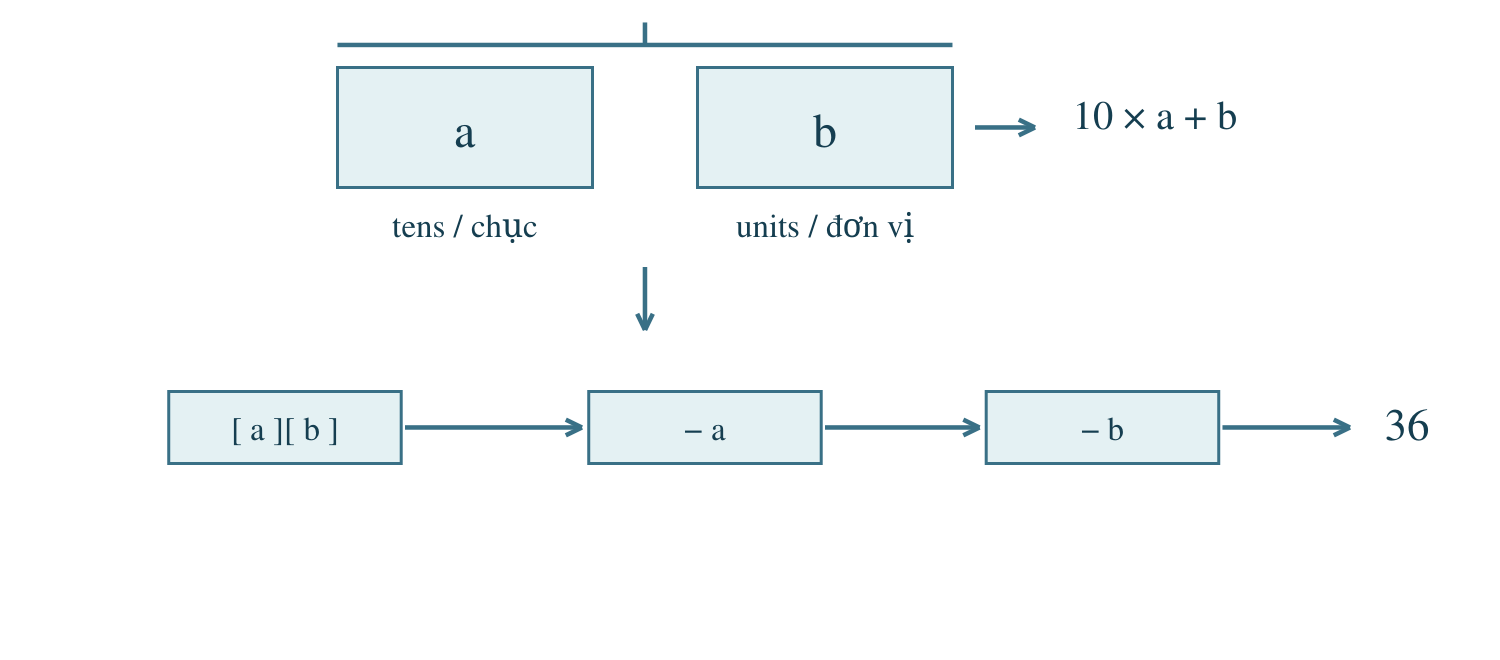
An operation ∗ satisfies 2 ∗ 6 = 26 − 2 − 6 and 7 ∗ 3 = 73 − 7 − 3. If a and b are nonzero digits and a ∗ b = 36, find a.

Use the general rule intended by the source: concatenate the two digits, then subtract both digits. Two examples alone would not uniquely define an operation.

Question illustration