Editorial self-study SET for 2027; not an official SASMO 2027 examination. Known source years remain in individual attributions. Time: 90 minutes. Platform scoring starts at 0: Q1–15 are worth 2 points each; Q16–25 are worth 4 points each; wrong and blank answers score 0; maximum 70. Official SASMO scoring instead starts at 15, deducts 1 for an incorrect Section A answer and has a maximum of 85. Verified means editorially checked; assumptions, source errors and mathematical uncertainty are disclosed where relevant.
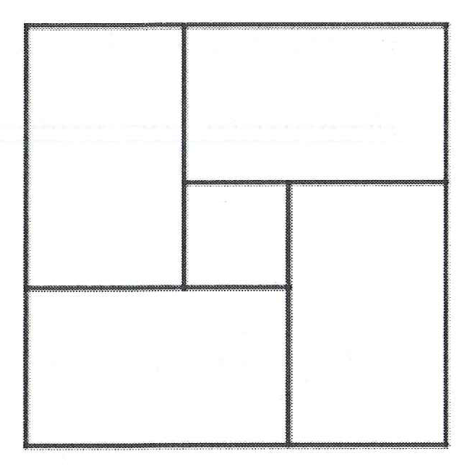
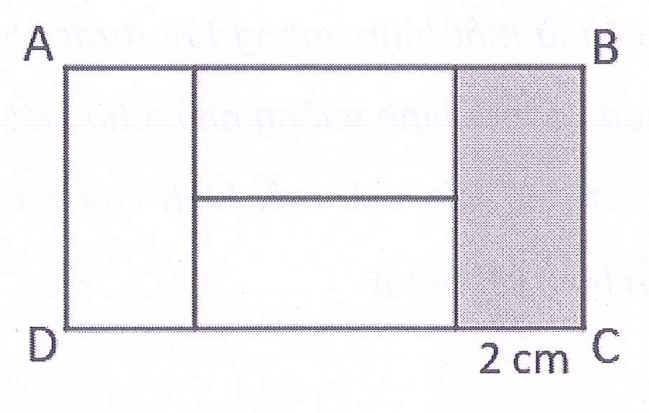
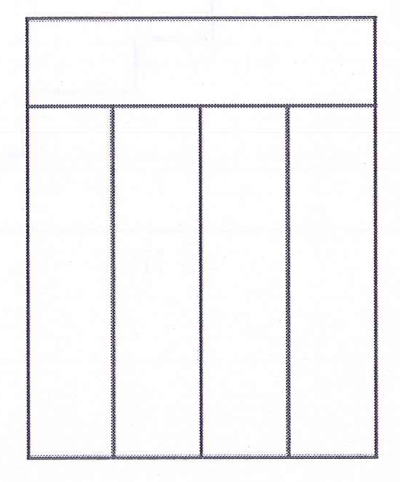
The big square is divided into four identical rectangles and a small square, as shown. The small square has area 16 cm² and each rectangle has area 140 cm². Find the breadth of each rectangle, in cm.
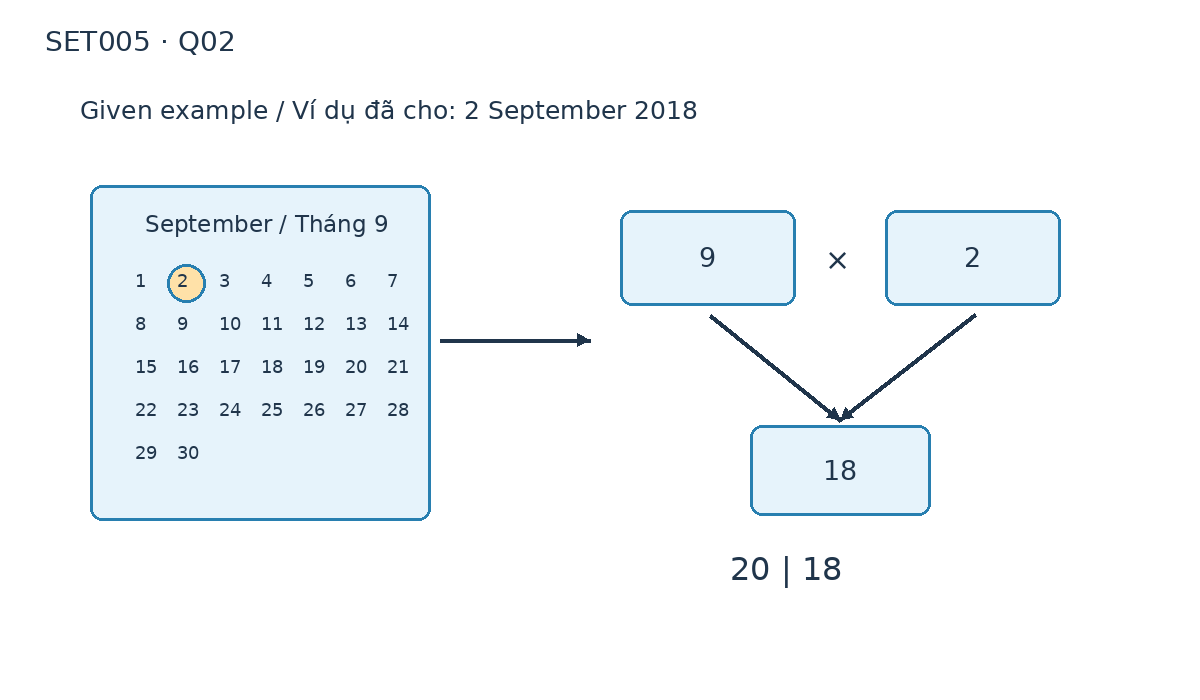
A day is a “Factor day” if the month number times the day of the month equals the number formed by the last two digits of the year. For example, 2 September 2018 is one because 9 × 2 = 18; so is 8 February 2016 because 2 × 8 = 16. How many Factor days are there from 1 January 2016 to 31 December 2018, inclusive?
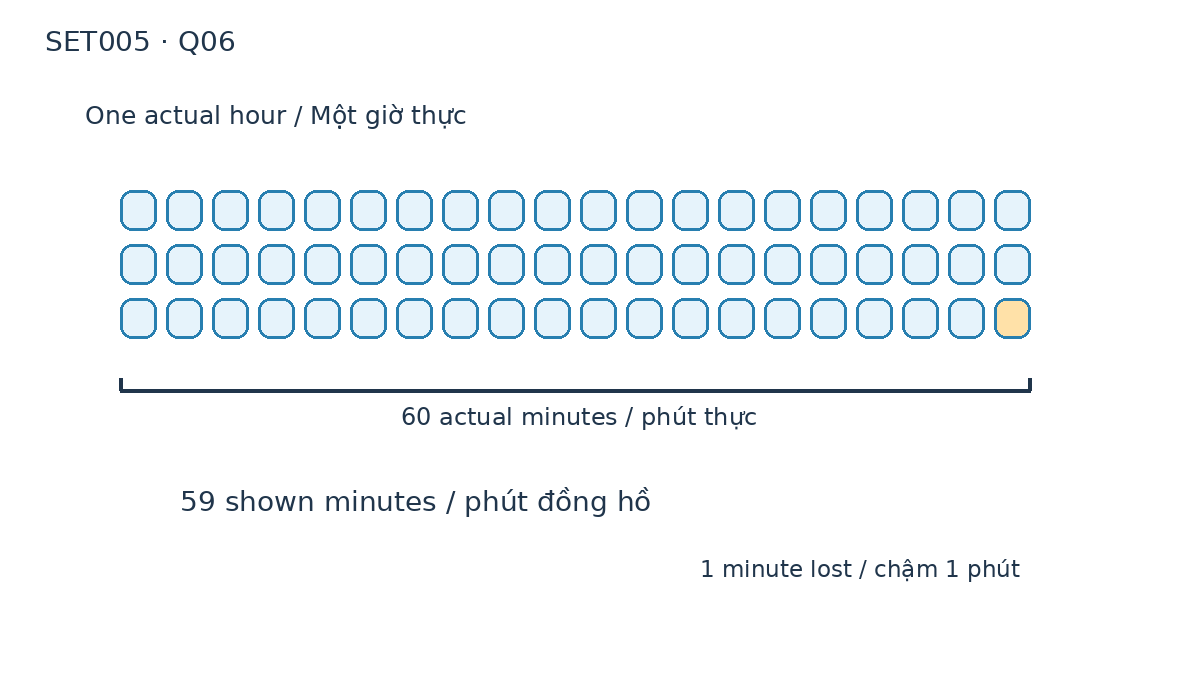
A clock loses one minute per actual hour. It was set correctly at midnight. When it shows 5:54 a.m. that morning, what is the actual time? Enter the time as HH:MM in the morning.
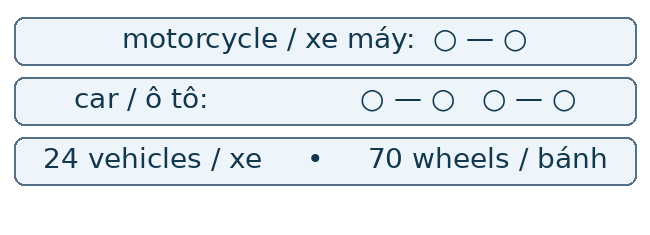
A car park has 24 vehicles, comprising motorcycles and cars. Altogether they have 70 wheels. How many motorcycles and how many cars are there? Enter motorcycles, cars in that order, separated by a comma.
Count 2 wheels per motorcycle and 4 per car; do not count spare wheels.
The large rectangle consists of five identical rectangles as shown. The perimeter of each small rectangle is 90 cm. Find the perimeter of the large rectangle, in cm.
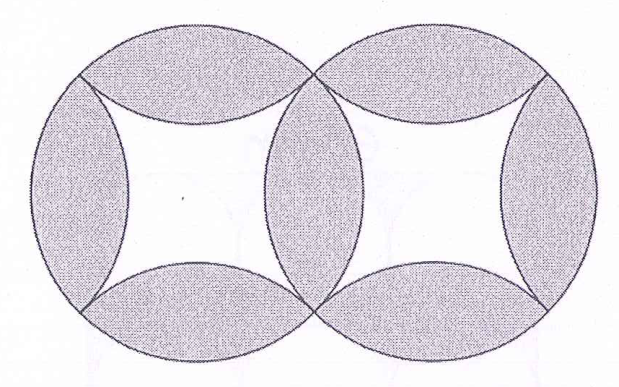
Find the total shaded area in the figure, in cm². Each circle has radius 20 cm. Use π = 3.14.
The source leaves some arc construction implicit. Use its intended symmetric construction: each lens is bounded by equal 90° arcs of radius 20 cm, and the four arc endpoints in each main circle form an inscribed square.
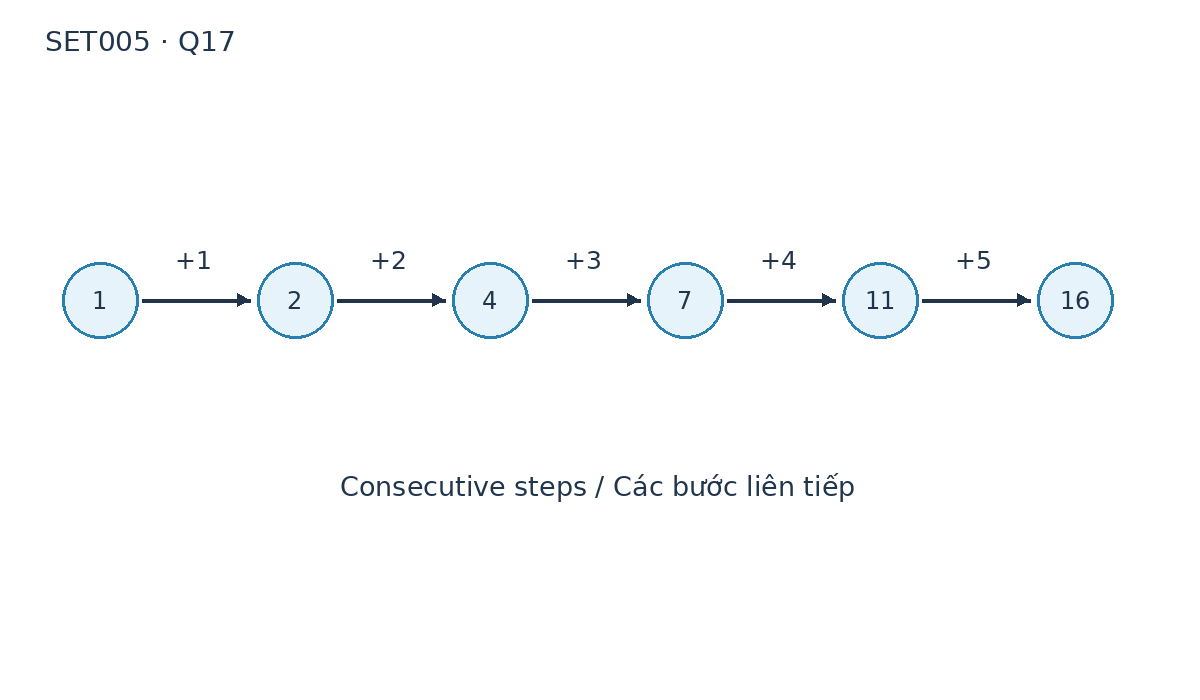
The sequence is 1, 2, 4, 7, 11, 16, 22, 29, 37, 46, 56, … . Continue by adding consecutive integers 1, 2, 3, … . Find the remainder when its 2019th term is divided by 5.
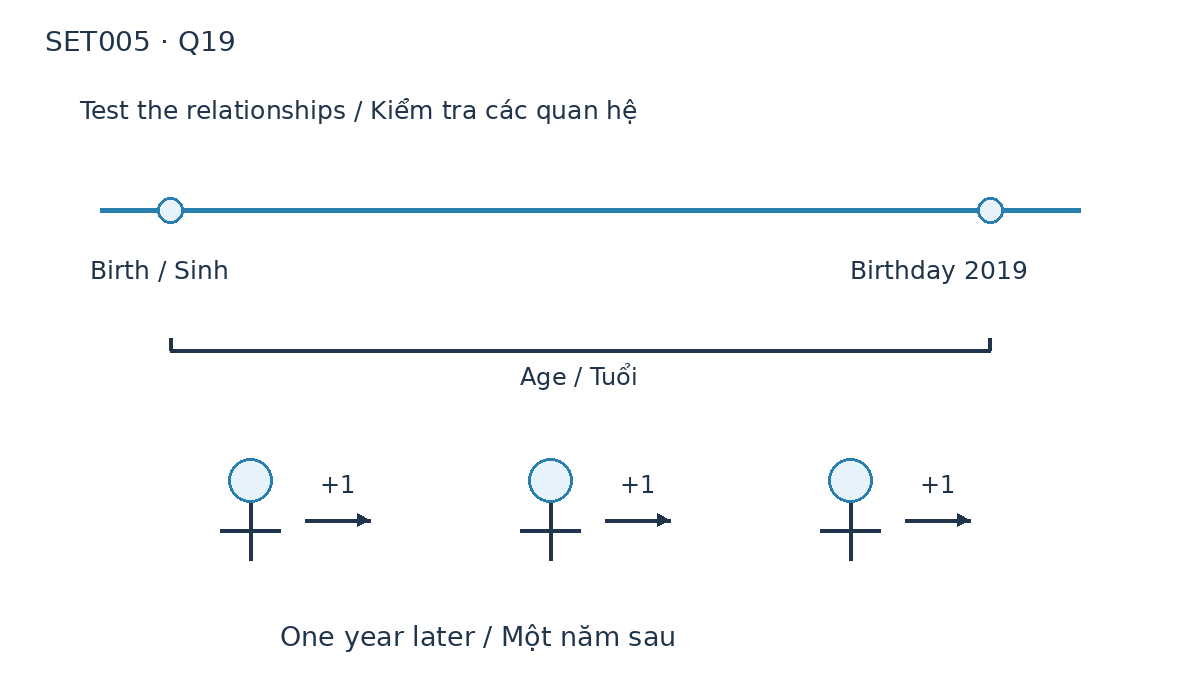
1. Your age on your birthday in 2019 plus your birth year must equal 2019.
2. If today is Monday, then 50 days later it will again be Monday.
3. If we multiply 13 by 8 and then add 13, the result must be odd.
4. If the sum of the ages of three people is odd, their age sum one year later must be even.
The source English says “on your birthday”, but its Vietnamese omits that condition. Both versions here use the birthday condition. Ages are counted in completed years, with each person one year older after one year.
Fill the three blanks in each sequence (a)–(h). Give all eight answers and explain the patterns. Use the simple arithmetic or interleaving patterns suggested by the terms; a finite list alone can have other continuations.