Editorial self-study SET for 2027; not an official SASMO 2027 examination. Known source years remain in individual attributions. Time: 90 minutes. Platform scoring starts at 0: Q1–15 are worth 2 points each; Q16–25 are worth 4 points each; wrong and blank answers score 0; maximum 70. Official SASMO scoring instead starts at 15, deducts 1 for an incorrect Section A answer and has a maximum of 85. Verified means editorially checked; assumptions, source errors and mathematical uncertainty are disclosed where relevant.
A book uses 99 digits to print its page numbers. How many pages does it have?
Number every page consecutively from 1, with no omitted pages or leading zeros.
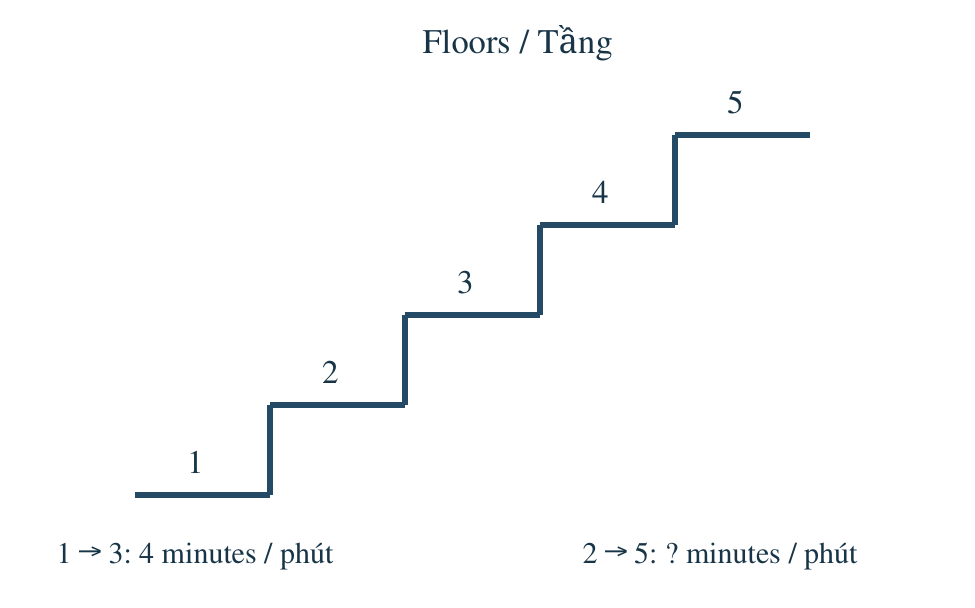
George takes 4 minutes to go from floor 1 to floor 3. He remembers that he left his water bottle on floor 5, and he is now on floor 2. How many minutes will he take to reach the bottle?
Assume each one-floor climb takes the same time and there are no stops.
A month has five Thursdays. Neither its first day nor its last day is Thursday. What day is its first day? The exercise version without choices asks the same question.
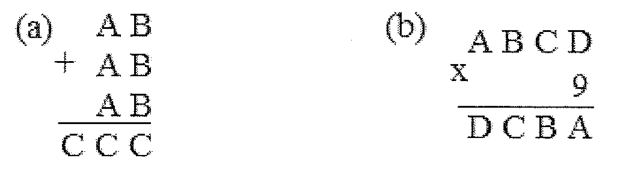
Find the digits represented by the letters in both original column calculations. (a) AB+AB+AB=CCC. Give all possible two-digit values of AB, in increasing order. (b) ABCD×9=DCBA. Give ABCD. Enter the two values for (a), then a semicolon and the value for (b), for example: x,y; z.
Within each separate calculation, equal letters mean equal digits, different letters mean different digits, and a leading digit is not zero. The assignments in (a) and (b) are independent.
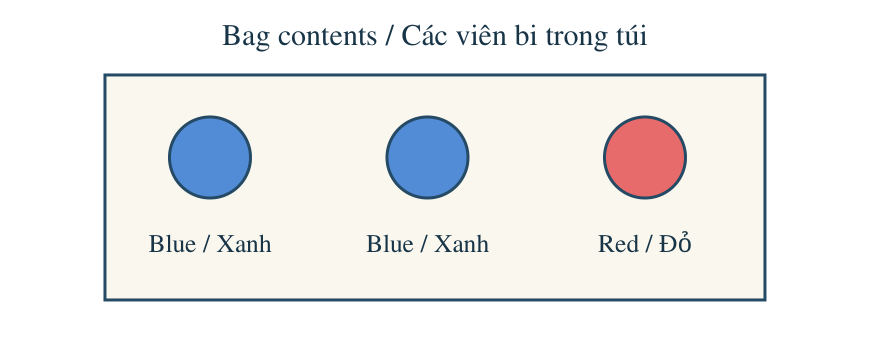
Alice and Bob each draw one marble without looking from a bag containing two blue marbles and one red marble. After each sees only their own marble, Alice says, “I know the colour of your marble!” If she is truthful and correct, what colour did each get? The lesson printing lists A–D; the 2017 paper also includes E.
Draw without replacement. Alice knows the initial contents and bases her certainty only on the colour she sees.
Two watermelons and three melons cost a total amount. Each melon costs twice as much as each watermelon. Find the price of one watermelon in dollars for both printed versions: (a) the prompt’s total of 8 dollars; (b) the worked solution’s total of 48 dollars. Enter (a); (b).
The source prompt and worked solution disagree about the total price. Answer both explicitly labelled versions.
James and Nina have 28 cakes altogether. Nina has more than James. After Nina gives James 4 cakes, they have equal numbers. How many cakes did Nina originally have?
A box contains 8 red, 9 yellow and 10 blue marbles. Without looking, what is the minimum number Bob must draw to guarantee (a) at least one blue marble; (b) at least two yellow marbles; (c) at least two marbles of the same colour? Enter (a); (b); (c).
Draw without replacement and keep all drawn marbles. Each subpart starts with the full original box.
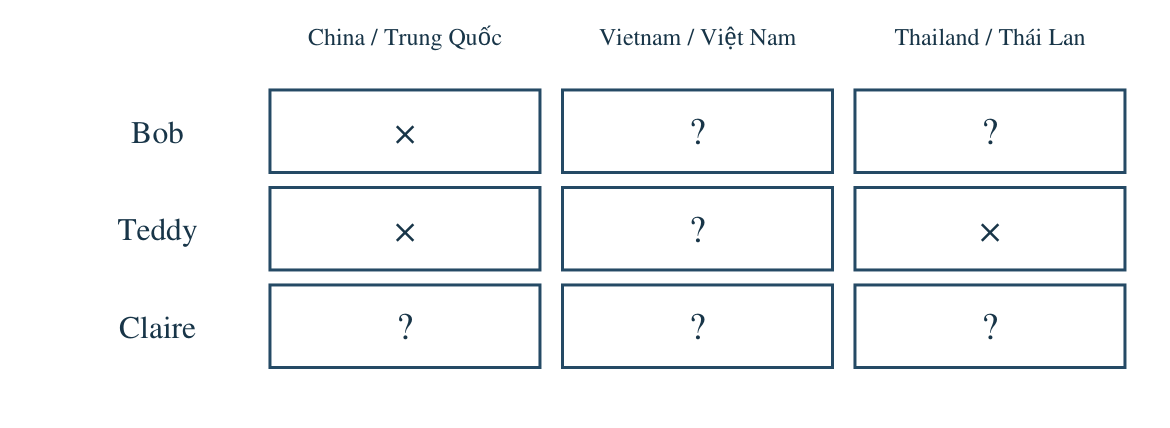
Bob, Teddy and Claire were born in China, Vietnam and Thailand. Bob has never been to China. Teddy was not born in Thailand, and Teddy’s birthplace is not China. Where was Bob born? One source asks for the country directly; the other supplies the choices below.
Use the intended one-to-one assignment: each country is the birthplace of exactly one child. Give the country name. Source choices: A China; B Thailand; C Vietnam; D Laos; E none of the above.
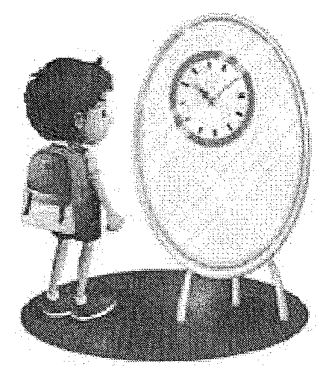
During daytime, Jack stands in front of a mirror and sees the clock shown. What is the actual time? The original 2017 choices are retained below.
The source keys disagree. Read the picture as a mirror reflection, not as the direct clock face. Use the source convention that daytime excludes the corresponding time after midnight.
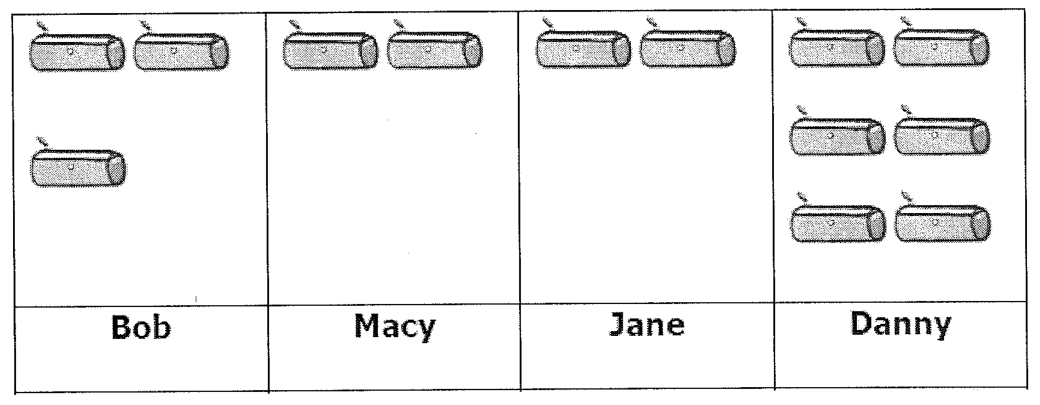
The table shows the pencil cases of Bob, Macy, Jane and Danny. Every case contains the same number of pencils. Danny has 27 more pencils than Bob. How many pencils do the four children have altogether?
The Vietnamese source’s name Daniel refers to Danny in the table.